
Project
Poisoned Pathways
Medical evidence shows that environmental exposure is contributing to a Parkinson's epidemic.

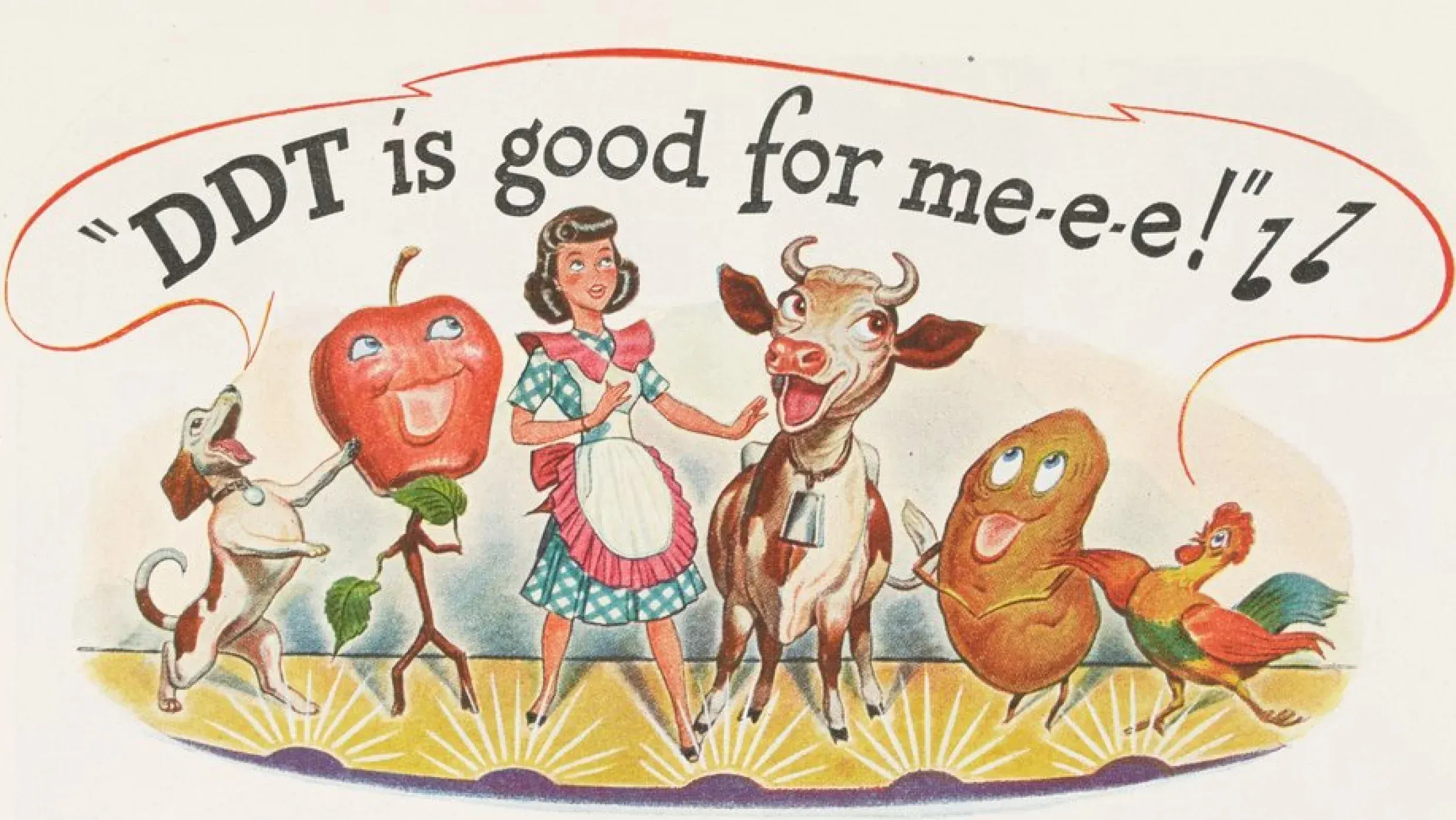
Rachel Carson brought awareness to the harmful effects of pesticides including DDT when she published her book “Silent Spring” in 1962. It took the United States another decade to ban the pesticide.
PENSACOLA, Fla. — On hot summer nights in her hometown of Starke in rural North Florida, Susan McLeod remembers waiting impatiently for the mosquito truck’s rumble and smoke to billow into sight. The weekly event might as well have been the neighborhood’s own parade.
Its purpose—to ward off disease-carrying mosquitos—didn’t matter to her or the other children. They all darted out of their houses to catch up with the fogger truck. She remembers running tirelessly behind it until her 6-year-old legs couldn’t go any further.
“You would spread the word,” she said. “It was hot news.”

As a nonprofit journalism organization, we depend on your support to fund more than 170 reporting projects every year on critical global and local issues. Donate any amount today to become a Pulitzer Center Champion and receive exclusive benefits!
All the while, the children’s parents stood and watched—some waving and cheering from their yards, some simply observing from their front porches. They all assumed the cloud of fog was safe.
“They were just sold on ‘This is going to help kill the mosquitoes and make the place safe,’” said McLeod, who lives in Pensacola today.
The pesticide in the cloud, DDT, was not safe. It was banned in 1972 for its risks to human health. Modern research has linked it to Parkinson’s, Alzheimer’s and a number of other diseases.
McLeod was diagnosed with Parkinson’s three years ago at the age of 65. She links her childhood escapades running through the fog as a likely factor.
DDT was considered a “miracle” when it was first developed in the 1940s. The researcher who synthesized it, Paul Müller, was awarded the Nobel Prize in 1948 for “an extremely valuable remedy in the fight against malaria that then killed 3 million people a year.
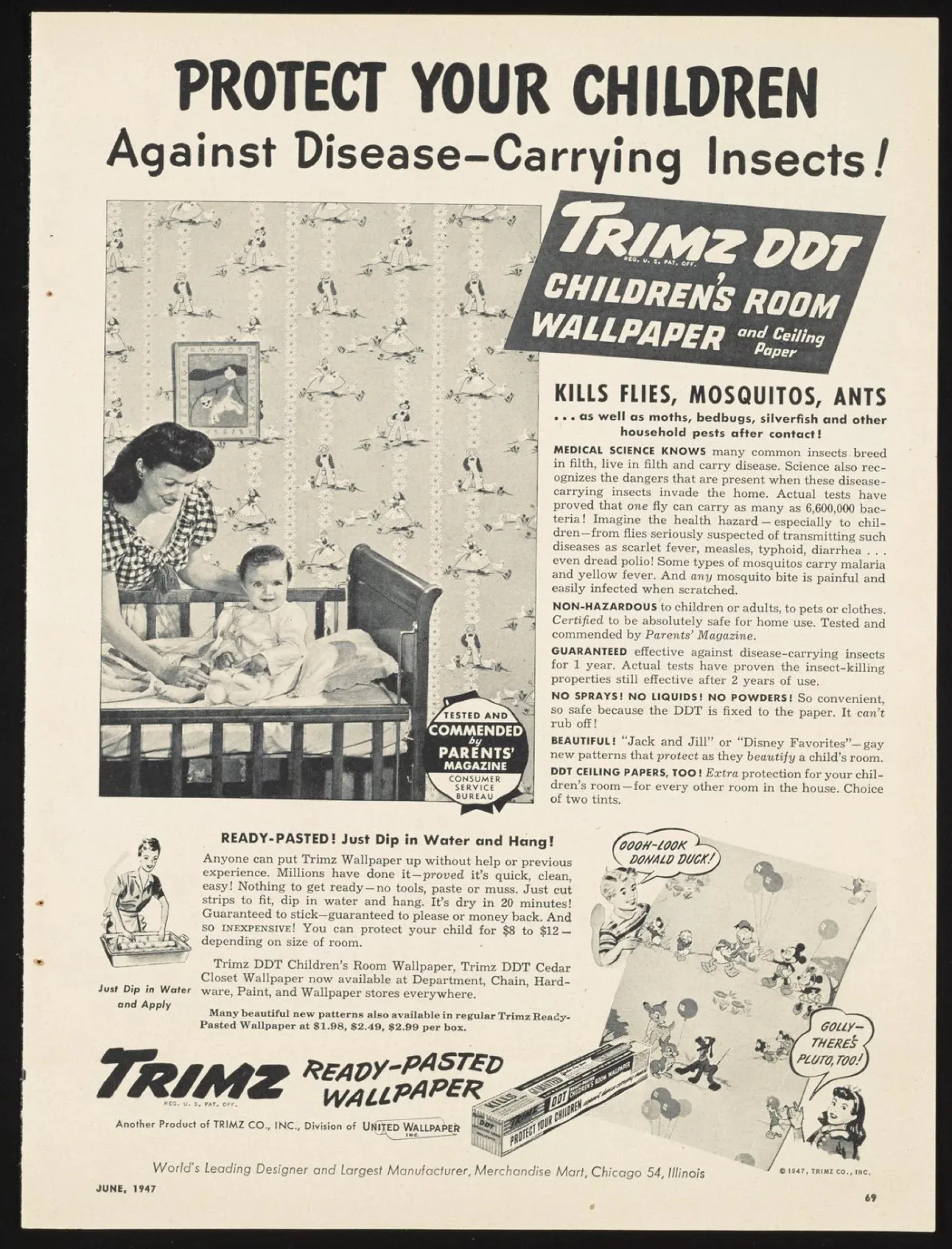
Farmers sprayed it on their crops, families sprayed it in gardens and sometimes inside the house and around the kids’ beds. It was even infused into children’s wallpapers, with companies advertising special “Jack and Jill” or Disney designs.
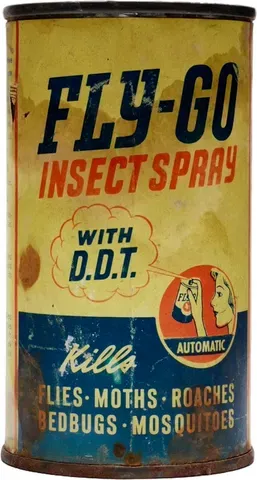
Carole Altier remembers her parents fogging it into her childhood bedroom when she was 4 years old.
Growing up in central Africa in the ’60s, malaria was a common worry in Altier’s village. She recalls every night before bed, her parents sprayed what she assumed was DDT into her and her sister’s bedroom. They used a red, metal cylindrical device with two barrels strapped to it. What came out of it was a thick cloud of fog.
It was a normal occurrence, with other village residents doing the same, she said.
The family left Africa and moved to Canada when Altier was 6 years old. She didn’t give the red fogger a second thought for nearly half a century.
Altier was diagnosed with Parkinson’s disease in her early 50s. Like McLeod, Altier points to her intense childhood exposure to DDT as a likely cause for her disease.
Back then, “every chemical was good,” she said, adding that no one thought of the consequences. “Everyone was just indulging in it.”
Now 68, Altier has had Parkinson’s for about 15 years, and every day brings a new challenge. She deals with low energy and near-constant pain—mostly when she sleeps. She’s found silk pajamas help bring some relief to the latter.
She can’t fathom exposing a child to any kind of fog or pesticides today, much less DDT.
“I mean, you would not submit a child to any kind of smoke whatsoever,” she said. But like so many other parents around the world, hers were trying to protect her.
Around the same time Altier’s parents were fogging her room, author and scientist Rachel Carson published her book “Silent Spring” in 1962. Carson made the case that a pesticide as effective as DDT that silenced insects could silence other life, too, including our own. The U.S. Environmental Protection Agency, which was established in 1970, banned DDT two years later.
“It is our alarming misfortune that so primitive a science has armed itself with the most modern and terrible weapons,” Carson wrote, “and that in turning them against the insects it has also turned them against the earth.”
Dr. Sneha Mantri, a professor of neurology at Duke University who serves as chief medical officer of the Parkinson’s Foundation, said the same is true for some of the dangerous pesticides and herbicides that remain on the market today.
The way to think about it, she said, is that “these are chemicals that are designed to kill living things. Humans and brain cells are living things so there’s no reason to think that they’re not going to impact brain health in the same way they impact the weeds or pests you’re spraying them for.”