
Students report on various issues around the world.


Rio Grande City’s strong faith and family ties influence how residents think about social issues.
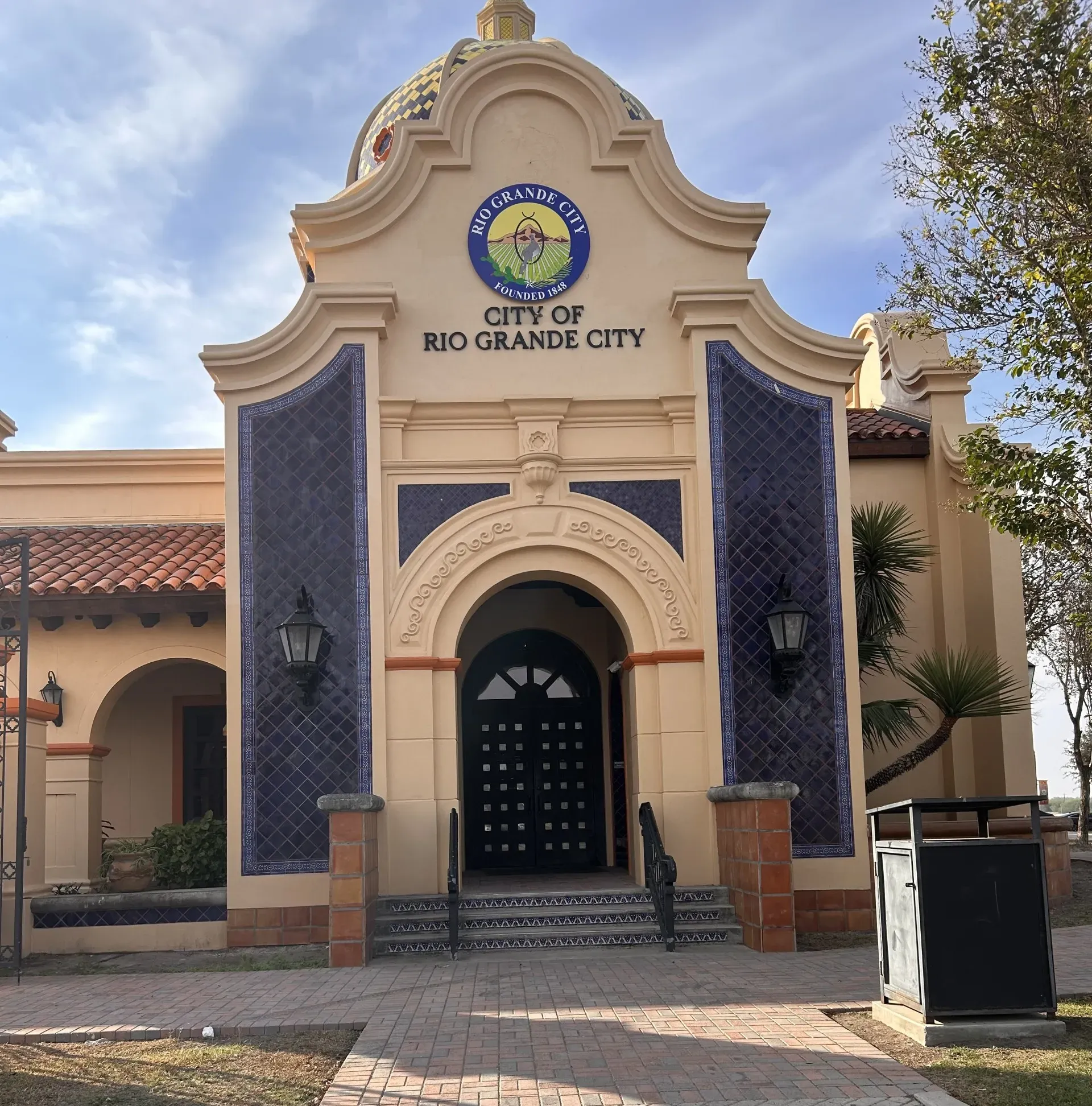
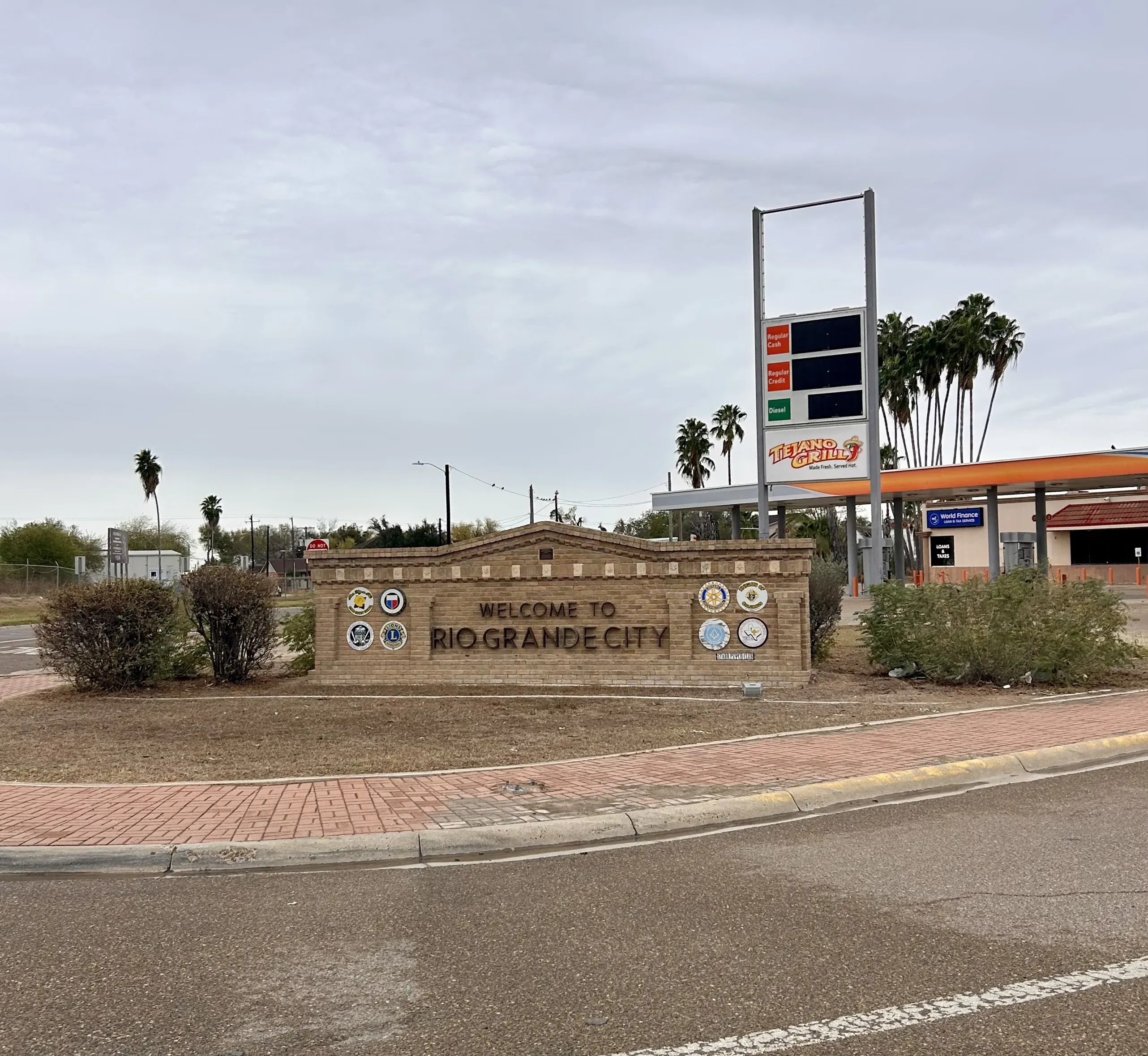
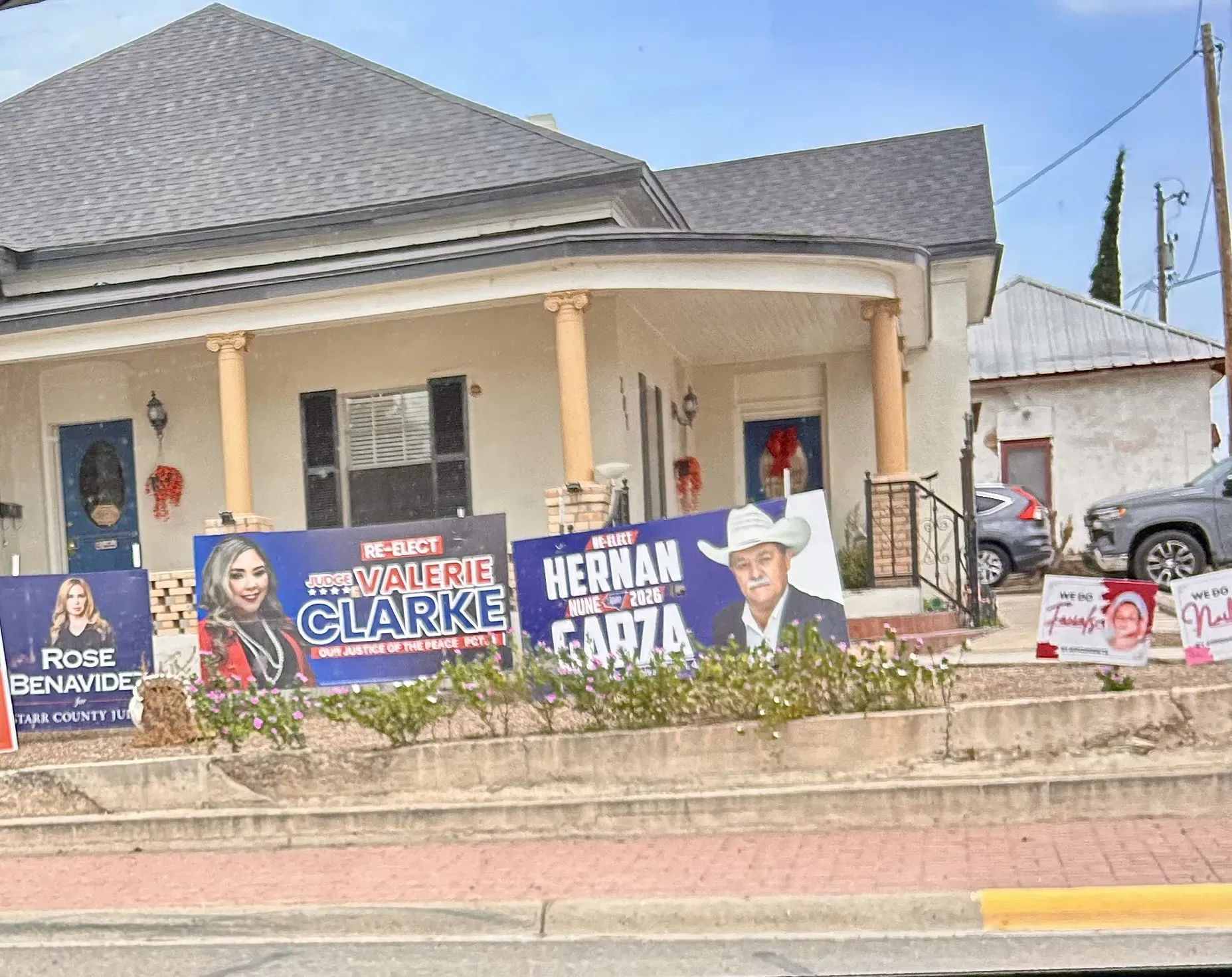
RIO GRANDE CITY, Texas—A brick sign flashes past: “Welcome to Rio Grande City.” The highway splits in two one-way streets, like a time machine back to the 20th century. The newly built Starbucks and Walmart give way to mismatched stucco and brick buildings. Fading paint leaves many of them local mysteries, while others’ brightly colored signs are difficult to ignore. The occasional palm trees serve as a reminder of the city’s southern identity. Midway through this downtown, a perpendicular road cuts through, leading to the courthouse, an aging building that has anchored the city for generations. It takes only five minutes and three stoplights for this dive into the past to end.
What lingers, though, are the signs.
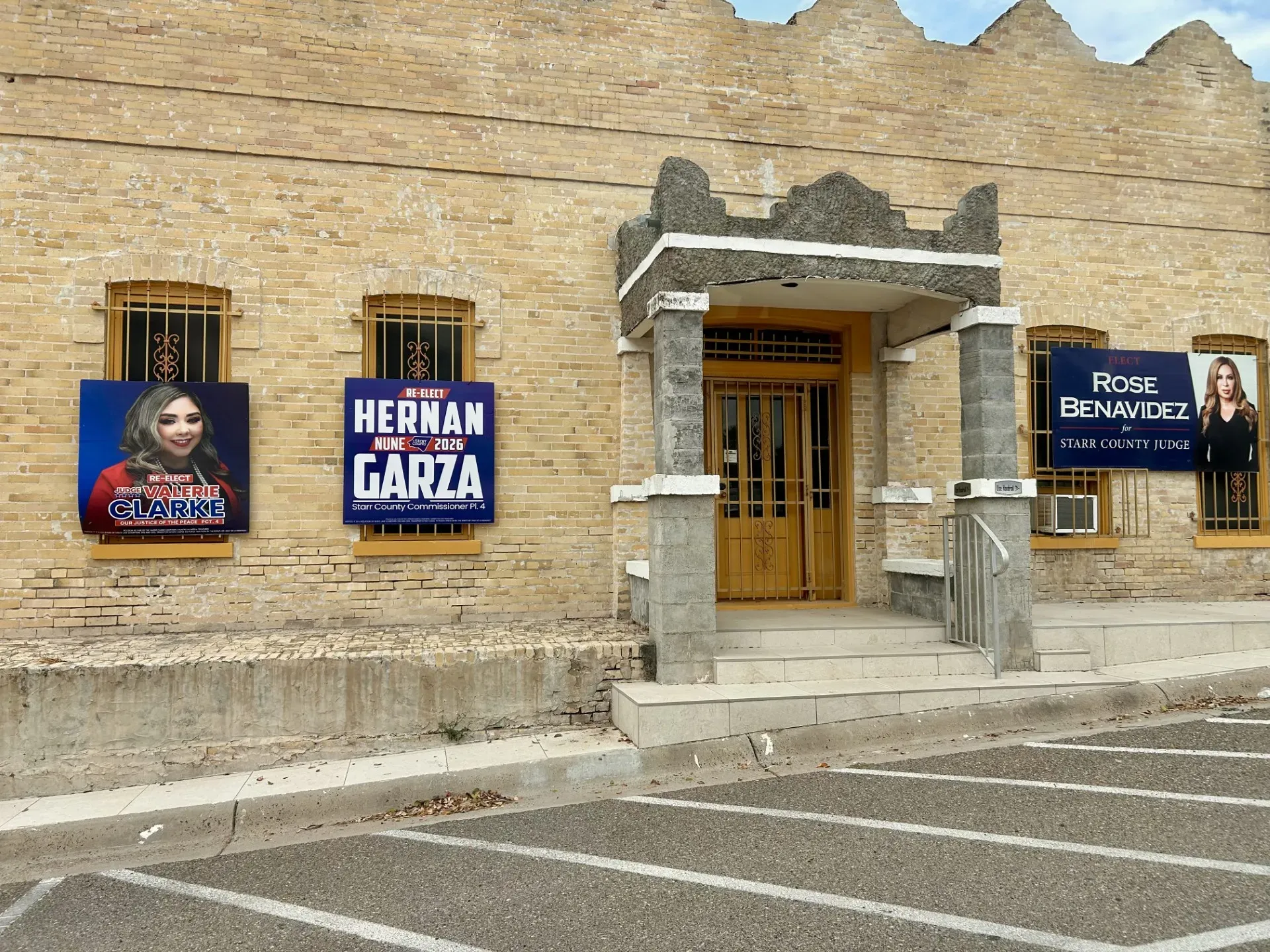
It’s hard to miss that on every street corner political posters jut out of the narrow strips of grass, line the sidewalks, and cover the walls of buildings. “Re-Elect for Justice of the Peace.” “Elect for Starr County Judge.” Each brightly colored sign sticks out against their brown and green backdrops. Some yards have only one, others half a dozen. Some even have signs for two candidates running for the same position. It is clear a judicial election is approaching.
For over a hundred years, Starr County, Texas, has been synonymous with Democratic loyalty, voting blue in nearly every election. But during the 2024 election, Starr County broke with tradition and voted for Donald Trump by a 15-point margin. Political commentators and analysts rushed to explain this shift through immigration rhetoric, messaging, or social identity.
From afar, this shift was dramatic, a signal of political realignment along the U.S.-Mexico border. In Rio Grande City, it was far less of a spectacle.

As a nonprofit journalism organization, we depend on your support to fund more than 170 reporting projects every year on critical global and local issues. Donate any amount today to become a Pulitzer Center Champion and receive exclusive benefits!
“[The] average person in Rio that votes [is] very conservative… they’re not liberal,” says Maria Elias Ramos, a former Starr County teacher and longtime local political activist. She argues that outsiders often misunderstand the dedication to tradition that continues to push her community to vote Democrat, even when it doesn’t align with their beliefs.
District Judge Baldemar “Balde” Garza, echoes that assessment. From his perspective as an elected official and judge, the community’s strong faith and family ties influence how residents think about social issues such as abortion. He explains that while ballots might have been cast for Democrats, for decades the county has aligned ideologically with the right.
In this small border community, politics are shaped less by party labels and national changes than by household incomes, school board meetings, and local security. In a county sustained by cross-border commerce and border enforcement, the cliché “all politics is local” is a lived reality.
As the news environment shifts from local to national with the decline in local news organizations and rise in media consolidation, it is easy to ignore the importance of local actions. In the case of Rio Grande City, it is the local political landscape that helps answer why they broke from tradition in the last federal election.
“Do I care what happens at the White House? Does it affect me? Not one bit,” Ramos says. “What affects me happens at the school board meeting… at the city meeting… at the county. I don’t even care what [Texas Gov. Greg] Abbott does, because it doesn’t affect me. What affects me is where I live, and this is the place I have to improve.”
This dedication to local politics is echoed in her own political activism. Fifteen years ago, Ramos ran for school board in Rio Grande City, creating a coalition of women to run alongside her in three other school board elections in Starr County-La Grulla, San Isidro, and Roma. While she wasn’t successful in earning a seat, Ramos leveraged her position in the community to gain respect and propel a post-retirement career in advocacy, or “troublemaking,” as she calls it.
“People [here] are well educated,” says Ross Barrera, veteran and current Starr County Republican Party chair. “I don’t mean college level,” he explains, “I mean educated in the way that they know what’s going on…and they [make] their own decisions.” In Rio Grande City, that education doesn’t come from classrooms or news, but from local networks.
Sitting in a downtown burger joint one afternoon, a server recognized a customer and handed her a phone. The customer worked at H&R Block and the person on the other end of the phone needed advice about a loan. Here, information moves through people quickly. Political conversations often travel the same way.
In Rio Grande City, political information is spread by politiqueras. The term—which means “politicker”—is unique to South Texas and their Tex-Mex Spanish, and refers to paid campaign workers. Politiqueras use their deep knowledge of the community to urge people to vote for a certain candidate oftentimes giving people free food or toys, according to Barrera.
Ramos says that the funding source for these politiqueras were not always the candidates themselves, but a larger political boss that leads the local Democratic Party. She describes the party as what political scientists might call a “political machine” that tightly controls the local political landscape through favors and job opportunities. “If you want to have a voice in [our] local government, you better be a Democrat, because that’s the only way you’re going to vote for them or vote them out,” Ramos claims.
Gilberto Millan Jr., Rio Grande City manager, reiterates the existence of this political boss and machine, suggesting past corruption caused by it. Both Ramos and Millan agree that this machine has dwindled in recent years. Ramos points to the growing success of politicians outside of the machine, allowing for an increased presence of Republicans and right-leaning ideology in the area. Election results support her claim. In 2024, Democratic candidates in Starr County won by extremely narrow margins, some by less than 1%. This is a decline from prior local elections, where the margin of victory for left-leaning candidates was much larger.
Republicans also got more votes after a state law changed in 2020, outlawing “straight ticket voting.” That’s when a voter can shade in one circle to indicate that they want to vote for all of the Democrats or all of the Republicans. Barrera says that without straight ticket voting, voters in Rio Grande City had to think more critically.
Taken together, these shifts suggest that the 2024 results weren’t due to a sudden rupture, but rather gradual changes at the local level—changes that often go unnoticed from afar.
While pundits in Washington are wondering what will happen in the midterms, Maria Elias Ramos will be working in her community garden, focused on the place that actually shapes her life.