
As plants bloom from urban land, communities are growing stronger, too.
Recent proliferations of community gardens across the capital city serve as reminders of its ancient farming roots and as harbingers of hope in the face of the climate crisis.
In the largest city in North America, residents are turning vacant lots into vibrant community gardens. Their call to action, however, extends beyond a need for nutritious food grown in urban soil.
The past and present dance la bamba in the heart of Mexico City. From the cobblestone streets to the baroque architecture, the Mexico of the past maintains a prominent place beside its more modern influences. But of the well-preserved parts from the city’s 700-year history, its most defining chapter has remained largely erased. As current issues like climate change and economic disparities threaten the futures of hundreds of thousands of Mexicans, some citizens have looked to the disregarded past for answers.
Uncovering the whole story required some digging.
Literally.
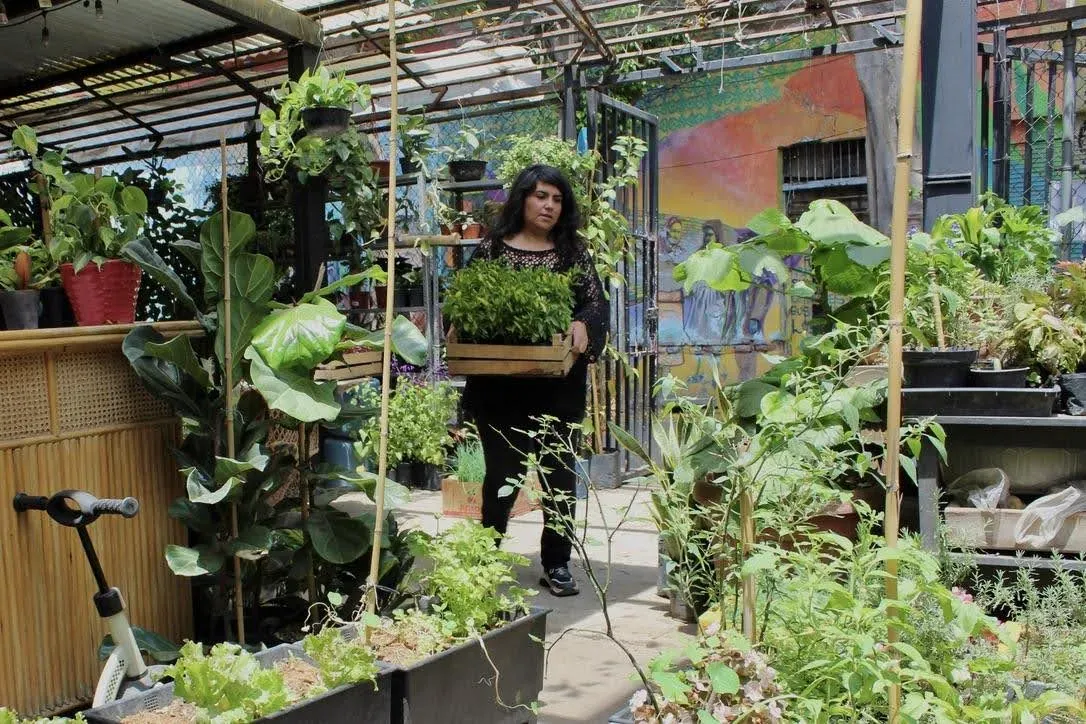
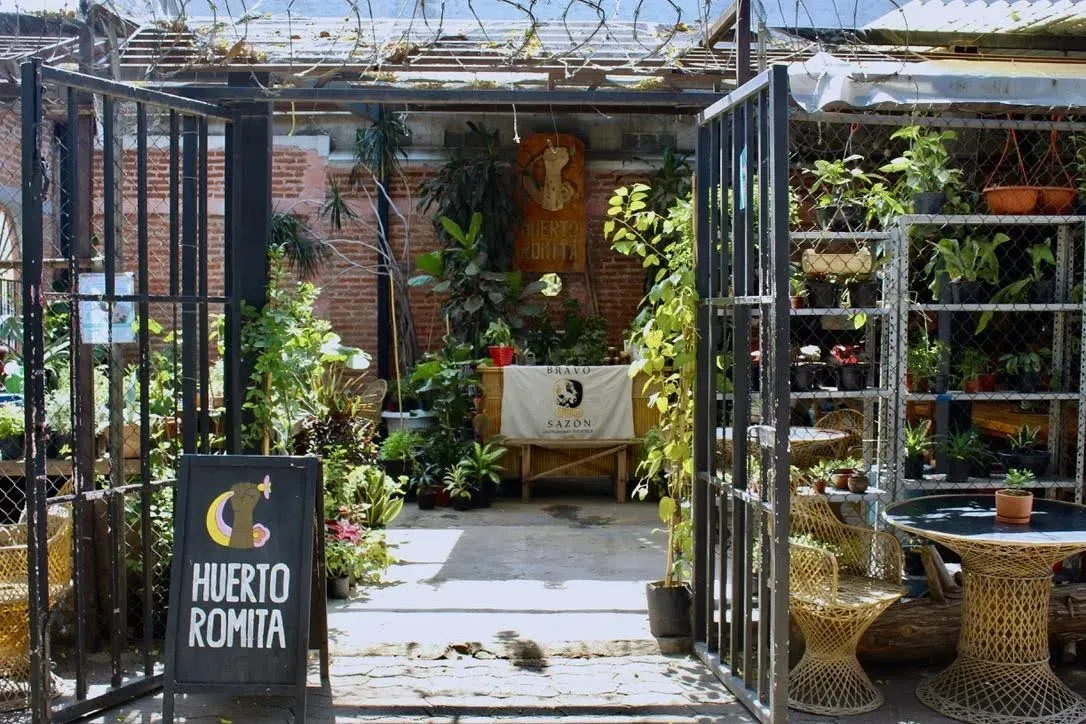
“The soils of our city—they hold the memories of our past that we can no longer see,” said Nayeli Real, rubbing dirt off her hands. She gestured to the earth-filled raised beds covering the floors and walls of her community garden space. We were in the oldest part of the city, Colonia Roma Norte. Real’s garden, called Huerto Romita, sits right at the historic neighborhood’s heart.
Move further from the well-preserved city center, and the historic landscape transforms. Rapid population growth and urbanization in the past century transformed both the physical and social landscape of the city, bringing with it numerous challenges related to infrastructure, housing, and the environment. Mexico City's population grew from about 500,000 in 1900 to over 21 million in its metropolitan area by 2016. This urban growth has contributed to the urban heat island effect, causing increases in both maximum and minimum temperatures beyond what can be attributed to global climate change alone.
The Mexico City Metropolitan Area (MCMA) lies in the Valley of Mexico, a basin surrounded by mountains and volcanoes, with altitudes ranging from 2,200 to over 5,000 meters above sea level. The valley is home to several rivers, including the Magdalena and Piedad, as well as lakes like Chalco, Texcoco, and Xochimilco.

As a nonprofit journalism organization, we depend on your support to fund more than 170 reporting projects every year on critical global and local issues. Donate any amount today to become a Pulitzer Center Champion and receive exclusive benefits!
“The soils remember the chinampas,” said Real.
She was referring to an ancient form of urban gardening developed by the Aztecs during the construction of their capital city. Like many urban agriculture systems today, the chinampas maximized efficiency by producing high crop yields in small areas of space. They stand apart, however, by one key difference. Instead of buildings, the chinampas were surrounded by water.
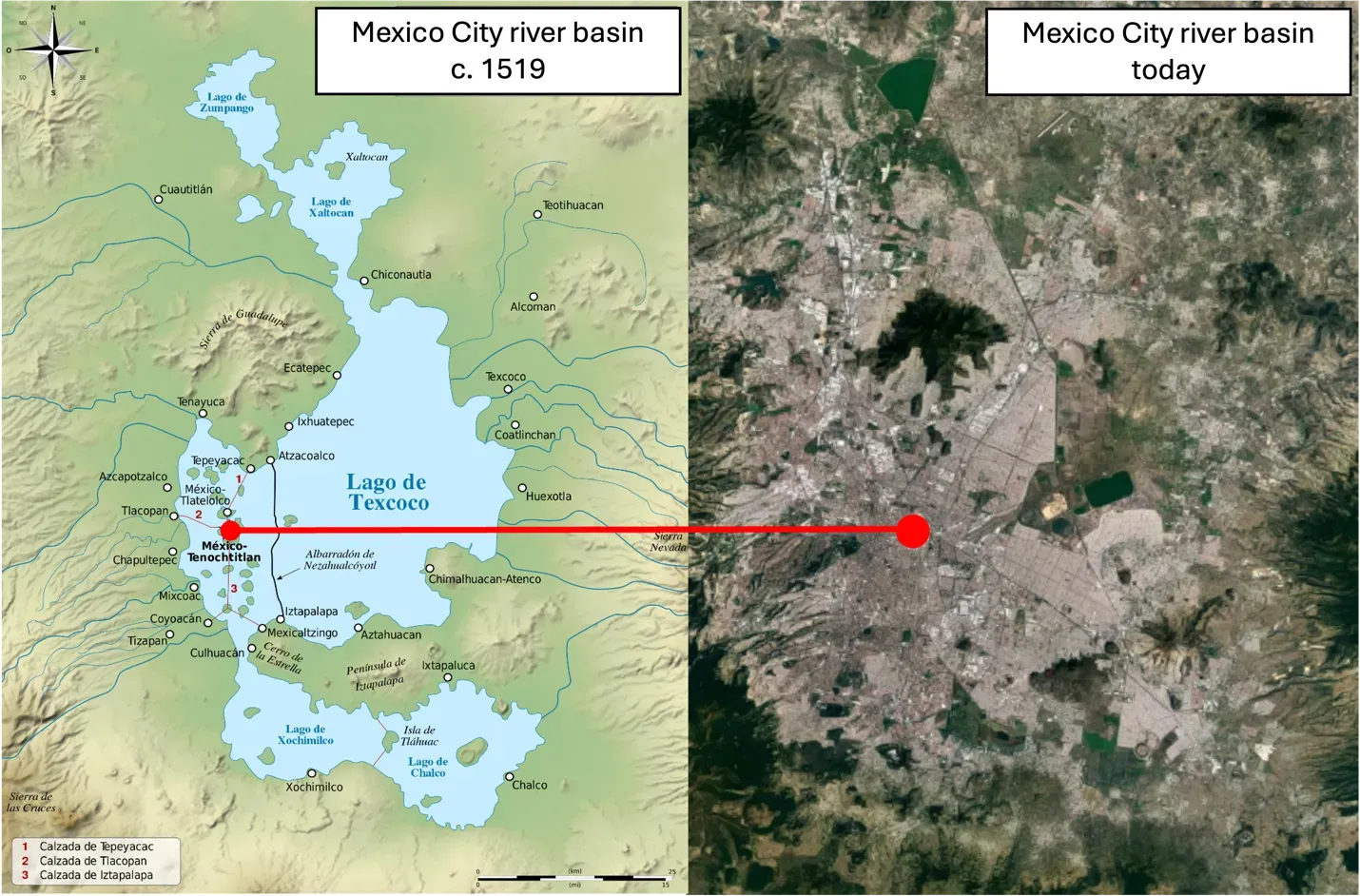
Five hundred years ago, Mexico City would have been right in the middle of Lake Texcoco, where the Aztec capital, Tenochtitlan, once floated. To build out their city and feed a burgeoning population, the Aztecs created a series of artificial islands, the chinampas, in shallow lake beds or wetlands. Long, narrow rows composed of layers of mud, aquatic vegetation, and other organic matter, as well as nutrient-rich lake sediments, made the chinampas both extremely fertile and space-efficient.
At their peak, these gardens were incredibly productive. Some estimates suggest they could produce up to 13 times more crops than traditional dry-land farming in the same area.
Unfortunately, neither the Aztec empire nor its floating gardens would live past the mid-16th century. The Spanish defeated the Aztec empire in 1521, destroying Tenochtitlan and draining the valley’s lakes to make land available for terrestrial agriculture. On top of the ruins of Tenochtitlan, the Spanish laid the foundation for Mexico City.
Real gazed at the pedestrians bustling past the open entryway into Huerto Romita. A few meandered in and began to point excitedly at the plants for sale. “The crazy thing is, most people living here don’t know we used to be an entire society of farmers. That is what I want to show people in this space; that the connection we shared with the Earth is still alive, it's right here. In the same soils, on the same pieces of land.”
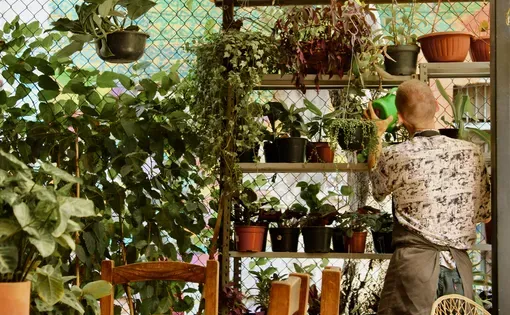
Real took over managing Huerto Romita in 2017 when her sister stepped down. Since its founding in 2006, the garden has spread its roots through Roma Norte. It hosts a variety of workshop series, gardening courses, cooking classes, and youth events, all centered on educating people about the basics of gardening.
“We are a small space, you know? We don’t have the capacity to feed a community or support those who are food insecure,” said Real, gesturing to the classroom-sized patio the garden occupied. “But what I can do is show them how to grow it themselves. And to me, that knowledge is more powerful.” said Real. “When you can do it yourself, you nourish your body and your mind.”
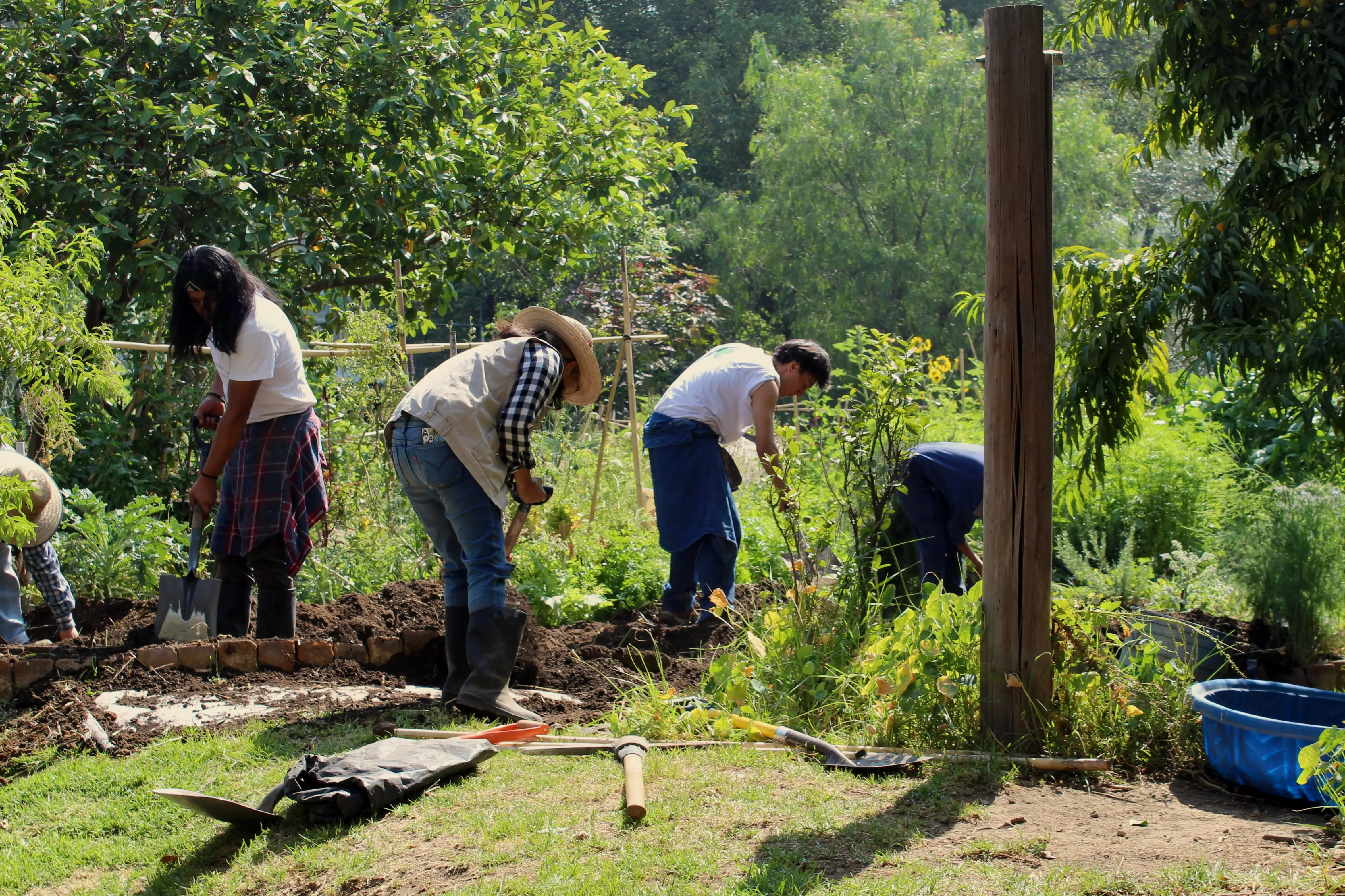
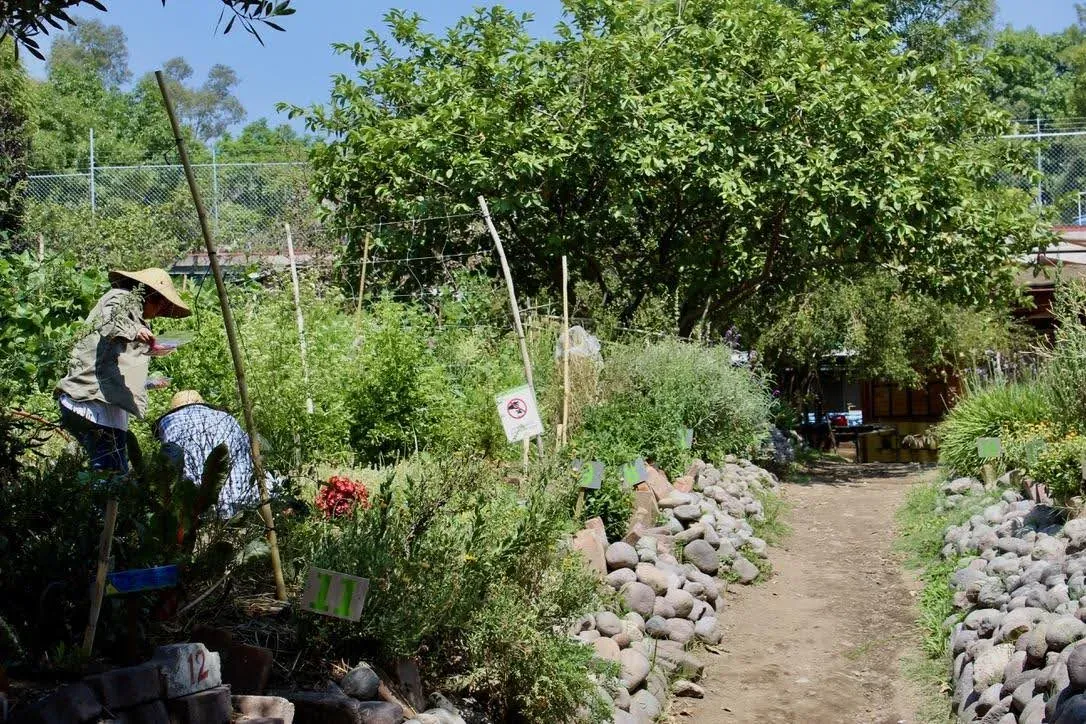
In a different community garden across the city, a woman picked a pomegranate off her fruit tree. In the shade of the orchard around us, the 90-degree air was surprisingly cool. This garden was much larger than Huerto Romita, spanning nearly the size of a soccer field and overflowing with green. After partaking in her pomegranate, I sat down with Gabriela Vargas, the owner of this garden.
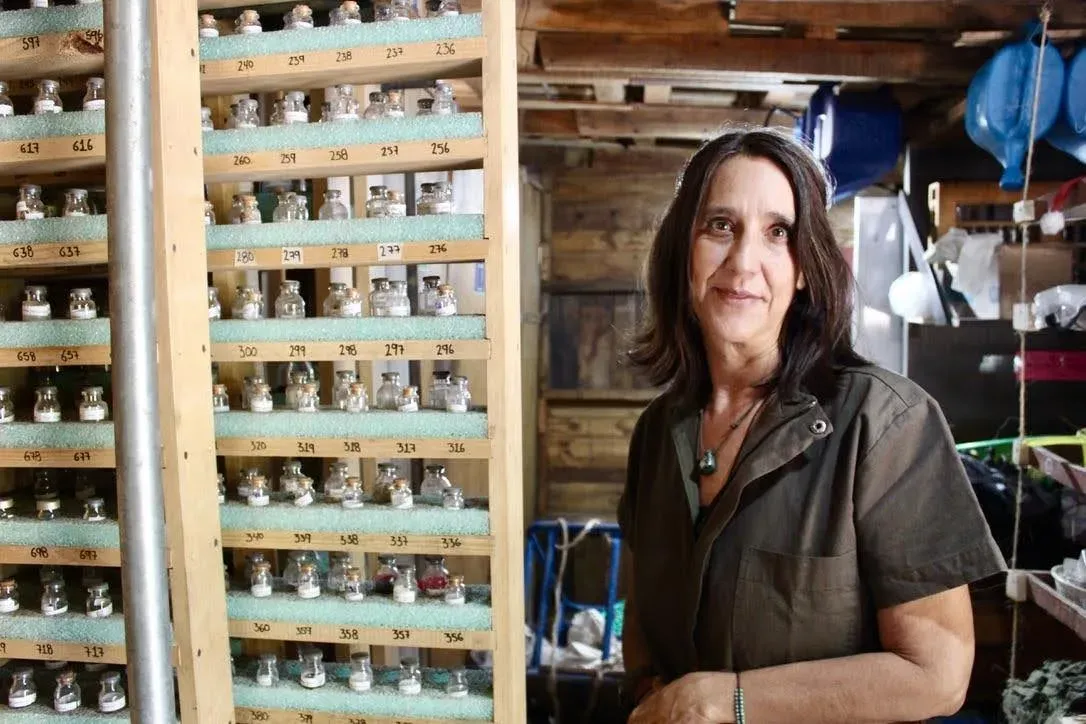
When Vargas first arrived at this space back in 2012, it was far from the vegetated mecca it is today. Surrounded on all sides by a chain-link fence and covered with chunks of concrete, the only signs of life were the fruit trees we sat beneath today. Working as the leader of her nonprofit organization, CultivaCuidad, Vargas received permission and funding to build a regenerative agriculture project on the land. Eight years later, the space has 33 raised beds, a seed bank, an outdoor kitchen, a greenhouse, and a community composting program.
“I think of this garden as a seed garden,” said Vargas. “Literally, we save the seeds of our crops to be replanted in the following season. But also, metaphorically. It has taken eight years of work—of trusting in the slow, successional process of growth—for Huerto Tlatelolco to become this today. We planted the seed, we were patient, and now we see the produce.”
“Tlatelolco” means “mound of dirt” in Nahuatl, the Aztec language. It is also the name of one of Tenochtitlan’s sister cities spread across the swamps of Lake Texcoco. And similar to the ancient lacustrine network of the chinampas, Huerto Tlatelolco is involved in collaborative projects with other gardens in the city. This includes Huerto Romita and others like Huerto Roma Verde and Fenix Farms in Colonia Roma Norte.
This is largely because most of these gardens were started by the same eco-activist group, Sembradores Urbanos, of which Vargas was a founding member. Together, the group worked to create its first garden, Huerto Romita, in 2001. After creating multiple other gardens across the city, the group eventually disbanded. The founders dispersed themselves in leadership roles among the jardines and continued their mission of re-greening the city from all corners.
At Huerto Tlatelolco, Vargas echoed a similar hope that Real promotes at Huerto Romita: to re-awaken the relationship between Mexican people and their land that has been lost through the current food system.
“To me, the essence of this space is getting people back in contact with the process of how their food is grown. That practice has been cut off from the everyday—instead of bending over to harvest something we grew, we run to the supermarket,” said Vargas. “But what is lost in that? That’s the gap I want to bridge.”
Recently, Vargas initiated a neighborhood composting program, where locals are rewarded with a point-value system based on the weight of the compost they donate. Over time, points can be exchanged for fresh produce from the garden. The program became so popular that Vargas eventually had to impose new rules: If you pass a weight threshold of compost donation each week, you have to start volunteering in the garden for those points.
Composting is like a municipal service, and an overwhelming amount of donations means a lot of extra work for the staff, Vargas pointed out. But she also believes that volunteers gain so much more from the experience of touching the soil and learning how the produce is grown.
“Most of Mexico City isn’t really a food desert, not like the ones you see in the United States. There are cheap produce stands and markets everywhere, and most of them you can get to by bike or on foot with no trouble,” Vargas pointed out. “It’s not hunger we’re addressing in this garden. It’s education.”
Back at Huerto Romita, I asked Real if she felt that education was her chief concern as well.
“It is the most sustainable thing to plant: knowledge,” said Real, agreeing. “There are no annual, perennial cycles to knowledge. You show a person how to connect with the Earth, their Earth? That lasts a lifetime. For generations, even.”
During COVID-19, Real launched a virtual gardening course to continue to connect with interested amateur gardeners. The response was overwhelming. That year, over 60 people enrolled in the workshop. The scope of her audience reached far beyond the cobbles of Roma Norte, beyond Mexico City even.
“We were reaching people in Canada, the U.S., even in Europe,” Real said.
Even as the pandemic subsided, Real continued to host the online class. And each year, her attendance numbers climbed higher and higher.
“We [Huerto Romita] are already at the heart—the roots—of the city here. And we spread them in the community, in the city. Now, we have the opportunity to spread our knowledge, like little seeds, to people everywhere,” Real paused. “It's almost like we are the chinampas; floating gardens all over the world."