Story
 July 24, 2026
Deepfake Child Sexual Abuse: Like 'Animals Trapped in a Circus'
Country:


How AI tools fuel child exploitation on Malaysian social media
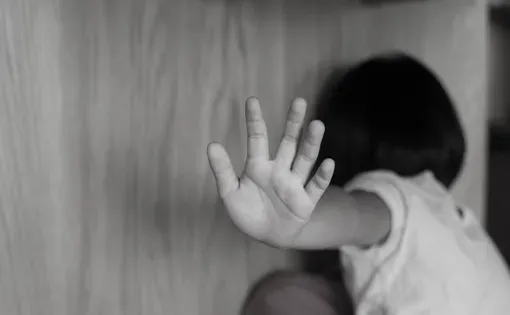
You have been added to a chat group by a stranger. There are a few photos in the group chat that you posted on social media years ago; the person in the photos is you, and the background is a café you used to visit. But all your clothes have been stripped off and you are now in the nude. You are not the only victim. Deepfake nude images have targeted more than 600 students and teachers worldwide.
The above scenario is not just hypothetical. It actually happened to a group of teens and young adults from the Kulai Foon Yew High School in Johor from March to April 2025.
Deputy Communications Minister and Kulai MP Teo Nie Ching revealed that victims comprised 40 current and former students, the youngest being 13 years old.

As a nonprofit journalism organization, we depend on your support to fund more than 170 reporting projects every year on critical global and local issues. Donate any amount today to become a Pulitzer Center Champion and receive exclusive benefits!
And it was not just them. In December of the same year, three students, each in Forms Two, Three and Four, from the Chung Hwa High School in Muar, were expelled for committing the same offence - creating fake sexually explicit images and videos of their classmates with the use of AI tools.
In the Foon Yew case, an individual named “Li Xiao Bai” began circulating the images to harass the victims and selling them for RM2 each.
These cases were noteworthy as they represented the only incidents recorded so far of the threat posed by AI tools and bots that take real-life photos of people from their social media feeds and turn them into new explicit images or videos.

A nine-month Malaysiakini investigation into Malaysian networks that traffic child sex abuse material (CSAM) discovered how such tools can be easily accessed through popular messaging app Telegram.
An investigation by WIRED and The Indicator discovered nearly 90 schools and 600 students worldwide are “impacted by AI-generated deepfake nude images - and the problem shows no signs of going away.”
Blame comes before understanding
“Anyone who knows me would see that isn’t me. I don’t have that perfect figure,” said Chai En Yah, one of the Foon Yew victims who graduated from high school when the photos started to appear in March 2025.
When Chai found out that her photos were deepfaked into nudes, her first reaction was to dismiss them.
“It’s just a prank,” she told herself. “It’s not causing any real harm,” said the 19-year-old university student.
But lying in her bed at night, Chai’s doubts got the better of her.
“Did I do something wrong? Who did I offend? Who did I hurt? Why would this happen to me? When the sun goes down, I try so hard to convince myself that I didn’t do anything wrong, and I couldn’t stop crying.”
The episode also initially strained her ties with her mother.
Ironically, Chai’s mother had suffered the same form of abuse. Four years before the Foon Yew incident, a rumour started going around that there were lewd videos of her own mother being spread online.
“My mother could not defend herself. She had no way of explaining that none of it was her in that video, apart from her face.”
When her mother finally admitted to Chai and came to terms that she had been a victim too, her attitude toward her daughter changed.
“It was then that she finally understood me and told me to file a police report. She said that no matter what, she will believe that I did nothing wrong.”
They watched us like 'animals trapped in a circus'
Another victim, Ong Yun Han, said there were 53 victims in the group chat, and each had one to three AI-generated images of them, which meant that there were about 150 deepfakes.
But the group’s tormentor, Li, did not stop there.
“He will take your public information available on the web, along with your Chinese name and whatever you have done in school, and publish them altogether with those nude images,” said Ong, who is now 20.
The university student found some images of her posted in social media groups and even on their old school’s online community page.
“He knows so much about you, but he has never surfaced, so you know nothing of him,” Ong told Malaysiakini.
Some of the victims would leave the group immediately, but Li added them back in. When they messaged him personally, Li would reply with even more disturbing deepfakes.
“That whole process felt like we were animals trapped in a circus. We were all thrown into a cage, and he watched as we writhed in agony and pain.”

Li also created Telegram groups to sell the deepfakes, and buyers in these groups would put in customised orders, requesting that a certain photo of someone be made into nudes, according to China Press. That group consisted of roughly 70 members, but it was uncertain as to whether they were students.
The images in the Telegram group also included those of female students who were secretly filmed in public or during physical education classes. They were photographed without the subjects’ consent, said Ong.
In a few of those video clips, Li was suspected of being behind the camera. Only the lower half of his body was shown, wearing white school trousers, and in the background, one of the school’s buildings.
Before harassing and provoking the victims, Li would send those deepfake images to their friends, including Chai’s boyfriend.
“My boyfriend didn’t want it to affect me as I was preparing for my exams, so he didn’t plan to tell me about it at all.”
Chai and Ong speculated that Li was from their batch or had just graduated, as he was familiar with the victim’s social circles and daily routines. However, they were unsure as to whether he operated alone or managed the account with others.
Chai wasn’t keen on filing a police report at first: “It’s not my first time. Everyone can see that it’s fake; why bother going to the police and troubling myself?”
Ong disagreed. She told Chai: “We shouldn’t let them live their lives easily after causing us harm.”
Ong mustered the courage to organise the victims, compile evidence, and report the incident to school authorities, the police, and MPs.
Winding road to justice
Despite her intent to organise a collective action, the process of seeking justice was also arduous.

Ong had to do much of the coordinating from Singapore, where she worked. She contacted the victims by phone and formed a support group.
Due to work constraints, Ong couldn’t return to Malaysia to file the reports on weekdays, but the police asked her to visit the station on Thursdays to help with investigations.
“It was not easy to get leave in Singapore,” said Ong. It was also hard for her to travel to the station in Kulai as she did not have a driving licence and depended on others for transport.
“The trips became very time-consuming and physically draining.”
The investigation process was also cumbersome for many victims. At first, the police collected all the photos of the individuals involved and asked everyone to go home, Ong said.
“Then they asked all of them to return to the station again to identify themselves. At the time, some were studying abroad, some were working, and some were travelling. It was hard to get everyone back together at once.”
The police then instructed them to file separate reports according to the addresses stated in their MyKads, as the students were from different parts of southern Johor.
To forgive or pursue the truth
In April 2025, the police arrested a 17-year-old.
When Ong’s mother, Chan, learnt that the suspect was a minor and the same age as her son—Ong’s younger brother—a row between mother and daughter was inevitable.
Chan had begged her daughter to “stop going after them.”
“Mama! It is not up to me to say whether we should pursue this or not; for now, we have the whole society’s attention on us; this is no longer just about me. Ma, please do not protect the perpetrators,” Chan said, recalling a conversation she had with her daughter.
Chan felt that as long as no serious damage had been done, the underage suspects could be spared from prosecution. She also issued a warning to her two sons: “Do not do something like this ever. If I were Li’s mother, I would be heartbroken.”
“I am a mother as well. I have two sons who are engrossed in computers. Should one day my son commit such a deed, it has to be the parents’ fault, for they did not teach them and monitor them better,” said Chan.
“From a parent’s point of view, the reason I asked my daughter to stop was because I hoped the perpetrator would get a chance to turn over a new leaf.”
Ong did understand where her mother’s plea was coming from.
“I know what she was thinking. Like many other parents, they think that the perpetrators are still young, there is still a chance to educate them, hence they should be given the opportunity to change. If they were sent to jail, then their lives would be destroyed.”
But at the same time, Ong believed that she was an example to the other victims.
“If I choose to forgive the perpetrators, what should the other victims do?”
Lone wolves in action
The 17-year-old was eventually slapped with three charges:
i. Section 292(a) of the Penal Code for possession of obscene materials
ii. Section 5 of the Sexual Offences against Children Act for making, producing, directing the making or production of child sexual abuse material
ii. Section 6 of the same Act for preparing to make, produce or direct the making or production of child sexual abuse material.
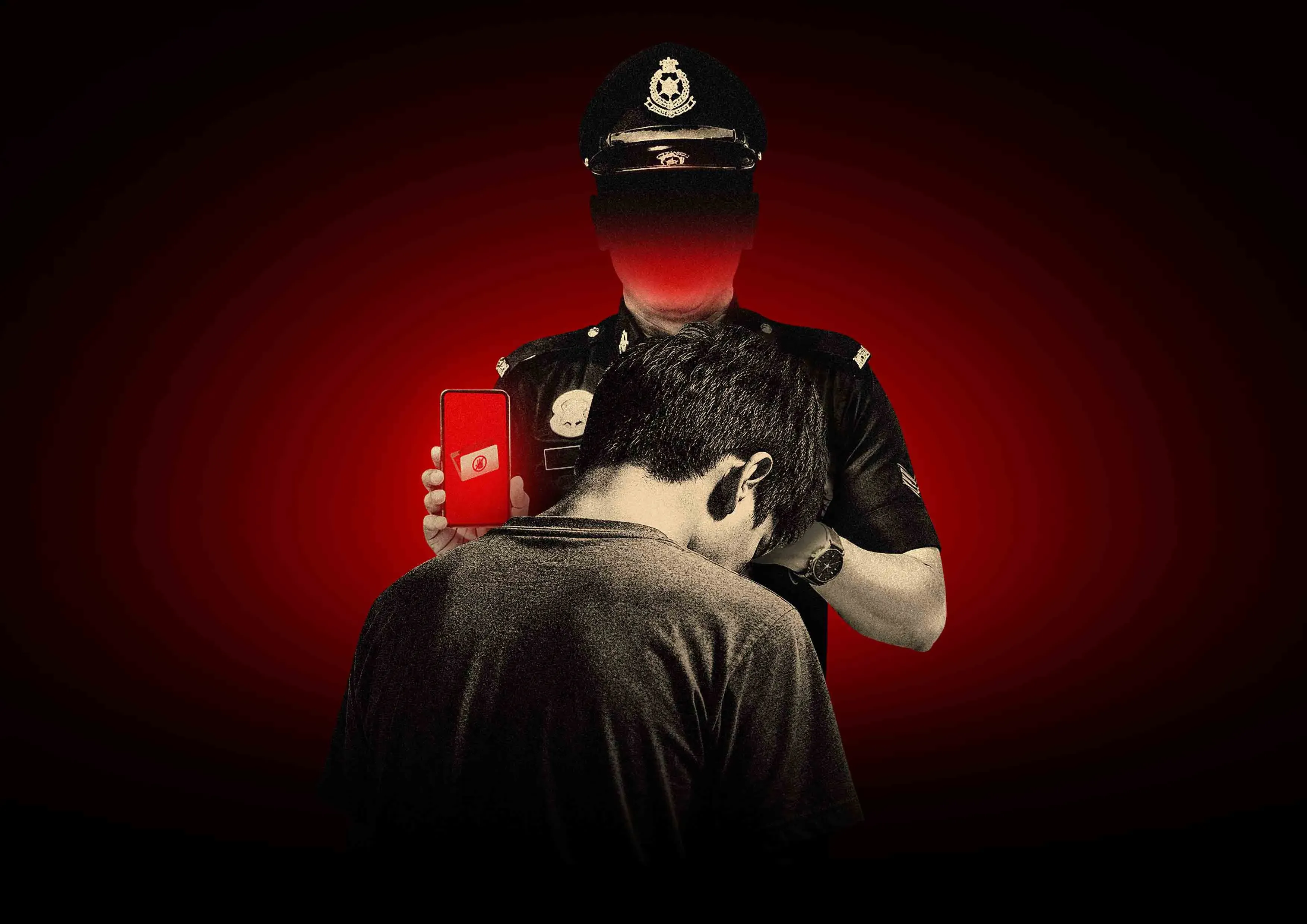
The 17-year-old’s lawyer, Alan Lim, said that his client initially claimed trial to all but one of the charges - possession of obscene materials.
Although the investigator had reviewed and verified these deepfake photos that sexualised minors, only two out of the many victims who have filed a report were included in the prosecution’s case, he said.
Lim added that the defendant insisted he did not generate most of the deepfake photos and only received them from Li and other anonymous individuals.
This is why the defendant chose to, at first, deny charges that he was producing the images, Lim said.
During the height of the public furore about the case, some in the media speculated that the victims had been targeted by an organised crime group that used professional software to create the fake images. But investigations showed otherwise.
Malaysiakini’s own investigation into CSAM showed that there are already AI tools on popular messaging app Telegram that can be used to create deepfakes from real photos.
It is learnt that during the course of the investigation, the police arrested several other suspects. But the defendant told Lim that he did not know any of the other individuals involved.
“My client knew there were a few people generating deepfake images, but he was unsure of their real-life identities. They only knew of each other’s existence through social media,” Lim said.
“From my understanding, they do not interact with each other as accomplices. This was far from being a well-organised operation,” Lim said, describing them as “lone wolves”.
Lim describes them as “lone wolves in action, not an organised crime syndicate.”
During his interview with Malaysiakini, Lim stressed that all this information was claims from the defendant and that they did not reflect the situation of the victims.
Police detention methods under scrutiny
Lim said representing the defendant was challenging due to the latter’s age and family background.
“Do we let this 17-year-old from a poor family shoulder all these charges? How do we explain to him that the current situation is not in his favour?” Lim asked, describing parts of the dilemma the defendant and his family faced.
“Although we know that there are other suspects out there that haven't been arrested or charged, he will still have to face the legal consequences of his actions.”
Lim also claimed that the defendant had been remanded four times and detained for a total of 15 days, which he said was a breach of Section 117 of the Criminal Procedure Code.
“Should there be a special situation where a third or fourth remand order was required, the police must offer a specific explanation to the court. However, the police arrested him and brought him around to apply for a remand order on the grounds that they received investigation reports from other districts.”
Lim claimed that the police had deliberately left out the number of times the suspect had been remanded when applying for a fresh remand order, and that the magistrate would not have known that the defendant had already been remanded twice.
Lim also claimed the police barred the suspect from receiving visits from his parents and lawyer.
“The law grants basic rights to the defendant, but has it been upheld? Not from my perspective, else he wouldn’t be remanded as many as four times.
“He is only a juvenile. Would he even flee, commit arson or murder? This is highly improbable. Did the police need to employ such heavy-handed tactics to deal with a juvenile offender? This is something that they really need to think over.”
When contacted, Kulai police chief Tan Seng refuted these claims, saying: “I have checked. No illegal detention happened as claimed.”
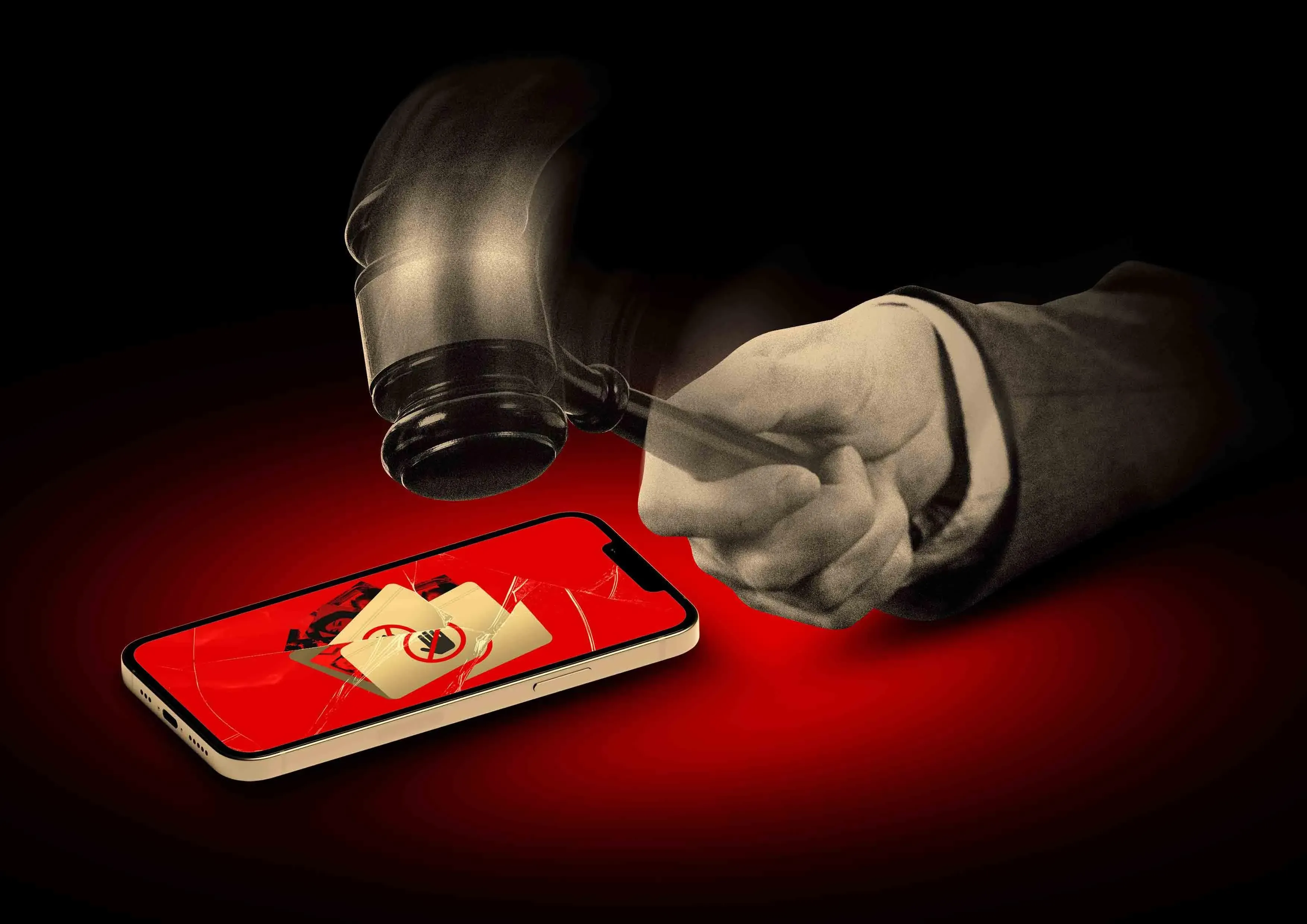
In the end, the 17-year-old changed his not-guilty plea and decided to plead guilty to all three charges.
“If the defendant did not plead guilty and the case goes through trial, the litigation process will get into the technical details. The prosecutor has to prove that my client created the deepfake content and produced the medium and methods used to generate these visuals.
“The defendant has to summon technical experts to prove that the person implicated is merely in possession of such materials instead of being the person who produced them.”
The Kulai Magistrate’s Court placed the teen under a two-year good behaviour bond, and his guarantor had to sign a RM1,000 deposit and not repeat any of these offences. The court also ordered the teen to be monitored by the Kulai Welfare Department.
Preventive education for children
Ee Chew Ling, a counsellor who works with teenagers, said based on her experience and observation, the reason teenagers create pornographic images using AI isn’t because they are psychologically deviant.
This behaviour stems from curiosity, peer influence and the lure of instant gratification. They are trying out these technologies because it looks fun, said Ee.
“They are just trying things out, and after a month or two, if it starts to lose its appeal, they stop.”
It’s when there are external rewards that this behaviour becomes problematic, said Ee. These can take the form of peer acknowledgement or financial returns.
For example, in the Foon Yew case, the perpetrator found that other individuals would pay them money to generate more deepfake visuals.
“For a young person in need of pocket money, even the smallest amount would be enough to motivate them to do it.”
The counsellor said the perpetrator was also a minor and his statement to the court showed his remorse. Recognising his willingness to take responsibility, the court sentenced him to two years' community service.
Ee referred to the work of American psychologist Lawrence Kohlberg on the stages of moral development to explain that an individual’s concept of morality develops as they age.
A child’s behaviour is often subject to a punishment-reward system – they act to avoid punishment or to receive rewards. As they grow into teenagers, their moral values rely on external guidance, particularly from the values being perpetuated by their family, schools or society, Ee added.
“Their behaviour will be governed by societal rules where you are allowed to or not allowed to do something. Some might defy authorities in response to such rules.”
In the end, as much as society wants minors to be accountable for their behaviour, it is still adults who are responsible for charting the path a young person takes.
“Schools and parents must start preventive education to guide our children through the exploration of the unknown.”
Need Help?
If you or someone you know is experiencing online sexual exploitation, grooming, or abuse, please seek help and report it to the relevant authorities or support organisations.
Talian Kasih 15999: A 24/7 emergency helpline established by the Women, Family and Community Development Ministry and operated by the Social Welfare Department
Internet Watch Foundation (IWF) – Report online child sexual abuse material: https://report.iwf.org.uk/my
NCMEC CyberTipline – https://report.cybertip.org/
MCMC Complaint Portal: https://aduan.mcmc.gov.my/
In emergencies, please contact 999 immediately.