Story
 April 7, 2026
Congo: Exclusive Investigation into Illegal Timber Exports (Video, French)
Country:

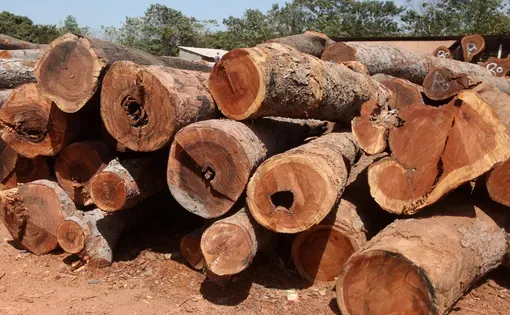
This video report was originally broadcast in French on TV5MONDE. The key points of this report are presented in English below, followed by the original television report. For a full English version of the text, please click on the “Translate page with Google” button on the upper right-hand side.
Key Points
- In the Republic of the Congo, the forestry code drastically restricts the export of logs; yet these tree trunks, intended for processing, continue to leave the country in large numbers—almost exclusively bound for China.
- The logs are used to make furniture, beams, planks, and plywood.
- Anonymous sources point to corruption that encourages Congolese officials to ignore the trafficking of logs. It also contributes to the weakening of the Congo Basin forest.
- For a year, TV5MONDE investigated the illegal export of timber in the Republic of the Congo. Below is an interview with Laure de Matos, who led the investigation. (The report in the video begins at 7:08.)

As a nonprofit journalism organization, we depend on your support to fund more than 170 reporting projects every year on critical global and local issues. Donate any amount today to become a Pulitzer Center Champion and receive exclusive benefits!
Congo: enquête exclusive sur l'exportation illégale de bois
Le reportage commence à 7:08.
Durant un an, les équipes de TV5MONDE ont enquêté sur l'exportation illégale de bois en République du Congo. Entretien avec Laure de Matos, qui a mené cette enquête avec notre correspondant sur place.
En République du Congo, le code forestier impose des restrictions sévères à l'exportation de grumes ; pourtant, ces troncs d'arbres, destinés à la transformation, continuent de quitter le pays en grand nombre, presque exclusivement à destination de la Chine.