


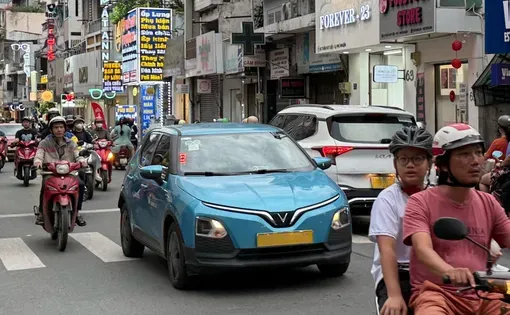
As demand for EVs rises, so does the need for tires made with natural rubber.

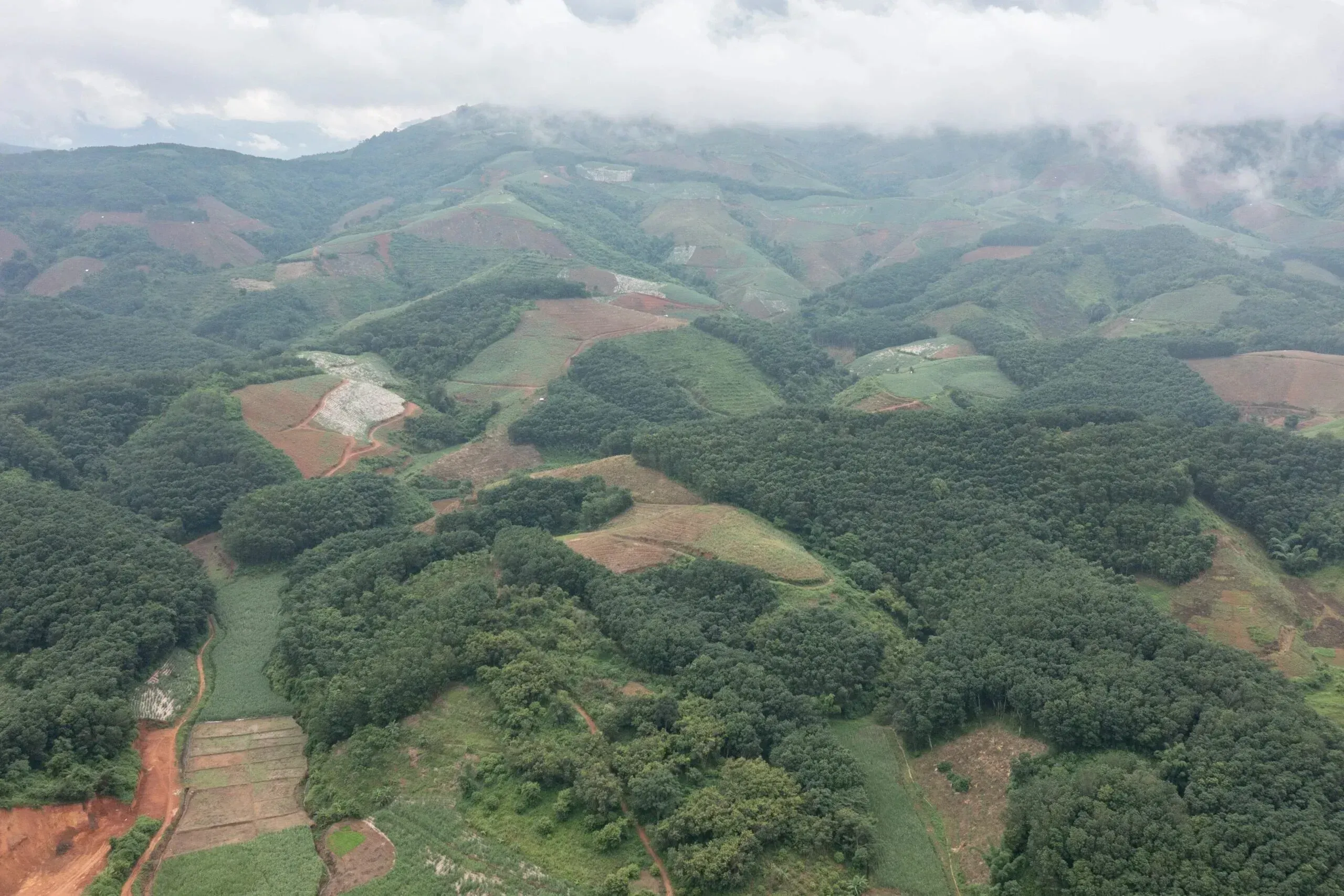
Rubber plantations are eating up the remaining forests of Laos and across the Mekong region, while farmers are gradually losing their economic reliance on the rubber industry
When Chinese rubber companies arrived in Leung district of Luang Namtha province in northern Laos, about two decades ago, the quiet rice-farming village of indigenous Akha people was quickly transformed in ways few had imagined.
The old thatched huts gave way to wooden houses. Families who once grew opium for cash and bartered for rice and salt suddenly could afford TVs, rice cookers, and motorbikes.
“Before rubber, there wasn’t a single motorbike here. Now almost every household has one,” said Mou, a village leader and one of the first to grow rubber.

As a nonprofit journalism organization, we depend on your support to fund more than 170 reporting projects every year on critical global and local issues. Donate any amount today to become a Pulitzer Center Champion and receive exclusive benefits!
Yet along with the new homes and incomes came steep costs – forest loss and dwindling biodiversity.
Local communities, which once relied on subsistence farming and forest products, now find their land rights uncertain and their livelihoods tied to volatile prices of rubber.
“It used to be a forest. Now it’s all rubber,” said Mou, pointing to a ridge of rubber trees, while sitting inside his wooden stilt house built from rubber earnings.
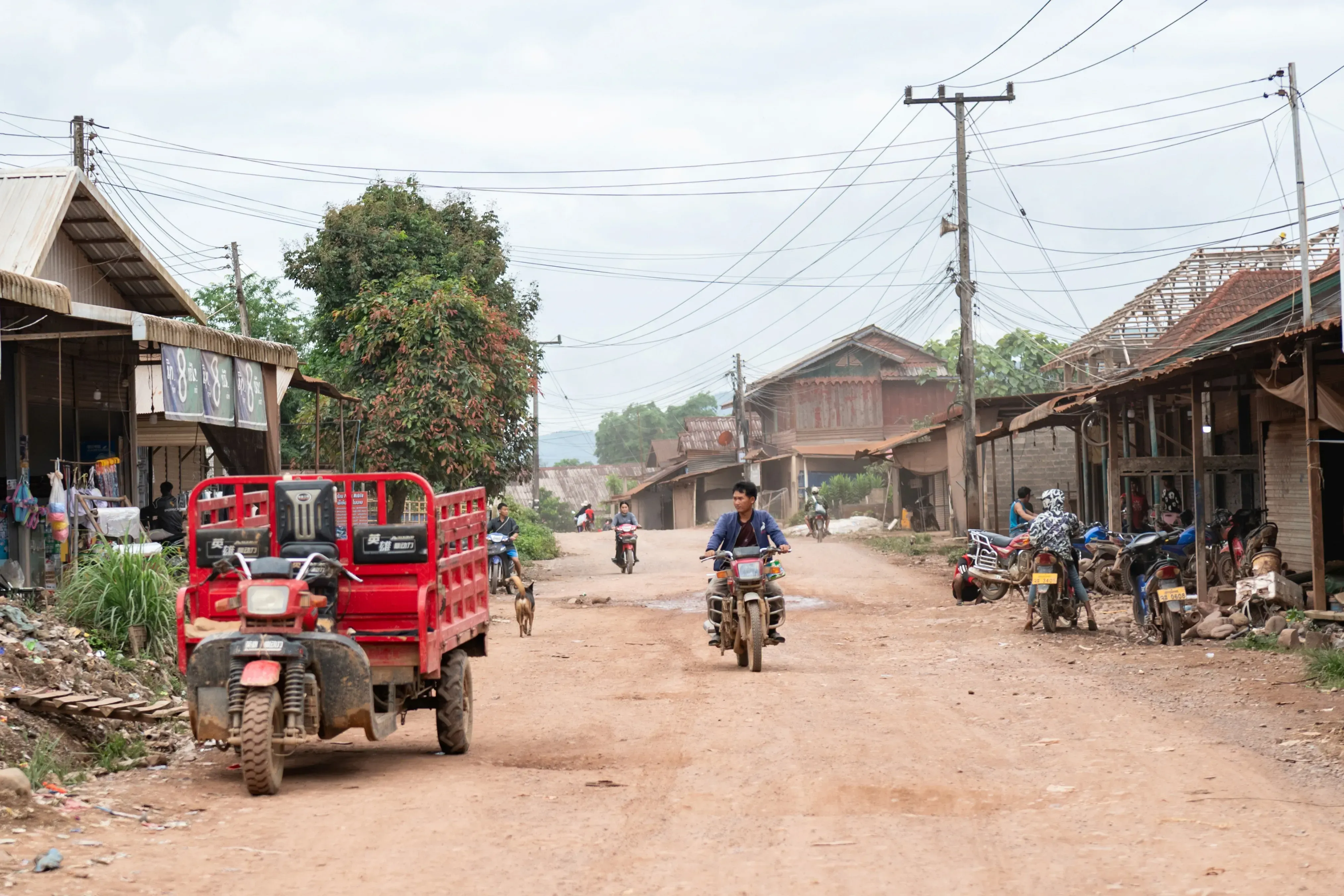
As rubber prices rose in recent years, many villagers have either expanded their plots or pondered doing it. Even those who cut down their trees during the price crash in the mid-2010s were eager to replant.
The expansion crept into protected forests, where villagers say boundaries were often unclear. “A few trees were cut each day, and before long, the old forest was gone,” Mou said.
A regional rubber surge
Unlike Cambodia and Viet Nam, where rubber plantations dated back to the colonial era, Laos was a latecomer to the industry. Its boom started in the early 2000s, when China’s rising economy was hungry for rubber and Viet Nam was pushing into the global rubber supply chain.
As these countries’ domestic supplies were unable to meet the surging demand, Laos, with ample land and close political ties, became a prime destination.
Throughout the 2000s, Laos issued investment promotion policies and land laws that classified rubber as a “priority crop,” offering long-term concessions, tax holidays and export duty exemptions.
These incentives spurred a wave of Chinese and Vietnamese investment across the country.
Two decades later, Laos has roughly 300,000 hectares of rubber plantations, according to a 2022 Kyoto University study. Nearly half are large-scale concessions run by foreign firms, about 30% are managed by smallholders and the rest fall under contract farming.
Laos’ story is not unique. Across the Mekong region, rubber plantations have been expanding rapidly under state-backed incentives.
Rubber is one of the world’s most versatile commodities, used in a wide range of applications from medical gloves and shoes to industrial hoses and seals. About 70% of it, however, goes into tire manufacturing.
That makes the crop’s future increasingly intertwined with the global shift toward electric vehicles, which require more frequent replacements than conventional cars and therefore, more tires.
This shift could bring new economic opportunities for the Mekong countries of Cambodia, Laos, Myanmar, Thailand and Viet Nam – which together produce half of the world’s natural rubber.
The region’s forests, which have been cleared for rubber production in the past two decades, could face further degradation if traceability systems fail to improve.
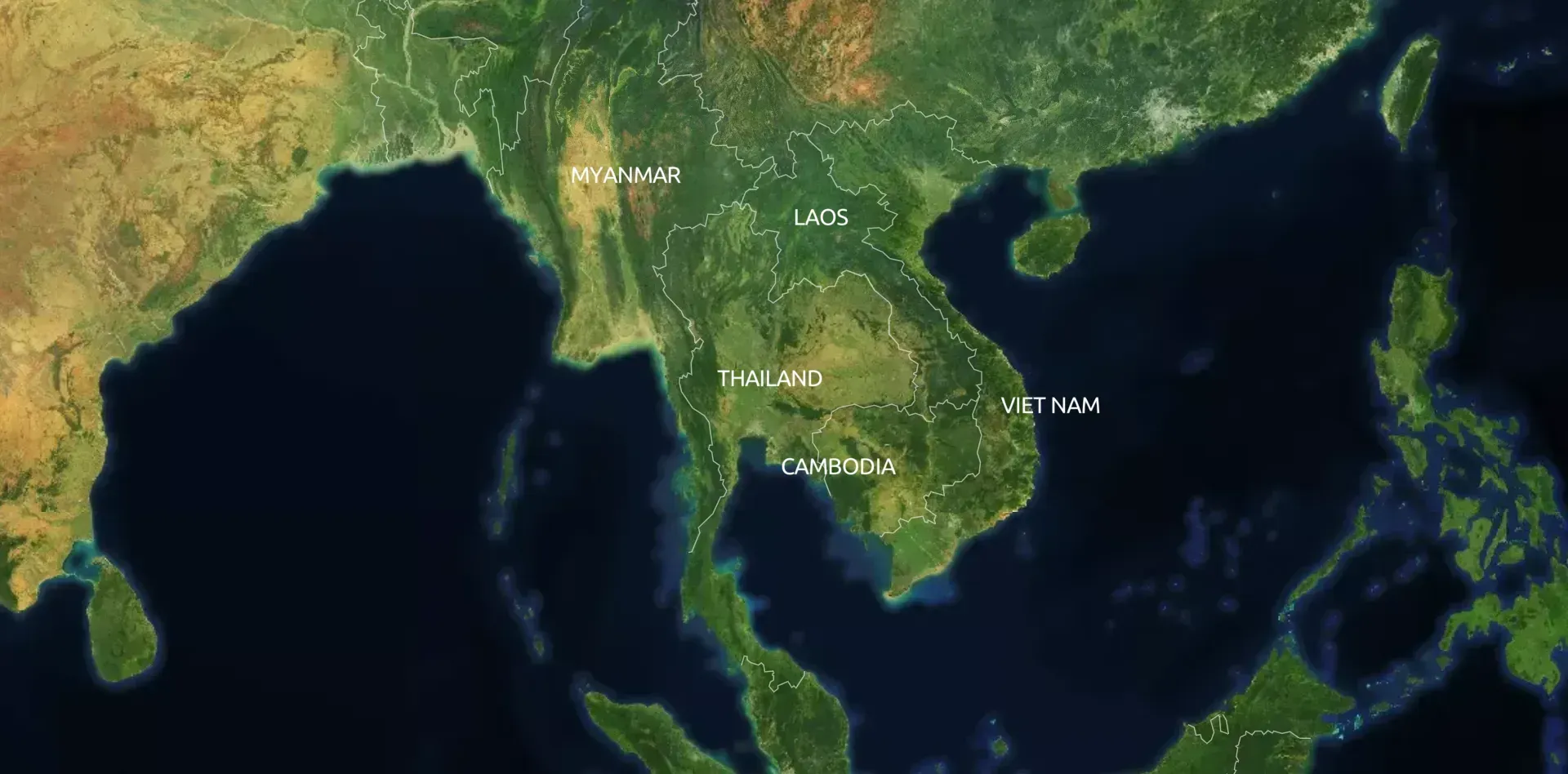
Historically, the rapid expansion of rubber plantations has been closely linked to deforestation across the region, with an estimated 1.35 million hectares of forest lost to rubber between 2001 and 2016, according to a Nature study. However, researchers note that the exact figures remain contested and have called for more comprehensive studies to assess the true extent of rubber-driven forest loss.
Despite rubber prices plunging to their lowest point in 2016 since the boom two decades earlier, rubber plantations have continued to expand across the Mekong region, although at a slower pace since its peak years – data from Land Cover Portal, developed by SERVIR-SEA, show.
In Thailand, the world’s largest producer of natural rubber, oil palm has been replacing rubber in its traditional base in the south. Under government subsidies, rubber plantations have been pushing rapidly into ecologically sensitive areas of the country’s north and northeast.
Despite ongoing political instability and fragmented administration, rubber plantations in Myanmar tripled in size between 2014 and 2023. Cultivation has expanded, especially in northern Shan State, which borders China.
In Viet Nam, the rubber industry has deep roots dating back to the colonial era, with plantations doubling over the past Decade, particularly in the southern provinces where the climate is favorable. Today, the country is increasingly importing from neighboring Laos and Cambodia to grow its processing industry.
Plantations in Cambodia have quadrupled, spreading across several provinces near the Vietnamese border, where companies such as Vietnam Rubber Group and Hoang Anh Gia Lai hold large concession areas.
In Laos, rubber cultivation has tripled, with Chinese investors dominating the north and Vietnamese companies leading in the south. The new Laos-China Railway and China’s 2024 tariff removal on Lao imports have strengthened rubber flows northward.
Such growth in rubber plantation areas reflects a shift from other crops to rubber, which offers farmers more stable, long-term income and has driven further land clearing. But this expansion comes at the cost of forest loss, including community forests that support livelihoods and pristine forests that sustain wildlife and ecosystems.
China’s tight grip on northern Laos
While rubber has lifted many out of poverty in northern Laos, contract farming schemes, though generating income for many farmers, have left many locals vulnerable and dependent on the industry.
Financed by China’s Opium Substitution Fund to replace poppy cultivation in the region, Yunnan-based rubber companies arrived after Beijing rolled out its “Go Out” strategy in the early 2000s, urging Chinese firms to invest overseas with subsidies, tax breaks and fast-track approvals.
On Laos’ side, local officials provided support and affordable credit for households to buy seedlings and equipment, hailing rubber as a path out of poverty and away from shifting cultivation.
Within only a few years, Luang Namtha became the epicenter of Laos’ rubber boom. Nearby provinces quickly followed suit.
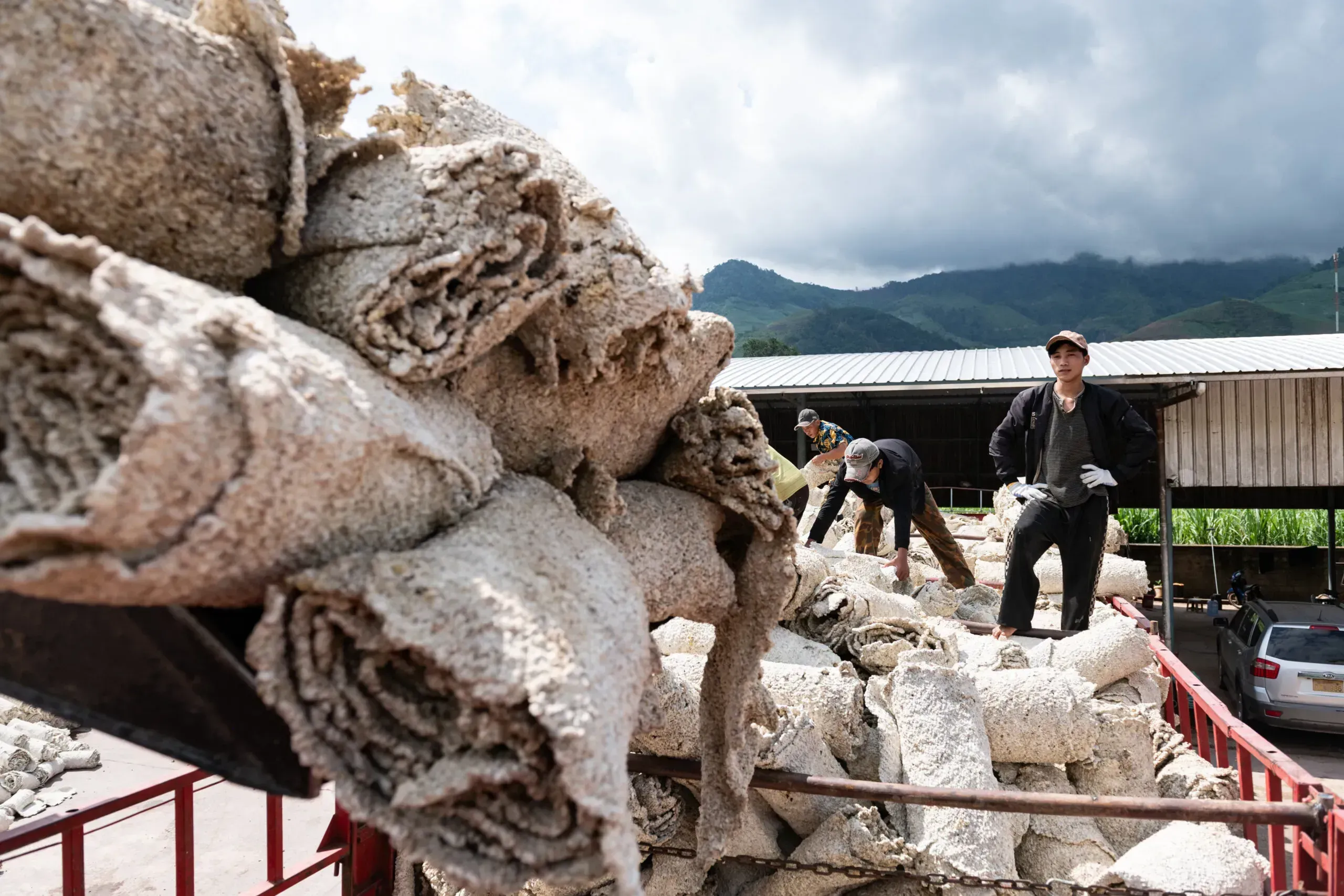
Yunnan State Farms Group, one of the most prominent Chinese province-level state-owned enterprises, arrived in northern Laos in 2002 and has remained active since then. It supplies rubber to domestic and international tire manufacturers such as Giti, Hankook, Maxxis and Kunlun, according to a Chinese state media report.
Benefit sharing between companies and farmers varies. Official policy narratives often claim mutual gains, but on-the-ground realities do not always reflect those claims, according to Michael B. Dwyer, an assistant professor of geography at Indiana University and the author of Upland Geopolitics.
In a study conducted in 2018, Dwyer identified two plantation models that had taken root under arrangements between rubber companies and local authorities in northern Laos. Interviews conducted by Mekong Eye with local farmers indicate that these models continue to shape the industry today.
Under the “2+3” scheme, smallholder farmers provided land and labor, while companies supplied seedlings, technical support, and market access.
Farmers captured around 50–70% of production revenues, depending on agreements between companies and local authorities. Participation in the 2+3 scheme remained limited, Dwyer noted, as many farmers preferred to remain independent smallholders.
Another “1+4” model, which functioned like a concession, required farmers to contribute land while companies controlled inputs and labor.
Under this arrangement, land was taken through government land zoning, in which farmers were offered a 30% land share while companies operated the remaining land using their own labor—an arrangement Dwyer described as a ‘quasi-concession’.
By the late 2000s, the 1+4 model had become the predominant agreement in northern Laos. Local authorities referred to these arrangements as “contract farming,” promoting them as schemes that favored smallholders despite evidence to the contrary
One study found that military units entered the industry, signing contracts with Chinese firms to monetize army-controlled border land.
Mekong Eye’s interview with residents found villagers often signed opaque contracts without fully understanding the terms.
Lao farmers have also lost control of their land due to debt accumulated before latex harvests.
Rubber trees require seven to eight years to become productive, a lengthy period during which farmers can fall into debt while waiting for returns. This is when companies could intervene and acquire the farmers’ land tenure rights.
Many farmers are also ineligible to sign a direct contract with the company. In Luang Namtha, plots of less than two hectares are typically too small for formal agreements. Households therefore organize themselves into groups of 10 to 12, pooling their cup-lump rubber at a collection point where company trucks arrive several times a week.
Once a contract is signed, villagers told Mekong Eye, they are bound to the company’s price, even if outside traders offer more.
Yunnan State Farms Group did not respond to Mekong Eye’s inquiries about its policy on ethical and responsible rubber production.
Muddy rubber trail
By late afternoon, a short stretch of roadside in Luang Namtha’s Leung district transforms into a modest market. Farmers arrive one by one on motorbikes, with sacks of cup-lump rubber strapped to their backs, and wait for buyers to appear.
Middlemen inspect and weigh each sack with practiced care, offering cash on the spot.
In Luang Namtha, small rubber plots of less than two hectares are often carved from former forest land. At this market, however, no one asks where the rubber came from or who grew it.
“What they care about is quality and weight,” said a young farmer who spoke anonymously, his eyes fixed on a sack as it was hoisted onto the scale. “They’re afraid we’ll slip stones inside to make it heavier.”
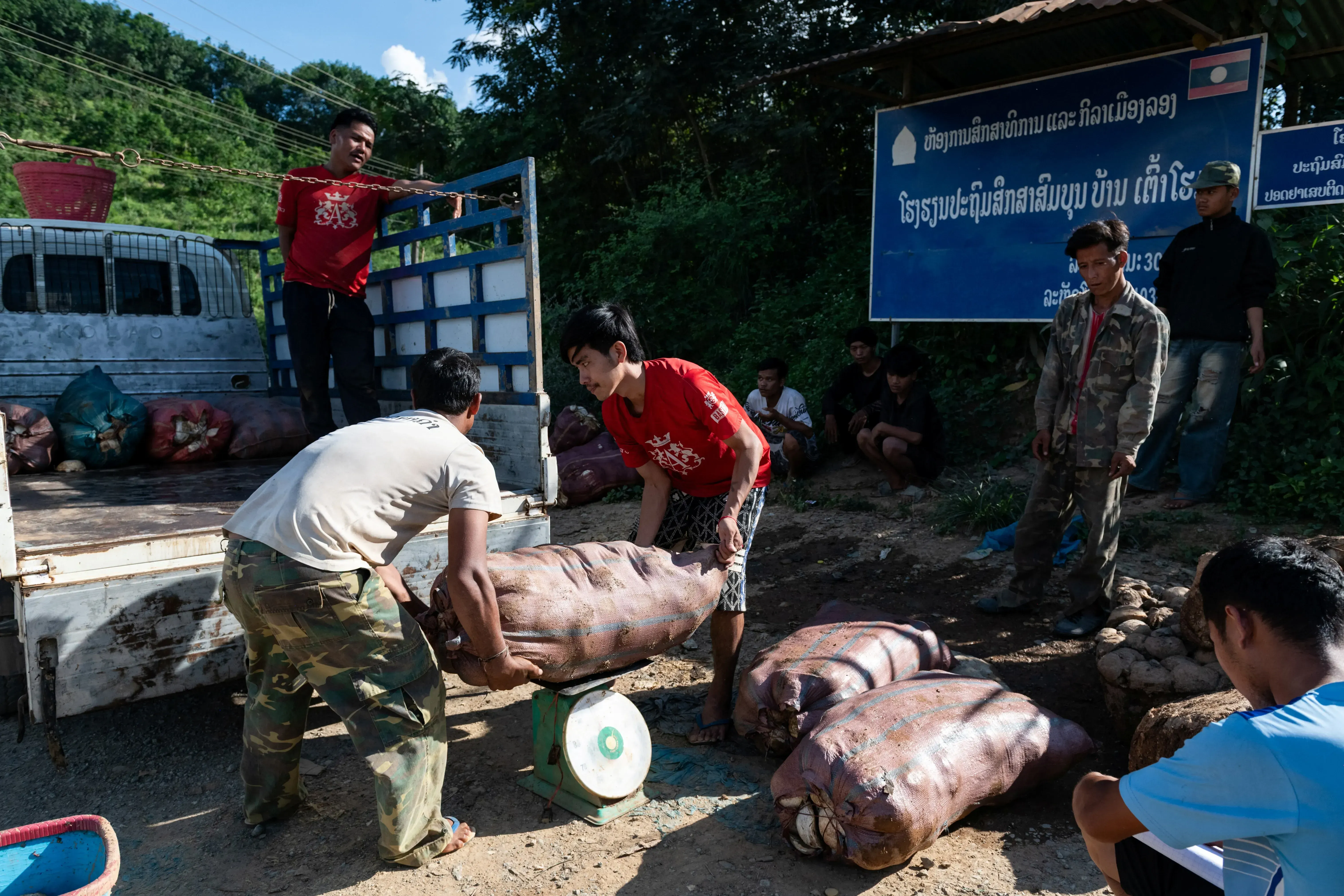
Once the sacks are loaded onto small trucks, the group disperses, and the buyers move on to other spots where another cluster of farmers is already waiting.
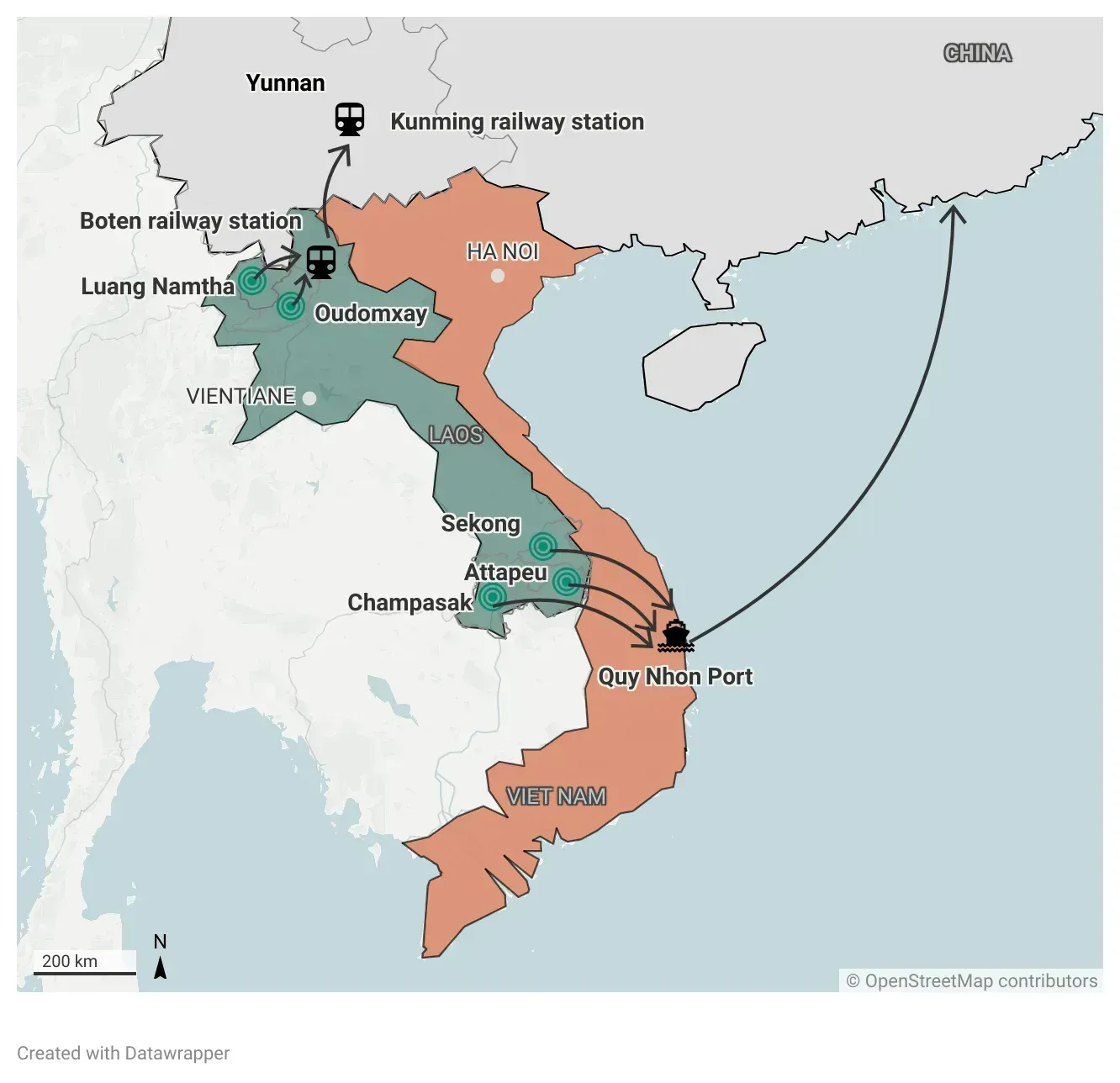
Mekong Eye could not independently verify the specific path of rubber coming out of this market. Still, according to some local farmers and middlemen, the rubber often ends up at Chinese-owned purchasing agencies or processing factories.
After processing, the rubber is transported to Boten station near the China border, where it boards the China-Laos Railway to Yunnan. From there, it travels to downstream factories before reaching tire manufacturers across China.
By the time it reaches tire factories, the trail of rubber has become muddy.
“Local authorities told villagers not to clear the forest for rubber. But when buyers keep purchasing without asking or monitoring where the latex comes from, many people feel there’s no reason to stop,” admitted a district officer in Luang Namtha, who requested anonymity.
Laos struggles with traceability like the rest of the Mekong region, according to U.S. NGO Forest Trends.
In 2023, data compiled from the UN Comtrade showed that 46% of Laos’ rubber exports went to Viet Nam and 40% to China.
Lao rubber, however, isn’t always recognized as such. As traceability is murky, it is sometimes even relabeled as Vietnamese.
Yet rubber from Laos powers car tires worldwide. Supply-chain tracking platform Sayari reveals that, via Singapore subsidiary R1 International, China Hainan Rubber Industry Group — which supplies tire factories across China and beyond — is a major buyer of rubber sourced from Vietnamese companies that procure their supplies from Laos.
Guizhou Tyre Viet Nam, a new producer of electric truck tires, buys from Liên Anh, a major partner of many Vietnamese companies, including the state-owned Viet Nam Rubber Group, which sources from Laos and Cambodia. Guizhou Tyre’s products primarily go to China, Russia, the U.S. and Brazil.
Guizhou Tyre China also sources from another Vietnamese partner, Đức Hiền Quảng Trị, which buys from a network of middlemen and smallholder farmers scattered across central Laos and Cambodia.
Mekong Eye contacted the companies named above via the email addresses listed on their websites, but did not receive a response by press time.
According to the Global Canopy Forest 500 Report 2025, which assesses the 500 most influential companies linked to forest-risk commodities, including rubber, major producers from China and Viet Nam are far from meeting “deforestation-free” standards.
Among those present in Laos, Yunnan Natural Rubber Industry Group and Hoang Anh Gia Lai both scored 0%, while China Hainan Rubber Industry Group 12% and Viet Nam Rubber Group 15%.
These low scores reflect weak performance across multiple indicators, including commitments to deforestation-free sourcing, labor and land rights transparency, and safeguards to prevent forest loss in their supply chains.
Lost land, desperation in southern Laos
In the south, indigenous people are losing their farmland and forest to land concessions. Vietnamese firms are the dominant players in the industry.
In Thateng district in Sekong province, a village lost 5,000 hectares of farmland and forest to a concession granted in 2006 to Lao Viet Friendship (LVF), a joint venture between Lao and Vietnamese state-owned companies.
This was the home of the Indigenous Katu people, who had been forced to relocate once under a government resettlement policy to end slash-and-burn farming.
The company moved in and banned villagers from grazing livestock on land they used to own, recalled Seangdao, a villager who wished to speak under a pseudonym. Those who resisted were arrested and forced to pledge an end to protesting.
Without their farmland, villagers had little choice but to become plantation laborers, earning as little as 60,000 to 100,000 kip (US$0.3 to $4) a day – barely enough for rice.
“Rubber is a good thing if we still have land to grow rice,” Seangdao, whose children had to drop out of school, said.
Relocation has been challenging. One proposed resettlement site was found to be located within a protected area, where local authorities block farming activities. In the past few years, villagers have consistently sent petitions to the central government asking to be granted proper land, only to be met with in vain.
Some villagers struggling to feed their families admitted to becoming so despondent that they resorted to stealing rubber. LVF, in response, mobilized local police and military units to prevent latex thefts.
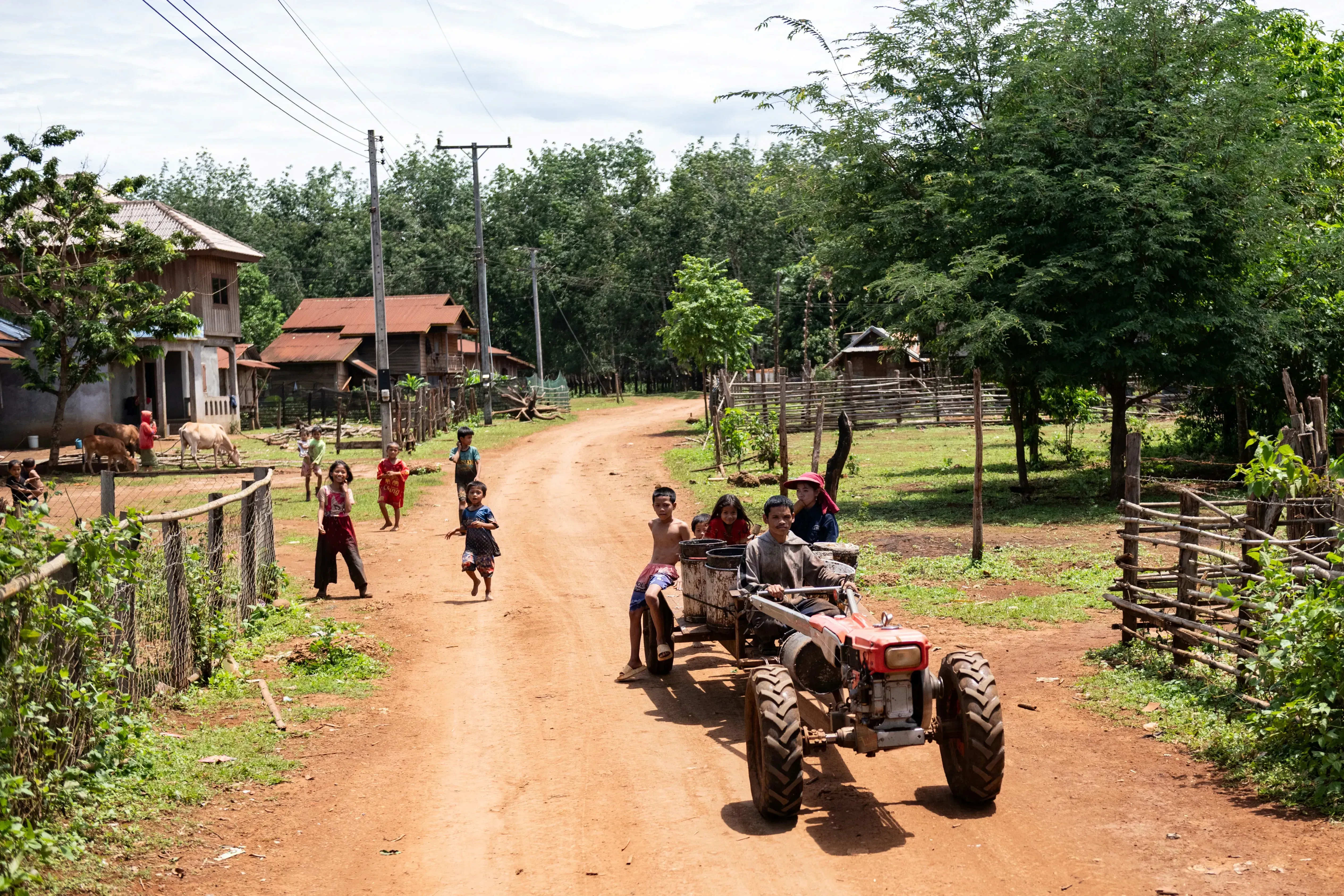
Despite the controversy, the Lao government has continued to approve new rubber concession projects, most recently for Viet Nam Rubber Group (VRG)’s plan to expand by 30,000 hectares. Prime Minister Sonexay Siphandone has proposed that the project prioritize cooperative models to maximize benefits for smallholder farmers.
VRG has also expanded into northern Oudomxay province, an area traditionally influenced by Chinese investors.
VRG and LVF did not respond to Mekong Eye’s inquiries about their policy to ensure traceability and community engagement.
Centering smallholder farmers
According to Ian G. Baird, a political ecologist at the University of Wisconsin-Madison who has studied the rubber industry in southern Laos, involving farmers is crucial to improving traceability and fair profit distribution.
“One solution is to group smallholders into cooperatives,” he said. With state and industry support, cooperatives could help farmers become more competitive, secure certification, pool resources and strengthen accountability.
Given the impacts of large-scale plantation concessions on local communities and the environment, the Lao government has become increasingly skeptical about rubber and eucalyptus investments, Baird’s 2019 study found. In 2015, it issued a moratorium to halt such plantations.
“The province has learned many lessons,” the study cited a local government official in Champasak, where VRG operates.
Amidst criticism, some Chinese and Vietnamese firms have started adopting sustainability frameworks, although implementation is limited.
In 2017, China released Guidelines for Sustainable Development of Natural Rubber, and in 2019, introduced it to Chinese companies in Laos, according to a study published by Mekong Region Land Governance.
In 2019, Viet Nam introduced voluntary guidelines to mitigate socio-environmental risks abroad. VRG later published a Handbook for Community Engagement to guide subsidiaries in Laos and Cambodia.
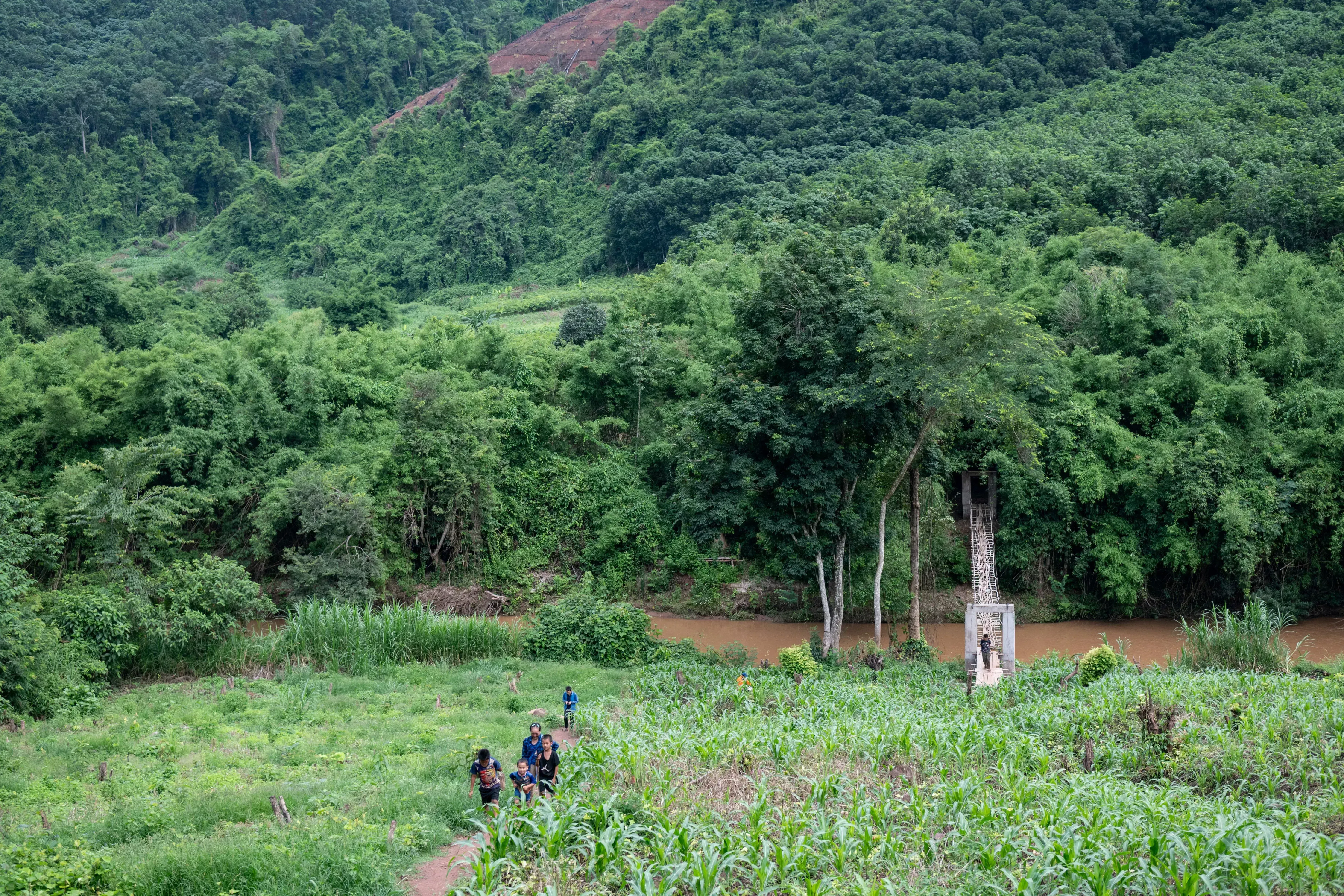
Yet forests and land lost to the rubber industry in the past are unlikely to be returned to local communities, despite civil society groups’ calls for a remedy.
According to Juliet Lu, a political ecologist at the University of British Columbia who studies the rubber industry in Laos and Cambodia, efforts to address the historical impacts of rubber had already “hit a wall” many years ago.
“The governments were unwilling to protect local community land rights and Vietnamese companies could point to the government as supporting the company’s claims to land,” she said.
“A lack of government-side reversal of these land-granting contracts reduced the maneuvering room for communities and organizations advocating on their behalf.”
Correction: The model used to identify rubber plantations in Laos has been updated to more accurately reflect the findings in Upland Geopolitics. The previous version misinterpreted some of the information, which has now been corrected.