Story
 November 11, 2026
Caring for the Caregivers: Lebanon’s Healthcare Workers Are Facing a Mental Health Crisis
Country:


After years of war and overlapping crises, Lebanon’s healthcare workers are grappling with trauma and burnout. Many are leaving the country, raising urgent questions about who will care for those left behind — and who will care for the caregivers.
It was 5 o’clock in the morning when a nurse in Beirut woke to the sound of an explosion. Israeli airstrikes were hitting the city during the latest round of fighting earlier this spring.
The nurse — a student of Dr. Mina Doumed, a professor at the American University of Beirut — and her husband rushed to their children’s bedroom and threw themselves over the children to protect them.
Their home ended up being hit by three missiles. The family survived and fled to the home of the nurse’s mother, who lived nearby.

As a nonprofit journalism organization, we depend on your support to fund more than 170 reporting projects every year on critical global and local issues. Donate any amount today to become a Pulitzer Center Champion and receive exclusive benefits!
Despite the traumatic experience, the nurse returned to work the next day.
“She had the choice,” recalled Doumed. “She said it was a way of proving that she’s still alive and she’s still needed.”
The nurse was one of Doumed’s graduate students and works in the bone marrow transplant unit. She said the woman was still in shock when she returned to the hospital for work. But her story is not unique. It reflects a troubling reality for healthcare workers across Lebanon.
After years of economic collapse, the COVID-19 pandemic, the devastating Beirut port explosion of 2020 and repeated wars, Lebanon’s doctors and nurses are struggling with the psychological toll of caring for others, all while facing the same dangers themselves.


With limited mental health support and growing financial pressures, experienced healthcare professionals have been leaving the country, which has placed an even heavier burden on those who remain. The consequences extend beyond the well-being of individual workers, threatening an entire healthcare system that is already stretched to its limits.
The invisible wounds of war
Dr. Firas Abiad, Lebanon’s former health minister and a surgeon, has witnessed the cumulative impact of these crises on healthcare professionals.
During the pandemic and subsequent conflicts, he lost colleagues, including doctors, nurses and first responders.
“You feel that really you’re walking very close to the edge,” Abiad said.
“Sometimes you think it could have been me. And sometimes you think why [wasn’t it] me? There is the guilt because you’re the one who survived. And there’s also the feeling that next time, you’re the one who’s going to get hit.”
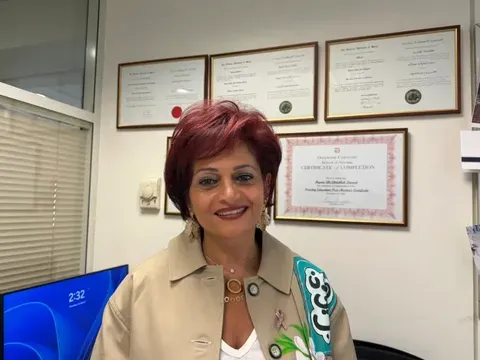
Abiad said the dangers have been particularly acute for first responders, who have continued carrying out rescue missions even after colleagues were killed in attacks. He described ambulance crews returning to work the day after their colleagues were struck, knowing they could face the same fate.
For many healthcare workers, there has been little time to process those experiences before another emergency demands their attention.
And while physical injuries are often visible, the psychological effects of repeated trauma can be harder to recognize and treat.
A study conducted at a Beirut hospital offers a glimpse into the extent of the problem.
Dr. Danielle Abou Khater, an emergency physician in Lebanon, helped research post-traumatic stress symptoms among 370 healthcare professionals, including doctors, nurses and other medical workers.
The findings were concerning.
“Nearly 1 in 5 participants had scores indicating an elevated risk of post-traumatic stress symptoms,” Abou Khater said.
The researchers also found higher symptom scores among women, nurses and lower-income healthcare workers.
Abou Khater cautioned that the study was conducted at a single hospital and could not be generalized to all healthcare workers in Lebanon. The results also identified elevated symptoms rather than clinical PTSD diagnoses.
Still, the findings underscored how deeply the country’s overlapping crises have affected those responsible for caring for others.
“Healthcare workers are not separate from the society they serve,” Abou Khater said. “They may be worried about their families, grieving someone they have lost or struggling with displacement or financial insecurity.”
When healthcare workers need help themselves
Despite the growing need, mental health support remains difficult to access for many healthcare workers in Lebanon.
Doumed, who previously headed Lebanon’s Order of Nurses, said hospital administrators often acknowledge the importance of psychological support but struggle to translate that commitment into meaningful services.
“When you talk to leaders, they say it’s a priority,” she said. “But when you come to practice, you don’t see it as a priority.”
The country’s prolonged economic crisis has left many hospitals struggling financially. Providing dedicated mental health professionals and counseling programs can be costly.
Meanwhile, stigma presents another obstacle. Some people feel that if they discuss trauma or their mental health, they’ll be viewed differently in society.
Doumed said that even healthcare workers, who understand the importance of mental health treatment, can be reluctant to seek professional help.
During the COVID-19 pandemic and after the Beirut port explosion, she helped arrange free counseling sessions for nurses through partnerships with mental health professionals.
Some nurses used the services, but participation was limited. The challenges have persisted as Lebanon has faced further violence and instability.
A healthcare system losing its most experienced workers
The consequences of Lebanon’s overlapping crises have extended beyond psychological distress.
Doumed said economic hardship, insecurity and deteriorating working conditions have pushed experienced nurses to seek opportunities abroad.
“So, who left? The highly educated and the most experienced,” she said. “And we were left with the junior and less-experienced nurses.”
Their departures have created additional challenges for hospitals already operating under difficult conditions. Less experienced nurses have had to take on greater responsibilities, while those who remain have been expected to train new staff, support themselves and maintain patient care standards.
That has created a cycle of mounting pressure.
As more experienced workers leave, the workload increases for those who stay. And the added stress can make it even harder to retain staff.
According to a July 2025 World Health Organization report, professional associations estimate that roughly 20% of Lebanon’s nursing workforce and 40% of its physicians have left the country, either permanently or partially.
For Doumed, the problem raises questions not only about the well-being of nurses but also about the quality and sustainability of healthcare in Lebanon.
Small efforts to address an overwhelming need
Some initiatives have sought to provide psychological support to healthcare professionals.
Abiad, the former health minister, said Lebanon’s Ministry of Public Health has worked with organizations such as Embrace, a mental health nonprofit, to expand access to services. But the scale of the need has far outpaced available resources.
“These almost cumulative and incessant crises have meant that all the resources that are available are minuscule if you compare it to the actual needs,” Abiad explained.
Doumed has been working on a smaller initiative of her own.
With funding from a private donor, she has been developing a relaxation room for pediatric oncology nurses.
The space is intended to give nurses somewhere to step away from the demands of their work, listen to music, rest or simply cry if they need to.
Doumed said the idea came directly from nurses who described what would help them cope with their daily stress.
While such initiatives can offer some relief, Doumed believes meaningful change requires a much broader shift in how Lebanon’s healthcare system treats its workers.
For years, Lebanese nurses have been praised for their resilience, their ability to continue working despite extraordinary challenges.
But Doumed has grown frustrated with that expectation.
“Why [do] we expect only nurses to be resilient?” she asked. “Why can’t we create a health system that would facilitate the work of the nurses?”
She wants the focus to shift away from celebrating individual sacrifice and toward creating hospitals where nurses feel safe, receive fair compensation and have access to mental health support.
“Let’s talk about the resilience of the healthcare system and not the nurses anymore,” she said.
Because the people who spend their lives caring for others need care, too.