

As the Kremlin unleashes a new wave of censorship in Russia, dozens of publishing houses and...
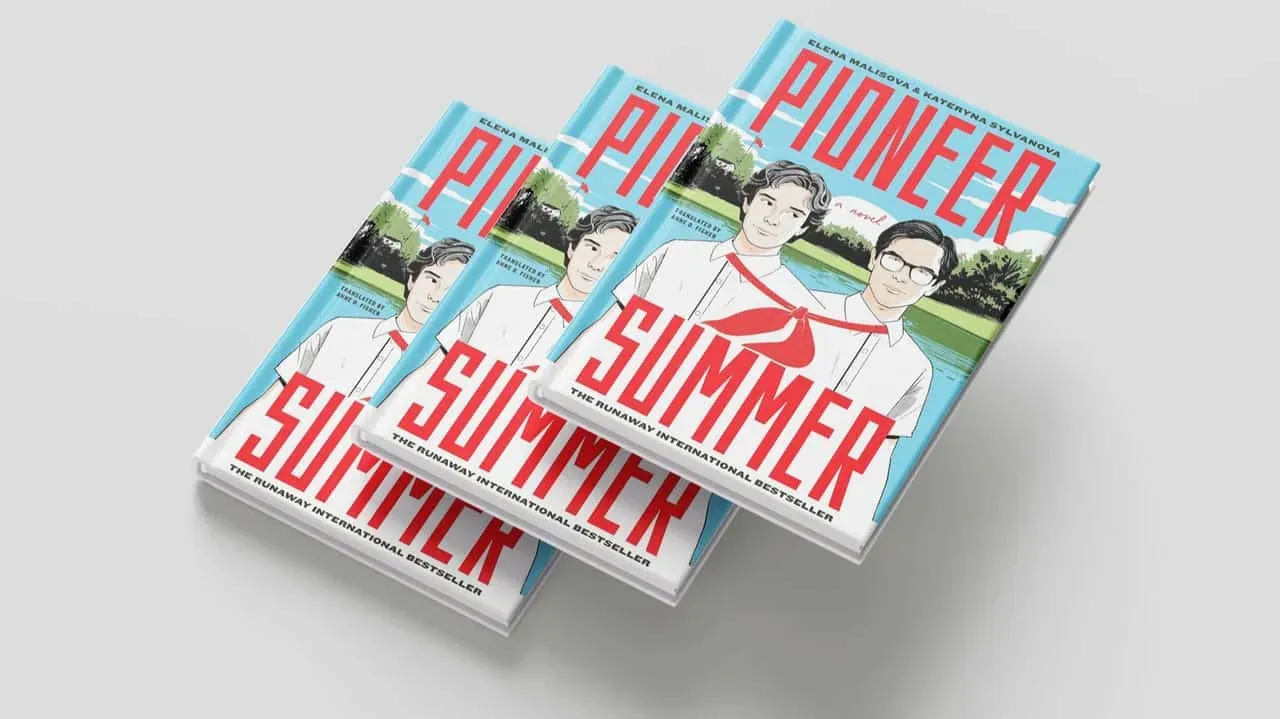
Pioneer Summer sparked a wave of censorship in Russia. Now it’s part of a growing literary resistance.
In the winter of 2021, Kateryna Sylvanova and Elena Malisova were touring bookstores in St. Petersburg, Russia, signing copies of their best-selling young-adult novel, Pioneer Summer. In its first six months, the novel had sold over 200,000 copies, plus tens of thousands of e-books, breaking Russian book-publishing records and inspiring a cult following on social media.
While Pioneer Summer was becoming a bestseller in Russia, Vladimir Putin was ordering a full-scale invasion of Ukraine, and suddenly the novel seemed to suggest the Kremlin’s startling lack of cultural control. Its authors were a Ukrainian and Russian writing duo, at a time when the Kremlin sought to portray Ukraine as an enemy; the book spans the chaotic final days of the Soviet Union, while the Kremlin sought to revive Soviet legacies of patriotic sacrifice. Most audaciously, the romance between the novel’s male protagonists, Yuri and Volodya, became a cultural phenomenon — inspiring teens to cosplay their courtship on TikTok and tattoo quotes from the book onto their bodies — despite the fact that the Kremlin had spent the last decade trying to erase queerness from public life.
The government backlash to their book forced Sylvanova and Malisova to flee Russia, and what started as a ban on Pioneer Summer became an ever-widening politicisation of Russian literature that continues to roil publishers, bookstores and libraries across the country.

As a nonprofit journalism organization, we depend on your support to fund more than 170 reporting projects every year on critical global and local issues. Donate any amount today to become a Pulitzer Center Champion and receive exclusive benefits!
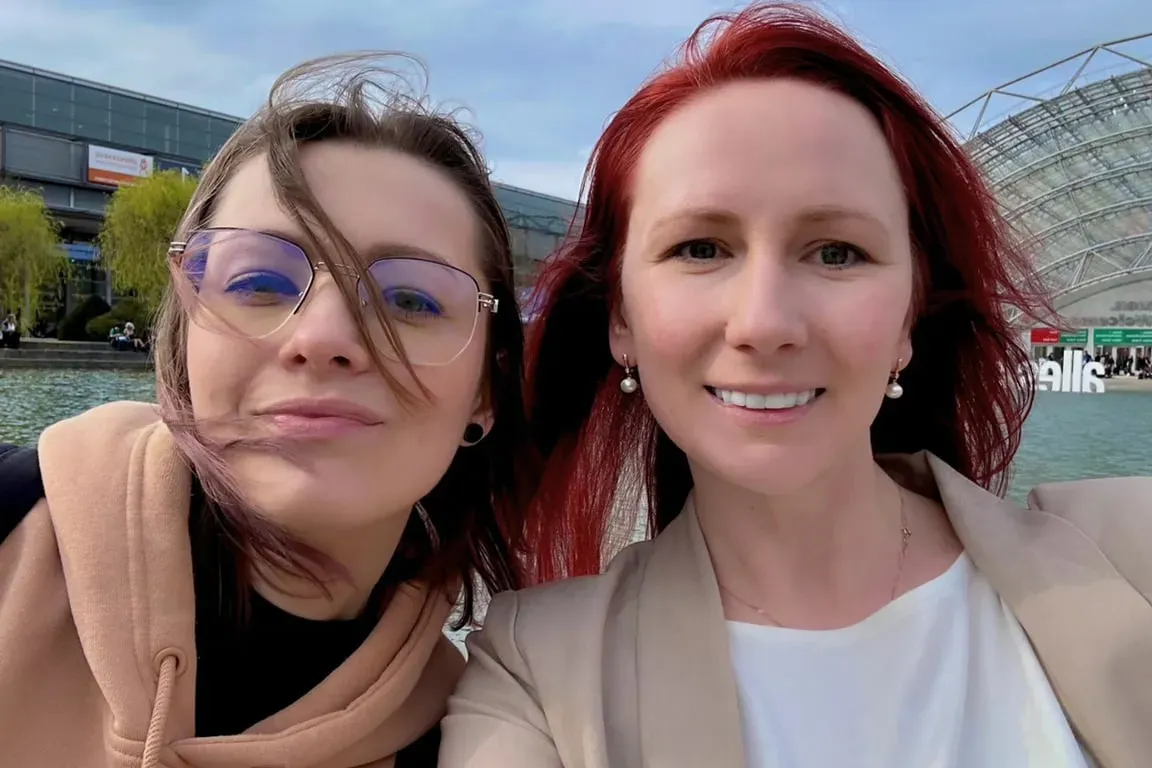
But abroad, Sylvanova and Malisova are still meeting fans, autographing books and writing new ones. Their novels have been translated into almost a dozen languages, and last montha new uncensored edition of Pioneer Summer was released in Russian for the first time since 2022.
Sylvanova and Malisova are part of a growing network of Russian-speaking writers and publishers working in exile to preserve independent Russian-language literature. In May they convened at the Berlin Bebelplatz bookfair, which welcomed around 4,000 visitors this year. With public dissent all but impossible in Russia, this may represent the largest gathering of anti-Kremlin Russians and their supporters anywhere in the world.
Success and controversy
When Elena Malisova and Kateryna Sylvanova decided to write a coming-of-age tale about a gay teen romance in Soviet Ukraine, their goal was only to divert themselves from the depressing atmosphere of Moscow in April: the snow had melted and the streets were grey and dirty.
At the time, Malisova worked a high-pressure IT job and felt unfulfilled. She asked her writing partner, Sylvanova, who was then the manager of a clothing store, to help her write something to lift their spirits. They imagined the setting of an abandoned summer camp in Kharkiv, Ukraine, not far from where Sylvanova grew up, and took turns writing.
“I would write something that delighted [Malisova], and she would write something that delighted me,” Sylvanova said.
When the resulting novel first appeared, in 2017, on the popular fan-fiction site “FicBook”, they never dreamed that it could make money. But steadily interest in their story grew, and it caught the attention of Popcorn Books, a Russian imprint that specialised in young-adult fiction.
“Readers were telling us that they wanted to hold the book in their hands,” Malisova said.
In late 2021, Popcorn Books released the first hard-copy versionand it became such a staggering success that the publisher had to order several additional print-runs to keep up with demand.
Novel-related memes and fanart flooded Pinterest and VK, Russia’s version of Facebook. On TikTok, girls posted videos of themselves crying as they devoured the text in a few days’ time. Others donned red scarves and wigs to perform dramatic reenactments of the wrenching romance between Yuri and Volodya. On TikTok alone, posts about Pioneer Summer have collectively garnered over 250 million views.
“I imagined that the audience of this book would be totally different,” said Alexey Dokuchaev, the founder and former owner of Popcorn Books. Though his publishing house would often print queer fiction, Dokuchaev thought the novel’s appeal would be driven by its depiction of the Soviet Young Pioneer movement, which was celebrating its centenary in 2022. He said he was sure that the novel would be read by middle-aged people “nostalgic for their pioneer youth”.
So when Pioneer Summer became beloved by legions of teen girls, Dokuchaev was taken aback.
“When you see the lines queuing up for this book, you think, This is so strange,” he said. The book “seems to have tapped into something.”
That a queer novel critical of the Soviet Union was enthralling Russia’s youth clearly disturbed the pro-Kremlin elite.
In May 2022, Zakhar Prilepin, a prominent pro-war writer, denounced the book on Telegram for besmirching “national Soviet symbols”. He threatened to “burn down [Popcorn’s] entire office”. After that, members of the Duma demanded that state censors investigate the novel’s homosexual themes. Then the notorious propagandist Dmitry Kiselyov spent several minutes of his weekly television show reading out quotes from Pioneer Summer and reactions from its fans, in a questionable effort to discredit the novel.
“The most popular book in today’s Russia is aggressive LGBT propaganda,” Kiselyov said.
Within weeks the Duma proposed a new law against so-called LGBT propaganda, which was explicitly designed to suppress books like Pioneer Summer.
Tightening the screws
Sylvanova and Malisova responded by archiving Kiselyov’s segment, Prilepin’s and the Duma leaders’ social media posts, and hundreds of other incidents of threatening behavior into a Google Drive, which they titled “Folder of Political Persecution”. They did this out of a belief that, some day, some of their evidence might matter.
When the “LGBT propaganda” law was passed, Russian authorities used it as a pretext to investigate and detain staff members of Popcorn Books, which had been acquired by the Russian publishing giant Eksmo. After that, Eksmo shuttered Popcorn Books. Nevertheless, this April, authorities raided Eksmo’s offices and detained the company’s CEO. State media reported that the investigation was related to Pioneer Summer.
This week, three members of Dokuchaev’s former staff mark their one-year anniversary under house arrest. “They are in truly terrible condition,” Dokuchaev said, as they face decade-long prison sentences. (The now-outlawed human rights group Memorial has recognised all three former staff members as political prisoners.)
But the crackdown on Pioneer Summer and Popcorn Books was only the beginning. In the past four years, Russian authorities have directly and indirectly pressured publishers, booksellers and libraries to pull hundreds of titles from circulation, including works by Fyodor Dostoevsky, Oscar Wilde and Stephen King, alleging often vague and unspecified connections to extremism.
In 2025 Podpisniye Izdaniya, the iconic St. Petersburg bookstore, was fined for selling three works by Western authors: two by the American writer Susan Sontag and one by the British author Olivia Laing. The books were not banned, but investigators fined the store anyway, for containing “traces of propaganda of nontraditional sexual relations”.
Last month Russian e-book platforms, worried about running afoul of a new law against “drug propaganda”, started putting warning labels on classics by Nikolai Gogol, Mikhail Bulgakov and Alexander Pushkin. This month customs officials in St. Petersburg seized a shipment of children's books imported from the United Kingdom for potential “extremist content”.
Russia’s Federal Customs Service later published footage of the seizure showing an officer removing titles from boxes and photographing them one by one: Baby’s Very First Big Play Book, The Dinosaurs Who Met Santa Claus, and the children’s anatomy book What's Inside Me?
Preserving independent literature
“Books are at the heart of everything,” said the exiled Russian publisher Georgy Urushadze, describing the importance of literature in Russian society. To him, it wasn’t just that the names and likenesses of Russian writers are a ubiquitous presence on city streets and in school curricula, it was also that a book is a way to “communicate with the world, communicate with the future, and effect change”, he said.
Urushadze had dedicated his entire life to books. He used to direct Russia’s most prestigious literary prize, and, after the full-scale invasion, he resigned in protest and founded Freedom Letters, which regularly releases anti-war books in Russian and Ukrainian. But he said there was nothing romantic about his perspective. He asserted that his work is part of a larger struggle to shape the country’s future.
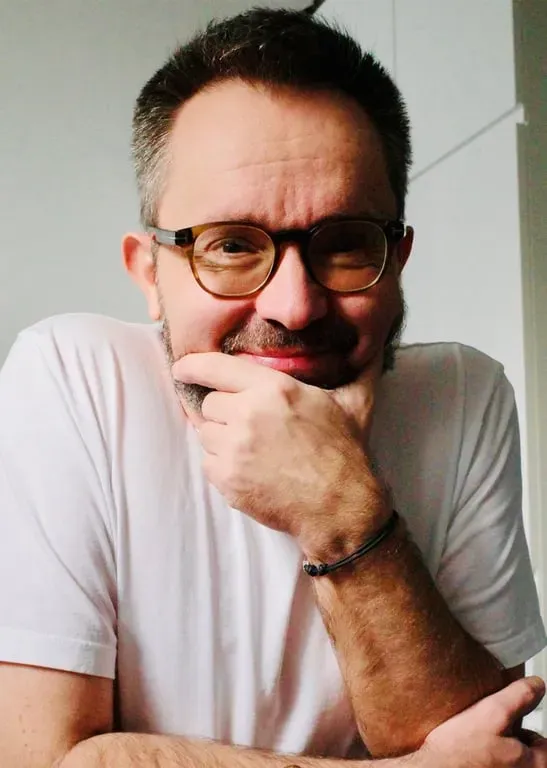
Urushadze remembered that First Person, Putin’s autobiography from 2000, had played a role in Putin’s first presidential election. “I was driving in Moscow and people were handing out this book on Smolenskaya Square,” he said, adding “a book is a fundamentally political thing”.
Dokuchaev would agree. In the spring of 2022, after authorities targeted him for his role in publishing Pioneer Summer, he fled Russia and helped found the StraightForward Foundation, a non-profit that produces non-fiction works that are “impossible to release in Russia”.
StraightForward is something like a literary agency. It helps edit book manuscripts and matches writers with publishers, promising to “use all possible means to reach readers” in Russia. It has helped produce Lost in Memory, about the Memorial human rights organisation, and Our Business is Death, a history of the inner workings of the Wagner mercenary group, among other books.
“Vladimir Putin wants so badly to be a part of history,” said Felix Sandalov, StraightForward’s CEO, “and we want to write those history books. We want history to be written by independent, objective and honest people.”
Along with other publishers working outside of Russia — Vidim Books, Sam Tam Books, FRESH Verlag, Vozduh magazine, Tamizdat Project, Meduza, Babel, and many more — StraightForward and Freedom Letters have released hundreds if not thousands of works of uncensored literature to Russian-speaking communities. In turn, these publishers are buoyed by a growing constellation of independent bookstores in New York, Berlin, Tel Aviv, London, Vienna, Istanbul, Almaty, Riga and elsewhere. The patrons of these stores include some of the roughly one million people who have left Russia since 2022.
This new literary resistance has even started convening, a few times a year, at bookfairs in Paris, Prague and Berlin.
An anti-Kremlin bookfair in Berlin
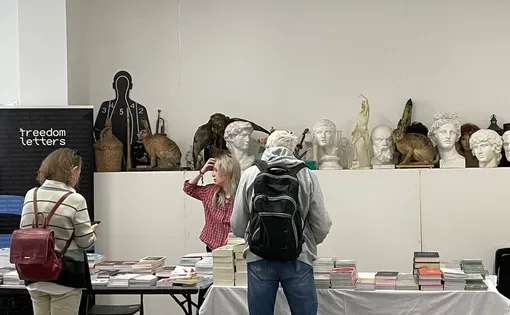
Over three days on the first weekend of May, about 4,000 Russian speakers packed the halls of the second-annual Berlin Bebelplatz bookfair — buying uncensored books, clamoring to hear lectures by artists and human rights workers who the Kremlin had deemed “foreign agents” and “extremists.” Next to a separate room dedicated to children’s literature, a vendor sold tote bags that read “Free Borscht in the Event of Putin’s Death”.
The fair is named after the square in Berlin where Nazis burned some 20,000 “un-German” texts in May 1933, and aims “to show that the Russian language today is not only the language of state propaganda”.
“It’s clear that what happens to books happens to people on an even larger scale,” said Olga Chesnakova, one of Berlin Bebelplatz’s organisers. This year, she had managed to put on the fair with virtually no financial support, while making the entrance completely free. “It’s kind of a miracle, isn’t it?” she said.
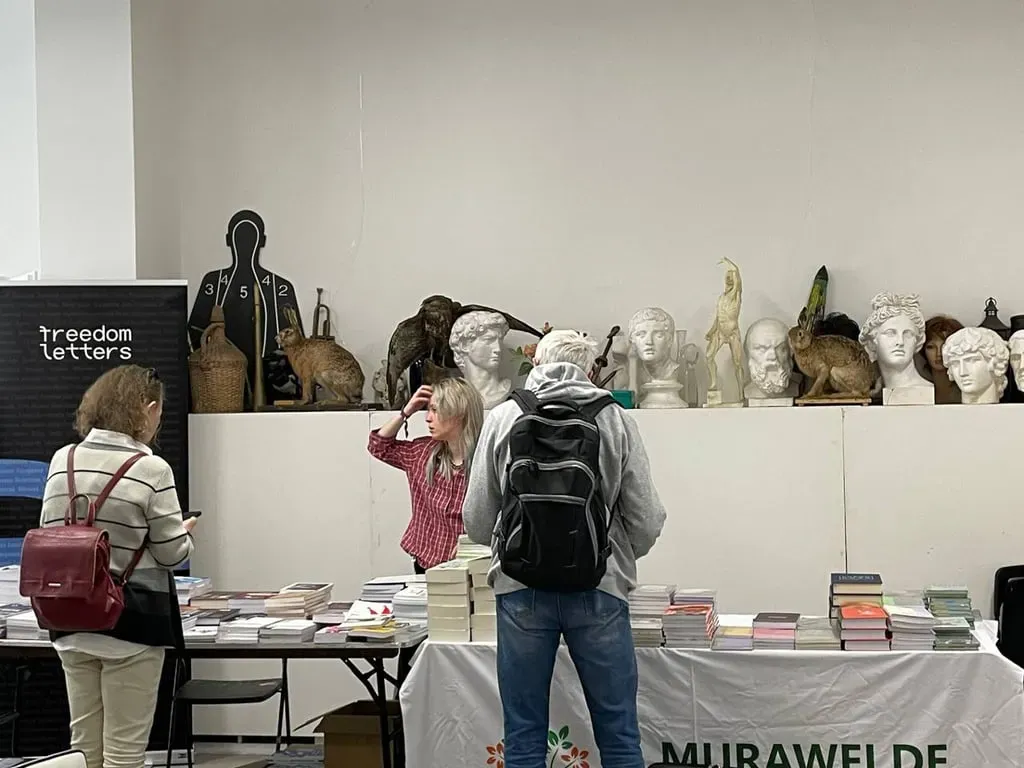
Chesnakova also works for Muravei, the online bookstore that reissued the uncensored Russian version of Pioneer Summer in April, and she had invited Sylvanova and Malisova to the fair to reintroduce their book.
Sitting at a plastic table as a long line of mostly young women held Pioneer Summer tightly to their chests, Sylvanova and Malisova spent more than an hour autographing books and at least one red sneaker. They said that such moments made them feel “the normalcy that we’ve been missing”, since the war and Russia’s recent crackdown on free expression began.
“Our readers in Russia feel lost, discarded, unwanted, hurt. Their freedoms are being violated and the world around them doesn’t care,” said Malisova.
That, plus the regular news of Russian authorities continuing to go after people with any connection to Pioneer Summer, makes both Malisova and Sylvanova feel an intense sense of responsibility.
Sylvanova explained how she dealt with it. To attend Berlin Bebelplatz, she had traveled hundreds of miles from Kharkiv. She moved back to the city in 2022, to live relatively freely under the constant bombardment of Russian rockets after it became impossible to live in Moscow. But Sylvanova said that one of the biggest changes in her life over the last few years had been in how she perceived herself.
Before the war she wrote for fun. “My desire to tell stories is the same,” she said, but now, “I have to write because I’m a writer, some big person, someone from whom people demand something.”