Story
 January 12, 2023
Bitcoin Mining Was Booming in Kazakhstan. Then It Was Gone.
Country:

Project
Crypto Mining’s Shallow Roots
This project looks at what is left behind when the crypto caravan moves on, examining the social and...
Miners flocked to the country to take advantage of cheap energy and loose regulation. Now most of them have moved on, leaving little behind but moldering equipment and social tension.
To reach Kazakhstan’s largest bitcoin mine, you need to travel deep into the country’s rust belt, to the city of Ekibastuz. In the far northeast of the country, equidistant between the capital city of Astana and the country’s border with Siberia, it’s a drab sprawl of down-at-heel shops and cramped Soviet-era apartment buildings, known locally as “chicken boxes.”
In late October, I waited in a hired car in a parking lot in the middle of town to join a short convoy to the mine, headed by a private security vehicle carrying armed guards. Orange lights flashing, it led the way on narrow roads that curved between tailings ponds and pits that threw up spirals of gray dust.

As a nonprofit journalism organization, we depend on your support to fund more than 170 reporting projects every year on critical global and local issues. Donate any amount today to become a Pulitzer Center Champion and receive exclusive benefits!
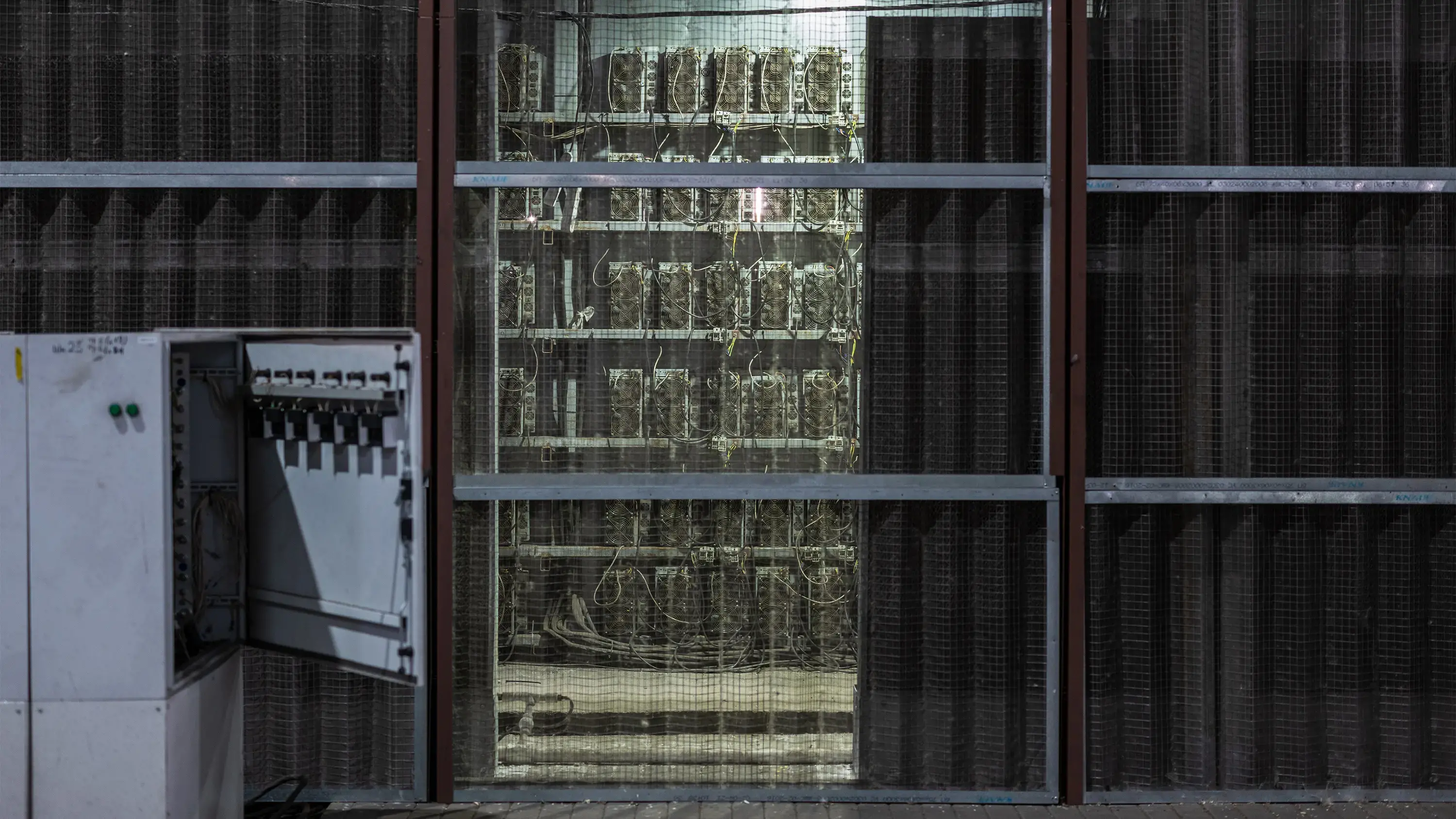
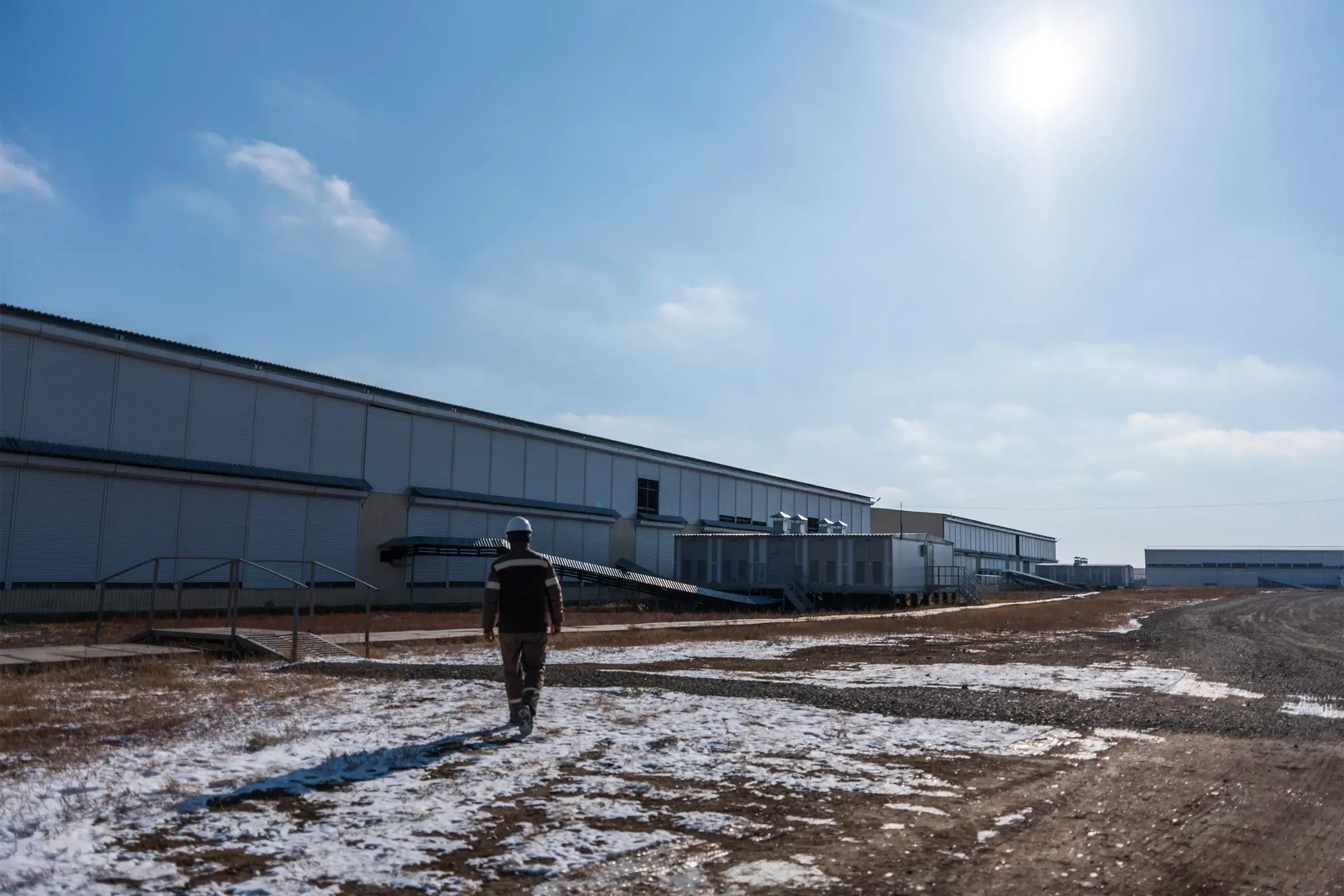
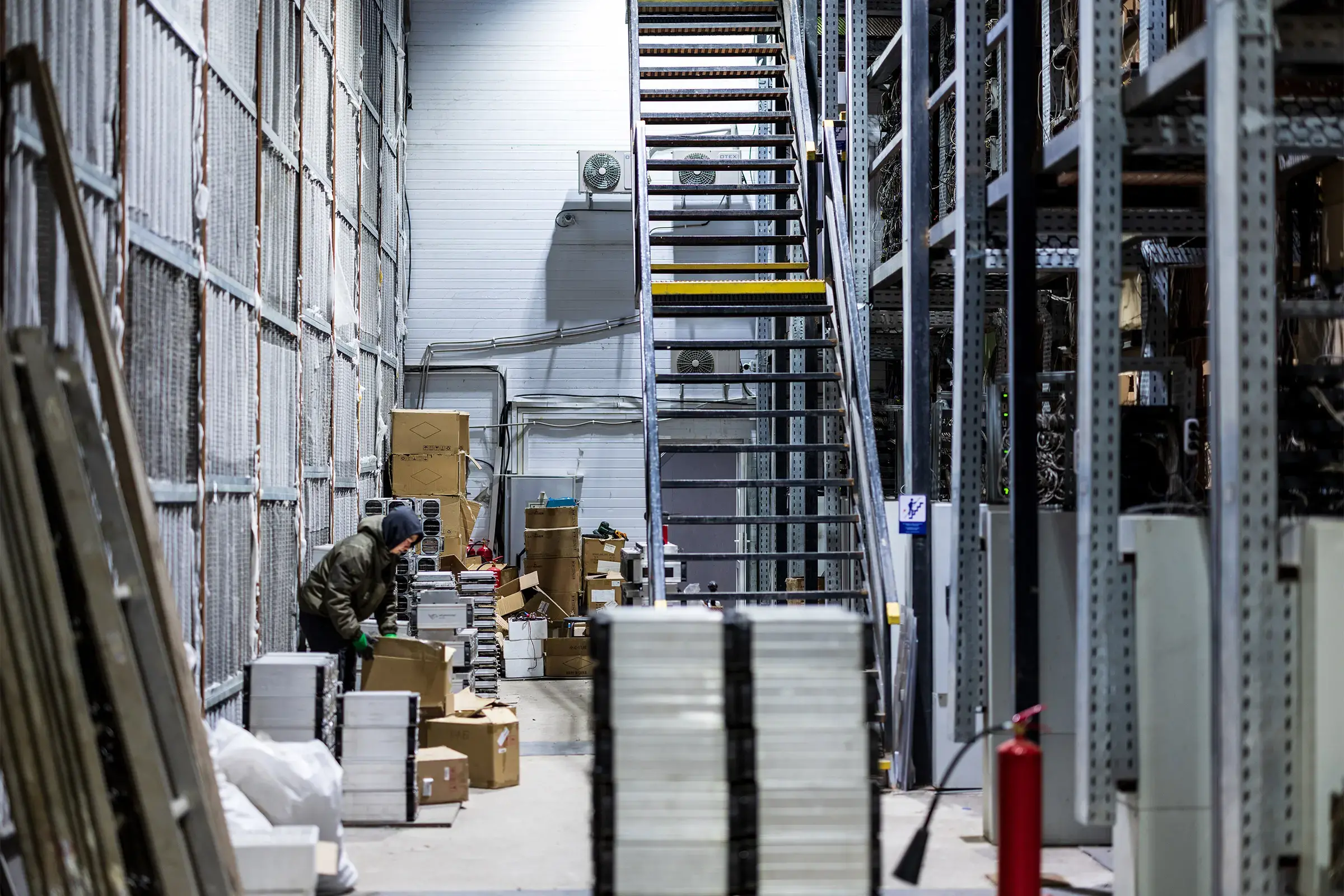
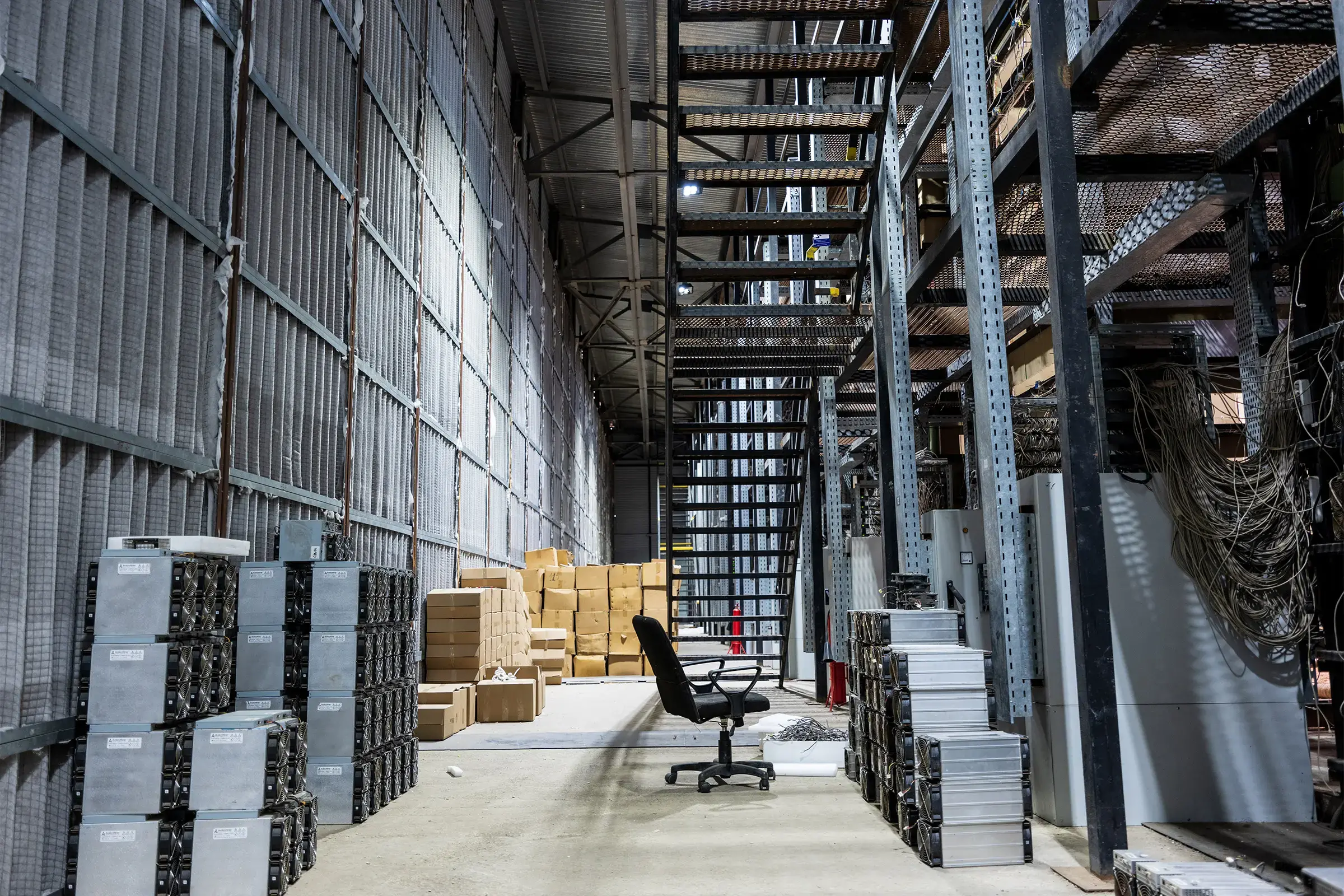
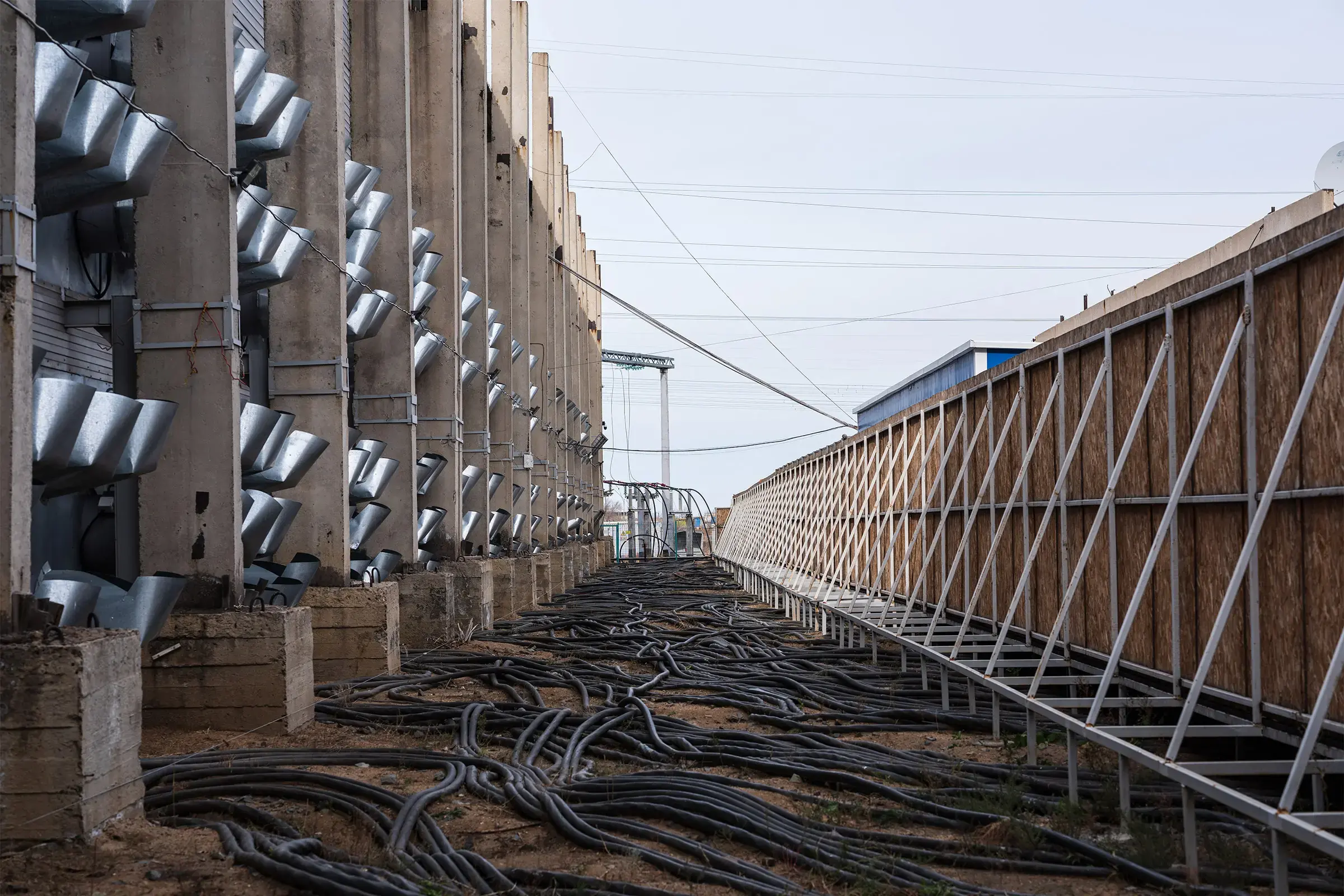
After 20 minutes, the cars pulled up to a gate manned by a security guard in black paramilitary gear, a Kalashnikov across his chest. Inside, more armed guards patrolled, and CCTV cameras on towers kept a constant watch. “Scavengers,” explained Yerbol Turgumbayev, who manages the mine for its owner, Enegix. He had to shout to be heard over the roar of the ventilation fans pushing sauna-hot air out of the facility’s eight 60-meter-long hangars, each filled with two-story-high racks of computers.
When fully operational, Enegix’s facility consumes 150 megawatts of power, five times the peak demand of Ekibastuz itself. It is just one of dozens of bitcoin mining operations that were drawn to Ekibastuz and the surrounding region in recent years. Abundant coal and the withering of industrial production after the collapse of the Soviet Union left the area—and Kazakhstan as a whole—with an electricity surplus. Eventually bitcoin miners cottoned onto that fact, and in 2017, they started to arrive. Not only was power cheap, but there was almost limitless land and a surfeit of unused industrial buildings that mines could inhabit.
By the summer of 2021, through a combination of entrepreneurship, graft, and circumstance, Kazakhstan had risen to be second in the world for the “hash rate”—a measure of how much computing power is devoted to bitcoin mining.
But the gold rush was doomed from the start. Kazakhstan’s miners—both “white” miners, who took advantage of tax breaks and cheap power, and illegal “gray” miners, who exploited Kazakhstan’s crony politics and lax governance to operate below the surface—overloaded the country’s energy grid. By the end of the year, the mining industry was consuming more than 7% of the entire generating capacity of Kazakhstan, a country of 19 million people. The surge tipped the grid over from surplus into deficit. Power shortages led to localized blackouts in parts of the country, exacerbating existing tensions over corruption, nepotism, and the rising cost of fuel. In January 2022, these issues boiled over into mass protests. Within weeks, the government effectively cut miners off from the national grid, bringing the boom to an abrupt end.
It was just the start of a turbulent year for cryptocurrency. The crypto world was gripped by scandal after scandal in 2022, from the collapse of the Terra stablecoin to the dramatic implosion of FTX, the third-largest crypto exchange, amid allegations of fraud and theft. But Kazakhstan’s experience also reflects a slower-moving crisis in the crypto supply chain, one that seems to arise wherever miners alight and that poses huge questions about the industry’s social, economic, and environmental sustainability.
When Kazakhstan cut off its bitcoin miners from the grid, dozens of mining operations shut. Almost all of the international miners moved on, some fleeing for the border in disarray. Enegix has held out, but it is running at a fraction of its capacity, working from midnight to 8 a.m. and on weekends, using electricity imported from across the border in Russia. The company hopes the environment will change, but with bitcoin prices now a fraction of their 2021 peak, the economics of the industry have changed profoundly. The bitcoin caravan has moved on—some of it to China, Russia and the US, other parts to new frontiers in Central Asia and Africa.
In its wake, it left behind dashed hopes and stranded assets: computers that can’t be used for any other purpose, server racks and electrical equipment rusting in place. Across northeastern Kazakhstan, MIT Technology Review saw mines being either dismantled or abandoned, and spoke to miners who saw no option but to get out of the business.
Critics of bitcoin mining say that what happened in Kazakhstan was inevitable. This is an industry that is often drawn to geopolitical gray areas and borderlands, where it exploits weak political systems, extracts value, and exacerbates social divisions. While its defenders say it’s a high-tech export business that could create the foundations of a new economy, the benefits, in terms of jobs and social contributions, seem at best ephemeral. The industry simply came and went, draining hundreds of millions of dollars in state subsidies, enabling corruption, squatting on the energy grid, and burning thousands of tons of coal per day. When it departed, it left little but tension and distrust.
“They will move around to where there is a willing host, until they’ve taken everything they’ve needed, and then they’ll move on,” says Pete Howson, an assistant professor at Northumbria University who has extensively studied the mining business. “This is a parasitic industry.”
The Kazakhstan government hopes its crypto story isn’t over yet. Even as miners were shutting down and moving out, officials were attempting an ambitious reinvention of the industry, rolling out a red carpet for crypto exchanges and investors in an attempt to turn the country into a global crypto finance hub. The government believes this is a way to kick-start its finance and tech sectors. But it could face a steep uphill battle as it tries to draw back an industry that is philosophically and practically opposed to being pinned down.
The innovation that set the bitcoin caravan in motion was the ASIC, or application-specific integrated circuit. These customizable chips can be optimized to make the trillions of guesses—or hashes—per second that are needed today to win some bitcoins.
This optimized ASIC’s arrival on the market around 2013 changed bitcoin mining from a cottage industry performed on home computers—albeit souped up with graphics processors—to an industrial process. In 2013, the global “hash rate”—the number of guesses being made on the network—was about 75 terahashes (or 75 trillion hashes) per second. By 2016, it had passed 1 million terahashes per second, according to data from the International Energy Agency. The more computers there were on the network, the greater the competition, driving miners to build bigger and bigger rigs. ASICs were relatively portable—you could ship them anywhere in the world, plug them in, and start mining.
“It’s a really simplistic market—you have two major components. One is the device. Second is the energy you need. That’s about it,” says Alex de Vries, a data scientist and founder of Digiconomist, a platform that tracks energy use in the crypto industry. “As soon as the bitcoin price got to a decent level and the industry started to professionalize, we have been seeing this trend of miners just [looking] for places with cheaper energy sources to run their operations.”
The US was the industry’s center of gravity at its inception, but China grew quickly, with huge mines springing up in the country’s further-flung regions, including Xinjiang, Inner Mongolia, and Sichuan, where there was abundant hydropower and little state oversight. Outposts emerged elsewhere too, in places including the Baltic states, parts of Norway and Sweden, and Iceland, which has a surplus of geothermal energy.
It wasn’t just cheap power that attracted miners. The industry has often thrived in places where states were weak or uninterested, where miners could find—or create—accommodating conditions, or where there was a pressing need for largely untraceable currency. Often, that meant the countries of the former Soviet Union (sometimes known as the Commonwealth of Independent States, or CIS), where the transition to the free market sent many industries to the wall, leaving behind unused infrastructure. Gas- and oil-rich Russia was inevitably popular, as was Ukraine, at least until the beginning of 2022.
Breakaway states and client regimes of Moscow have been disproportionately represented. Opportunistic entrepreneurs in Transnistria, a breakaway area of Moldova supported by Russia, have used essentially free gas power provided to it by the Russian energy company Gazprom to build a small mining industry, allegedly helping to finance the regime despite international sanctions. In Abkhazia, an area of Georgia illegally annexed by Russia in 2008, bitcoin miners pushed the crumbling energy grid to a breaking point until they were finally banned in 2021. The same year, a mining center sprang up in Serbian enclaves of northern Kosovo, in areas that didn’t pay for electricity because they don’t recognize the legitimacy of the government in Pristina. The Kosovar government eventually banned mining and seized machines, escalating inter-communal tensions.
Howson compares bitcoin mining to the disclosing tablets that dentists used to give to schoolchildren in the UK, which dye areas of tooth decay in bright colors. “I think that’s what bitcoin does,” he says. “It swishes around the world and it highlights areas where there are geopolitical tensions going on, and there is poverty and corruption.”
For miners used to more challenging frontiers, Kazakhstan was like hitting the jackpot. It had many of the elements they wanted—cheap, subsidized power and ample real estate in its moldering industrial districts. It was also a large, relatively secure, and stable state, its post-Soviet decline having been cushioned by natural-resource exports. The country had been ruled for nearly 30 years by Nursultan Nazarbayev, an old-school Central Asian securocrat, making its politics predictable. Nazarbayev officially stepped down in 2019, but he and his associates remained close to the center of power.
“It had excess [energy] capacity, [and] it was quite a cheap infrastructure setup, because [of] all of these old Soviet type of buildings in the middle of nowhere,” says Denis Rusinovich, a bitcoin mining veteran now with the Swiss crypto consultancy Maveric Group. “It’s the CIS—it’s typical that corruption exists. I think it exists across the region,” says Rusinovich, who arrived in Kazakhstan in September 2017 and would go on to cofound the National Association of Blockchain and Data Centers Industry in Kazakhstan, a trade association and lobbying group for the industry. But “it was also, let’s say, more stable,” he says, “because there was a president [who had] been there for 20 years.”
As Kazakhstan’s bitcoin mining industry gathered pace in 2018, some miners set up inside existing structures; others used portable, modular rigs inside shipping containers. Local entrepreneurs started to build dedicated infrastructure, including warehouses and heavy-duty electrical equipment. There’s no legal way to convert bitcoin into fiat currency in Kazakhstan, so rather than mining for themselves, companies like Enegix set up their facilities to host international clients, who could ship machines to the country to be plugged into the grid.
In Almaty, Kazakhstan’s largest city and commercial capital, Didar Bekbauov and Olzhas Kemal got into the business almost by accident. Bekbauov was a wholesale trader of Chinese imports. Kemal imported kitchen equipment for restaurants. In 2017, they spent a few thousand dollars to buy some ASICs and try mining for themselves. Unable to find a sustainable home for the machines, they hired electricians to set up a dedicated facility. A few friends asked if they could add their computers to the data center. “So we helped them. Then we started to think: ‘Why not?’ Kazakhstan has a lot of electricity—the price is cheap,” Bekbauov says. Some miners were paying $0.0023 per kilowatt-hour for their power—far below what they’d expect to pay in the US or China.
In 2018, they took their fledgling company, Xive, to Tbilisi for a mining conference. “A lot of miners from China, different regions, were asking about the price of electricity,” Bekbauov recalled. “And when I told them, they said: ‘It’s very cheap.’ So some of them decided to move.” From that point onwards, he says, “we were busy—like, three years busy [with] building facilities, just building, building, and piping electricity.”
Miners, including Rusinovich and Bekbauov, insist that the industry grew organically, that it was all achieved without government support. However, for those able to navigate the country’s various subsidy and tax regimes, the government was incredibly accommodating.
In 2017, Kazakhstan hosted the International Expo in Astana, turning a piece of land in a previously unloved suburb of the capital into an architect’s model of organic forms in glass and plastic, topped with a massive sphere that some locals, even government officials, wryly call “the Death Star.” After the three-month expo was over, the government turned the estate into a tech park and financial center, the kind of build-it-and-they-will-come nesting box for international capital that is favored by cash-rich, commodity-dependent economies looking to diversify.
The expo area now hosts the Astana International Financial Center, where imported British judges preside over a regulatory regime based on UK common law; Kazakhstan’s Ministry of Digital Development, Innovation, and Aerospace Industry, charged with building the tech industry and digitizing public services; and Astana Hub, a tech incubator that offers tax breaks and other incentives to companies registered there.
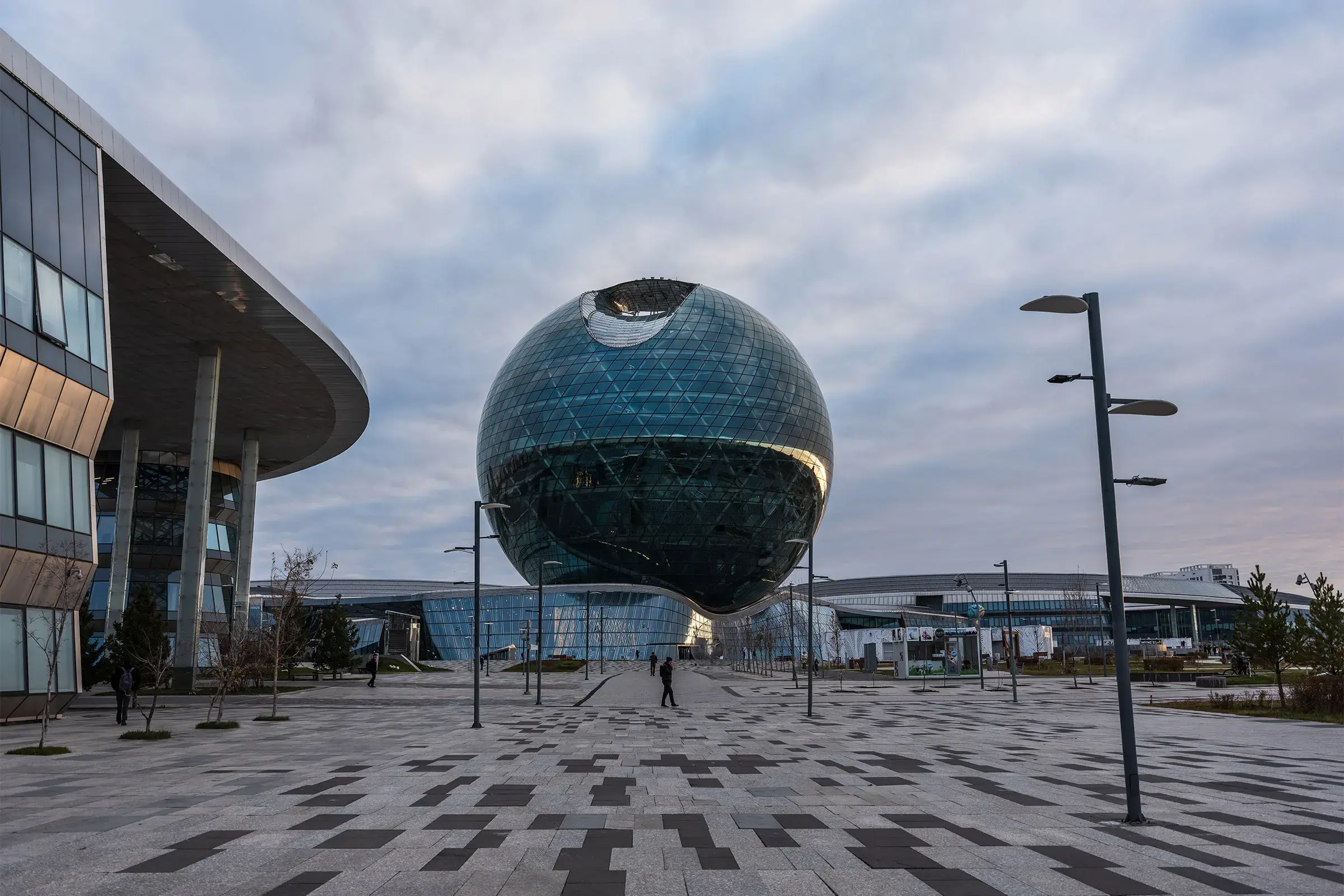
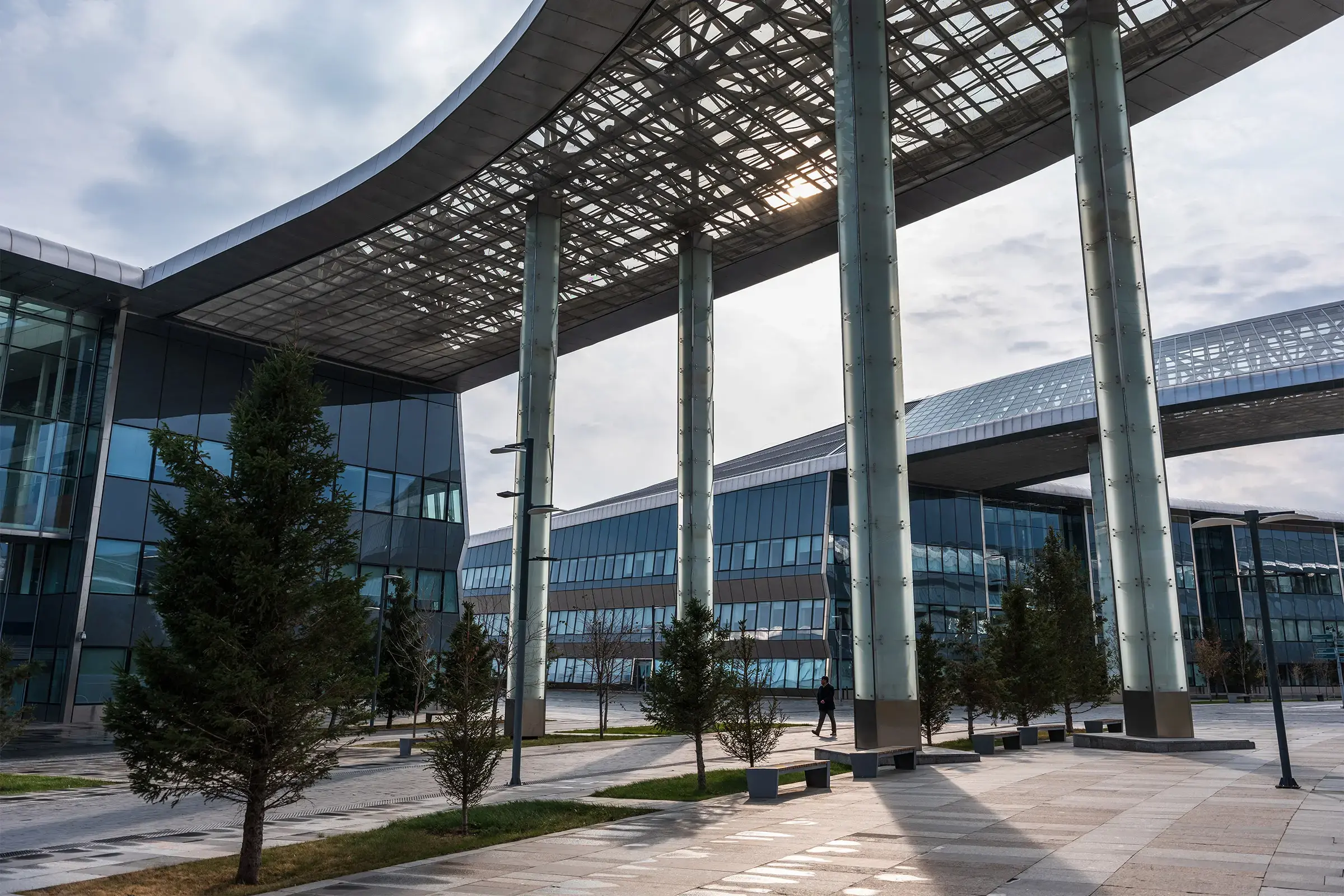
“Why can we provide zero taxes for all IT companies, for all tech companies? Because we have high tax income from the oil sector,” Magzhan Madiyev, Astana Hub’s CEO, told me in an interview in his glass-walled office in the expo complex. “The tech industry in the whole Kazakhstan economy is like 0.1% of GDP.” Outside, speakers broadcast a selection of electronic funk at high volume to a largely empty park.
Madiyev’s official goal is to increase tech exports to $500 million a year by 2025. But unofficially, he said, he wants to see Kazakhstan produce its first unicorn—a startup valued at $1 billion or more.
When it launched in 2016, Astana Hub’s tax breaks were available for “remote performance services” or data centers, which created a loophole for miners. “At that time, we didn’t know that there [would] be such a problem with the high-consuming energy companies as crypto miners,” Madiyev said.
Xive and roughly 100 other mining-related businesses registered in Astana Hub after it launched, which let them import equipment, like heavy-duty electrical cabling, transformers, and their clients’ mining rigs, duty free. Some were able to access a low-tariff regime that meant they only paid tax on the energy they consumed, just a few thousand dollars a year for businesses earning tens of millions.
Government officials are still nervous to speak critically about past policies, but two former senior officials at the Ministry of Digital Development told MIT Technology Review that the rapid growth of the industry should have thrown up red flags. The Astana Hub subsidies were designed to create jobs and kick-start “high-tech export industries”; no one in government had anticipated that they would be used as they were, as a kind of cheat code to get cheap power to mine crypto.
Because there was no legal way to convert bitcoins to ordinary currency, most of those being mined were dropping into wallets overseas, meaning that as the cryptocurrency’s price surged to more than $65,000 in November 2021, it was the international owners of ASICs hosted in Kazakhstan who were booking the gains. “Whatever you mined here in Kazakhstan, you used the energy of Kazakhstan, the resources of Kazakhstan,” one former member of the government says. “But the bitcoins [flowed out] from the country to Singapore or Switzerland or the US.”
When I asked Turgumbayev about the benefits that Enegix’s investment had brought to the local community, he hesitated. “We are on the outskirts,” he said. “We are away from town. People may not have felt we are here … but we pay taxes.”
The industry did bring in capital. Rusinovich estimated that “white,” or legally registered, miners collectively invested $500 million into their operations between 2017 and 2021.
By 2021, these operations were consuming more than 600 megawatts, mainly on behalf of their international clients—enough to supply a quarter of a million Northern European houses. However, mining in the country was consuming a lot more than that.
For some well-connected individuals who thrived in the background of Kazakhstan’s politics, the opportunity to use state resources to generate untraceable money in offshore wallets was too good to miss, and they set up “gray” mines—off-the-books operations, usually hidden within other businesses.
“I don’t think Kazakhstan ended up in the top three global leaders in mining bitcoin by chance,” says Arman Shuraev, a political activist from the northeastern town of Karaganda. “The reason is that Kazakhstan is a super corrupt and super authoritarian state where a small bunch of people makes a profit.”
In late October, low snow clouds hung over the northeastern town of Temirtau, turning it dusk-dark at noon.
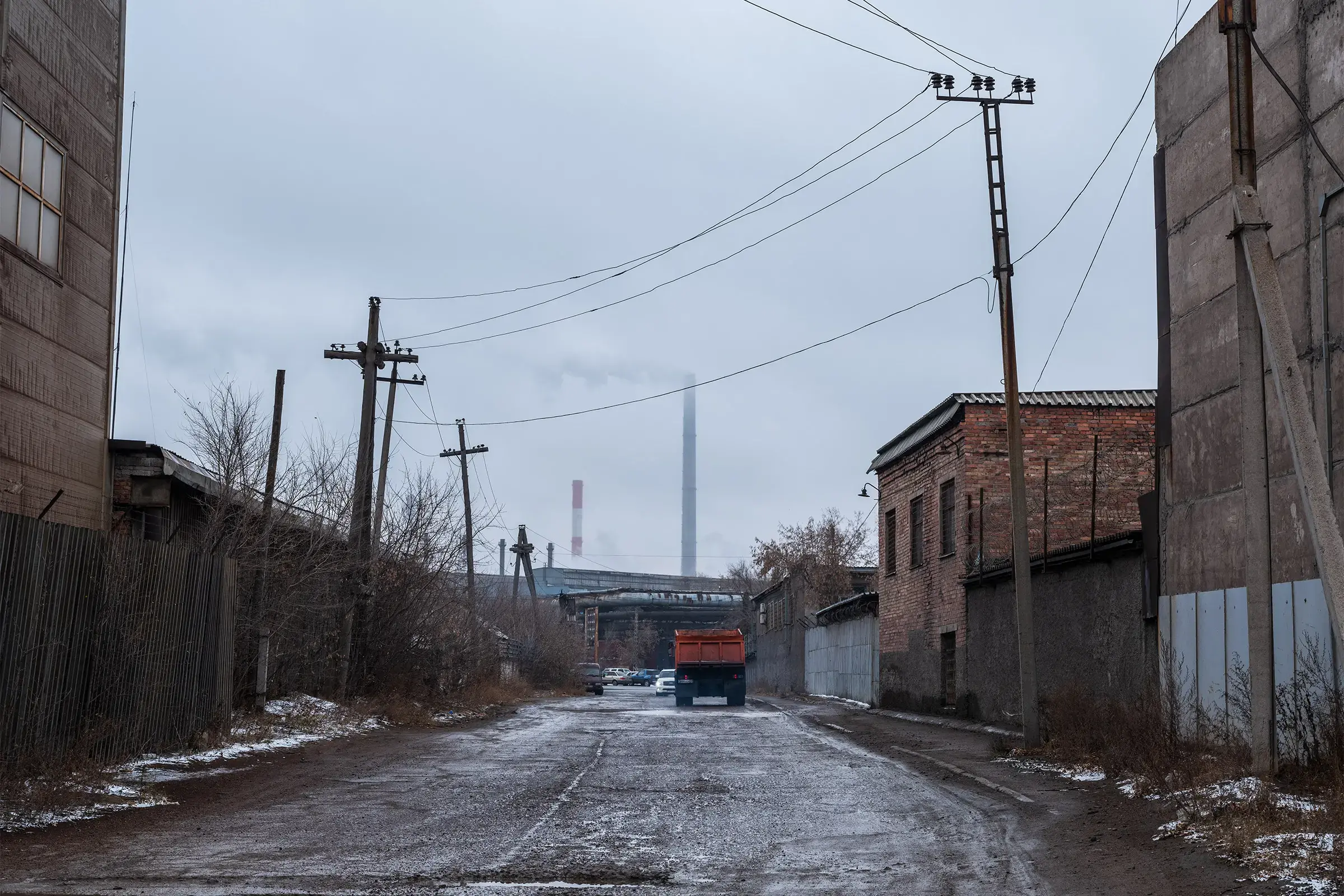
Outside the vast ArcelorMittal steelworks, among the rusted gas pipes a meter wide that sprawl across the town like jungle creepers, a truck-stop café served instant coffee over the counter, and 100-gram shots of vodka under it. “I see [bitcoin] on television,” said one middle-aged patron, tucking into a deep-fried pastry, “but I don’t know what kind of money that is.”
Few residents of coal-rich Temirtau knew that their region of northeast Kazakhstan was home to one of the country’s biggest gray crypto mines—one that the government alleges was built with resources intended to help revive local industries.
In the 2010s, in an attempt to revive moribund industrial parts of the country and create jobs, the Kazakhstani government declared some of those areas “free zones,” offering tax breaks and subsidized electricity to manufacturing companies. One company that embraced the opportunities in Temirtau and nearby Karaganda was Qaz Carbon, co-owned by Yerlan Nigmatulin, the twin brother of the then speaker of the house of representatives. The company established a ferroalloy division within the free zone, trading in coking coal and other minerals.
Shuraev, the activist, became suspicious of the operation in early 2022. Energy consumption data showed that Qaz Carbon was using at least three times as much electricity as a facility of that kind should, he said. He started to sniff around, and eventually an inside source at the company tipped him off to the reason. Someone, Shuraev was told, was using the cover of a free zone, and its heavily subsidized electricity, to run an unregistered bitcoin mine at the site. The subsidies were supposed to create jobs. Instead they were being used to print money.
But the extent of the “gray” mining operations in Kazakhstan might not have come out were it not for events across the border in China.
Beijing has long been suspicious of crypto, which it sees as allowing citizens to dodge their capital controls and move their money around and offshore using largely untraceable digital tokens. The position was an uncomfortable one in light of the country’s place as the most significant producer of specialized equipment for bitcoin mining and the host of many mining operations.
In May 2021, the Chinese government announced a crackdown on mining, saying that the amount of energy the industry used was incompatible with the country’s carbon emissions targets. Miners fled to more amenable jurisdictions. Some shipped their gear to the US, particularly to energy-rich, regulation-light states like Texas, but many crossed the border into Kazakhstan, bringing container loads of equipment by road and air. Kazakhstan was suddenly number two in the world for bitcoin mining, making up nearly 20% of the total hash rate, according to the Cambridge Centre for Alternative Finance, a research center in the UK.
The surge of new users stretched the electricity grid to capacity and beyond. Between January and October 2021, power use grew 8%—four times the typical annual rate of increase. Kazakhstan, which had long been a net exporter of energy, found itself in deficit. There were power cuts in several areas of the country, and the national utility had to buy electricity at inflated prices from Russia.
Power cuts weren’t the main cause of the political turmoil that followed, but they were representative of the many cumulative failures that undermined trust in the government, and ultimately brought people to the streets in January 2022. What started with a demonstration about rising fuel prices snowballed into broader protests about falling standards of living, elite corruption, and the fact that Nazarbayev and his cronies were still believed to be pulling strings in Kazakhstani politics. The government sent riot police, and then Russian soldiers, to put down protests in Almaty. At least 225 people were killed. At the height of the protests the internet was shut down for three days. The impact of the shutdowns on the bitcoin price figured prominently in international headlines. Few observers, if any, reflected on the role that bitcoin mining had played in starting these events.
Under pressure to do something to curb the social unrest, the government, led by President Kassym-Jomart Tokayev, had to be seen to be dismantling the rump of the old regime, and tackling cronyism and corruption. Tokayev promised to build a “new Kazakhstan,” and people and businesses that previously felt protected by their connections to the old guard were suddenly in the crosshairs of regulators.
Shuraev took advantage of the changing political climate, and in March 2022 he released a video on Instagram and YouTube detailing his investigations into Nigmatulin. Nigmatulin would later appear on a list released by Kazakhstan’s Financial Monitoring Agency of more than 50 gray miners who had “voluntarily” closed down their operations after investigations by the FMA. The grid failures and power shortages created by the industry had become “a threat to the economic security of the country,” the agency said. Nigmatulin did not reply to requests for comment.
The FMA’s list also included Bolat Nazarbayev, the former president’s brother, who had allegedly been mining bitcoin in the north of the country. In February, the minister of digital development estimated that the power consumption of gray mining exceeded 1 gigawatt at its peak—more than 5% of the country’s available generation capacity.
“Absolutely everyone suffered, both the industries and the population,” Shuraev says, “except for the owners of gray crypto mining in Kazakhstan.” By getting hold of cheap power, the owners of gray mines were stunting other businesses and creating shortages for consumers, he says.
(This kind of corruption is not a singularly Kazakhstani experience. In Kyrgyzstan, government officials have been linked to illegal bitcoin mining operations running in industrial free zones. The country shut down around 2,500 mining operations in late 2021.)
Officially, all of the gray miners have now either been shut down or voluntarily closed their operations. However, there are persistent rumors that some just moved to other locations in the country, where they could once again disguise their energy use.
In early 2022, Qaz Carbon changed its name to Asia FerroAlloys, although its old branding was still in evidence on safety notices and work equipment. At the front desk of the company’s plant in Karaganda one morning in late October, a company representative listened to questions about the company’s bitcoin mine and then summoned a lawyer, who arrived—somewhat out of place in the industrial setting in smart shoes and a sleeveless jacket—to explain that there was no such operation. Half an hour’s drive away from the headquarters, in Temirtau, a worker in Qaz Carbon overalls pointed to a new-looking building covered in white corrugated iron. The bitcoin mine had been in there, he said cheerfully, but the equipment had all been taken out a few months before and shipped elsewhere.
White miners, like Rusinovich, say that they were used as scapegoats for bigger problems, like the government’s failure to maintain the energy grid or rein in the gray mining business. “The problem, I think, was actually always illegal mining,” he says.
But Shuraev makes little distinction between the two halves of the sector. Each drained power, paid little tax, and failed to make much impact on unemployment, he says.
“The crypto mining industry, with billions in turnover, didn’t create and is not creating jobs. It needs few staff for a firm to operate. It paid a minimum tax,” he says.
The Kazakhstan government’s crackdown in March and April hit white and gray miners alike.
More than 100 unregistered operations were either forced to close or did so voluntarily to escape punishment, after being targeted by the government’s Financial Monitoring Agency. Miners told me that thousands of ASICs had been seized by the authorities.
Astana Hub ejected around 100 mining-related companies. Some, including Bekbauov’s Xive, didn’t just lose their tax breaks but were told to pay tax retroactively on goods they’d imported duty free. “They said no more mining, and all the miners who imported and use these [tax breaks] now have to pay for previous periods,” Bekbauov says.
Most significantly, their access to electricity was drastically reduced, throttling their ability to operate. When they were cut off from the grid in January 2022, they expected it would be a temporary outage. Many clung on in anticipation of being allowed back into the network, but they have remained frozen out. The state energy utility now has energy quotas for different industries; bitcoin mining is bottom of the list, and most miners simply can’t get an allocation of electricity from the domestic grid.
International miners bugged out. Sébastien Gouspillou, cofounder of the bitcoin mining group BigBlock Datacenter, had been building up mining operations since 2017, until the crackdown began last January. A few months later, the company got a tip-off from a friend in the government that the crackdown would extend beyond just cutting miners off from the grid. It packed up and drove the machines to Siberia. “Many, many colleagues lost the machines during the transportation to Russia,” he says. “At customs the machines were seized by the government. So we were lucky. We took a small truck with a private driver, and a special road. And we were lucky we [kept] the machines this time.”
Gouspillou says a diminishing number of places are willing to host miners. A thousand of his machines were seized in Ukraine in 2018. “There is no country really friendly. The only one country that’s totally friendly is El Salvador,” he says. But BigBlock is banking on a new project in the Democratic Republic of Congo.
Although mining remains illegal in China, miners have started to operate there again, braving another crackdown. The country is now second in the global hash rate once again.
Along with energy security, the climate has become a central point of debate about bitcoin mining. Ekibastuz is not the only place where the currency is generated using coal power. The industry has been credited with a revival of numerous coal plants in the US. New York state has banned mining activity using non-renewable power. In September, the White House Office of Science and Technology Policy recommended imposing limitations on the industry’s energy use and carbon emissions.
De Vries, the researcher, says that even if miners move on to cleaner energy sources, the industry still won’t be sustainable. All it will do is crowd out other consumers of clean energy in order to perform a function that, in his analysis, is entirely pointless.
In September, Ethereum, the second-most-traded cryptocurrency, abandoned the “proof of work” model for generating coins—i.e., mining—for “proof of stake,” a complicated cryptographic process that doesn’t require brute-force calculation. The Ethereum network’s energy usage dropped by 99.95% after the switch, according to the Ethereum Foundation, which oversees the network. This highlighted just how wasteful bitcoin mining is, de Vries says. Rather than looking at what the industry produces, he says, it’s instructive to think of all the failed guesses that the machines make—quintillions of them every second, creating nothing but heat and carbon.
“You have a pretty big industry consuming as much power as a country like Argentina, just for generating random numbers that get thrown out right away … That’s something that you can’t really do sustainably,” he says. “We’re in an energy crisis and a climate crisis, and we’re using fossil fuels to run the world’s biggest random-number generator.”
The measure of the bitcoin mining business might be in what it’s left behind. Turegeldy Turanov has helped build three mines in Ekibastuz as the deputy regional director for BTC.kz, a local data-center company. Now, he’s dismantling them.
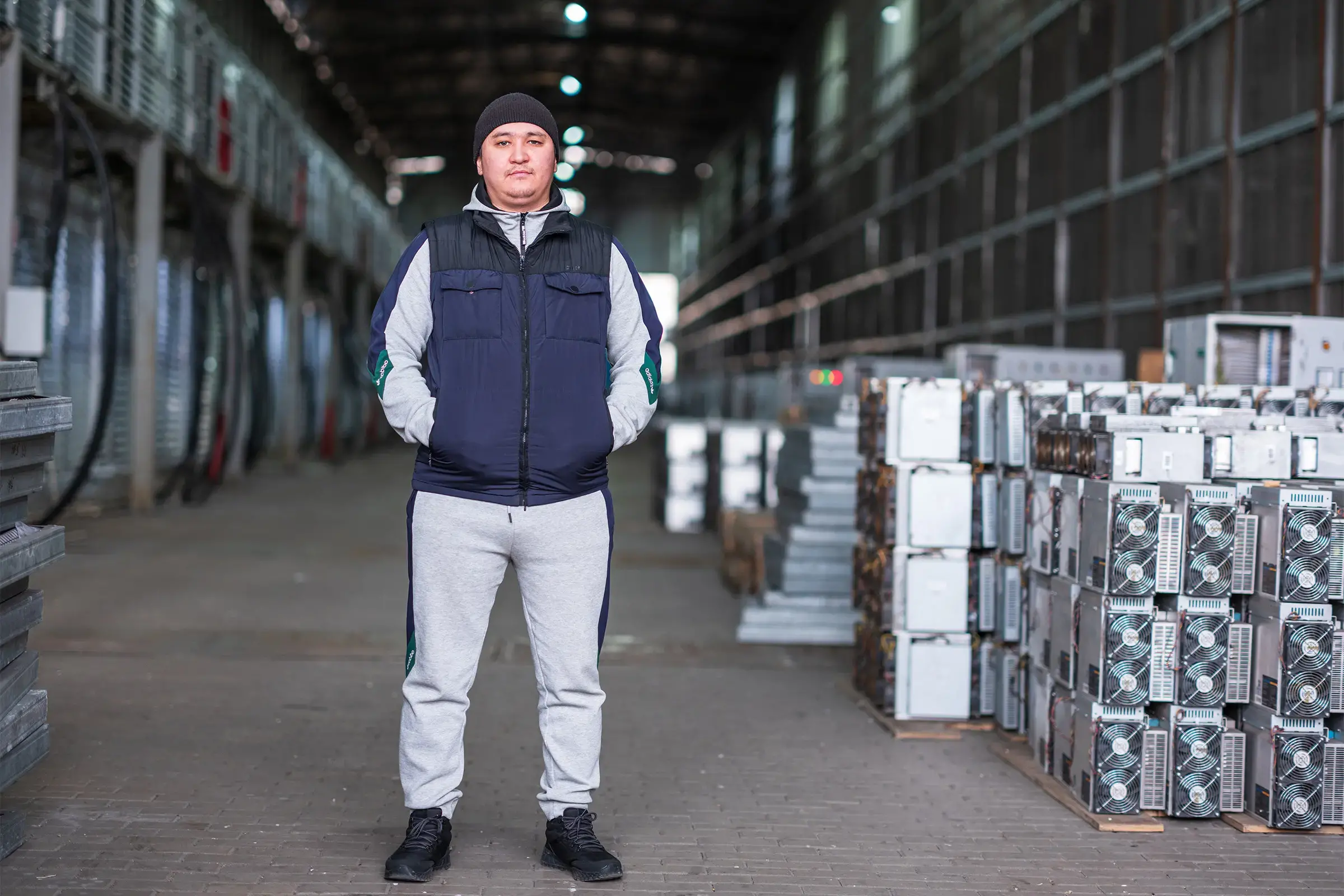
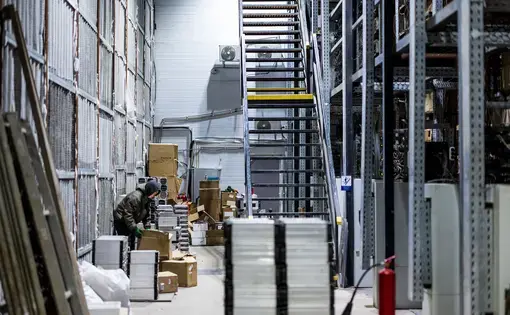
At its peak, just one of those facilities on the outskirts of the city ran 10,500 machines, drawing 35 megawatts of power 24 hours a day, seven days a week. In late October, most of its racks were empty. Bare wires hung loose from the walls. On the upper gantries, some of the machines were rusting in place; on the ground floor, others were being packed into cardboard boxes to be shipped back to their owners overseas.
Without the machines running, it was bitter cold inside the BTC.kz mine. Turanov, a broad man in his 20s, wearing a stocking hat and body warmer, sighed deeply. “Jobs are being lost,” he said. “We used to employ 70 people. Now we’re just 30. A lot of effort and work was put into this. It feels as if your child is dying.”
There are still elements of bitcoin boosterism in evidence in Kazakhstan. One miner said he was gambling on the ruble’s collapsing because of international sanctions on Russia, meaning that the price of imported electricity would fall; another was convinced that the price of a bitcoin will pass $100,000 in 2023, and is holding on until it does. Others, including Enegix’s Turgumbayev, are confident that the market is about to turn because, since its assault on bitcoin mining, the Kazakhstani government has found a new enthusiasm for cryptocurrencies.
In September, President Tokayev fronted a tech conference in Astana, in which he promised “full legal recognition” of crypto assets. This would mean that miners would finally be able to legally convert bitcoin and other cryptocurrency directly to tenge and vice versa, and that crypto could ultimately be used to pay for goods and services in Kazakhstan. The Astana International Financial Center is running a “regulatory sandbox” for crypto companies, allowing exchanges to register, so that they can let consumers buy and sell crypto legally. Binance, the world’s largest crypto exchange, has set up a local office and is participating in the sandbox.
The push is the latest attempt to turn Astana into a more diversified high-tech, high-finance hub; officials told MIT Technology Review they see crypto as a sector in which they can leapfrog more established financial centers.
The global competition to be the home for crypto trading has echoes of the nomadic mining business. Crypto exchanges have tended to gravitate to lightly regulated jurisdictions, such as the Bahamas, the Cayman Islands, and Dubai, often moving from place to place in response to regulatory changes—“A floating pirate empire,” in the words of Stephen Diehl, a software engineer and prominent critic of the crypto industry.
Now crypto’s prospects feel more uncertain than ever. Bitcoin’s price began 2022 at around $35,000. After the FTX crypto exchange imploded in November, it slumped to below $17,000. Kazakhstan officials who were happy to speak about their plans for crypto abruptly stopped responding to messages.
Before the FTX collapse, one miner, who asked for anonymity to rage freely against the government and the national grid, estimated that in Kazakhstan the break-even price of bitcoin—the point where the mine could turn a profit—was $40,000. Below that, he was losing money. The price was half that when we spoke, and he was facing a wipeout. He wouldn’t be able to sell his equipment, and none of it can be repurposed. Put simply, he said, “It’ll rust where it is.”
But despite the despondency in many parts of the business, there are still flickers of quasi-religious enthusiasm, the desire to “HODL” and “buy the dip.” At Enegix’s massive facility on the outskirts of Ekibastuz, the company is planning an additional 50 megawatts of capacity. The fact that other countries are banning crypto mining entirely will inevitably bring miners back to Kazakhstan, Turgumbayev says. All their clients have to do is hold on.
Additional reporting for this story was done by Naubet Bisenov.