Africa has become a new frontier for Big Tech.

Privacy concerns linger as Meta, Google and Microsoft embed themselves in public services
Meta fought multimillion-dollar penalties from Nigerian regulators while building new relationships with the state. An investigation by Business Day found at least 17 engagements between Big Tech companies and Nigerian government institutions since 2024, many with little public information about the terms behind them.
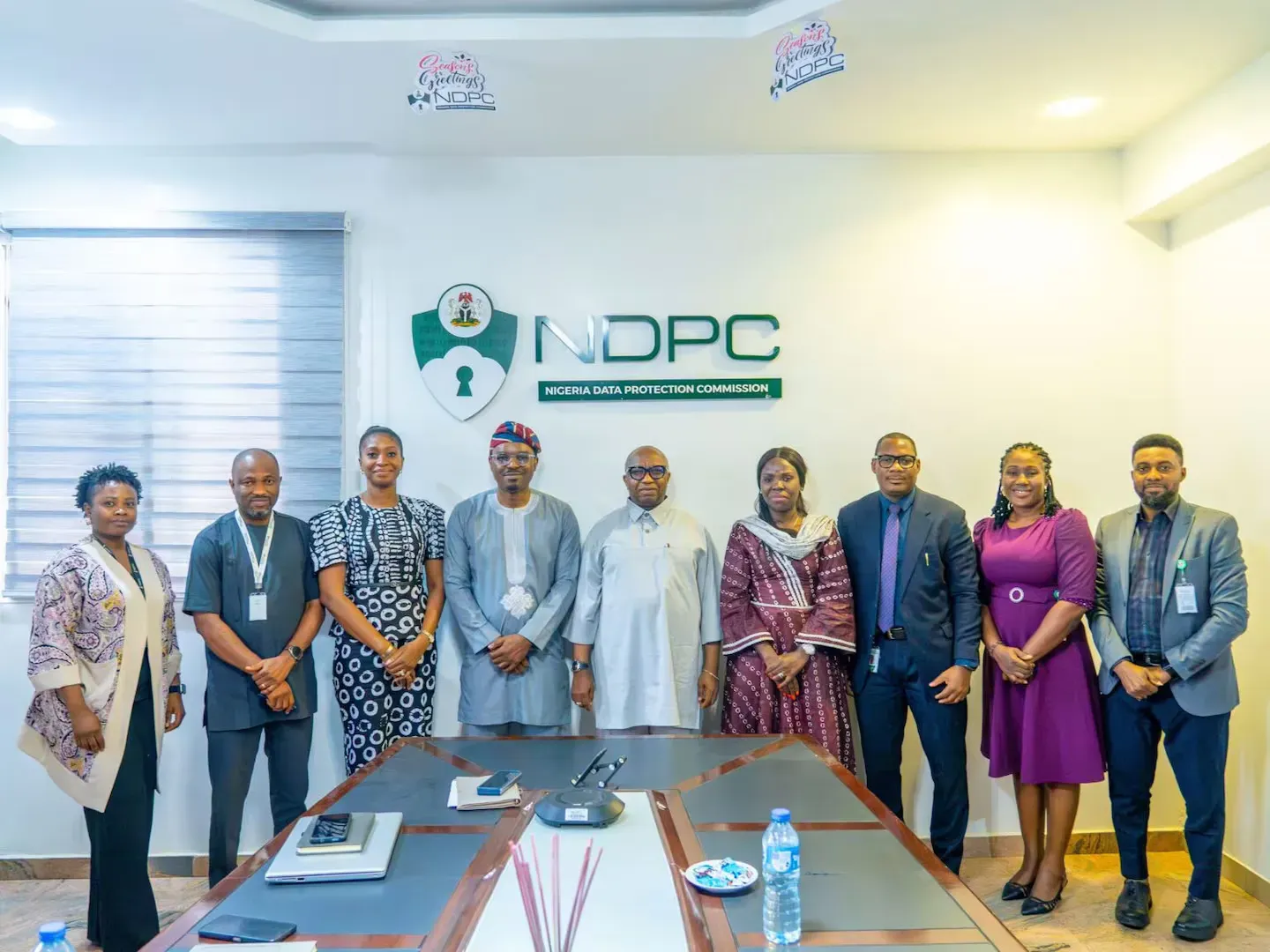
In February 2025, representatives of three of the world’s most powerful technology companies sat down with the Nigeria Data Protection Commission (NDPC).
Meta, Microsoft and Google had come to discuss collaboration. “[NDPC CEO Vincent] Olatunji expressed his delight at the prospect of collaborating with global tech giants. He stressed the importance of synergy between the public sector, private sector, civil society groups, and academia. He warmly welcomed the collaboration offer,” read the regulator’s press release.
For Meta, the timing was striking.
The company was already fighting Nigerian regulators over how it handled the personal information of millions of people. In July 2024, another regulator, the Federal Competition and Consumer Protection Commission (FCCPC), fined Meta and WhatsApp $220m after a 38-month investigation. The regulator found, among other things, that Nigerians had been given too little control over how their information was collected, shared and used. And within days of the NDPC’s collaboration discussions being publicly reported, that regulator imposed a separate $32.8m penalty on Meta.

As a nonprofit journalism organization, we depend on your support to fund more than 170 reporting projects every year on critical global and local issues. Donate any amount today to become a Pulitzer Center Champion and receive exclusive benefits!
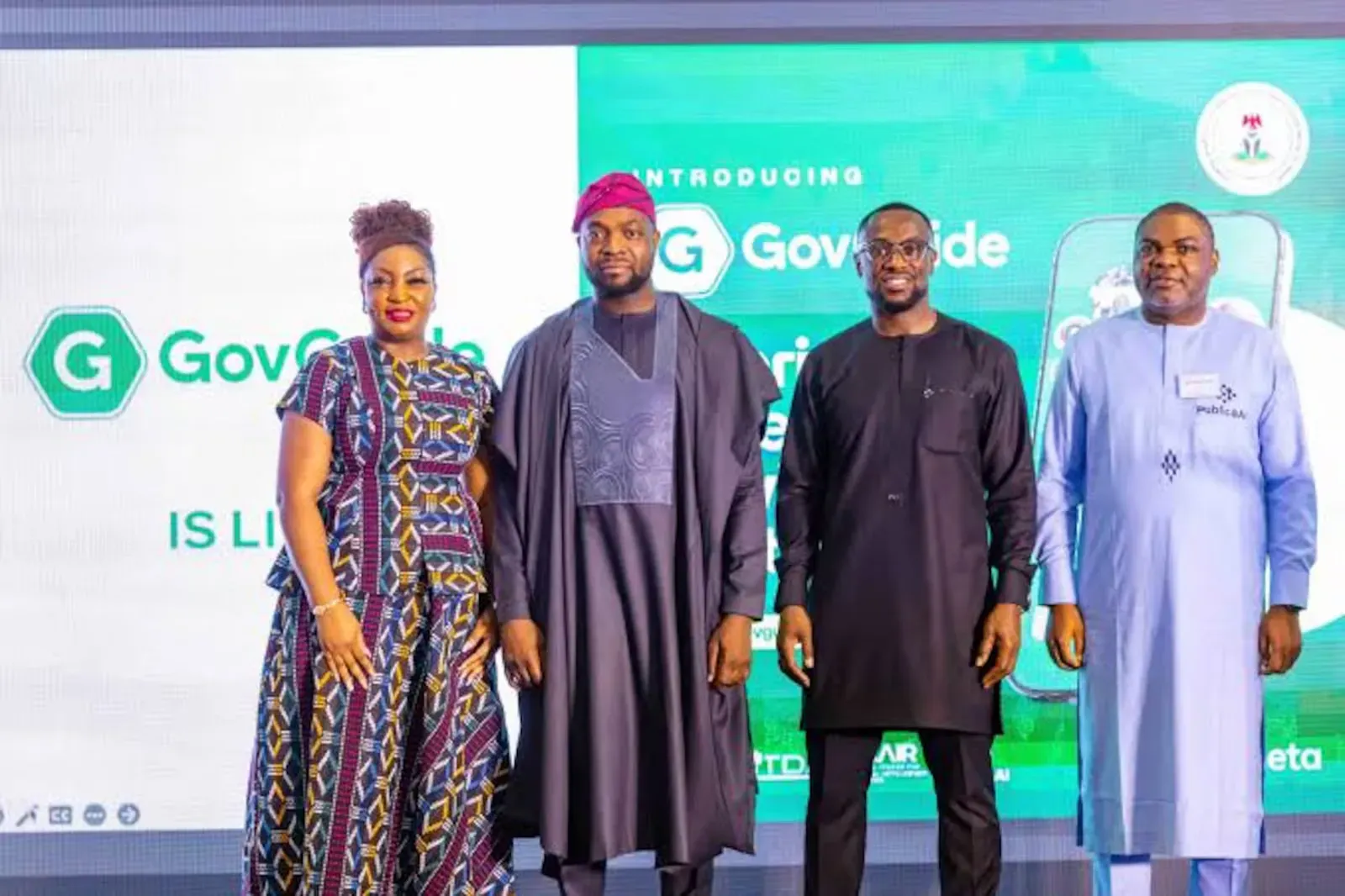
However, over the months that followed, the $32.8m case was settled; the NDPC announced that, “in collaboration with Meta”, it had translated the Nigeria Data Protection Act (NDPA) into local languages, and in May 2026, another arm of government launched GovGuide Nigeria, an AI service built with Meta’s technology to help Nigerians navigate public services.
Business Day asked Meta and Nigerian government agencies when discussions over GovGuide began because in Nigeria companies aren’t required to enter meetings such as these into a lobbying register. There is no routine public record showing which companies are approaching government officials, what they want from them, or what is discussed behind closed doors.
Besides lobbying the Nigerian government, Big Tech companies are also increasingly funding, training and working alongside the institutions that make the rules that govern it.
Project
When AI Comes for Our Land


So the newspaper started building one.
Our investigation traced at least 17 publicly documented engagements between major technology companies and the Nigerian state since 2024. They stretch from meetings with the president and regulators to government AI projects, training programmes, funding, and policy discussions.
Besides lobbying the Nigerian government, Big Tech companies are also increasingly funding, training and working alongside the institutions that make the rules that govern it.
The core of various Nigerian regulators’ concerns was that the citizens using WhatsApp were not being given enough choice over what happened to their data. Users were effectively required to accept WhatsApp’s new privacy terms if they wanted to keep using the service. Those terms allowed information to be shared across Meta companies and with other third parties.
Information collected about people can be used to build profiles of their interests and behaviour and, among other things, decide which advertising they are shown. The FCCPC found that Nigerian users had not been given adequate control over how their information was collected and used, including for advertising purposes.
The commission also found that Meta shared and transferred Nigerians’ personal information without proper permission and gave Nigerian users fewer protections over their data than users in some other countries.
Privacy lawyer Olumide Babalola, who served as counsel in Odunola Kehinde vs Vesti, a case involving alleged unauthorised data disclosures under the NDPA, notes how odd the situation is. He points out that the high-profile NDPC case against Meta was fundamentally about the company’s handling of Nigerians’ data
“The Nigerian data protection framework generally forbids the processing of personal data except where there exists a lawful basis,” explains Babalola.
“In the absence of any document establishing otherwise, Meta does not have any lawful basis to use citizens’ data in an undisclosed manner. For GovGuide, the context is entirely different. Citizens are interacting with a government service, not a public social media platform. The presumption should be that any data processing is strictly for the purpose of providing that government service, unless explicit, informed consent is obtained for any other use.”
Weighing in on the systemic challenges of holding Big Tech accountable, Saidu Lawal Mohammed, a digital rights lawyer and managing partner at Spectrum Legal Services, believes Big Tech’s financial power creates an unfair playing field between multinational corporations and local regulators.
“There are so many fundamental things not working in Nigeria, and the issues surrounding data protection are unfortunately not an exception,” Mohammed said. “It is apparent that there is a built-in incentive for regulators to be soft on these companies. This is why, when a company is found wanting, the penalties can be lighter than they ought to be.”
Business Day asked the government agencies involved when GovGuide negotiations began, who initiated them and whether discussions overlapped with Meta’s regulatory cases. The data protection commission was also asked whether its proposed collaboration with Meta — discussed at a February 2025 meeting — continued while it pursued and later settled the privacy case.
The agencies did not provide records or responses that answered those questions. Meta did not provide the GovGuide agreement.
However, this is not an isolated partnership. Our search of public records identified at least 17 Big Tech engagements with the Nigerian state over the past three years, from funding and training to meetings with senior officials, technology projects and dealings with regulators.
The true extent is difficult to establish. Nigeria has no lobbying register showing who meets government officials, what is discussed or what they are seeking to influence, and there is no lobbying law requiring these contacts to be routinely disclosed. Many of the agreements behind the partnerships aren’t public either, leaving only a partial picture of how deeply Big Tech has become embedded in Nigeria’s digital ambitions.
Ali Sabo, head of digital rights at the Centre for Information Technology and Development, describes it as “soft influence.”
"Partnerships need to be out in the open, protected by clear safeguards and open to input from universities, civil society organisations and local tech builders."
Ali Sabo, Centre for Information Technology and Development
Pulitzer Center Update
As Big Tech's Warnings Make Headlines, Meet the New AI Accountability Fellows

“While their projects can aid national development, they also quietly shape how policymakers view technology and governance.”
If left unchecked, Sabo warns that outside tech platforms threaten government independence, lead to over-reliance on specific vendors and restrict future policy choices. “Partnerships need to be out in the open, protected by clear safeguards and open to input from universities, civil society organisations and local tech builders.”
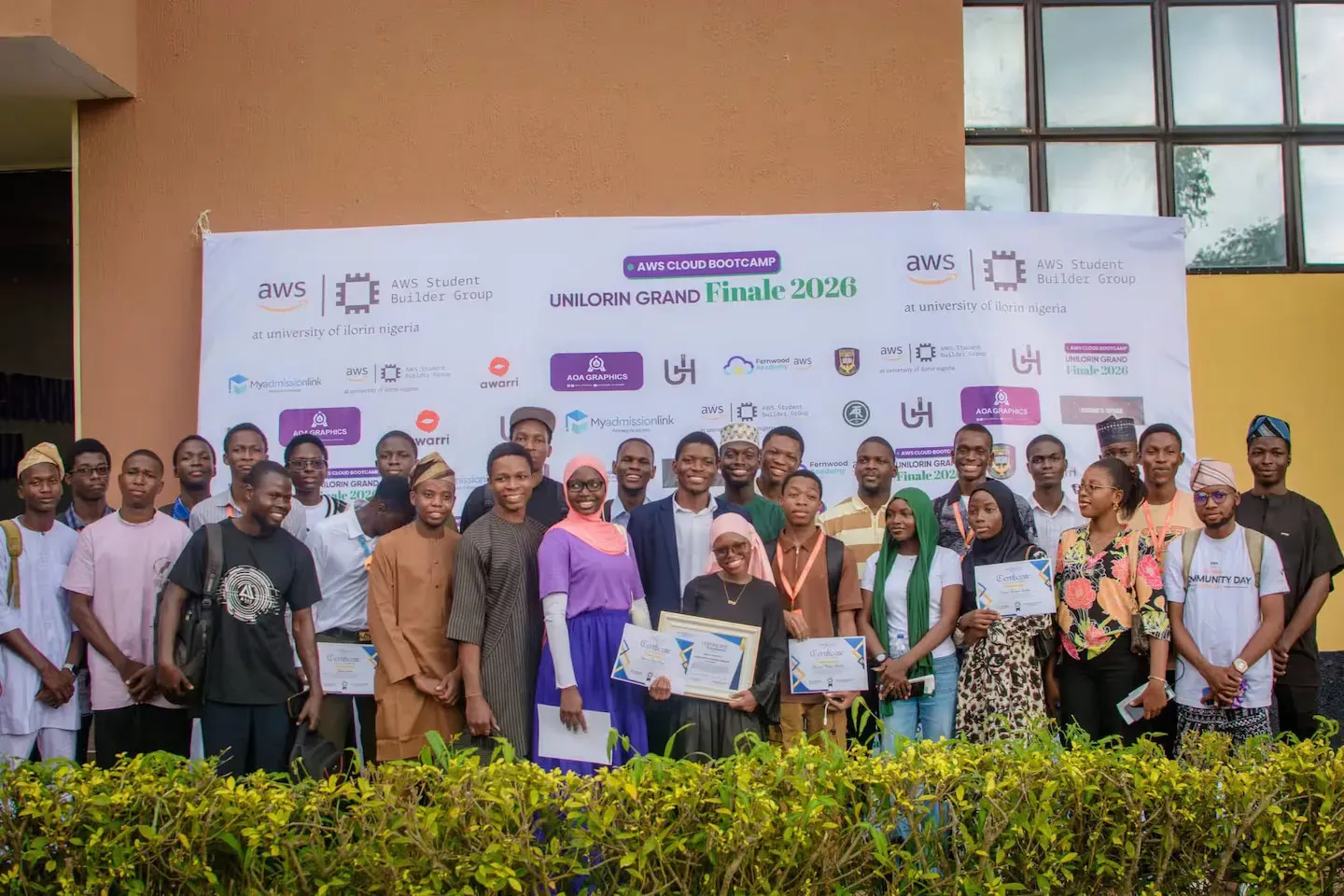
In October 2024, the Nigerian government partnered with Data Science Nigeria to announce a 2.8-billion naira (R34m) Google grant for national AI talent programmes tied to the federal ministry of communications, innovation and digital economy (FMCIDE). Programmes rolled out included:
- the DeepTech Ready Track for 20,000 advanced learners;
- the Experience AI teacher programme intended to reach 25,000 teachers and 125,000 students; and
- a government AI campus for civil servants.
These programmes onboard thousands of Nigerians into specific company tools, certification tracks and software ecosystems from a young age. According to analysts, these companies are essentially securing lifelong customers for their ecosystems.
When Business Day asked Taiwo Kola-Ogunlade, Google’s communications and PR manager for West Africa, about data protection during these initiatives, he said the company’s products use “industry-leading technology” to protect users’ information and pointed to privacy controls, its registration with the NDPC, and the appointment of a data protection officer.
But his response did not state where the data generated through the public sector programmes is stored, how long it is retained or whether it can be used to improve commercial AI products.
Microsoft has been using the same strategy. In 2025 the company partnered with the FMCIDE, Data Science Nigeria and Lagos Business School. They launched the AI National Skills Initiative to train 35,000 people in AI. Participants received certificates linked to the national 3-Million Technical Talent portal. Another partnership with Junior Achievement Nigeria (JA Nigeria) introduced thousands of young students to generative AI basics.
Grace, a student at the Federal University of Technology Akure, participated in the Microsoft/JA Nigeria Career Essentials AI programme and received free access to Microsoft Copilot and LinkedIn Premium. She and other participants later extended the programme to students on another campus. But her experience also shows how the company introduces young people to the company’s wider technology ecosystem beyond just AI.
When we asked Microsoft about this, the company provided figures for registrations, learning activity and certification. It did not provide the commercial agreements, contract values, procurement information or licensing arrangements we sought. On the role of its products in the training, Microsoft said: “Specific training pathways may include Microsoft technologies, where relevant to the curriculum.”
Tech analyst Eze Hanson considers these programmes a mix of smart philanthropy and workforce development, while cautioning against hidden risks.
“Embedding a proprietary suite of developer networks, certification paths and job-search platforms into a state-backed mass training can be perceived as seeding a captive user base and standardising national dependency on a technology infrastructure,” Hanson said.
"When government partners with multinational companies to handle public services and data, the public deserves to know the terms of the deal."
Adekunle Omolabi, civil society transparency advocate
That concern, however, sits beside Nigeria’s own ambitions for greater digital independence. Nigeria is trying to take greater control of its data and digital infrastructure. But it is doing so while becoming increasingly reliant on the global companies providing the money, training and technology behind that transformation.
Many of the agreements defining those relationships remain outside public view. And without a lobbying register, Nigerians cannot routinely see when those companies meet government officials, what they are seeking or how those conversations intersect with decisions about the rules governing them.
“When government partners with multinational companies to handle public services and data, the public deserves to know the terms of the deal,” said civil society transparency advocate Adekunle Omolabi.
For now, the announcements are public. Much of what has been agreed behind them is not.
This story was made possible with support from the Pulitzer Center and forms part of the Africa leg of Big Tech’s Invisible Hand, a cross-border collaborative investigation led by Brazilian news organisation Agência Pública and the Centro Latinoamericano de Investigación Periodística (CLIP).
 View this story on The Cable