Story
 September 11, 2026
AI Fellow's Drone Warfare Investigation Spurs Town Hall in Nigeria
Country:



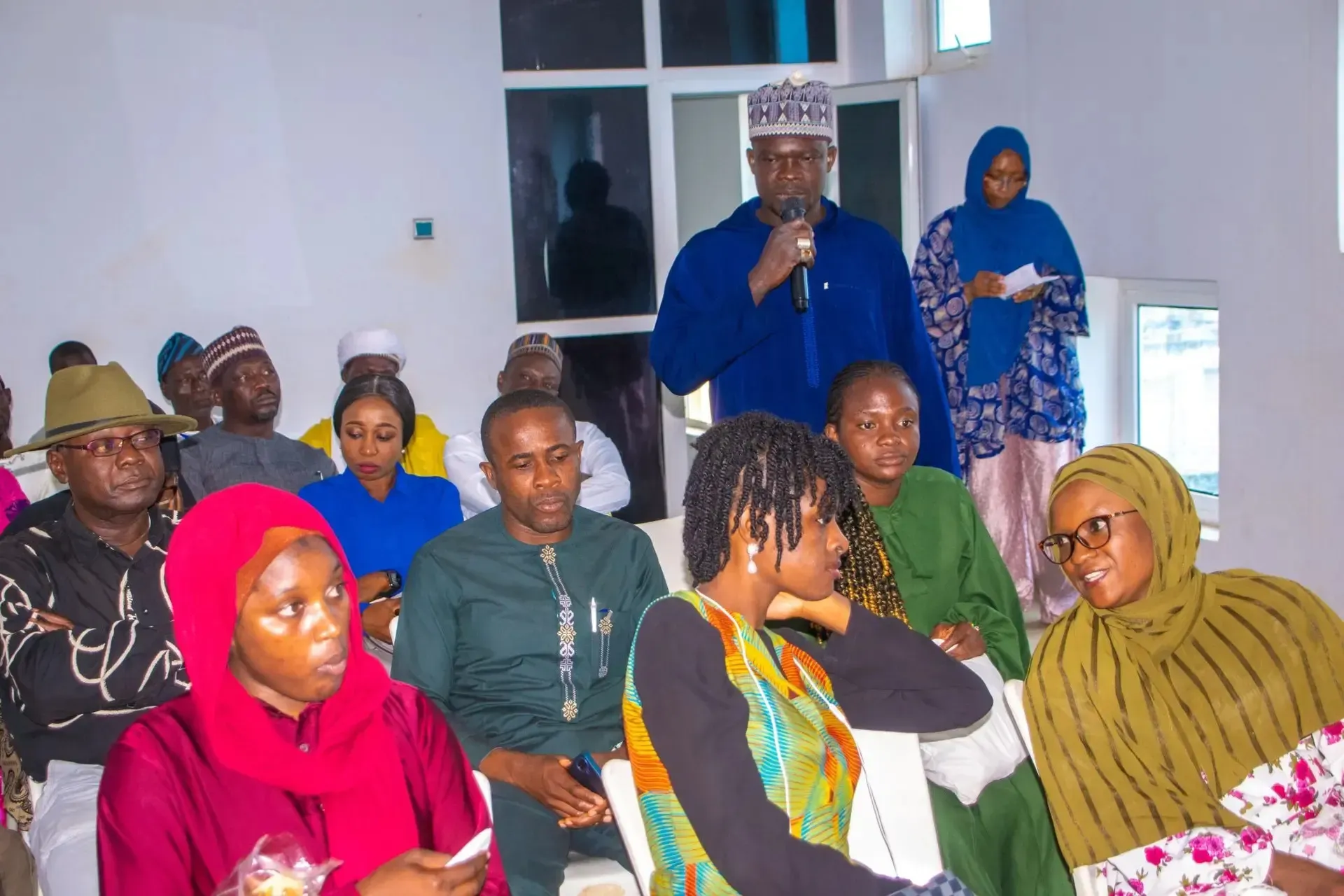
Government officials, security agents, social justice advocates, journalists, and humanitarian actors from various democratic sectors gathered for a town hall meeting in Kaduna State, northwestern Nigeria, to discuss the way forward following HumAngle’s investigative series on AI-powered drone warfare and civilian protection across Sub-Saharan Africa.
A HumAngle investigation into the proliferation and cost of AI-powered drones in military operations across Africa has spurred a town hall meeting in Kaduna, northwestern Nigeria. The civic engagement, facilitated by HumAngle and centred on the intersection of AI, human rights, and peacebuilding, took place on Wednesday, Sept. 9, and drew stakeholders from diverse democratic sectors in Nigeria.
The Nigerian leg of the investigative series examined the accountability gap following misfired military drone strikes in Tudun Biri and Rukubi, two underserved communities in Kaduna and Nasarawa states. It showed how faulty intelligence and AI‑enabled targeting contributed to strikes that killed dozens of civilians and left survivors with lasting trauma. Despite government promises of compensation and support, survivors told HumAngle they had received only dysfunctional infrastructure projects instead of direct restitution. HumAngle produced the year-long investigation in partnership with the Pulitzer Center’s AI Accountability Network.
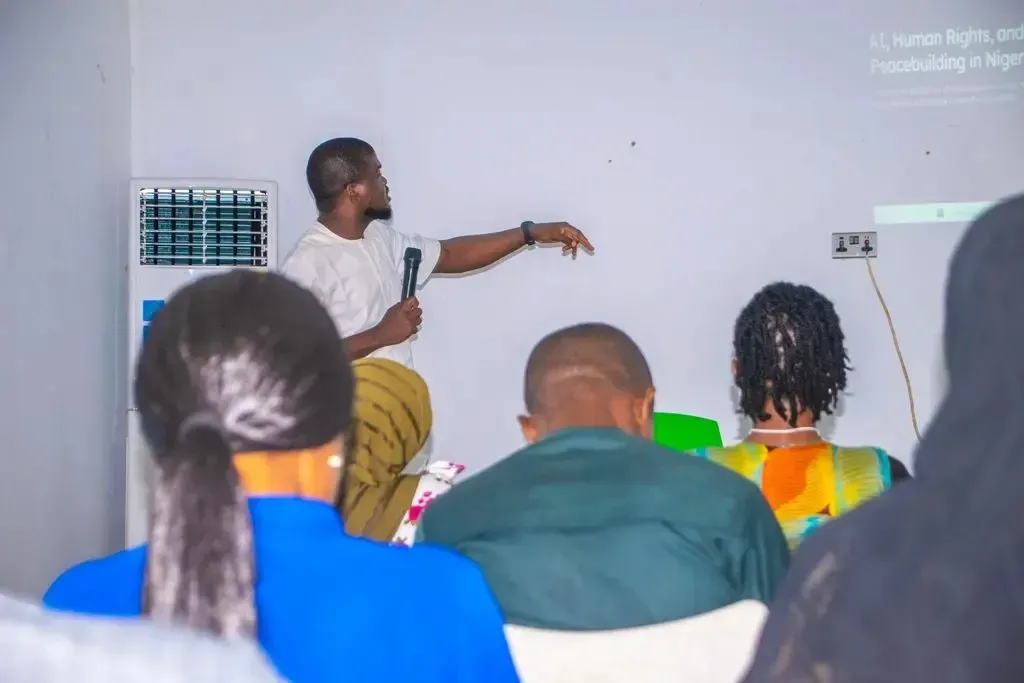
Ibrahim Adeyemi, HumAngle’s Investigations Editor and author of the investigative series, presented its major findings at the town hall, outlining the accountability gaps exposed by the reporting.

As a nonprofit journalism organization, we depend on your support to fund more than 170 reporting projects every year on critical global and local issues. Donate any amount today to become a Pulitzer Center Champion and receive exclusive benefits!
The presentation set the stage for a broader discussion among participating stakeholders, including government officials, security agents, social justice advocates, journalists, humanitarian actors, and leaders and survivors from affected communities. Abubakar Musa, one of the locals interviewed for the investigation in April, attended alongside other community leaders from Tudun Biri, including Aliyu Adamu, Abdurrasheed Musa Saidu, and Suleiman Sani, who shared their experiences and bore witness to the report’s findings.
Speaking on behalf of the community delegates, Aliyu, secretary to the Tudun Biri village head, said there were signs of change since HumAngle last visited and published the report on the dysfunctional infrastructure built as part of reparation measures following the drone strikes.


“We lost our family, friends, parents, and siblings in this attack,” Aliyu reiterated.
He noted that some improvements had been made to the paved road following HumAngle’s reporting, saying that solar lights have now been installed and that travel time to the community has dropped from nearly an hour to a much shorter time. Although the government has taken steps to recruit staff for the primary health centre, it hired casual workers rather than filling the full-time positions initially promised, the locals said during the stakeholder town hall meeting.
HumAngle’s investigation had revealed that the health centre remained dysfunctional, lacking medical staff and receiving no patronage from the community. The village head’s secretary said deliberate efforts are underway to improve the clinic’s operations. He noted that the vocational centre still has no workers to facilitate training, despite appeals to the government.
About a week ago, he added, the community began working with the Kaduna State government to ensure that people previously displaced by the drone strikes are given houses and can return to their communities. The relatives of 85 people lost to the military drone mishap in Tudun Biri were also given three-bedroom houses.
“Something terrible happened to us, but we were also shown that we are part of the nation,” Aliyu stated.
Responding, Nehemiah Bamai, Senior Special Assistant (SSA) to the Kaduna State Governor on security, commended the community delegates for acknowledging the government’s efforts to provide succour to survivors of the drone attack and for highlighting other issues that need to be addressed.
“Government processes are different, and things have changed since the last time the journalist visited the community,” Nehemiah added.
Human intelligence-led operations
As Nigeria seems to have prioritised integrating AI into military operations and security surveillance, stakeholders at the town hall meeting resolved that emerging technologies must support, not replace, human judgement, especially where decisions affect human lives. Most participants questioned the reliability and preparedness of AI systems for use in security and other high-stakes contexts. A key concern was whether AI models are sufficiently trained on context-specific data to accurately interpret complex security situations in African war zones.
Ibrahim Datti, a Nigerian security consultant, noted the need to place accountability at the centre of AI-enabled security operations, saying intelligence should be understood as a process rather than a product, as it requires continuous collection, analysis, verification, and interpretation. “Nigeria is entering a new era of security, and we should not wait for another tragedy to act,” Ibrahim said. He noted that security agencies must strengthen Early Warning and Early Response (EWER) mechanisms to ensure that information gathered from communities and technological systems translates into timely preventive action.
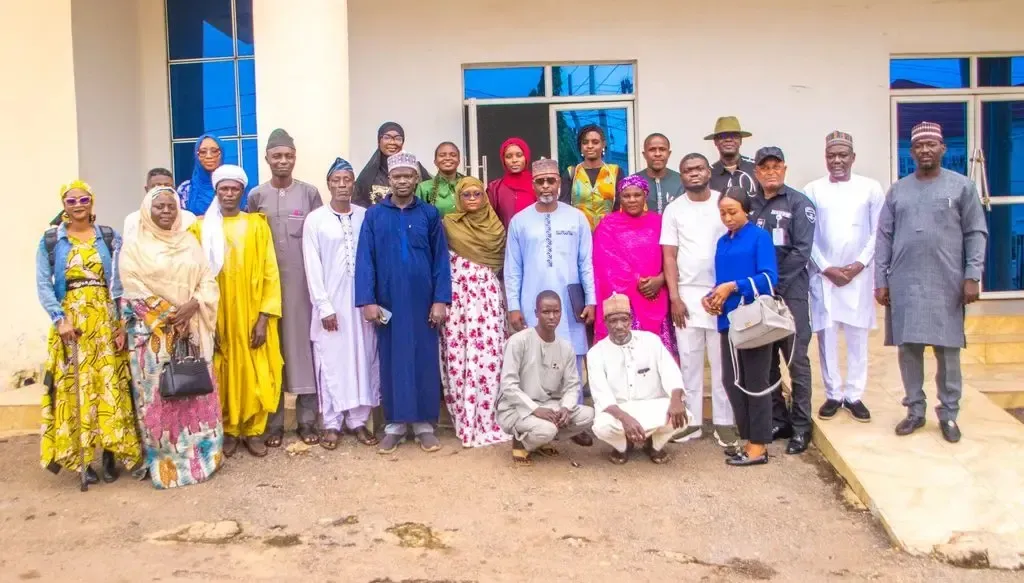
Amid conversations on security and human rights in the era of emerging technologies, Danlami Adamu, the Special Adviser to the Governor of Kaduna State on Peace and Conflict Resolution, stressed the need for trust-building as a fundamental component of peacebuilding. He said that government cannot effectively fulfil its social contract where trust between citizens and government institutions is weak. Nehemiah also reinforced the importance of human intelligence in complementing technological systems. He stressed that information received from citizens and other sources must be properly verified before operational decisions are taken.
Aisha Yusuf from the Transparency and Accountability in Totality Initiative (TATI) expressed concerns about the training levels of operators managing AI-powered drones. In response, some stakeholders argued that training might not be the primary issue, citing the fact that these drones have been used effectively in more advanced countries. Corroborating this, El-Abass Muhammed of the Kaduna State Vigilance Service (KADVS) noted that some security-sector challenges are not necessarily due to inadequate training, but may result from negligence or failure to perform assigned responsibilities.
“I can confirm to you that we have highly trained personnel, but the problem mostly is negligence of duty,” El-Abass noted.
Peter Broderick, a journalist and civic actor, said that when adopting any technology for security purposes, we should ask ourselves these basic human questions: “Does it protect human dignity, reduce the risk of harm, challenge the decision, and contribute to peace, justice, and development? The debate about AI is not just about machines but [also] affects the relationship between human beings and power.”
Nigeria has joined other African nations integrating AI into military and security surveillance to strengthen national defence strategies. The federal government’s official narrative is that investing heavily in AI-assisted military operations could help track and attack armed groups effectively and strengthen the country’s security architecture. However, while these technologies promise efficiency and precision, they also raise critical concerns about oversight, civilian safety, and accountability when using autonomous systems for national security.