Story
 March 22, 2026
After Decades of Displacement, a Nukak Family Returns to the Jungle (Spanish)
Country:

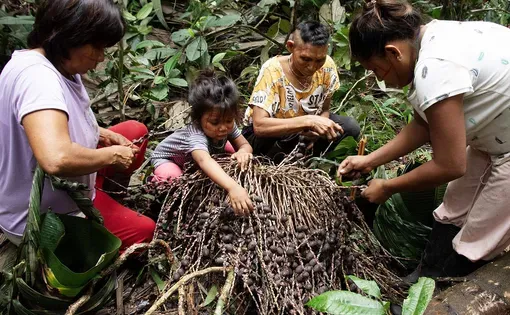
Members of the Indigenous Nukak tribe, once an uncontacted people, return to their ancestral lands...

Since their return in 2022, they have restored 15 hectares of forest and revived traditional practices

As a nonprofit journalism organization, we depend on your support to fund more than 170 reporting projects every year on critical global and local issues. Donate any amount today to become a Pulitzer Center Champion and receive exclusive benefits!
For centuries, the Nukak people lived in isolation deep in the Colombian Amazon, with little contact with outsiders and subsisting on hunting and forest fruits. But in 1988, the expansion of the agricultural frontier and the armed conflict brought settlers and guerrilla groups into their territories, bringing an end to their isolated way of life. The initial contact was devastating: 40% of the population died, mainly from disease, and many survivors were displaced to urban areas, where they struggled to survive.
Jedeku Njibe was a teenager at the time. Watching much of his family die from respiratory illnesses, he fled his home in the jungle alongside other survivors. Nearly four decades later, he returned to the place from which he had been displaced: WimPena Cha’ana. There, along with his family, he found a landscape ravaged by cattle ranching and coca cultivation. Since their return in 2022, they have restored 15 hectares of forest and revived traditional practices such as harvesting seje, an Amazonian palm whose fruit they use to make chicha and weave baskets. By reclaiming their territory, they have also sown a seed of hope: that the Amazon can heal and that the Nukak can build a future in the jungle.