Journalist Resource December 11, 2025
Workplace Surveillance: How I Investigated the Computer Vision Industry
Country:

Project
Big Foreman Is Watching You
Store CCTV, AI-augmented video surveillance and facial recognition are multiplying in the workplace...

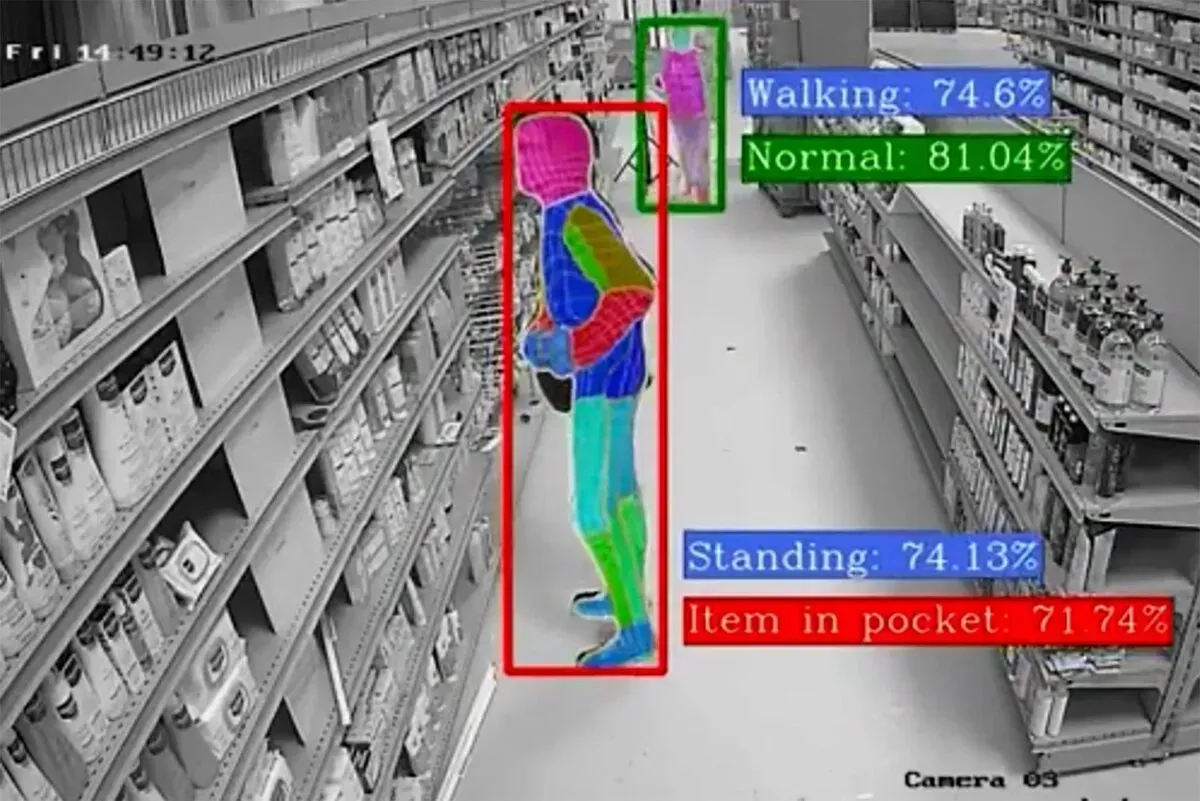
On June 21, 2024, the French Council of State issued a decision that gained little to no media attention. The subject? The illegality of certain surveillance technologies. The target? Veesion, a French startup that generated over €8 million in revenue in 2024. Specializing in algorithmic video surveillance, the company markets a technology designed to detect theft in supermarkets, a solution deemed illegal by France's highest administrative court.
The Veesion case clearly illustrates the growth of the algorithmic video surveillance and facial recognition market in France. For years, this little-known sector of the artificial intelligence industry has been booming. Theft detection, security alerts, employee identification, and productivity monitoring: a wide range of image analysis technologies are now being used in sectors as diverse as retail, gyms, and industry, all without any legal framework.
In the summer of 2024, I decided to investigate the sector. For years, I documented the development of these technologies, but I wanted to focus on their widespread adoption in the workplace. How prevalent are they? What risks do they pose to employees? Which French startups are marketing these surveillance tools, and under what conditions are these technologies manufactured?
From the outset of the Big Foreman Is Watching You project, my aim was to cover the entire technology production chain, systematically highlighting the humans hidden behind the machines. Very quickly, the project branched out. I planned an investigation into the working conditions of subcontractors for AI companies in Madagascar, a broader study of the sector, and targeted investigations into the companies and technologies that I considered the most dangerous: illicit surveillance technologies, such as those marketed by Veesion, and facial recognition technology being deployed across platforms.
From France to Madagascar
The first step in this investigation was to map the companies in the sector. For several weeks, I spoke with key players in the industry. I already knew many of them, so approaching new ones wasn't a problem. Startups love speaking about their products, and I also spoke with many sources off the record to ask them broader questions about the sector and the competition. Objectively assessing the sector's development ultimately proved to be the most difficult task. Knowing that it would be difficult to be exhaustive, I limited my approach to AI startups sufficiently developed to be listed by industry organizations. In this case, I used a mapping by French Digitale, which publishes an annual list of French AI startups.
After the Pulitzer Center team helped me scrape a list of 771 companies from this online ranking, I manually categorized the file by examining the technologies they employ by reading their website. This allowed me to identify around 30 companies operating in the computer vision sector, in addition to the established players in the field (Thales, Idemia, etc.). Drawing on research by Clément Le Ludec and Maxime Cornets, with whom I conducted a lengthy interview and with whom I have remained in close contact since, I was then able to trace the production chain of many French AI companies to Madagascar, where they outsource data training.
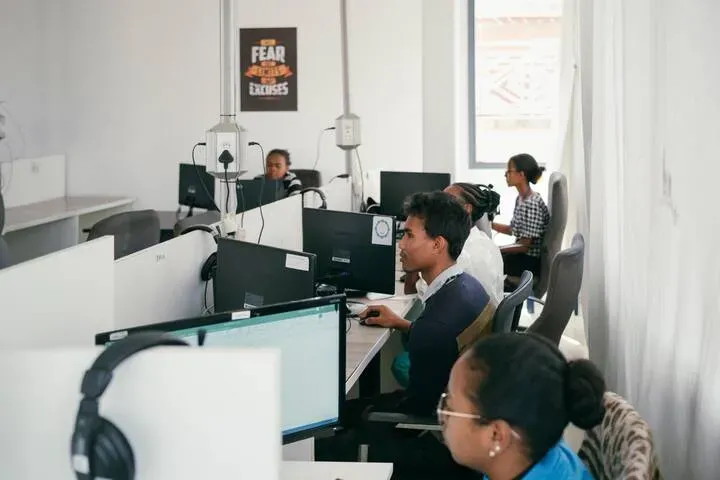
In Madagascar, the approach was more traditional: going from source to source and interviewing witnesses to gain a comprehensive understanding of working conditions in the sector. I worked with Pauline Troquier, a French journalist based on the island, which allowed me to grasp the nuances of the situation on the ground and facilitated logistics, such as access to sources. Another local reporting partner also helped us for a few days to gain access to some employees. I chose to travel with a fellow photographer, Eugénie Baccot, so we could show the workers behind the AI products. The images significantly strengthened the investigation and led to its publication in the Swiss magazine Le Temps, several French publications (Mediapart, Le Pèlerin, Chut !, Le Monde, etc.), and even in Italy.
The goal was also to understand the actual use of these technologies in the workplace. I attempted to launch a questionnaire targeted at French workers, which I circulated online, and contacted several dozen French trade unions, hoping to obtain precise information on the state of deployment of these technologies. It was a resounding failure, barely 30 responses, probably due to the invisibility of these technologies (employees are often unaware of the technologies monitoring them) and my methodology itself, which was too general (I could have focused on the use of computer vision). However, it did allow me to gather feedback on use cases in certain French companies.
Investigating surveillance technologies
Two technologies, and therefore two companies, particularly caught my attention: the one developed by Veesion, deemed illegal by the digital regulatory authorities in France and yet still deployed in hundreds of businesses, and the case of facial recognition used by home delivery platforms like Uber and Deliveroo to identify delivery drivers and couriers.
The investigation into Veesion unfolded along two lines. First, relying on requests to the CADA (Commission for Access to Administrative Documents), I obtained from the CNIL (French Data Protection Authority) the various opinions and investigation reports they had produced on the company. Simultaneously, I met with Malagasy annotators in Madagascar who had worked on Veesion software (identified, via OSINT, from the company's own website), which allowed me to gain a fairly comprehensive understanding of the tool, its operation, and its shortcomings.
The approach for Uber and Deliveroo was quite similar. I thoroughly analyzed legal documentation available on these platforms’ websites and read documents from legal proceedings at the French, European, and international levels. This also allowed me to identify the platforms' service providers for implementing facial recognition and provided a good understanding of the data collected.
I also spoke with several researchers specializing in working conditions in the delivery sector, as well as with the delivery drivers themselves to better understand the issues and humanize my narrative. I planned to rely on data access requests to gain a more detailed perspective, but as luck would have it, just as I was starting this part of the work, Maxime Cornets, one of the two researchers who helped me with the Madagascar project, explained that he had actually obtained this data from 150 Uber drivers and delivery workers and that he was willing to share his analysis with me. A good reminder that you should never hesitate to talk to your contacts about the topics you're working on.
Even though my initial methodology didn't work perfectly, I ultimately achieved almost all of my initial objectives by analyzing the computer vision market in France, its production chain, and its impact on workers. This also allowed me to contribute to a broader research project begun three years ago which resulted in a book, Les nouveaux contremaîtres (The New Foremen), published in French in November 2025.
The next step will be to monitor not only the widespread adoption of these technologies in companies—across many sectors, the phenomenon is just beginning—but also the lobbying efforts of companies in the sector that are trying to change the legal framework to legalize their surveillance technologies.
Key takeaways on how to investigate workplace surveillance and AI:
- Researchers working on the human impact of AI are few in number, but they are particularly reliable sources. Don't hesitate to take the time to connect with them, to learn about their research topics, and also to consult them when you are looking for references on another subject.
- Employees, consulting firms, software publishers, company executives, regulatory authorities… The number of stakeholders involved in an AI project is very high. A good first step is to make a list of them and compile all the documents and information they might possess. Don't reinvent the wheel!
- Never neglect the unions. They are often aware of everything that happens within the company and may have access to extremely valuable documents. In France, for example, the implementation of a new technology in the workplace systematically triggers a presentation to employee representatives, a presentation which often leads to a study of the project's risks and benefits. All of these presentations and reports can provide material for your investigations.