Journalist Resource
 October 3, 2025
How We Investigated the University of Utah’s Partnership With the Ute Indian Tribe
Country:

In an age where information is everywhere but often eludes the communities that need it most...

To connect this investigation to university and tribe officials, sports fans, and Ute Tribe members, The Salt Lake Tribune team presented findings in several digital and print formats and engaged in intentional outreach for over a year as part of the StoryReach U.S. Fellowship. Highlights include:
- Reshaped legislation: While in the process of reporting this project, a Utah state senator proposed an anti-DEI law that could have jeopardized the existence of the Ute scholarship program. After Courtney’s reporting on the matter was published, the lawmaker changed the language of the bill to protect the program.
- Scholarship access: Reporting resolved a case where Ute student Nakisha Mart finally received a long-delayed scholarship.
- University response: The University of Utah published its own article, and later an editorial in The Tribune, offering its perspective and highlighting additional work with the tribe.
- Mentorship program created: The University of Utah has now organized a mentor program so that current Ute students can help incoming students.
The little cheerleaders held their poses like tiny statues waiting for the beat to drop. But even after the music started to play over the speakers in the 15,000-seat basketball arena, they stood still.
Someone had played the wrong song.
For several minutes, adults scrambled to deal with the technical difficulties that were disrupting Ute Proud Night, a celebration of the Ute Indian Tribe at halftime of a women’s basketball game between the Houston Cougars and the Utah Utes.
“Alright, let’s try something,” the PA announcer finally said.
Then the dance group’s instructor held her iPhone up to a microphone so the right tune — tinny as it may have been — could be heard. At last, members of the Ute Cheer Squad from the Uintah and Ouray Indian Reservation proudly danced and cheered. Young Arden Grace Cuch, Ute on her father's side, smiled wide and pressed her thumbs together and extended her index fingers, forming the “U” that thousands of University of Utah fans flash at sporting events all year long.
In the end, there was applause. A few even stood in ovation. For others, it might’ve been seen as a moment that highlighted the imperfect relationship between the University of Utah and the tribe from which the school’s athletic teams borrow their name.

As a nonprofit journalism organization, we depend on your support to fund more than 170 reporting projects every year on critical global and local issues. Donate any amount today to become a Pulitzer Center Champion and receive exclusive benefits!
The University of Utah began using the Ute name in 1927. Forty-five years later, the school entered into an agreement with the Ute Tribe, a partnership that has been formalized through a series of Memoranda of Understanding (MOUs) since 2003.
But has that relationship been fair to the Utes?
That’s what Salt Lake Tribune reporter Courtney Tanner sought to understand through reporting made possible by the Pulitzer Center’s StoryReach Fellowship.

Our findings
While Ute athletics brings in millions of dollars each year, we found:
• No real enrollment progress: The U.’s estimates for the number of Ute tribal members attending the school now show little to no substantial gains since the 1950s. Three students received the Ute Tribe Scholarship during the 2024-25 academic year.
• No minimum requirements for scholarships: The tribe has asked for scholarships for its students to attend the university. But the U. has no minimums for the number it must award or the amount. In fact, for the two academic years before this one, there were zero Ute students receiving that money. And some qualified students are being passed over.
• Scholarships not providing enough to cover tuition: The latest agreement states a specific scholarship amount, and the U. has declined the tribe’s requests to boost that number to cover tuition increases — leaving at least a $2,600 gap for those now granted a “full” award. In all, the university has invested some $225,000 (raised through private donations) to support scholarships for 18 students since 2014.
• No graduation benchmarks: If Ute students do attend the university, there are no mandates for monitoring their progress or providing help if they’re struggling with classes. And the agreement doesn’t have any requirements or goals for graduation rates for those students. The U. says six Ute students have earned bachelor’s degrees since 2014, with one achieving a doctorate.
• Limited progress in supporting K-12: The U. is additionally supposed to support Ute students in K-12. But its investment is small, at $100,000 per year given to the tribe since 2020. And data shows no real gains as the tribe’s children living on and near the eastern Utah reservation continue to have the worst test scores and the largest high school dropout rates in the state.
But leaders from both the tribe and the school hope they can take steps toward a better future. And, in the wake of our reporting, there are signs that the next MOU, which is currently being negotiated, could be more beneficial to the Ute Tribe.

“While examining the relationship with the U. and the tribe was the focus of the reporting, the work could not have been done without also looking at The Salt Lake Tribune’s relationship with the Utes.”

How we reported this story
While examining the relationship with the U. and the tribe was the focus of the reporting, the work could not have been done without also looking at The Salt Lake Tribune’s relationship with the Utes.
Our readers (28.1% of respondents in our 2024 subscriber survey, in fact) have said they want more coverage of Native and Indigenous issues.
But the Uintah and Ouray Reservation, located 150 miles from Salt Lake City, had been an afterthought for too many reporters and editors over the years. When stories were written, they were about the tribe, but not in service of its members. Tribal leaders often simply ignored our inquiries.
Tanner has begun to thaw that relationship.
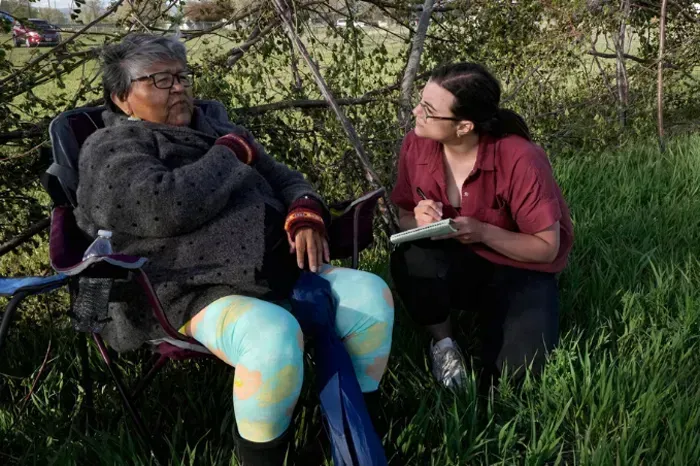
First came important work uncovering the history and lasting impacts of Utah’s boarding schools for Indigenous children, which stripped them of their culture and derailed their paths to educational success for generations.
“When it comes to education, Indigenous students across Utah are being left behind, but none more so than the children of the Ute Indian Tribe of the Uintah and Ouray Reservation,” the Ute Tribal Business Committee said in a letter after the report was published. “The Business Committee supports the Tribune’s findings, which document and reveal what the Tribe has always known—the systemic failure to include Ute children in educational opportunities is a widely known problem that has persisted for generations.”
Meanwhile, Tanner also endeavored to report other stories that were important to the tribe’s members, including a profile of the Ute chairman, coverage of a key land battle, and reports on other issues on the reservation, such as a rise in fears amid increased ICE operations in the U.S.
She met Ute students where they were, visiting the Uintah and Ouray Reservation and attending events such as an Indigenous storytelling camp for high schoolers.
All of our reporting included surveys and callouts to help generate new leads and connections.

Audience work
Defining your audience is crucial in modern journalism. For this reporting, we broke our audience into the following groups.
- Fans and the general public
- University and Ute Tribe officials
- Ute Tribe members
Fans
We wanted our reporting to be seen by both Ute and University of Utah officials, who had the power to change policy and improve outcomes for students.
We also wanted to engage another important stakeholder: the thousands of University of Utah fans and alumni who could help shape public opinion.
To do this, we focused on framing and presentation.
Over the years, plenty of journalists have asked the question of whether the University of Utah should be using the Ute name. That has, frankly, been asked and answered. The tribe is a sovereign nation and has voted to allow the use. To focus on that question would only serve to divide.
Instead, we wanted our reporting to create a path to a true dialogue. I think we accomplished that and were rewarded for it.
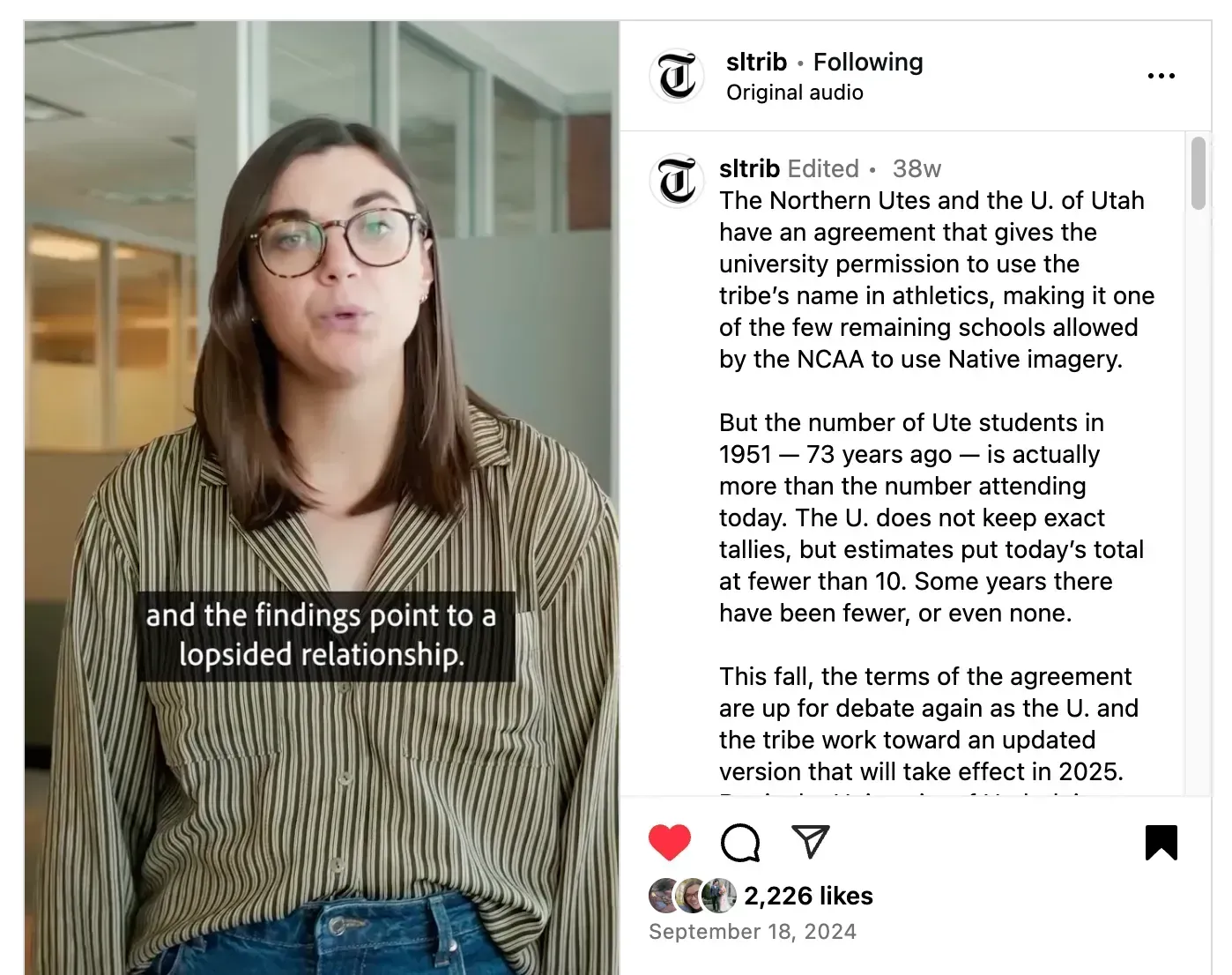
Our social media presentation included an Instagram video that was viewed more than 50,000 times and a comprehensive X [formerly Twitter] thread that garnered more than 100,000 views.
As one Utah fan wrote on X, “I opened this thread ready to fight but was quickly disappointed by the presented data. Seems like such a low bar for the University to clear to benefit the tribe and they seem to be falling quite short of that.”
We also made sure this would be accessible and digestible for people who might not be interested in reading a traditional story.
To do that, we crafted a detailed timeline of the U.-Ute partnership as an alt-form story and emphasized video and social media components.
“The U’s partnership with the Ute Tribe is among my favorite things in sports, but as a student of history I know that it MUST be done with respect and reason,” a local sports talk radio personality said after the story was published. “I hope that’s an institutional conversation that is revisited regularly.”
Officials
In hopes of making our findings clear to decision-makers at the tribal and university levels, our project also featured a traditional-story format that included easily digestible takeaways and data-backed charts.
Engaging tribal leaders remains a difficult task, especially while the next version of the Memorandum of Understanding is still being negotiated.
At the university level, the reporting was met with some pushback.
In the days after our first story ran, the University of Utah published its own piece detailing the work it does with the tribe.
In the meantime, we provided another outlet for the U. to express its point of view. Our Voices editor encouraged U. officials to write an editorial for The Tribune. Chase Hagood, vice provost for Student Success at the University of Utah, took the opportunity to highlight a “few insights the story missed.”
“... I appreciate the attention The Salt Lake Tribune recently brought to the U’s partnership with the Ute Indian Tribe, which allows us to share resources and outreach to increase educational support for potential students. This enduring relationship goes far beyond a transactional document or an over-simplification of branding.”
The response left me with a question I’m still pondering: How do you hold powerful institutions to account without alienating an important stakeholder?
The reporting, however, clearly resonated with some at the university. One professor wrote in response to the reporting, “I know of various efforts, current and former, that have been designed to address these issues, but clearly there is so much more that needs to be done.”
Ute Tribe members
We created multiple online surveys and callouts throughout the reporting. That helped Tribune Voices Editor Sara Weber reach out to tribal members in search of underrepresented opinions on our op/ed pages.
We’ve found many members of the Ute community to be skeptical of journalists in general.
As one Ute descendant told me, “There was one [article], I think it’s from [The Tribune], it wasn’t correct. That really upset me. I’m still upset and this was all the way 20 years ago.”
There is also hesitation to speak publicly in a way that may be viewed as counter to tribal leaders.
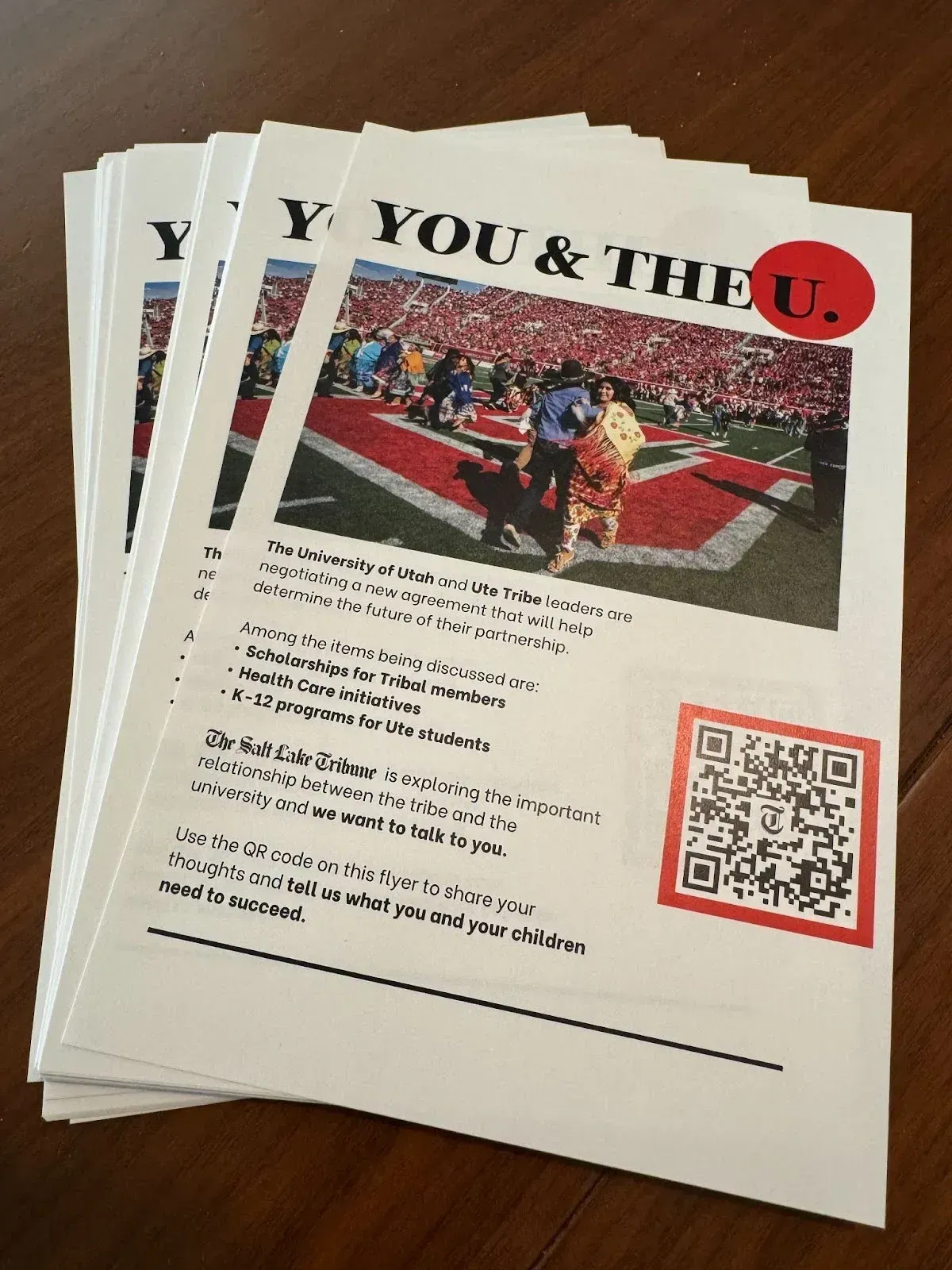
We have tried to open up new lines of communication wherever possible, distributing flyers electronically and in person to sources to expand our network of connections.

Impact
Only time will tell the full scope of the project’s impact, as the tribe and university negotiate a new Memorandum of Understanding. For its part, the university has proposed a change that would expand its scholarship program to all Ute descendants, even those who do not meet the tribe’s blood quantum for full membership.
But there have already been other impacts:
- Reshaped legislation: While we were early in the process of reporting this project, a Utah state senator proposed an anti-DEI law that could have jeopardized the existence of the Ute scholarship program. After Tanner’s reporting on the matter was published, the lawmaker changed the language of the bill to protect the program.
- Scholarship awarded: One Ute student, Nakisha Mart, did not receive a scholarship for her first two years of college despite qualifying for the award. During the course of our reporting, Mart’s issue was finally resolved.
- Mentorship program created: The University of Utah has now organized a mentor program so that current Ute students can help incoming students.
What we learned
- The work is just getting started. Even as we made inroads in our own relationships within the Ute Tribe, it was evident that we have a lot of ground to make up. Getting community buy-in remains a challenge.
- As the editor overseeing this project, I wish we had done more listening early on. We made a number of connections but there are still viewpoints that need to be represented. The Ute community has some division between enrolled members and those who do not meet the blood quantum, which I don’t think we fully captured in the initial project. It will be something to consider in our reporting going forward.
- We found ourselves at odds with the university at times. Could we have worked harder to partner more on this story in hopes of being a better resource?
“You can only capture a small portion of your audience with the written word, especially if you’re presenting them with a long-form story. You must create different entry points.”
Applying lessons
- Find multiple entry points: For some journalists, the work ends with “the story.” But you can only capture a small portion of your audience with the written word, especially if you’re presenting them with a long-form story. You must create different entry points: a mix of written word and photos in an Instagram carousel; vertical video for TikTok users; timelines, takeaways and other alt-form stories for readers who don’t have time to wade through a 2,500-word story.
- Ask for your audience’s help and buy-in: You don’t have to feel around in the dark to find all of your sources. We used our biggest platforms, our website and social media channels, to share surveys that helped make connections with sources and generate new ideas.
- Your story is only as good as your headline: It’s often the last thing you want to think about when you’ve put in hours into reporting and writing. But tailoring your headline for your desired audience is critical.