Engagement Resource August 14, 2026
The Data Centers in Querétaro and the Local Population’s Unanswered Questions
Country:

Project
The Backyard of AI
The boom of generative AI has launched tech giants into a race to increase their computing...

This article summarizes one of the activities supported by the Pulitzer Center’s Outreach Engagement Funds and is part of The Backyard of AI project, a cross-border investigation into the local impacts of data centers. You can also read about the other two activities of the same initiative carried out in Chile and in Spain.
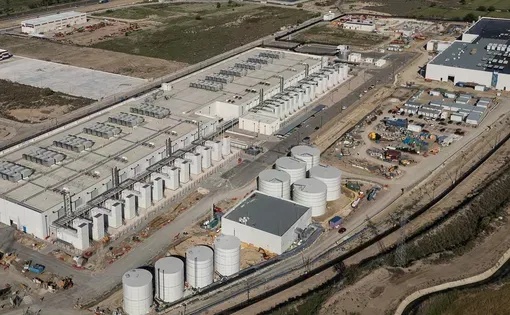
The state of Querétaro (Mexico) is one of the promised lands for the hyperscale data center industry. As in other regions around the world, companies such as Microsoft, Google, and AWS have found here the ideal conditions to build up their massive server complexes. Other lesser-known firms, such as Equinix, Ascenty, and Odata, also operate centers in the area.
The Querétaro state government has welcomed this resource-intensive industry with open arms, facilitating the construction of new data centers in record time in a small area near the state capital. However, local communities living in the nearby municipalities are unaware of the implications of these facilities. They also lack a basic understanding of what a data center is, what happens inside them, or the resources they need to operate.
During my fieldwork in 2025 I met Mariana Lorena García Estrada, UNAM researcher and professor at Universidad Autónoma de Querétaro. At that time, García Estrada had been investigating the local impacts of this industry for months, particularly its water consumption in an area suffering from severe drought, where many residents do not have guaranteed access to this basic resource.
By then, she had already expressed her interest in working directly with local communities to provide them with independent information about this phenomenon, as part of an academic research project she is currently working on. So, in late 2025, I asked her to lead a meeting with residents of one of the villages in the area.

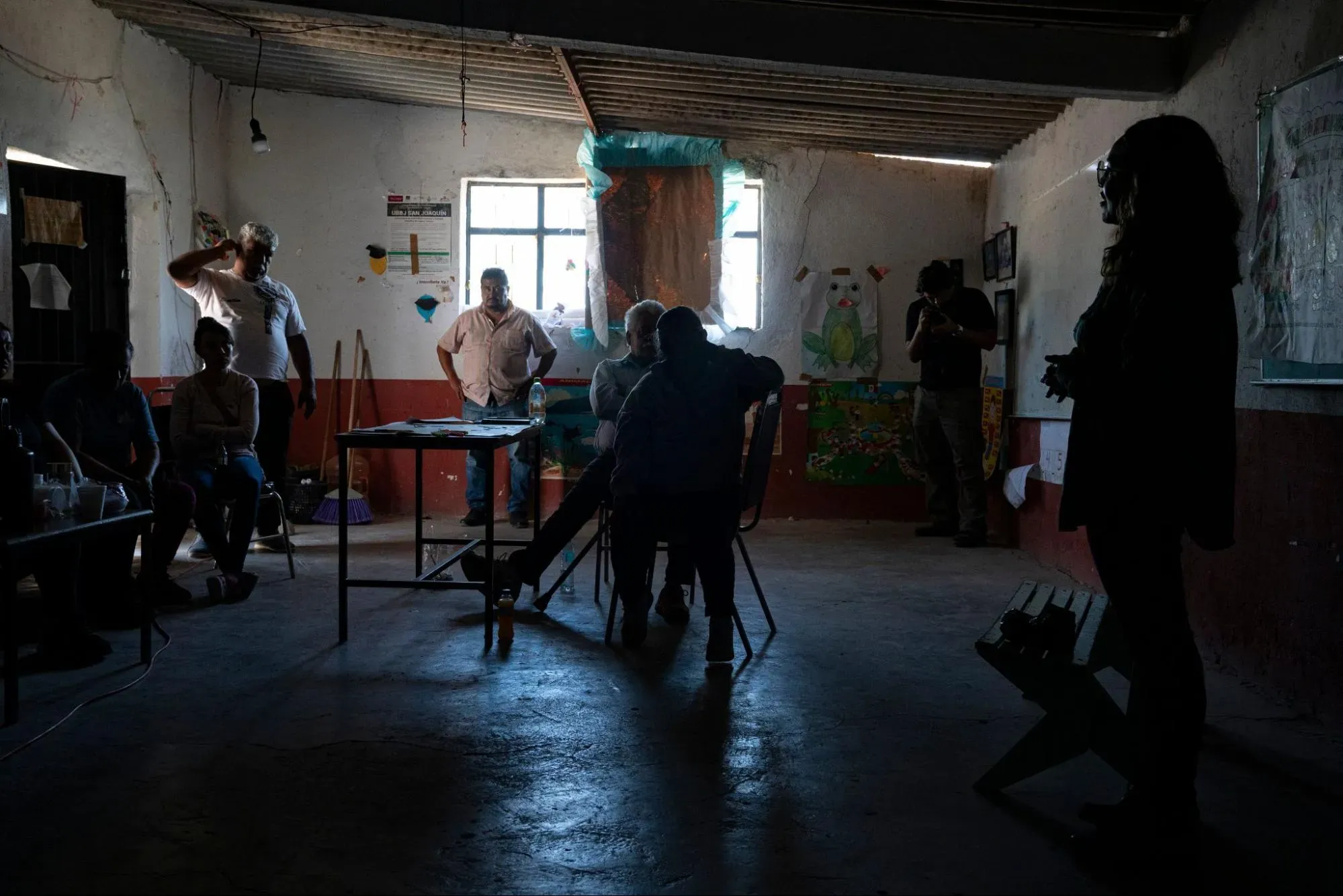
In February of this year, in Urecho—a small town in the municipality of Colón—we brought together residents interested in discussing how this area and its ecosystems have been changing in recent years as industrial parks have expanded in the surrounding area—data centers in Querétaro are typically built in these parks. Seven people ultimately attended the meeting—four women and three men—in addition to García Estrada herself.
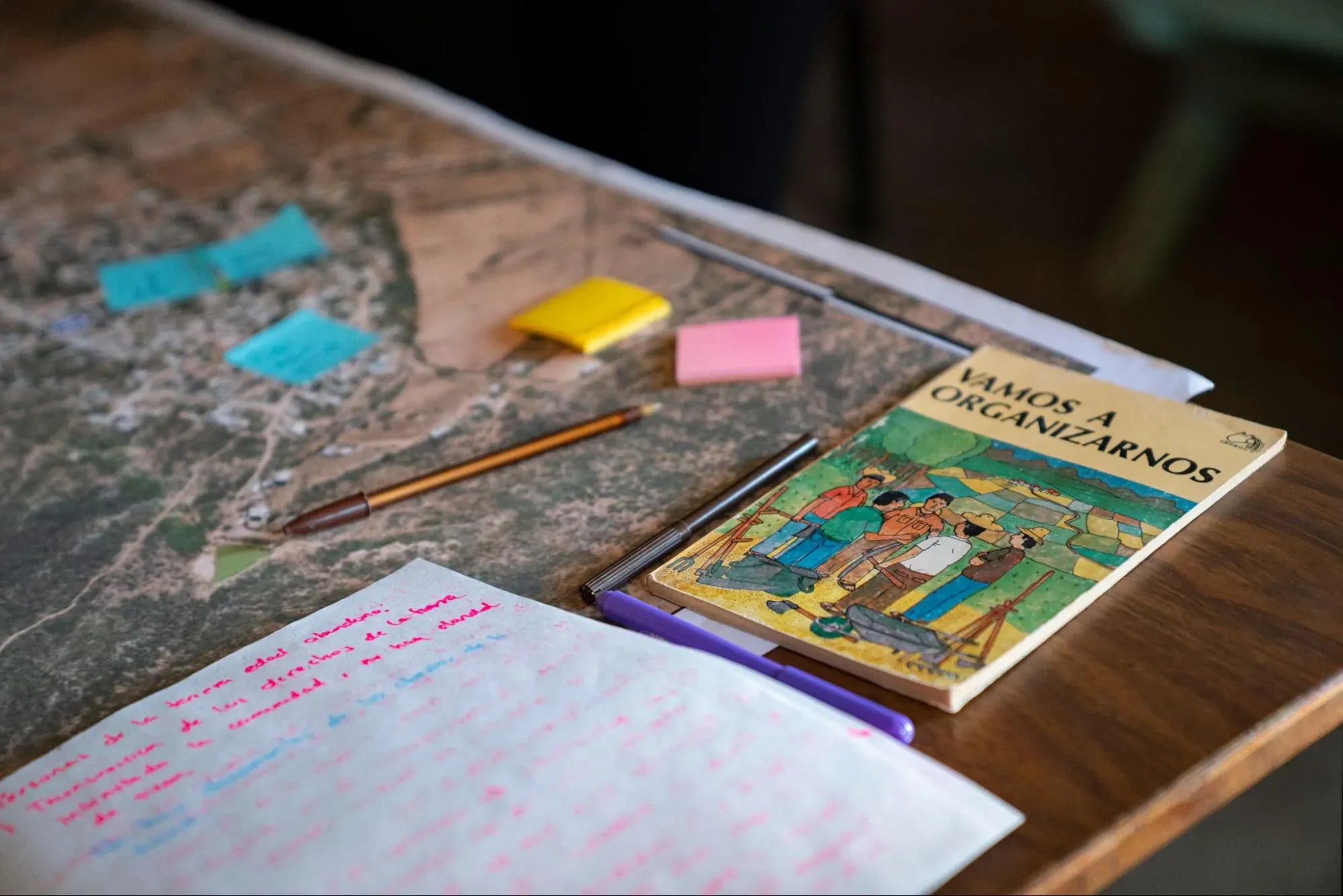
To kick off the session, she asked them what their needs were as a community. In a brainstorming session using a map and Post-it notes (see photo below), attendees identified the issues they considered most urgent. They noted that water outages were a serious problem they frequently had to deal with. But they also pointed out deficiencies in various municipal services and the lack of clarity regarding the ownership of much of the surrounding land.
García Estrada then screened a video documentary published a few days before the meeting by Diana Baptista and Fintan McDonell for Context. In this video journalists describe how promises of jobs for local communities around the data centers in Querétaro are not being fulfilled. They also highlight the increasingly solid evidence linking water and power outages to the rapid industrialization of this region.
“What was explained in the video caused them a great deal of concern. Their facial expressions even changed when they saw it,” the researcher recounts. The video describes the reality in towns like Viborillas and La Esperanza, located just a few kilometers from Urecho. This proximity led attendees to connect these issues with the current needs of their own community. “If we already have very little water now, what will happen when this reaches us?” said one of them.
Another observation that came up, García Estrada explains, was the residents’ surprise at the interest shown by journalists from around the world who have been coming to Querétaro in recent months to cover this story. “They’re surprised that people from so far away want to investigate their area and that the authorities aren’t telling them anything. But deep down, it doesn’t really surprise them either, because they feel they’ve always lived under the government’s indifference.”
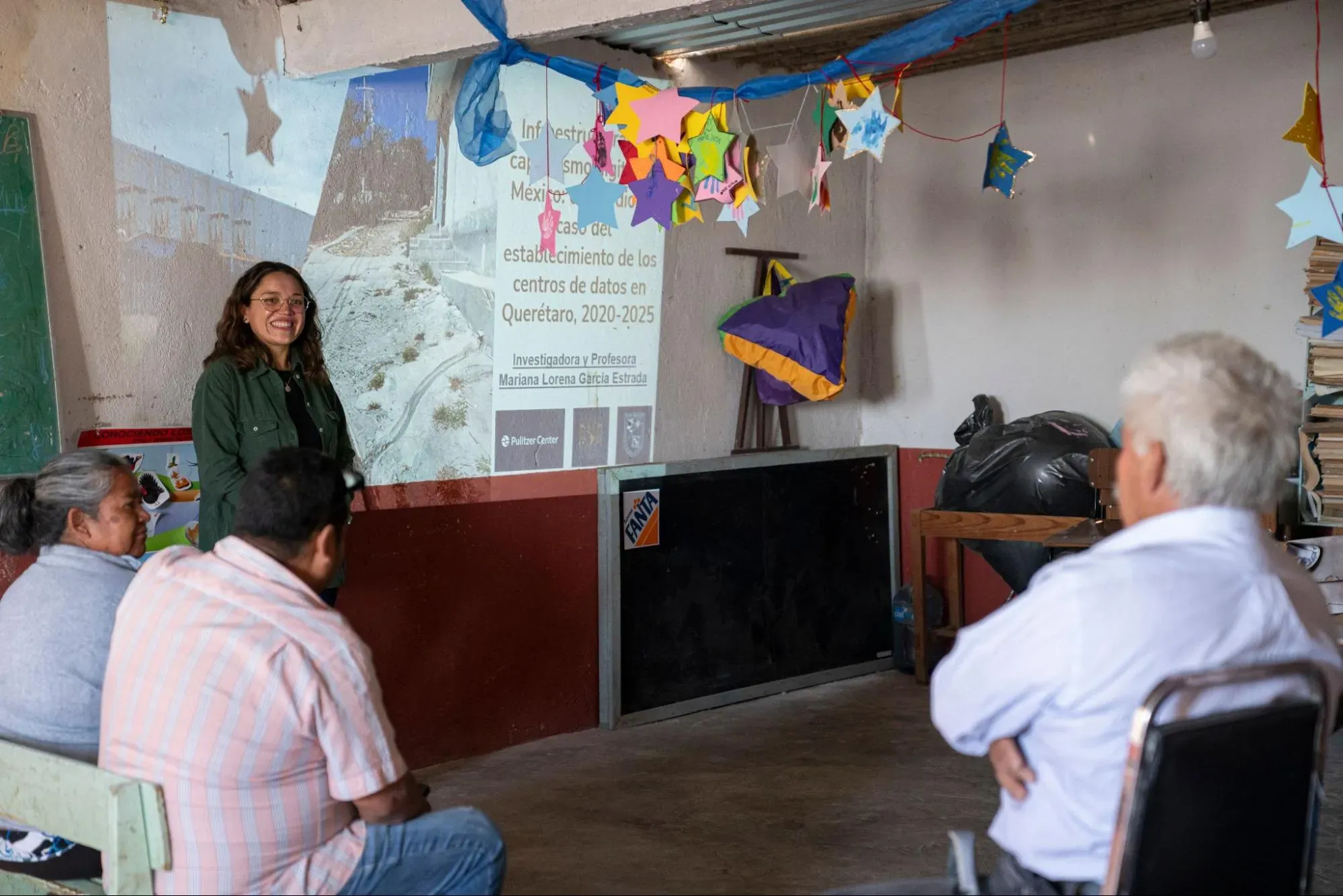
Before wrapping up the activity, García Estrada suggested they create a WhatsApp group to stay in touch. In fact, the researcher plans to continue holding similar meetings in this same community or in others in the area in the coming months. Her goal for upcoming workshops is to share more detailed information about the use of resources from these infrastructure projects, as well as highlight stories of citizen resistance that are happening in more and more countries.
“Many of you think that nothing can be done. But there are cases where projects have even been successfully halted. Not everything is set in stone,” she told them as she wrapped up the meeting.