Journalist Resource
 October 3, 2025
Amplified Across Platforms, Cited in Congress: The Ripple Effect of 'Chasing Misoprostol'
Country:

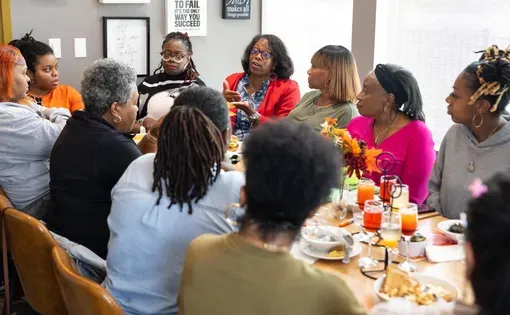
In an age where information is everywhere but often eludes the communities that need it most...

Viral articles, grassroots amplification, and new video strategies from a StoryReach U.S. Fellowship project helped connect patients, doctors, and policymakers to a story once hidden in hospital supply closets. Highlights include:
- Broke the national story on Louisiana reclassifying pregnancy care drugs (misoprostol, mifepristone) as controlled substances.
- Produced 12+ stories tracking effects of the law in Louisiana and other states considering similar legislation.
- Reporting cited in a lawsuit by the Birthmark Doula Collective challenging Louisiana’s law.
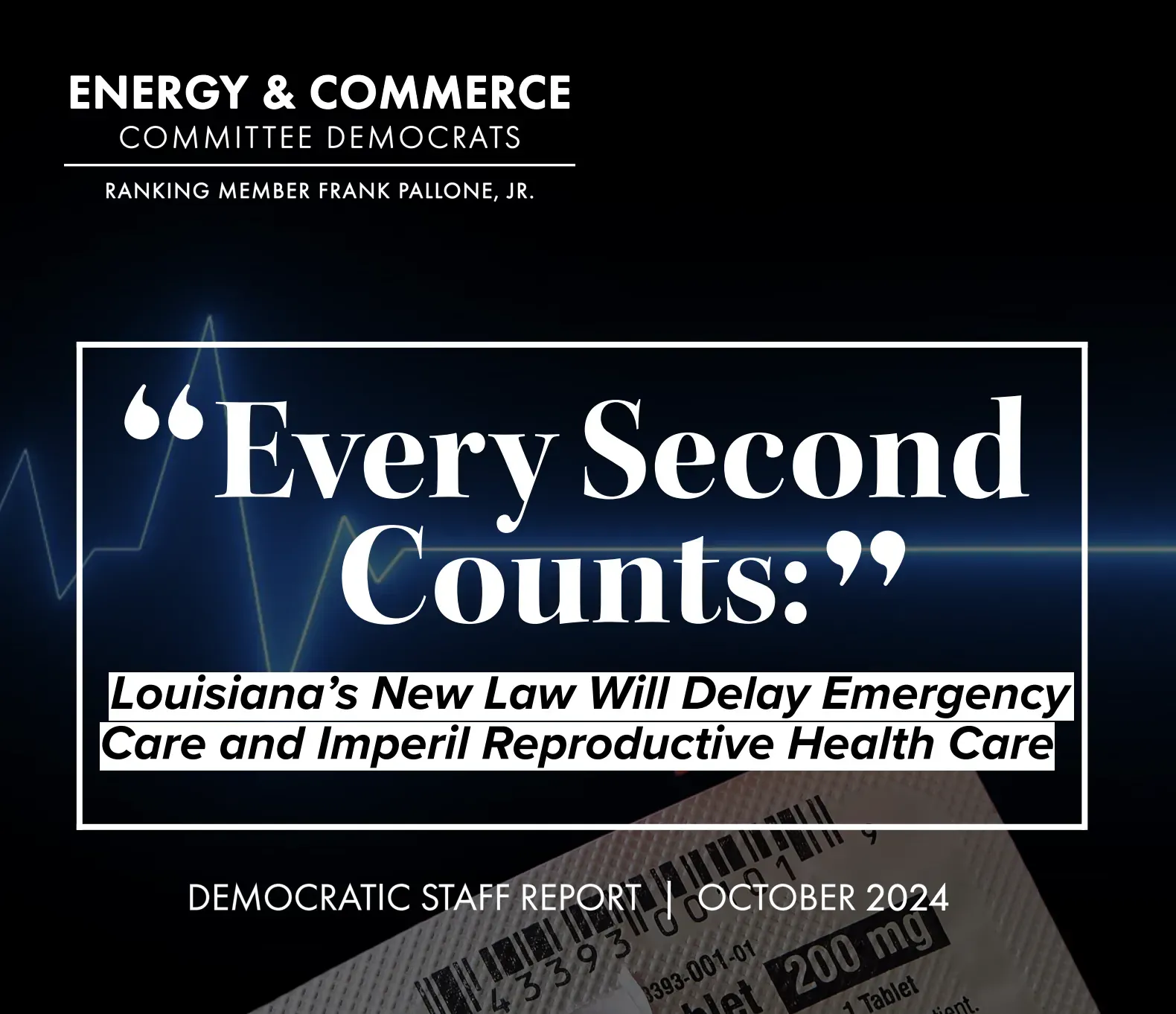
- Reporting cited in the U.S. Congressional Energy and Commerce Committee report studying the law.
- Prompted state health department guidance for doctors within 3 days of publication.
- Reporting honored with the Edward R. Murrow Award.
This project began as a study of technology and reproductive health in rural Louisiana, but it pivoted soon after the state became the first in the nation to reclassify pregnancy care drugs as controlled dangerous substances. Misoprostol and mifepristone are medications that are constantly targeted by right-wing politicians because they can be used for abortion, although both have multiple other uses. It’s a fight that is occurring nationally, progressing after the Supreme Court overturned Roe v. Wade in 2022 and gaining steam even more, when during the course of reporting on this project, Donald Trump was elected to the presidency again in fall 2024.
I am a freelance reporter based in New Orleans, and I applied to work on this project along with the nonprofit Louisiana Illuminator, which is part of the States Newsroom, a nonprofit media network.

As a nonprofit journalism organization, we depend on your support to fund more than 170 reporting projects every year on critical global and local issues. Donate any amount today to become a Pulitzer Center Champion and receive exclusive benefits!

How I reported the project
As I was interviewing labor and delivery nurses and OB-GYNs at the end of August 2024, I received the tip that misoprostol was being preemptively pulled off postpartum hemorrhage carts in Louisiana hospitals. The law that had reclassified the two drugs as controlled dangerous substances was set to take effect on October 1.
I had first reported on the law when Governor Jeff Landry signed it in May 2024. At the time, hundreds of doctors had signed a letter asking legislators not to pass the law. The reclassification of the pregnancy care pills was not the original intent of the bill when it was introduced, it was added in amendments to a separate bill about coerced abortion. The amendments were added quickly and took the Louisiana medical community and reproductive health advocates by surprise. There was not a lot of time for feedback, and at the time, I remember doctors talking about how shocked they were that this happened so quickly.
In May, a lot of the focus was on concern about how this could affect pharmacies and outpatient care, but I hadn’t heard much about how it would affect how hospitals would deal with the reclassification. Controlled substances have to be stored and accessed differently from other medications, so they could no longer be carried around in nurses’ pockets or in rolling carts. In my reporting, I learned that every hospital has its own unique system for obstetric hemorrhage care. Some use rolling carts while others use kits in labor and delivery rooms, where easily accessible medications and equipment are stored in case of massive bleeding after delivery.
After speaking with one OB-GYN and one nurse, I began working on confirming the reports across multiple hospitals in Louisiana. I also spoke with doctors about how often they use misoprostol to stop and prevent postpartum hemorrhaging, and why it is especially used for patients with hypertension or asthma who might have adverse side effects from other hemorrhage medications.

Findings
Going into this project I already knew that Louisiana has one of the worst maternal mortality rates in the country. I also knew that the risk of mortality and morbidity is exponentially worse for Black women and people living in maternity-care deserts. As the abortion ban in Louisiana was enacted after the Supreme Court decision, reproductive health experts in the Deep South had been sounding the alarm on how abortion bans would put more women’s lives at risk. And when I was speaking with health care providers about these pills being pulled off hemorrhage carts, there was an increasing sense of alarm that this would only add risk for women.
One doctor forwarded a report to me that shows from 2016 to 2019, severe maternal morbidity due to hypertension and postpartum hemorrhage decreased by almost 40% in Louisiana, solely due to the standardization of processes.
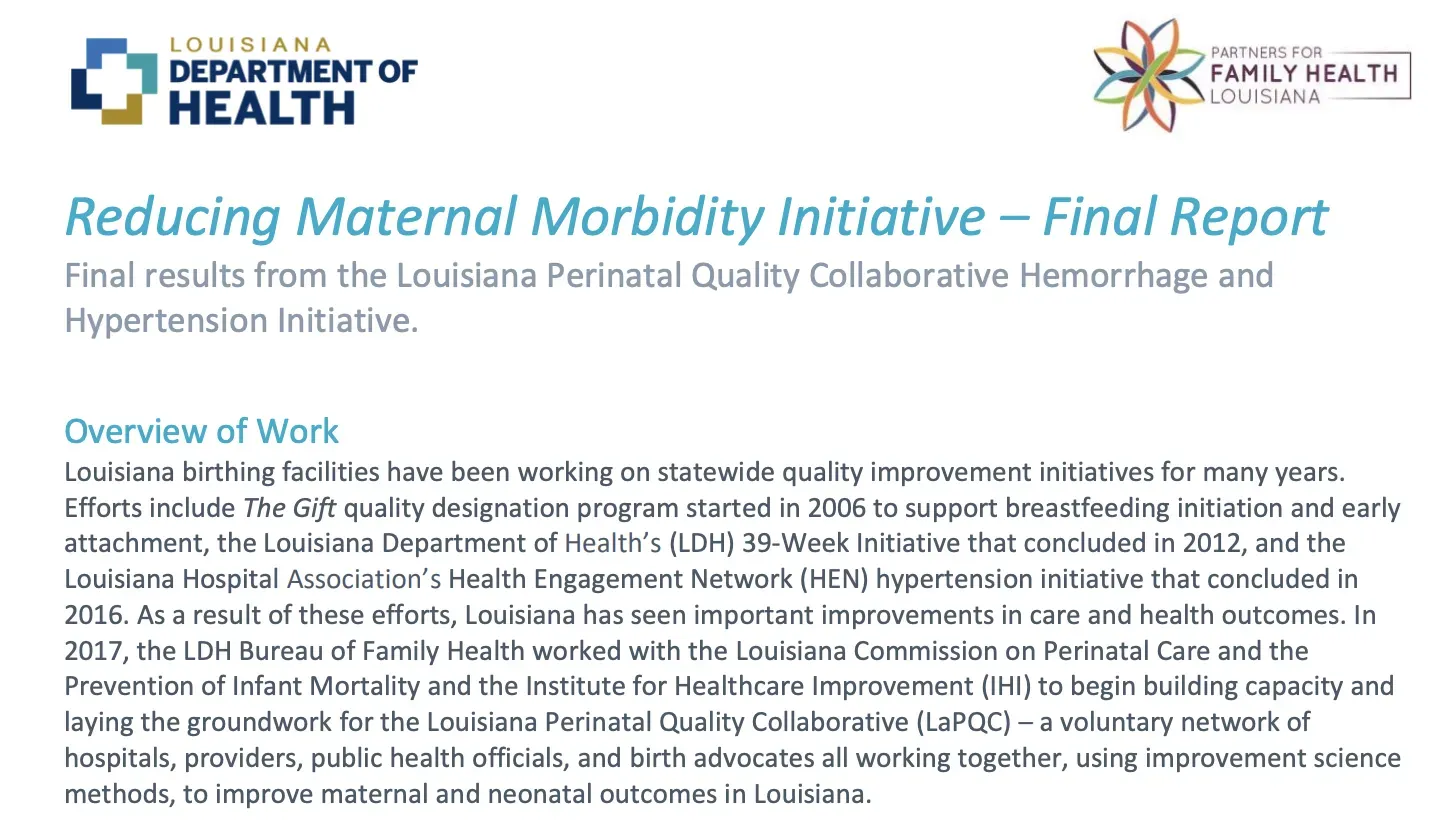
But, the doctor worried that changing the protocols for dealing with postpartum hemorrhage could risk backsliding. “When we change these protocols that work so well, we are introducing a significant opportunity for errors, lapses, and delays in care, and worse maternal outcomes solely because we are messing with a process that works well and now has to be re-learned,” the doctor told me.
One reporting challenge I had is that there were some doctors, nurses, and pharmacists who were worried they were putting their jobs at risk by speaking with me. I conferred with my editor, Greg LaRose at the Illuminator, and we decided that, so long as we knew and could confirm the identity of the health care providers, we would allow some medical providers to withhold their names from publication. That way, I was able to obtain copies of letters doctors had submitted, without exposing them by publishing the contents of the letter with their signatures.
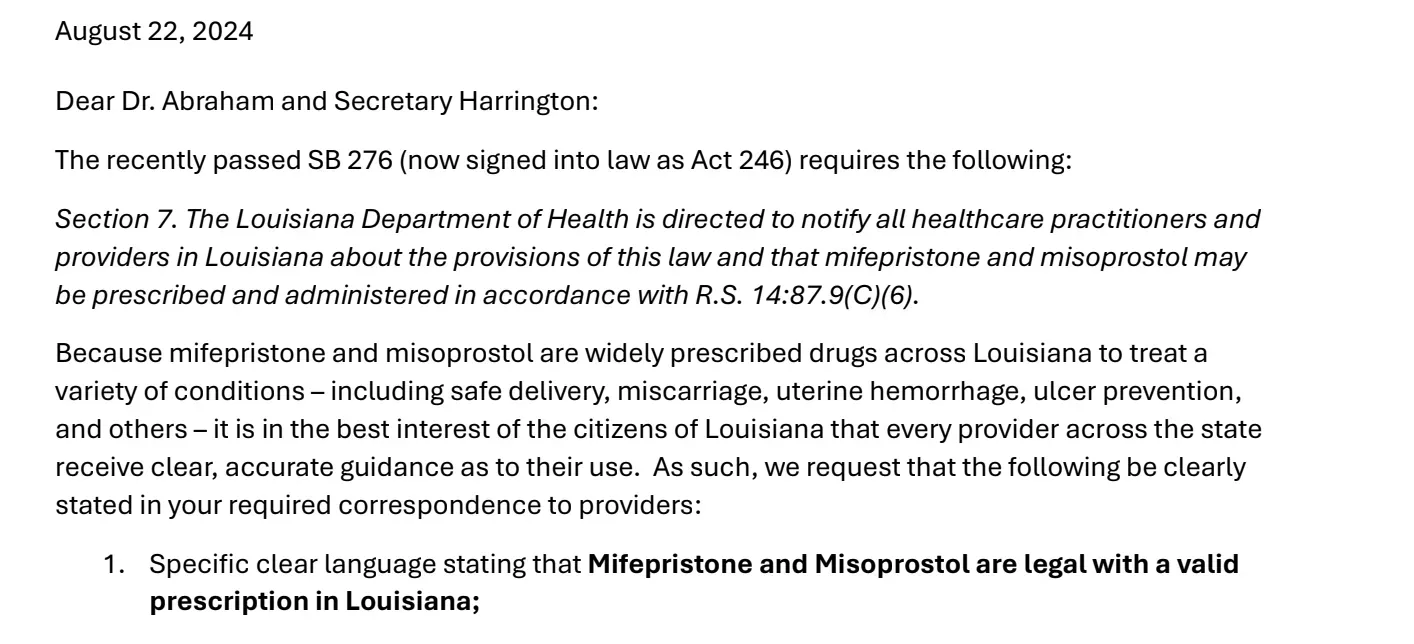
I obtained a copy of a letter sent on August 22, 2024, and that 50 doctors had signed and sent to the Louisiana Department of Health (LDH), asking for additional guidance on how to safely prescribe and administer misoprostol and mifepristone once the new law goes into effect. They specifically asked for help on the use of misoprostol in the inpatient setting, and “how to ensure it will be readily and quickly available in commonly used obstetric hemorrhage carts.”

Immediate impact
We published my first story on September 3. I was not prepared for the level of public impact that occurred almost immediately after the story went live. The article went viral, picking up speed first on X (formerly Twitter) and then across local and national outlets that aggregated the reporting. Senator Chuck Schumer (D-New York) and other politicians shared the news on their social platforms. Historian Heather Cox Richardson and writer Jessica Valenti blasted the news on their newsletters. Then came an email from Vice President Kamala Harris’ presidential campaign, informing me that Harris would be sharing my story in a press release. So on that same day I was able to publish a second story about Harris’ comments.
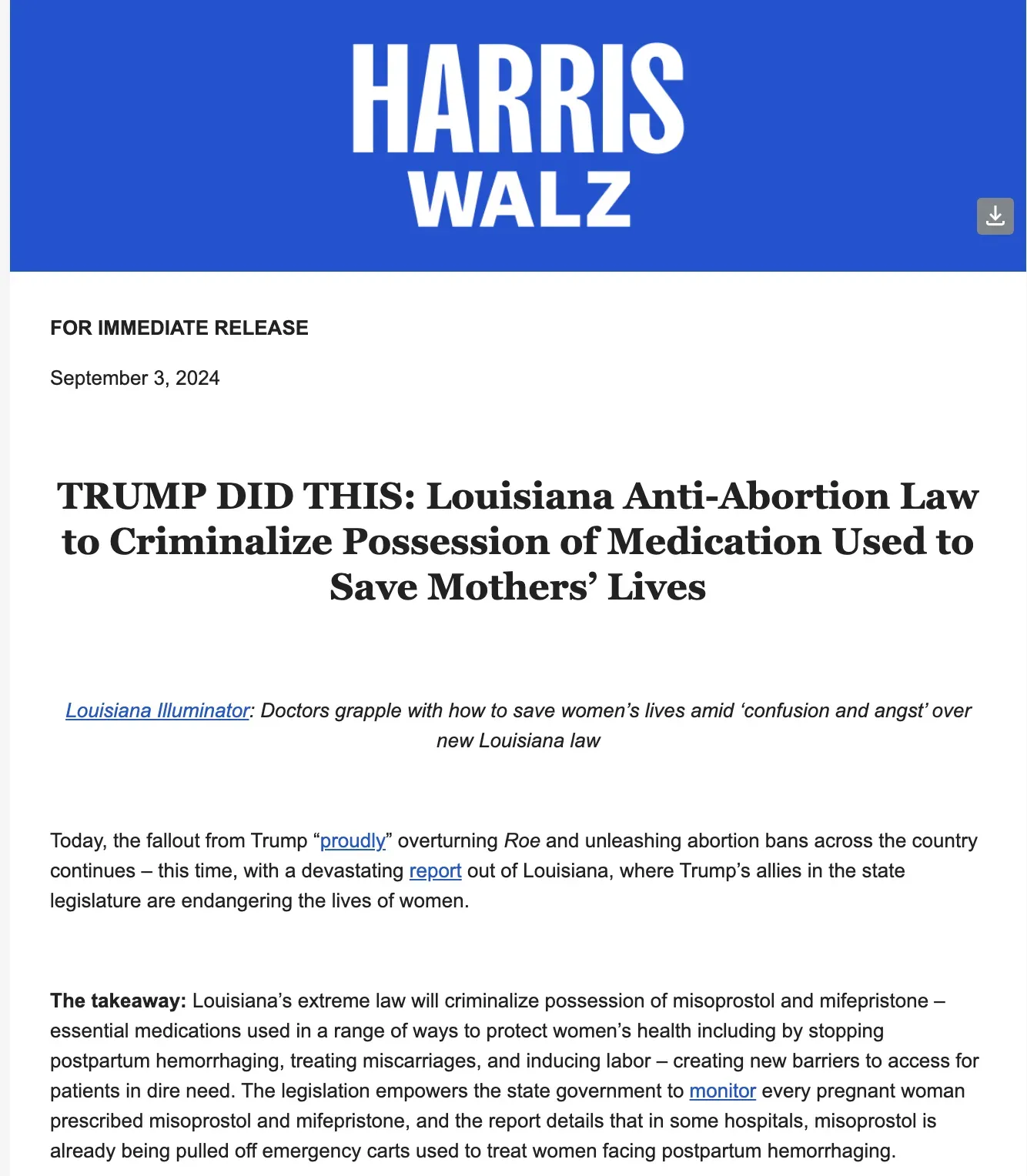
But the impact was not just in terms of reaching wide audiences. When I published my first article, LDH had still not responded to the doctors’ request for more guidance on the reclassification. Within three days of my reporting and the public outcry that ensued, the health department released a list of guidance for doctors. Ultimately, this ended up providing me with more news for my continued coverage, and I shifted my focus to reporting on this topic for my project. For example, I covered the complaints medical providers had over the errors and lack of details in the health care guidance, as well as the attorney general’s attempt to clarify what the law change would mean. There were also multiple follow-ups on what the hospitals were doing to change their protocols, and how some were doing drills to see how much more time is needed to access the medicine when it’s down the hall and locked up versus in the labor and delivery rooms. Along the way I cross-published on the news website The 19th and multiple online newspapers affiliated with the States Newsroom. Several local news stations also picked up my reporting.

Integrating audience research
When I started working on this project I initially believed my audience would primarily be patients, mothers who needed reproductive health services. But after one conversation with my advisers at the Pulitzer Center, I realized I wasn’t naming another big section of the audience that needed to be reached: Louisiana medical providers, including doctors, nurses, and pharmacists. This realization came after I was reflecting on how many doctors I reached out to in September who hadn’t even realized the medication had been reclassified. Nurses and pharmacists I spoke with also shared their confusion. A rural doctor said that if a pregnant patient came into her hospital bleeding out with no IV access, she would automatically use misoprostol as an option. Other medications and tools are not as easily accessible in rural hospitals because they require more resources, whether that’s because they are more expensive or require the use of syringes. Not to mention the more times a patient has to wait for access to medicine, the more blood she loses.
“Blood is always in short supply,” the doctor told me. After we spoke, she reached out again to say that the pending law is likely why she’d been having pushback from pharmacies when she prescribed misoprostol for outpatient miscarriage management. They’d been calling her to request clarification on why she prescribed the medication, and one pharmacy refused to fill the prescription.

“There were times where I worried about my reporting, until I spoke with mentors who pointed out that if I was getting such intense pushback, it was because the reporting had stirred up a reaction and had people calling for change.”
Part of my reporting involved developing my relationships with medical professionals. I had already been connected to a handful of doctors prior to this Fellowship, but my reporting on mifepristone really helped secure these relationships. Given that the Fellowship was for a year, and I knew I’d be doing continued reporting on the subject, I would have regular check-ins with about six medical professionals, where I would just quickly message them to see if anything new had popped up. I found that this resulted in a lot more tips and updates that the doctors considered “small” news but would often be worth either a breakout story, or worth combining with some of the other doctors’ updates to establish a pattern I could do a full story on. In the past I’ve said, “Let me know if anything comes up,” but what I found was by consistently messaging to ask for quick updates, I learned a lot more.
What I learned
I will take this into future reporting as a lesson that doctors don’t always know what is considered “newsworthy,” and so it’s important to keep constant contact with a handful of sources on a regular basis. What was also helpful is they would send my articles to colleagues and friends, and that way I was connected to doctors across the state who, after reading my articles, would sometimes ask how to reach out to me if they had something to share.
As my reporting continued, I had government representatives on state and national levels reach out to me, as well as attorneys, to ask about my reporting. Additional impact was seen when I was cited in a lawsuit challenging the law as unconstitutional, and when my reporting was cited multiple times in a congressional report studying the law. Throughout the year, I increased my outreach to doctors and always made sure to keep in touch with rural doctors to make sure their voices were included.
One of the challenges I had with the project was handling the online harassment that occurred in the wake of the reporting going viral. Some local politicians who worked on the bill insulted me multiple times on X, by name; anti-abortion organizations critiqued my reporting; and I was referred to as a "propaganda artist” for abortion. There were times where I worried about my reporting, until I spoke with mentors who pointed out that if I was getting such intense pushback, it was because the reporting had stirred up a reaction and had people calling for change. When the attorney general issued a multiple-page release saying that reporting about the pregnancy care pills were misinformation, my editor wrote a letter defending our reporting.
When I saw how my articles were taking off on TikTok, with people recapping the news, I thought I should start using that as another outlet for engagement, to increase my reach to those who may not be reading traditional news outlets. The Pulitzer Center connected me with TikTok training. Dr. Ben Rein, who has a large following on the platform, gave me three hourlong sessions of training. He was extremely helpful in sharing what works on TikTok—for example, having passion and being opinionated—and I worked on how to incorporate that in my reporting while also keeping an eye on bias. He recommended using a green screen with my article in the back for one of the TikToks, which I did, and he also said it’s helpful to respond and engage with commenters. In my second video, I was a bit more comfortable and casual, and it did a lot better than the first. Rein and I discussed how TikTok is a type of platform where people just want to feel like they are listening to a friend, so a less scripted tone is better. He also walked me through on how to structure a script and how important the first six-10 seconds of a TikTok are in making the news feel immediately important and approachable.
It’s often hard for me to think of promoting the news as part of the job. It often gets pushed out of the way as I focus on my investigations and reporting. In hindsight, I wish I had started the TikTok access way earlier in my Fellowship as a way to educate more people. It’s definitely something I was uncomfortable with, filming myself, but I’m learning to get adjusted to it.
Takeaways for journalists
What advice would I give to someone starting out with videos?
Make a lot of draft videos testing yourself out just talking about your topic. I thought I’d be able to quickly make many TikToks, but each one took so long to complete, because I needed to adjust when writing for a short delivery of news. My second TikTok got more views than my first, and it’s hard to know exactly why, but the biggest difference is for the first one I wrote a script and then read it, whereas for the second, I recorded myself talking and then transcribed it, and went back and edited that into a script so it would sound more like I speak. Reporting is, of course, the center of the project, but I’ve learned that I need to spend time making sure there is a long tail of impact with that reporting.
Have faith in your own reporting. Don’t be afraid to be flexible, and follow your instincts. These are all lessons I learned while working on this project. It was originally about technology and reproductive health, but when it seems like another breaking news story is pulling at you, you owe it to yourself to run with it and see it through. And keep in mind that the audience you think you need to reach is only a small part of the one that needs to hear what you have to say.
These are lessons I learned from this project that I will take with me to future projects. I will now think differently about how to connect with audiences, and keep in mind that the audience might not always be the public at large, but a subset of professionals in the space I am working in. And going forward, I’m going to try to amplify my reach by engaging with more video-focused social media to share my stories, for many of my stories generally. I do really think it’s important to remember to meet the people where they are, and in our case at the moment, people are getting their news from quick videos.
“I will now think differently about how to connect with audiences, and keep in mind that the audience might not always be the public at large, but a subset of professionals in the space I am working in.”
At the end of my Fellowship I reached back out to many of the doctors I’d stayed in touch with about the year. It was really meaningful to hear how impactful my project was to them, and to get a final update about the state of mifepristone in Louisiana. The doctors I spoke to have all had to implement workarounds in their respective hospitals to adhere to the law but try to minimize risk to the patient. But they said we would reconnect once they had more solid data on whether or not postpartum hemorrhaging increased since the new law went into effect. I put a reminder on my calendar to reach out to them ahead of the anniversary. I was also honored to be recognized for my work with the Illuminator and the Pulitzer Center when the project won a national Edward R. Murrow Award under continuing coverage.
The Fellowship may be over but I will continue my work on this going forward. Thank you to the Pulitzer Center for all of your faith and confidence you have instilled in me.