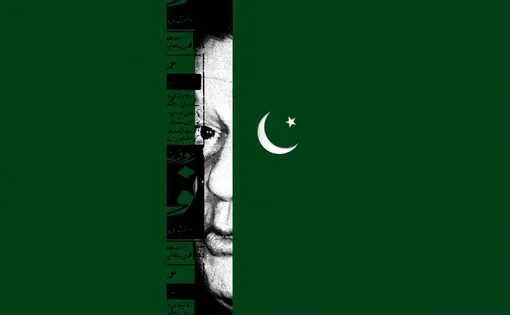

What happens when a state erases its most famous public figure?
This is what Pakistan has been trying to do with the cricketer-turned-politician Imran Khan over the last two years. He has been confined in a small jail cell, on trial for a slew of charges. Only one photo of him has emerged from that time.
The Pakistan Cricket Board, run by political appointees, issued a video celebrating Pakistan's 1992 World Cup win, under Imran's leadership—after having edited him out of the footage. News anchors were banned from mentioning his name.
So much of Imran Khan’s appeal has been built on his physically arresting presence, and to try to erase that—to erase the most famous Pakistani ever—is a striking experiment in repression.
In some ways, his situation is similar to that of Myanmar politician Aung San Suu Kyi when she was in prison—and Imran has compared himself to figures such as Mahatma Gandhi and Nelson Mandela. There are also parallels with older Pakistani leaders with cult-like support.
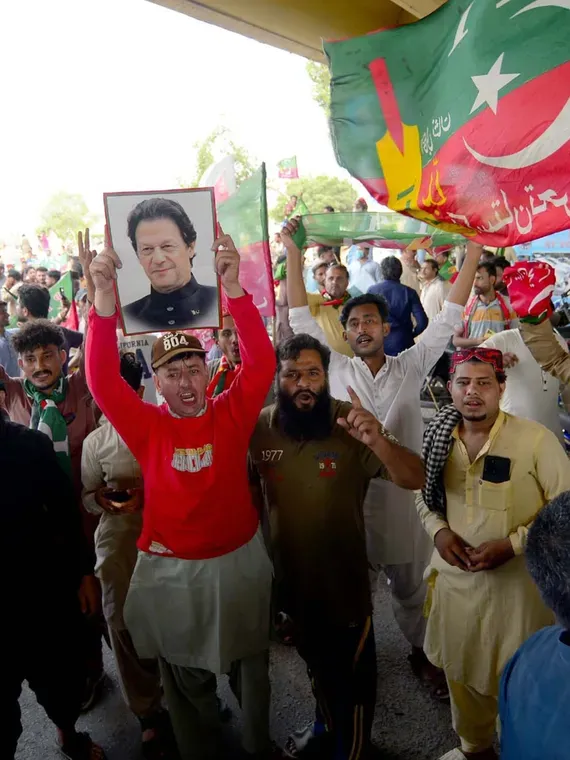
But Imran's situation is unique, not least because of the nature of his public profile, his route to political power, and his erasure in this digital age.
Journalist Osman Samiuddin reports from Lahore, Karachi, and Islamabad, to understand the stakes at play, the government’s various methods to vanish Imran from public life, and the hacks that his supporters have used to bend the rules.