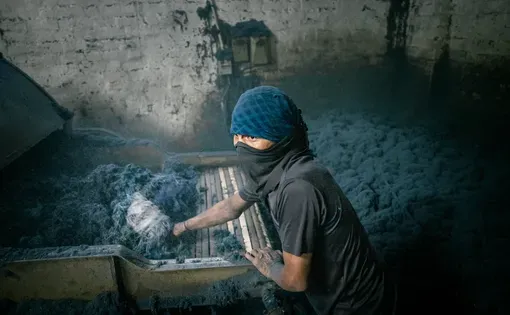

Panipat, a city in northern India, is one of the world’s largest textile recycling hubs. Known as the “cast-off capital of the world,” it processes more than a million ton of discarded clothing each year, transforming garments from Europe, North America, and East Asia into recycled yarn, blankets, rugs, and home furnishings that re-enter global markets. The city is often held up as a success story of fashion’s circular economy.
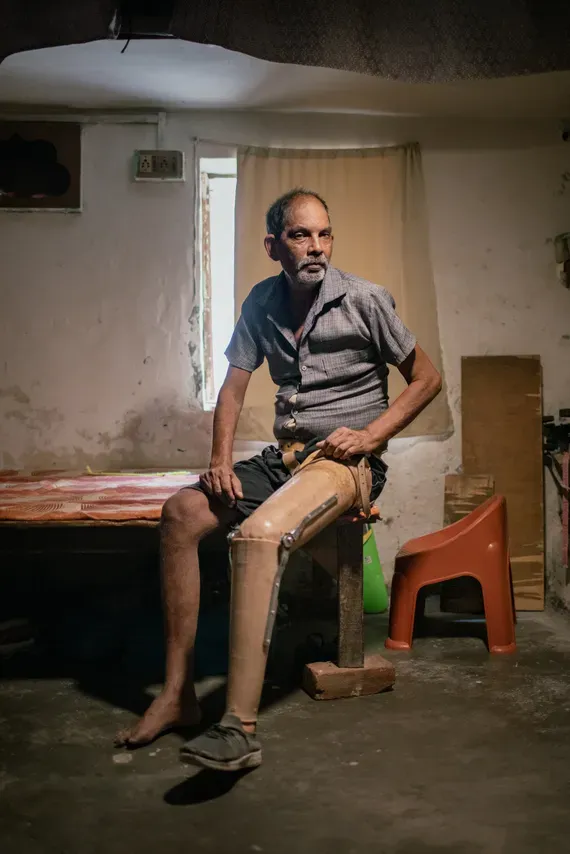
But behind this story lies a hidden human cost. At least one worker loses a limb every day in Panipat’s textile recycling industry, with amputations reaching as many as seven in a single day during peak production. The victims are overwhelmingly migrant workers from Bihar, Uttar Pradesh, Jharkhand, and West Bengal, many employed through contractors or informal arrangements that leave them with little protection when accidents occur.
For most, losing a limb means losing their livelihood. An estimated 95% of injured workers eventually leave Panipat, returning to their villages disabled, indebted, and often without compensation.
This investigation examines what happens to workers after catastrophic injuries, why accountability remains elusive, and whether fashion’s celebrated circular economy can truly be sustainable when its human costs are borne by workers whose bodies are treated as disposable.