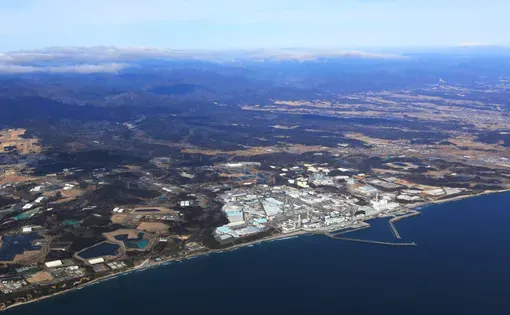

Four thousand workers struggle daily to control the ongoing disaster at Fukushima. In March 2011, a 9.0 magnitude earthquake and tsunami killed 20,000 people on Japan’s eastern coast. Four nuclear reactors at the Fukushima Daiichi power plant melted down and exploded. The radioactivity in the melted reactors is so intense that it destroys the robots sent to explore the damage. No one knows where the melted fuel is located or how deep it has burrowed below the reactors’ concrete pedestals. The water used to cool the reactors is stored in more than a thousand tanks. Since 2023, this cooling water, supposedly cleaned but actually contaminated with 62 radionuclides, including cesium, strontium, and plutonium, is being released into the Pacific. Two spent fuel pools, packed with nuclear cores, have yet to be emptied. They sit precariously on top of Units 1 and 2, which are exploded tangles of metal ready to topple into the ocean.
Fukushima’s 160,000 atomic refugees no longer receive housing subsidies. Radioactive soil from Fukushima—renamed “Happy Soil”—is being dumped into the prime minister’s flower bed in Tokyo and other construction sites around the country. The government claims that the disaster is over. It is forcing resettlement and turning Japan into a red zone. Fukushima is the world’s worst industrial accident, eventually costing over a trillion dollars. As Japan restarts its nuclear reactors, it is forgetting its atomic history and the geology of an archipelago that yearly suffers more than a thousand earthquakes.
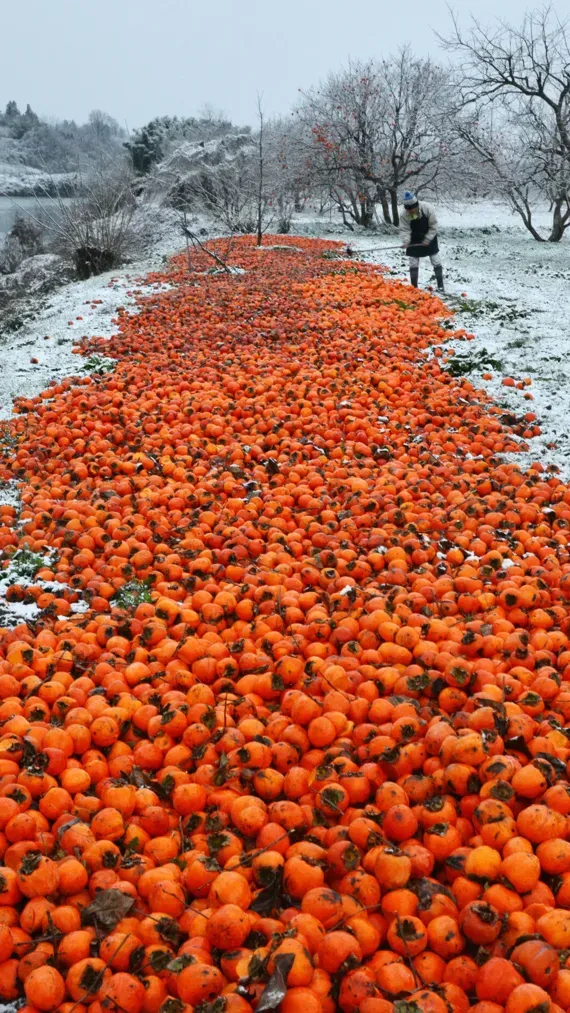
Image Caption: Radioactive persimmons, Date City. Image by Yuki Iwanami.