Story
 June 13, 2026
From Algorithms to Addiction: How AI Is Fueling Underage Sports Betting, Mental Health Crisis
Country:

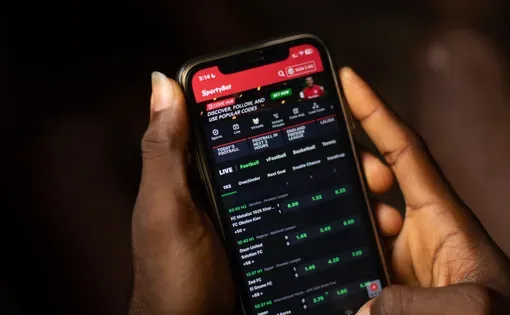
Sports betting companies in Nigeria weaponize artificial intelligence for their own benefits. They...

In May, Adeniyi Adewale almost committed suicide in Akure, Ondo state, after losing around $30,000 belonging to his boss to a sports betting company. Though his family refunded the money to his employer by selling family land and other properties, Adewale became mentally ill, as his family went bankrupt due to his action.
“I wanted to take a risk, because they told me the games are AI-powered. I wanted to see whether I could win,” he said in an audio confession to the police heard by this reporter.
Just like Adewale, Samuel Adegoke grew up like other young men, obedient, law-abiding, and respectful. At 18, when he gained admission to the Federal Polytechnic, Ilaro, Ogun state, a friend introduced him to sports betting.

As a nonprofit journalism organization, we depend on your support to fund more than 170 reporting projects every year on critical global and local issues. Donate any amount today to become a Pulitzer Center Champion and receive exclusive benefits!
Sports betting, Adegoke’s friend told him, was an artificial intelligence (AI)-powered activity that guaranteed millions in jackpots from small stakes. All Adegoke needed to do was place money according to predictions by AI models that continuously analysed vast datasets for accurate win probabilities for stakers.
Impressed by the idea, Adegoke began to bet, attracted by promotions that promised millions of naira, and soon, bombarded by advertisements from sports betting companies on a daily basis on his social media accounts, he became an addict.
One morning in his first year at Ilaro, he lost his entire school fees to betting. About to be kicked out of school, his parents, who belonged to the royal family in his village, bailed him out by sending him more money for school fees. But Adegoke did not learn any lesson, as he persisted in betting, entranced by the dizzying virtual betting spots on sports betting websites, powered by a combination of artificial intelligence and independent random number generation, giving Adegoke the illusion that he could win.
One morning in his second year in school, just before the first semester examinations, another AI-powered sports betting promotion came, one promising a mouth-watering bonus. Adegoke used his school fees to bet and lost everything, meaning he would not be allowed to sit for the exams without the fees.
An opportunity to recoup the money came through his roommate, Jacob Israel, who had received his own school fees through an alert on his phone from his parents.
“He asked for my phone, and I gave it to him. After school hours, I told Adegoke that I wanted to go and pay for my school fees and asked that we should go together. When we got to the place for the payment, I asked for my phone. That was when he told me that he had used my money for betting and lost it,” said Israel.
Desperate now, Israel called Adegoke’s parents, telling them what happened. Adegoke’s mother asked Israel to confiscate her son’s phone and other valuables, sell them, and use the proceeds to pay his school fees. Israel then confronted Adegoke about how he became addicted to sports betting.
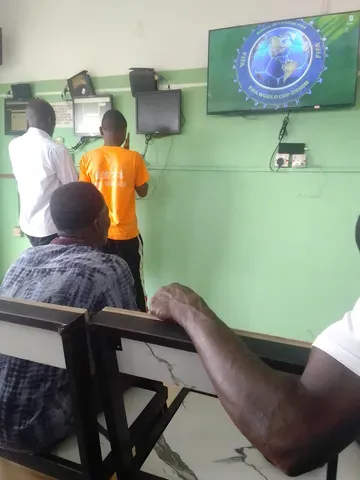

Unlike in the past, sports betting companies had a sophisticated plan on a 24/7 basis, turning bettors into addicts through social media algorithms and exploiting the AI hype by promoting themselves as using AI for more accurate, adaptive, and specific forecasts. They claimed that their AI-generated information about players’ output, injuries, weather and past team performances within microseconds could help stakers win through on-the-spot predictions.
Also, the AI-powered dashboards of sports betting companies made their interfaces easy to navigate, allowing people to lose money in a fast and seamless manner, said David Ebriku, a lawyer handling cases for underage sports bettors. All a young bettor had to do was go to their website on their mobile phones, make selections based on AI-generated predictions, click the bet button, copy the booking number, click the ‘Book a Bet’ icon from the top menu, paste the booking number, and then make payments online through their bank accounts.
“There were virtual betting games too,” Israel said. “People bet on AI-powered games.”
Unable to resume school or refund Israel’s money, Adegoke developed mental health challenges, bought insecticide from a patent medicine shop, and drank the poison, dying at a period he was supposed to be sitting for his examinations.
Following Adegoke’s death, people began to ask questions across Nigerian websites, blogs, and newspapers about increasing cases of suicides and mental health challenges among young Nigerians since sports betting transitioned from manual operations to AI-powered platforms on mobile phones in the last two decades.
There are no official centralised government statistics to track mental health challenges and suicides from sports betting in Nigeria, but a study stated that of sports bettors surveyed, 12.5 percent reported negative impacts, many resorting to depression, debt and crime to recoup from losses.
However, documented cases of suicides were numerous. In December 2021, an Abuja-based youth, Adegbite, took his life after losing N150,000 ($100) belonging to his employer through betting. In February 2022, Daniel Ayuba Mark took his life after scammers hacked his SportyBet account and withdrew N1.5 million ($1,000) with a card he saved in his account.
An estimated 60 million Nigerians are now engaged with gambling. Things changed through the proliferation of mobile phones, with usage surging since 2021, active telecom subscriptions now exceeding 182 million subscribers.
Artificial intelligence through mobile phones then accelerated the rate of sports betting engagements, with ads now designed to be catchy and omnipresent in social media, blogs, and search engines, highlighting the few who won big, creating a sense of hope for young people, and portraying betting as a shortcut to wealth. Unfortunately, the rate of losses also accelerated, increasing mental health challenges and documented cases of suicide.
For instance, SportyBet promised young people instant payouts if they won N1,100,000 ($900) with each round; the process was made easy with an AI-powered interface.
In December 2024, Onoh Chukwuma responded to a similar promotion by another sports betting company, lost N2.5 million, and committed suicide after the loss.
Lax regulations and loopholes
The National Lottery Regulatory Commission formerly supervised sports betting through the National Lottery Act 2005, which banned children under 18 from participating in it. In Section 34 (1) (e), licensees who contravened the provision were liable to fines of not less than N20,000 and imprisonment of not less than one year.
Despite this, findings revealed that the National Lottery Act was breached with impunity, with culprits not paying fines or being imprisoned, while underage bettors frequently visited online betting sites. Sports betting operators compounded the situation, exploiting lax regulations and loopholes in the law, with artificial intelligence continuing to tilt the scales towards sports betting platforms due to the overwhelming AI techniques at their disposal.
To combat these sharp practices and lax regulations, the House of Representatives wanted to amend the 2005 National Lottery Act, through the Health Adolescence Act, but lack of political will stood in the way. Lanre Gbajabiamila, director-general, National Lottery Regulatory Commission, also intended to institute tougher laws.
“Any operator allowing underage individuals to participate in gambling will face the consequences. We are committed to building a responsible, well-regulated and fair industry,” he said.
The Supreme Court of Nigeria rendered these good intentions needless in 2024, when it ruled that gambling was supposed to be controlled by states and not federal authorities.
States now control the sector, but the proliferation of AI-powered mobile phones, as well as the activities of sports betting companies, still fuel sports betting among underage bettors, leading to rising documented rates of suicides and mental health challenges.
Experts also said the tough economic conditions in the country, the get-rich-quick mentality of Nigerians, and the compelling techniques used by AI-powered sports betting platforms made millions gamble.
With approximately 62 percent of Nigerians, or roughly 141 million people, living below the poverty line, lots of people fall for the alternatives provided by sports betting companies.
“Since the country is so bad, people are doing anything to get their daily bread, even sports betting, which entices people, especially young ones, like magic,” Love Olawumi, publisher of Apoi Voice, told this reporter from his Lagos base.
Olawumi, a sports bettor, noted that the companies also made it easy for young people to bet through AI features. This, combined with poverty, made underage bettors in Nigeria gamble.
How companies use AI to entice young Nigerians
In 2025, a video advertisement was posted on Facebook by Oun Lyka, featuring a news reporter presenting a report about popular footballer Victor Osimhen endorsing the “I Be Casino” betting app.
“Victor Osimhen has become the official sponsor of an official mobile application that allows Nigerians to be successful. The app has created a new sensation and has broken all download records,” the reporter said.
“Our developers have specifically made it so that everyone can have a 98 percent chance of winning,” the footballer supposedly said in the video.
The post quickly gathered over 605 likes and was shared by ten people to their personal accounts, potentially reaching thousands of people who believed the video was genuine.
Unknown to her followers, what Oun did was the standard way sports betting companies use to lure thousands of unwary youths, with AI-powered videos endorsing them by popular footballers; only this time it was fake, as Osimhen’s endorsement of “I Be Casino” was AI-generated.
In Bet9ja, for instance, the dashboard displayed AI-driven automation of actionable data, personalisation and security to convince bettors about the operator’s efficiency and a pleasant bettors’ experience.
Worried about the alarming rates of suicide and mental health issues among the youth, as well as the powerful nature of AI-powered websites, the Lagos State Government in late 2023 banned 45 gaming companies.
One of the banned companies was MaxBet Gaming Limited, which operated under the trade name of MaxBet247 and used artificial intelligence for its operations.
Why an AI-driven sports betting company was banned
On August 19, 2025, an influencer wrote a list on Nairaland, one of Nigeria’s biggest blogs.
“My name is Ajimuda Timilehin. I live in Lagos, and I work in sports betting,” the influencer said.
Writing with passion, he encouraged readers to stake with Helabet, an AI-driven sports betting company banned by the Lagos State Government.
“If you are in Nigeria and you are looking for a betting site that pays fast and gives good odds, you can try Helabet,” Timilehin said.
The virtual games in Helabet’s catalogue included Money Wheel, Demi God, Tales of Camelot, Net Cash and others, represented by many manufacturers, including Play’n Go, Playson, Booongo, NetEnt, Microgaming and many more.
The entire list of providers was displayed on the page with titles, allowing users to find software from their favourite developers quickly.
Selected slots, new collections, popular species, slot machines with jackpots, multi-line, and options with the purchase of bonuses were marked out by separate menu items.
Everything on the above screen was controlled by artificial intelligence, classic gaming, or generative AI, with computers making decisions every single minute.
However, scrutiny of the platform showed that Timilehin’s claims were not entirely accurate.
Helabet lost credibility in 2023 when Nigerians berated it over the treatment meted out to a bettor popularly known as @MistaFelix, who won some draw games of around N50 million ($50,000) and was not paid. Helabet eventually paid after two and a half years.
A bettor on Facebook also expressed concern about the website, urging caution when transferring money to Helabet, as it might not update the money into a payer’s account, claiming that Helabet stole money from new members professionally and openly.
Helabet got 59 reviews on Trustpilot, with an average of 3.6 out of 5. Trustpilot, a website that hosts reviews of thousands of businesses worldwide, included comments about Helabet in its reviews.
“They are scammers. They are holding $3,700 of my money after I verified my account and submitted all the documents they requested (passport, national ID, binance account, etc). In the end, when I tried to withdraw, they approved it, and instantly an error appeared: ‘Payment error, payment rejected by operator,’” wrote Ican, a bettor, on January 15, 2026.
On contacting Helabet about these issues, an official told this reporter that all bets were settled only after their specialists received official results of events provided by official sources.
“If you are interested in withdrawals, please note, availability of a payment method depends on the technical capacity of the payment system. Withdrawal operations can be processed from 15 minutes to several days, depending on the chosen method and circumstances in each case,” said Liza, the Helabet official who answered the email enquiry.
“Betting companies give false hopes, pull you into trouble and make you empty. Nobody shows you the losses, the lies, the breakdowns. Everyone tells you the fake wins, the loans, the fake slips. I fell for it, and I’m in trouble,” Titus Olawale, a heavy bettor, told this reporter in Lagos.
Google fights back, but not on underage betting
Google allows sports betting companies to operate on its platform, but the outfits must comply with local laws about not targeting minors and promoting irresponsible betting.
These provisions have been breached time and time again. Google banned sports betting companies in January 2025 after the Supreme Court judgement about who controls the sector.
Three months later, Google reversed the ban, allowing ads for gaming products in Lagos state, provided they aligned with state laws.
Soon after, Google also allowed operators in Cross River, Ekiti and Oyo states to advertise sports betting, online casino games and lotteries, in line with the Supreme Court ruling.
Experts, however, cautioned that artificial intelligence continued to put underage bettors at the mercy of sports betting companies through algorithms.
“Because of the way advertising works, even if you want to avoid gambling, you’re going to be served up more options and opportunities to engage in that behaviour than if you were someone who never engaged in that behaviour in the first place,” said James Sherer, an expert with the American Psychiatric Association task force on gambling.
In Nigeria, where digital literacy is limited, Abah Christopher, a psychologist, said AI-fueled sports betting could have negative psychological effects on individuals by contributing to depression, frustration and, in extreme cases, suicide.
To curb the problem, Christopher called for a number of measures.
“We need intervention through therapy, support groups and treatment programs. These are crucial in breaking this cycle and helping individuals recover from gambling addiction,” he said.
How is the Nigerian government reacting?
Some Nigerian state governments announced a strict zero-tolerance policy against underage betting, following the Supreme Court judgement allowing states to handle gambling.
“Gaming is more than recreation. It’s a driver of growth if well-managed. Our focus is on oversight, tax efficiency and protecting minors. We plan mandatory participant verification through tax identification numbers. Unregistered and underage users will be blocked. Violating operators will face consequences,” Michael Ango, secretary of the Federal Capital Authority (FCT) Internal Revenue Service, said.
But these lofty ideas have not been executed in practice.