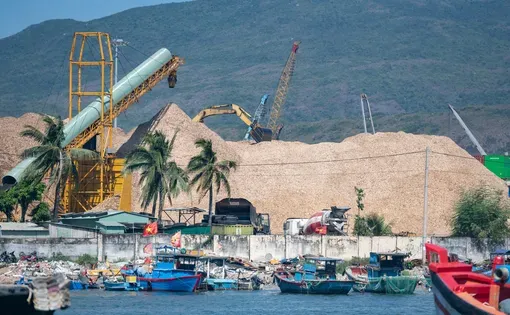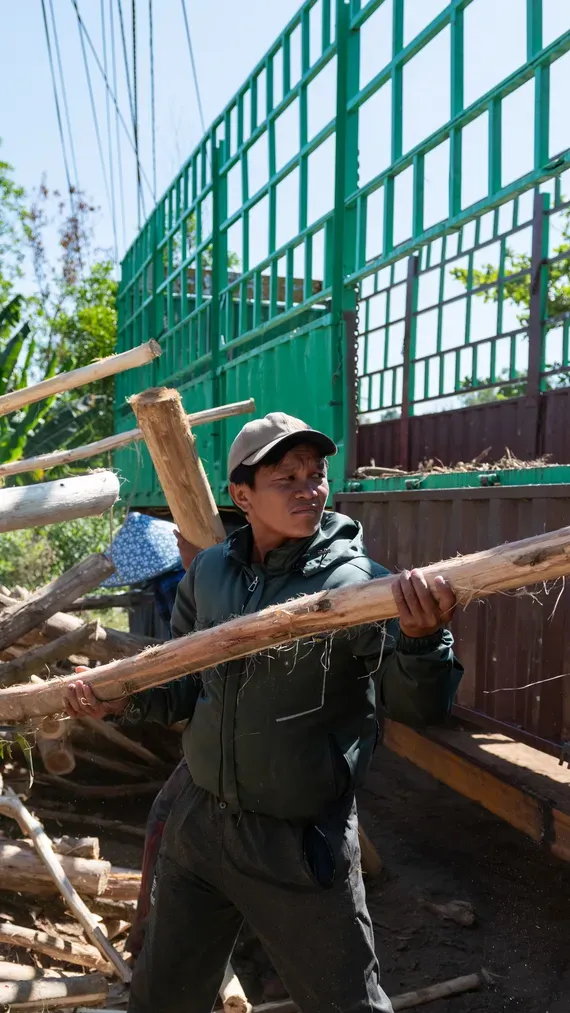

This project investigates air pollution linked to Viet Nam’s wood pellet industry, which supplies biomass fuel to power plants in South Korea and Japan as part of their clean-energy transition. As these countries ramp up biomass power to cut emissions at home, Viet Nam has become their vital source of wood pellets.
Yet this energy shift has transferred environmental and health costs to a less affluent country. At numerous pellet factories across Viet Nam, sawdust from drying and grinding processes drifts into nearby homes and farmlands, while emissions monitoring is often minimal or nonexistent. Residents are left exposed to persistent dust pollution that threatens their health and livelihoods.
The risks have intensified as manufacturers rush to meet production targets, with many using mixed and poorly documented feedstocks that may contain chemicals or industrial residues. These materials generate heavier emissions, worsening local air pollution and raising safety concerns beyond Viet Nam. In 2025, there were several fires and explosions at biomass power plants in Japan, reportedly linked to impurities in imported pellets from Viet Nam. These problematic pellets raise questions about the integrity of the biomass supply chain, weak oversight at the production stage, and the responsibility of consuming countries.
By shedding light on the hidden environmental and public health costs of wood pellet production and consumption, this project explores the contradictions embedded in the global transition to renewable energy. It highlights issues of environmental justice, showing how "green" and "clean" energy solutions in wealthier nations can impose social and environmental burdens on distant and marginalized communities.