Pulitzer Center Update June 3, 2026
Holding AI Accountable: Meet 2026 Teacher Council Exploring Technology's Use in Schools

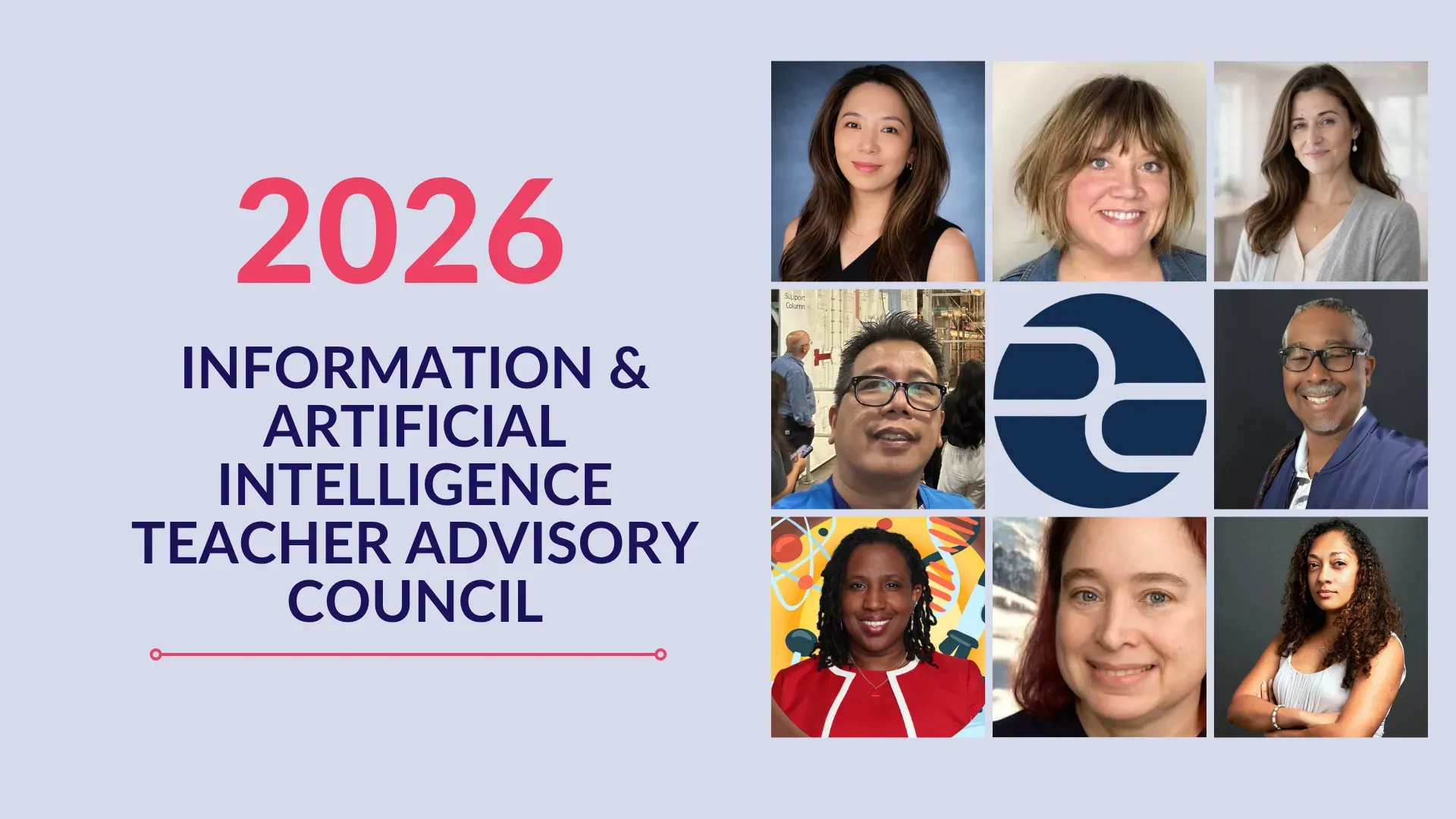
The Pulitzer Center is excited to introduce the eight educators selected for our 2026 Information and AI Teacher Advisory Council.
For three years, the Information and AI Teacher Advisory Council has supported our team in understanding how to equip educators with resources to better engage with questions of AI ethics and accountability in the education space.
Council members participate in learning workshops to increase their own understanding of AI accountability and use the Pulitzer Center’s in-depth reporting on Information and Artificial Intelligence in tandem with their professional expertise to create resources that foster greater awareness of the issue in their school communities.
The work of addressing the challenges and opportunities in AI development is ongoing and each Information and AI Teacher Advisory Council has had a unique approach to its work. The 2026 Council members are applying both the AI knowledge-building work of the 2024 Council and the teacher capacity-building work of the 2025 Council to its project-based community-building work.
Each 2026 Council member will lead dialogues about AI accountability in education with at least 60 educators, students, and/or family members. Collectively, the 2026 Council will directly engage 530 school community members in these critical conversations. Their project models and reflections on impact will be published ahead of the 2026-2027 school year to serve as resources for other educators interested in holding similar conversations for their own schools and districts.
The 2026 Council members' projects are informed by both their school community needs and their role within their school context. The Council includes classroom teachers, librarians, and technology directors working in seven different school communities across the Northeast, South, Midwest, and Southwest regions. Council members developed a critical question about AI technologies in schools that they feel is urgent to explore within their unique context.
The Council members include:
Ming Jin: The lead teacher and AI task force co-lead at an elementary school in Washington, D.C., will be using the AI task force meeting space to prepare staff members in her building for a conversation about AI data and security many parents in the community have been requesting.
“I am particularly interested in Pulitzer Center reporting that investigates how AI systems collect data, influence decision-making, and impact equity, privacy, and opportunity—especially in contexts where automated systems shape people’s access to resources, services, or education … These stories provide a critical lens for helping students, educators, and families question who designs AI systems, whose interests they serve, and how communities can advocate for responsible and equitable use in schools.”
— Ming Jin, 2026 Information and AI Teacher Advisory Council
Rachel Lugo: A middle school teacher who is also pursuing her doctorate in educational technology, Lugo works at an independent school serving neurodivergent learners. Lugo has modeled a project exploring whether AI tools can be ethically implemented into special education environments, and whether these tools expand access and agency for neurodivergent students as often advertised.
“[Following a hands-on inquiry introducing AI] participants will move into structured small-group discussions using protocols that support equitable participation and critical thinking. Mixed groups of students, educators, and families collaboratively examine case studies, surface tensions, and generate shared recommendations. The experience culminates in a community-informed set of guiding principles for responsible AI use, grounded in participant voice rather than top-down policy.”
— Rachel Lugo, 2026 Information and AI Advisory Teacher Council
Andre Pineda: A middle school STEM Teacher and Pulitzer Center Teacher Fellowship alumnus, Pineda works at a school in the White Mountain Apache community. He is working with students to lead critical conversations about the ethical issues of AI transparency, privacy, and bias that align with community concerns about the ways technology intersects with their culture and values.
“Another important factor [in my work] is the role of community and cultural values in my students' education. Learning is deeply connected to relationships, respect, and collective well-being. Because of this, any discussion about AI must consider not only academic outcomes, but also cultural relevance, data sovereignty, privacy, and the protection of student identity and community knowledge.”
— Andre Pineda, 2026 Information and AI Teacher Advisory Council
Council Members Dani Jo White-Yelito (Teacher Fellowship) and Lucia Hassell-Lee (1619 Network, Holton Arms Team) are also Pulitzer Center Education Program alumni. Hassell-Lee’s project partner and fellow technology director, Troy Gordon, and Council Members Margo Fisher-Bellman and Cecelia Gillam complete the full cohort.
Learn more about the Council members in the slideshow below.
Introduction_2026 AI Teacher Council by Pulitzer Center
Beginning April 9, 2026, Council members worked together over five weeks to prepare for their community conversations. During this project development, they:
- Engaged with the ideas and themes that drive Pulitzer Center reporting about artificial intelligence.
- Leveraged Pulitzer Center education frameworks and data from audience research to drive discussions about opportunities and challenges for K-12 classrooms seeking to engage with questions about AI accountability.
- Explored underreported news stories about information and artificial intelligence and connected with Pulitzer Center AI Accountability Fellows, Hilke Schellmann, Niamh, McIntrye, and Sofia Schurig.
- Collaborated through group discussions and peer feedback protocols to refine their community-based projects.
In the months ahead, Council members will work with the Pulitzer Center team to document the impact of their projects within their school communities. They will present their learning and takeaways during a public professional development workshop on August 29, 2026. Educators interested in attending can pre-register for the Zoom event now.
We recommend subscribing to our K12 Education newsletter and the AI Spotlight Newsletter for information on new resources, reporting, and program announcements related to AI accountability.