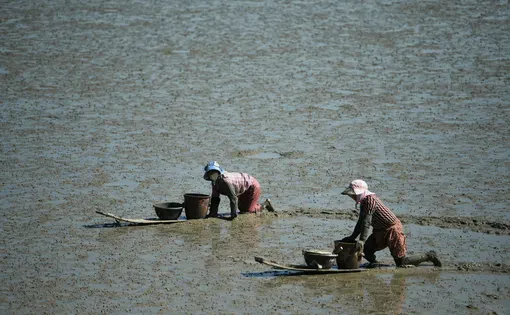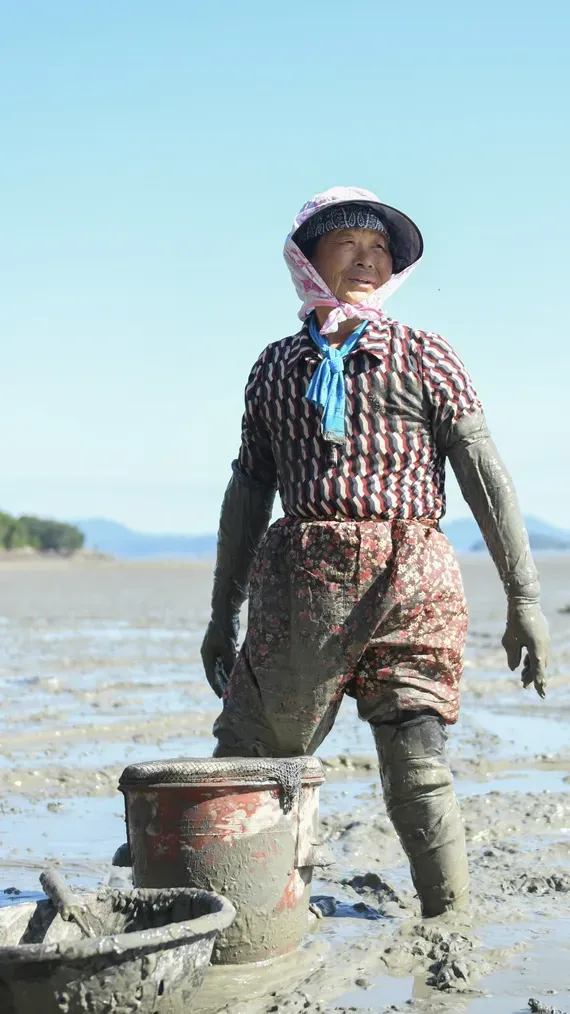


For centuries, the people on Korea's coasts have developed a communal economy adapted to the dynamic interplay between sea and land. The mudflats or “sea field” is called Getbol by these fishermen. And similar to agricultural land, Getbol is managed by local fishing cooperatives (eochon-gye).
Fishermen practice traditional fishing techniques, which are environmentally friendly, resource-conserving, and sustainable. Scientists see the special fishing traditions as instruments for protecting the tidal flats. They want to make this ancient knowledge available to other fishermen and promote sustainable fishing methods.
In this reporting project, journalist Tobias Asmuth and photographer Noriko Hayashi seek to find out how traditional fishing works in the cooperatives. How do they manage the balance between stable economic income and caring for the animals of the tidal flats? And can the adaptation of old knowledge and the dissemination of sustainable methods help to secure Getbol's future?
Image Caption: Traditional fishing methods are used to protect Korean mudflats, or Getbol. Image by Noriko Hayashi.