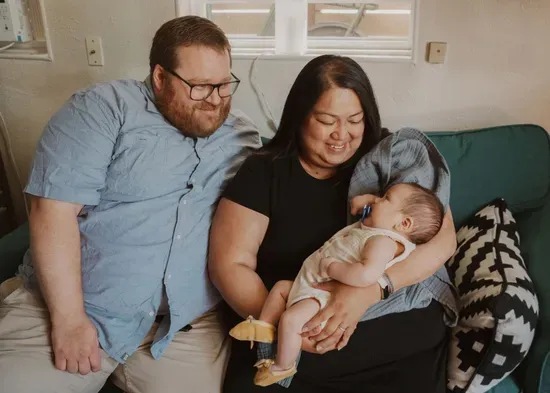
This letter features reporting from “The Rise of Indigenous Doulas” by Jenna Kunze and Jessica Lázaro Moss
Dear Dr. Khan,
I share your commitment to addressing the socio-economic and cultural determinants of health, and I am writing to advocate for greater investment in Indigenous doula programs and culturally-grounded maternal health services in King County. Indigenous mothers face some of the highest rates of maternal mortality and postpartum complications in our community and across the U.S. However, a Pulitzer Center-supported investigation by Jenna Kunze, “The Rise of Indigenous Doulas,” highlights how culturally specific birth work is transforming these outcomes. Kunze investigates the Hummingbird Indigenous Family Services, based in the Seattle area, which has supported over 150 Native families and reported zero maternal or infant deaths among participants. This is more than a success story; it is evidence that Indigenous communities hold the knowledge and practices to close one of the most devastating health equity gaps.
The crisis is especially urgent in Washington, where Native maternal mortality is far higher than white maternal mortality. Many Indigenous maternal deaths are preventable, driven by a lack of culturally competent care, systemic racism, and limited access to prenatal and mental health services. King County is home to a large and diverse Native population, and expanding Indigenous-led doula programs would not only save lives but also strengthen cultural continuity, family wellbeing, and long-term community health. When mothers receive support from doulas who understand their culture, traditions, language, and community, outcomes include lower rates of cesarean sections, fewer premature births, stronger postpartum mental health outcomes, and higher breastfeeding success.
As Director of Public Health for Seattle & King County, you have the authority to direct partnerships that lower access barriers and make Indigenous doula programs sustainable. I respectfully ask that King County create a dedicated grant to expand Indigenous doula services through partnerships with organizations like Hummingbird Indigenous Family Services and tribal health departments. The county should also work with the Washington State Department of Health to navigate changes to Medicaid and Apple Health reimbursement for doula care. This is especially vital now, as many families face decreased Medicaid access and instability in coverage. Studies across the United States consistently show that doula support improves maternal health and reduces overall public healthcare spending.
Globally, maternal mortality remains one of the clearest indicators of inequality. Locally, Indigenous doulas offer a proven, community-driven solution that honors cultural knowledge and saves lives. By expanding support for these programs, King County can become a national model for health equity, one where every parent, regardless of heritage or income, has access to safe, respectful, and culturally-responsive care.
I am deeply inspired by your international career in public health and medicine. Your work has consistently shown the power of culturally-informed, community-centered health systems. Your leadership embodies the same values that make Indigenous doula programs successful, and I believe your continued commitment to equity can help ensure these services grow, thrive, and reach the families who need them most.
Sincerely,
Suhani Kakkar
Suhani Kakkar is a student with a strong interest in global health and civic engagement. Through her writing, she explores how local action can address global challenges and advocates for equitable health solutions. She participated in the Local Letters for Global Change contest to amplify youth voices in conversations about global health and social responsibility.
Read more winning entries from the 2025 Local Letters for Global Change contest!
Student letters reflect the authors’ views. Students choose their own topics and act independently if they decide to share their letters outside the classroom. The Pulitzer Center is a nonpartisan 501(c)(3) organization that does not endorse candidates, parties, or specific legislation. Our publication of student work is for educational purposes.