Story
 December 8, 2025
When Chinese EV Brands, Escaping Internal Competition, "Export" Competition to the Thai Market (Chinese)
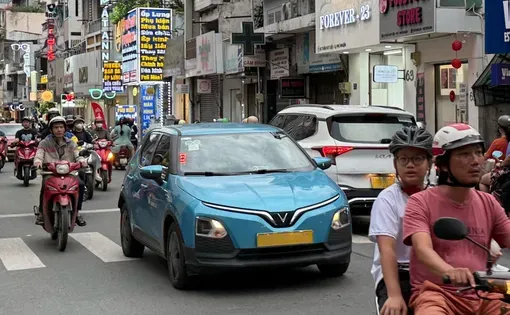
As demand for EVs rises, so does the need for tires made with natural rubber.


This article was originally written in Chinese and published in The Initium. The key points of this article are presented in English below, followed by the original version of the story. For a full English version of this article, please click on the “Translate page with Google” button on the upper right-hand side.
Key Points
- The story investigates Thailand’s rapid push to become a regional electric vehicle (EV) manufacturing hub, focusing on the surge of Chinese EV investment and questioning whether this growth is economically, socially, and environmentally sustainable.
- The Thai government has set ambitious targets to accelerate EV adoption and production, aiming for EVs to account for 30% of total vehicle output by 2030. However, rapid factory expansion has led to signs of oversupply, including underused plants and intensifying competition.
- Chinese EV brands now dominate Thailand’s EV market, supported by the Eastern Economic Corridor (EEC), which offers tax incentives, infrastructure, and fast-tracked land permits. Longstanding China–Thailand economic ties have further eased factory construction and joint ventures. Chinese entry has accelerated EV adoption, expanded manufacturing capacity, and positioned Thailand as a key production base for exports to Southeast Asia.
- As Chinese investment expands, labor relations in Thailand’s auto and battery industries are being reshaped. Workers, especially migrant workers from Myanmar, reported verbal abuse, inadequate protection, and even physical altercations. Cultural differences are often cited.
- Key takeaway: Thailand’s EV boom, driven largely by Chinese investment, reflects both opportunity and risk. Without stronger labor protections, clearer land governance, and realistic demand planning, the push to become an EV manufacturing hub may reproduce old industrial problems under a new “green” label rather than delivering a truly just and sustainable transition.

As a nonprofit journalism organization, we depend on your support to fund more than 170 reporting projects every year on critical global and local issues. Donate any amount today to become a Pulitzer Center Champion and receive exclusive benefits!
當「逃離內卷」的中國電動車品牌,在泰國市場「輸出內卷」
日本車企措手不及,泰國供應鏈艱難轉型——但中國車企又得到了什麼?