Story
 December 4, 2025
Mekong’s Push for Responsible Rubber and Tire Production


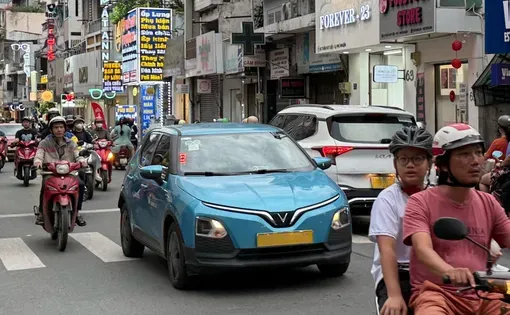
As demand for EVs rises, so does the need for tires made with natural rubber.
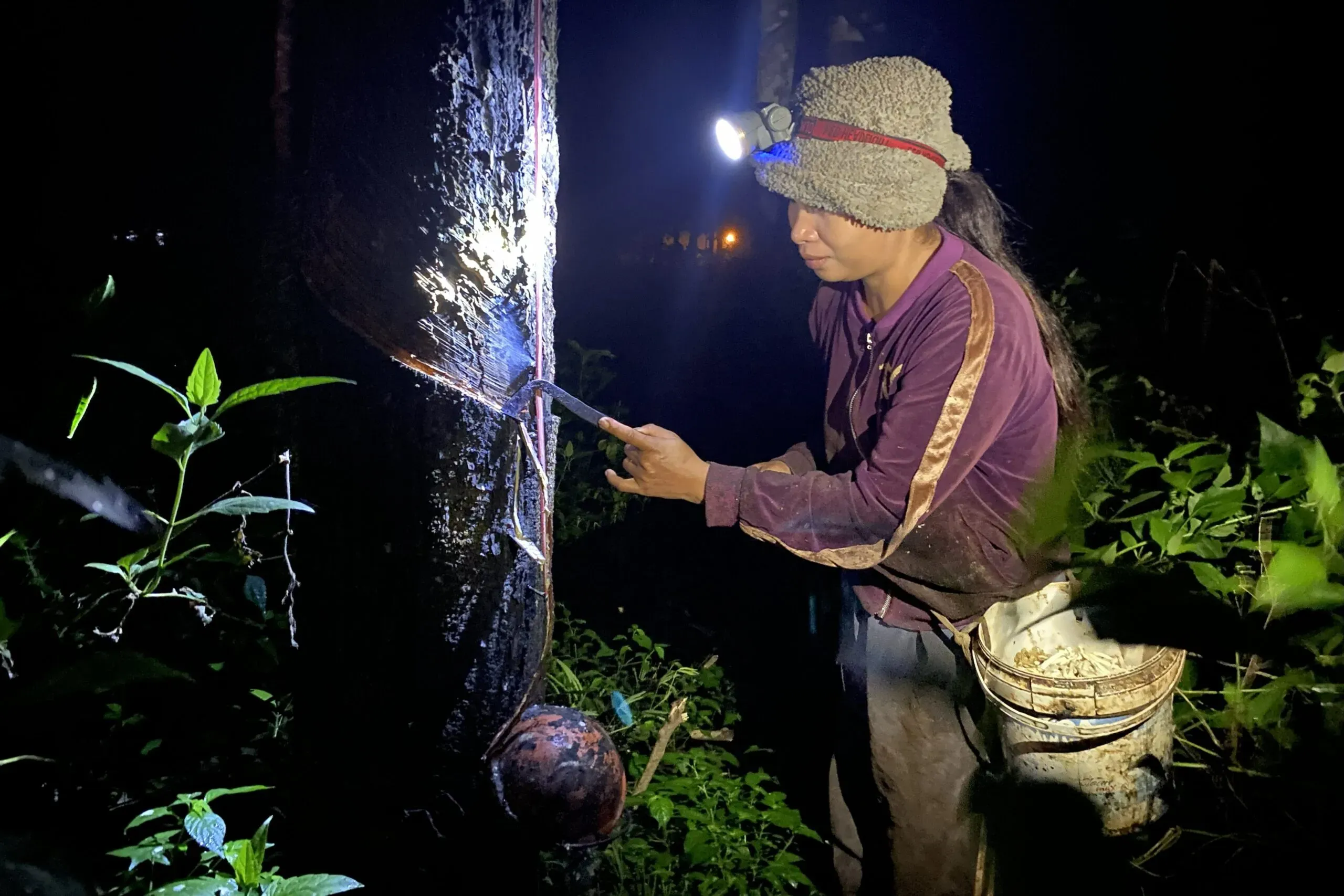
Across the region, traceability systems are forming, yet efforts to address historical deforestation and land conflicts remain stalled
On a humid afternoon in 2022, officials in southern Thailand’s Phang Nga province gathered dozens of rubber farmers in a community hall. They wanted the farmers to stop clearing and start replanting the forest.
“‘We know you rely on these trees,’ they told us,” recalled farmer Srirat Songkai, who attended the meeting.
“‘You can keep tapping what you have, but no new planting, no expansion into the forest,” she remembered being told.

As a nonprofit journalism organization, we depend on your support to fund more than 170 reporting projects every year on critical global and local issues. Donate any amount today to become a Pulitzer Center Champion and receive exclusive benefits!
Srirat and many farmers had grown rubber, palm oil and fruit trees on land the government classified as protected forests for decades.
Under the new agreement, land users could register their plots and keep harvesting if they agreed to afforest 20-70% of the farmed areas, depending on the forest zone.
About two million hectares of farmland inside protected forests are now under this arrangement or in the process of being included.
Such arrangements are the fruits of advocacy by activists and grassroots organizations, combined with rising pressure on the Thai government to comply with the EU Deforestation Regulation (EUDR). It was considered a soft approach to balance conservation and livelihoods.
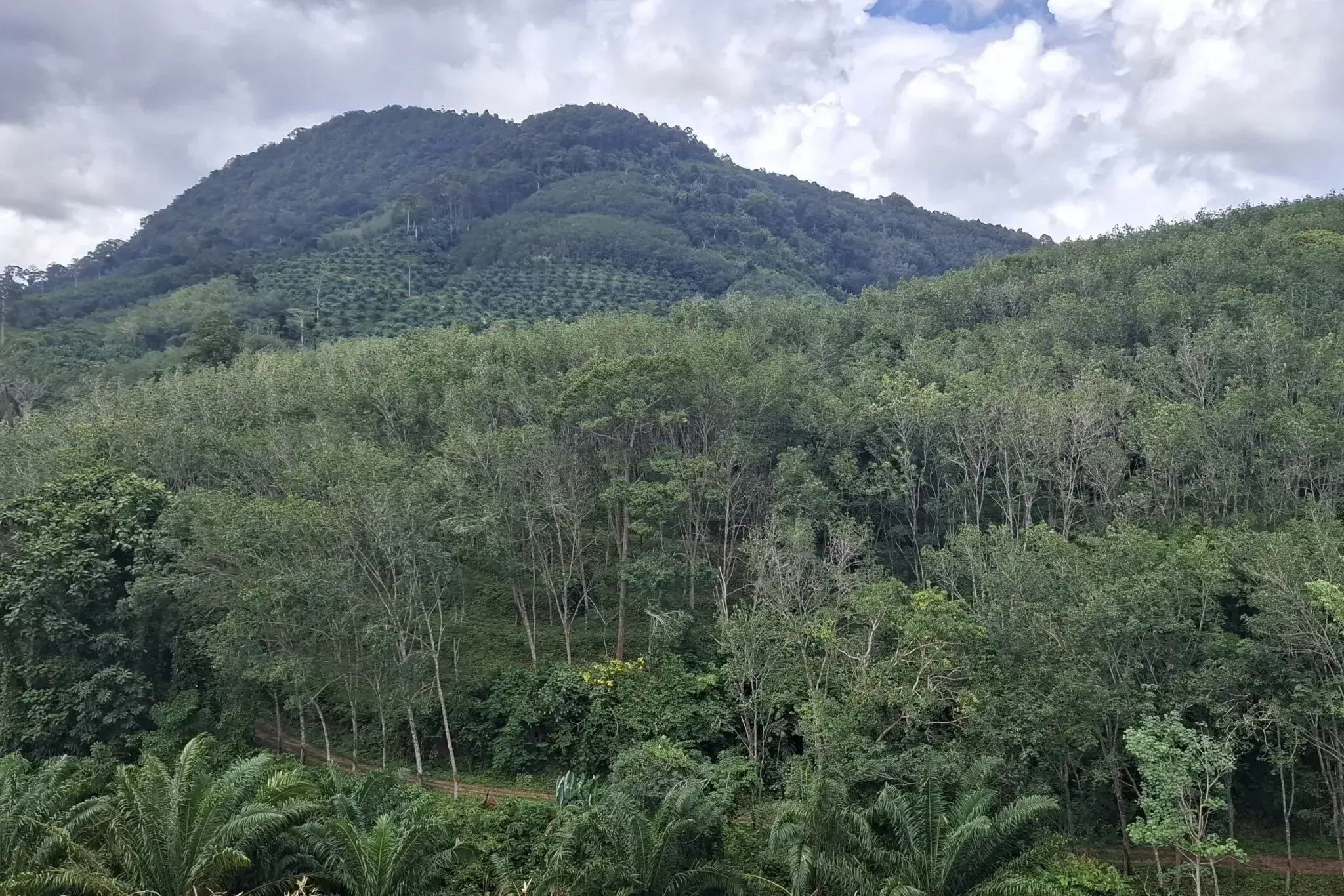
Today, young forest trees shade part of Srirat’s land. Her rubber plot is logged digitally and classified as low risk for recent deforestation.
With deforestation and forced evictions associated with rubber production now widely acknowledged, the push to build a plantation-to-tire traceability system has moved to the center of discussions.
Across the Mekong region, efforts are underway, starting with smallholder participation such as in Phang Nga. However, the road is still long and arduous for those who lost their homes and forests to rubber.
Engaging with smallholders
Thailand’s push since the 1990s to become a global car-manufacturing hub has attracted major automakers, tire companies and now EV producers.
Making rubber a priority in national policy enabled the rise of home-grown rubber giants such as Sri Trang, Von Bundit and Southland Rubber Group — whose operations stretch from plantations to latex collection to processing.
Unlike in Myanmar, where concessions are backed by armed groups, or in Laos and Cambodia, where foreign investors run the game, smallholders control about 90% of Thailand’s rubber industry. Yet many farm on land that was once forest.
This reliance on smallholders shapes both the country’s approach to resolving land conflicts and the design of traceability systems that begin at the farm level.
A digital system to log farmers and their plots is in place — developed by state agencies including the Forest Department, Land Department, Ministry of Agriculture and Cooperatives and the State Agricultural Bank.
The Rubber Authority of Thailand (RAOT) now has information on 98% of total growers — 1.6 million farmers and three million hectares.
This registration system paved the way for Thailand’s compliance with the EUDR, which bans products linked to land cleared after December 31, 2020, though enforcement is delayed until December 2026.
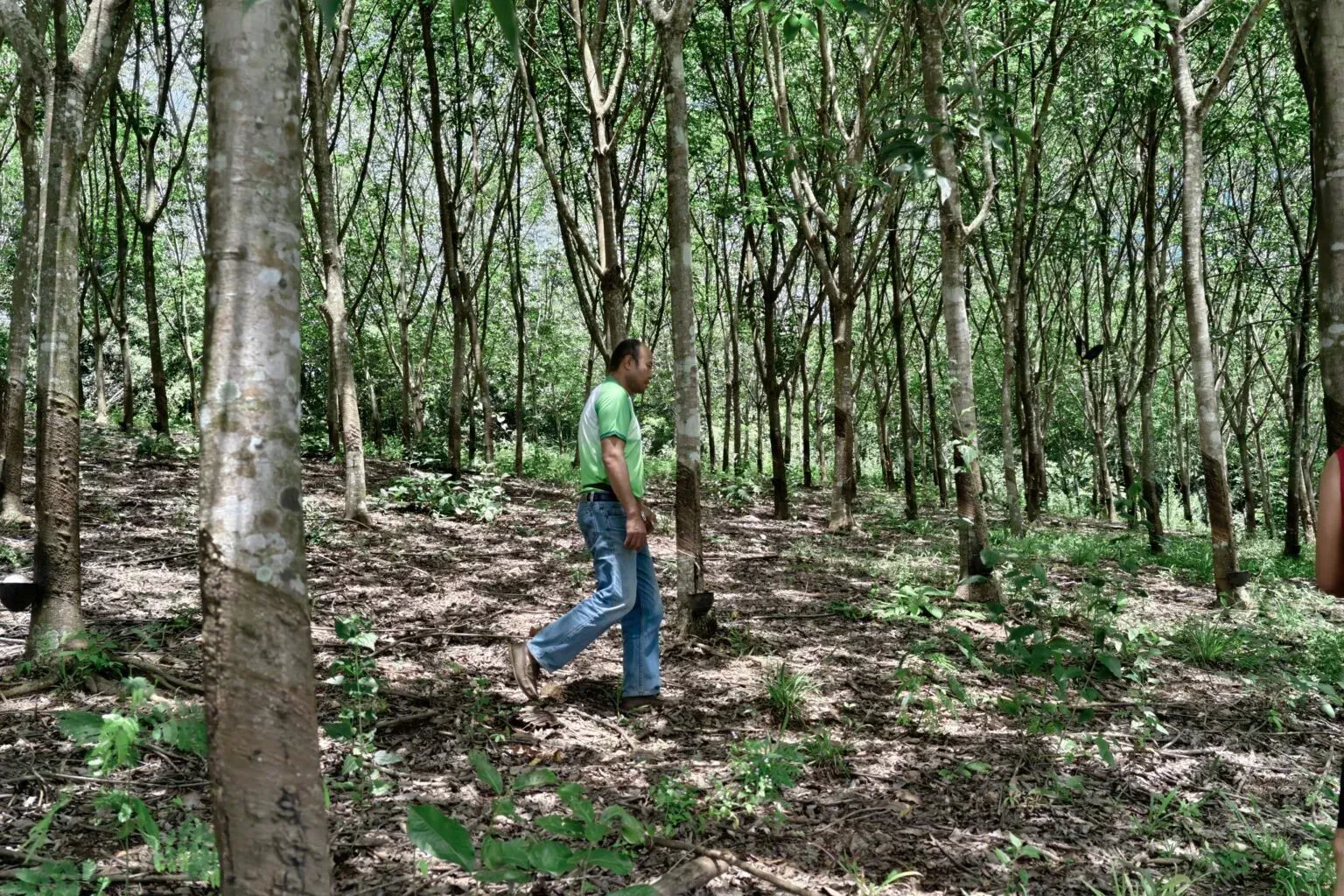
Rubber accounts for 92% of Thailand’s EUDR-covered export values, according to a Bank of Thailand study.
Under growing pressure, some Thai companies started trialing EUDR-compliant rubber last year. This amount makes up about 6.2% of total production. Offering higher prices as incentives, these shipments mainly consist of ribbed smoked sheets and cup lumps, used primarily for tire manufacturing.
“We took it [EUDR] as an opportunity to improve our [traceability] system,” said Athiwee Daengkanit, of the RAOT’s EUDR task force.
Chinese companies, which import large volumes of rubber from Thailand and export tires to the EU, are also under pressure to comply with EUDR regulations.
Yet a structural gap remains. While compliant rubber flows to the EU, non-compliant output is expected to head to China’s domestic market and beyond, where no equivalent regulation exists.
For Chinese manufacturers in Thailand, joining traceability systems is voluntary, said Daengkanit.
“Chinese companies don’t like to lose face. They’ll make sure to maintain their reputation abroad,” argued Yossapong Laoonual, the founding president of the Electric Vehicle Association of Thailand, whose members include both Thai and Chinese automakers.
Civil society’s push for change
Civil society groups have been advocating for responsible and ethical rubber supply chains since the 2010s, when reports of land grabs and deforestation came out — especially in Laos and Cambodia, where public participation is limited.
In Myanmar, WWF Myanmar helped form the Myanmar Sustainable Natural Rubber Association, trained farmers and developed national rubber standards. The group also piloted a digital traceability system covering 210 farmers and about 2,000 hectares.
In Laos and Cambodia, organizations such as Oxfam and Pan Nature facilitated dialogues between affected communities and rubber companies, according to a 2024 report by the Mekong Region Land Governance (MRLG).
In Laos, Oxfam worked with local authorities and industry groups to promote the Chinese voluntary guidelines issued in 2017 by the China Chamber of Commerce of Metals, Minerals and Chemicals Importers and Exporters (CCCMC).
However, progress was modest due to companies’ suspicion of working with civil society and limited knowledge of Lao language among Chinese staff.
The state-owned Viet Nam Rubber Group (VRG), which lost its Forest Stewardship Council (FSC) certification in 2015, also joined these dialogues.
Operating plantations in both Laos and Cambodia, the group was also pressured by the Viet Nam Rubber Association and the Viet Nam Chamber of Commerce and Industry to comply with EUDR, access higher-value markets and improve the industry’s reputation.
Engagement with civil society groups led VRG to publish its handbook on community engagement and forest management for its internal staff, launch a grievance mechanism in Cambodia in 2019 and integrate sustainability goals into its business plans.
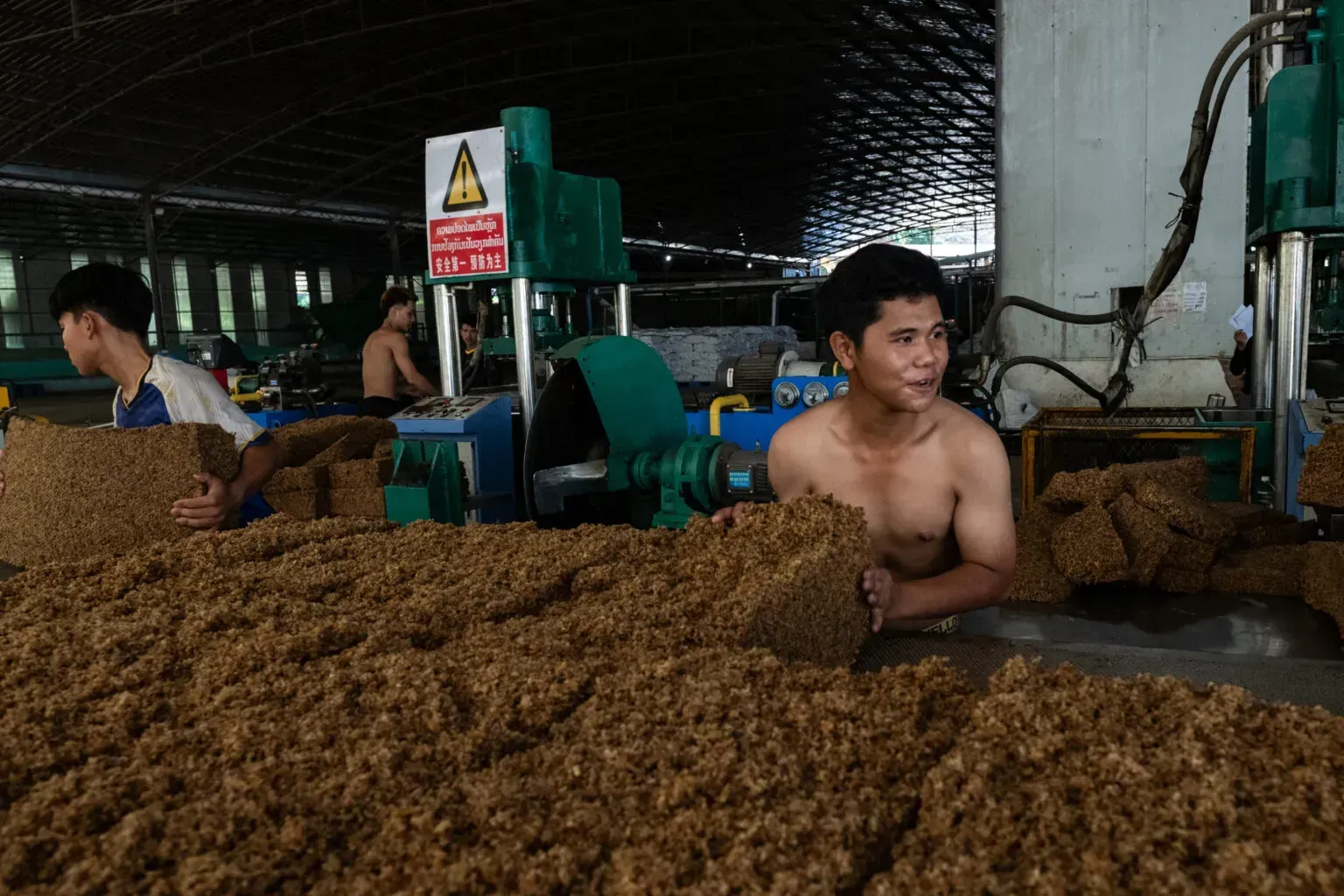
According to the MRLG report, Chinese and Vietnamese companies investing abroad for the first time often applied domestic business practices unsuited to local laws or norms. They, therefore, often persistently claim that their land acquisitions were lawful, despite evidence of harm.
Juliet Lu, a political ecologist at the University of British Columbia who authored the MRLG report, argued that the actual supply chain mechanisms proposed will not be effective and equitable, despite initiatives like the EUDR and FSC “putting very strong symbolic pressure on firms across the rubber sector.”
“Firms are scrambling to understand deforestation in their supply chains, but I don’t think it is pushing them to reduce deforestation, just to cut out smallholders who cannot produce documentation affirming the legality of their plantations, ultimately harming the smallholders more than anyone,” Lu explained.
“What I’ve observed in specific areas is that companies oftentimes get non-forest land but push smallholders into forested areas. Thus, the actors deforesting in situ may be local communities, but the driver of that deforestation is the company. Under the EUDR it’s hard to understand how that kind of displacement will be taken into account,” she added.
To transform the rubber industry, Lu believes companies cannot be trusted to oversee themselves. Third parties like states, NGOs and consumers need to hold them accountable and drive long-term, systemic change.
VRG and CCCMC did not respond to Mekong Eye’s inquiries via email.
Shifts within the industry
In 2019, the Global Platform for Sustainable Natural Rubber (GPSNR) was established as a multi-stakeholder initiative that includes the automotive and tire industries, civil society organizations, and smallholder representatives.
Its members from the automotive and tire sectors range from major Chinese firms—such as Yunnan Dianyuan Rubber Technology, Shandong Haohua Tire, Linglong Tire, and Sailun—to international giants, including Bridgestone, Continental, Michelin, BMW Group, and General Motors.
In recent years, the platform has attracted a growing number of Chinese members and others beyond China, as tire makers seek support in adapting to the European Union Deforestation Regulation (EUDR).

Members of the platform must adopt sustainability policies covering legality, human rights and environmental protections. GPSNR also runs a grievance system, in which complaints are mediated first. Companies that fail to act may be removed.
Members must file annual progress reports, and reporting becomes mandatory in 2027. Companies also have to undergo third-party audits and map their supply chains to at least the district level.
“The way rubber is produced can really benefit smallholders,” said Stefano Savi, CEO of GPSNR. “It’s important not to give the message that because there are issues with rubber, you need to change to something else.
“We’re trying to reach out to more end users like vehicle makers. When you want changes in a supply chain, you cannot push it. You can only pull it,” Savi added.
The need for support
In rubber-dependent villages, change is gradual but slowed by complex land-tenure issues and the heavy paperwork required to document farmers and their land plots.
For low-income rubber farmers like Srirat in Phang Nga province, these changes could open the door to better market access.
Srirat said farmers still lack clear guidance and resources. Many also fear exclusion from the supply chain if their rubber fails to meet the required standards, or being forced off their land if government policies change.
“We would like to follow new rules and go through systems to prove our rubber is deforestation-free,” she said. “But we also need support to do it.”
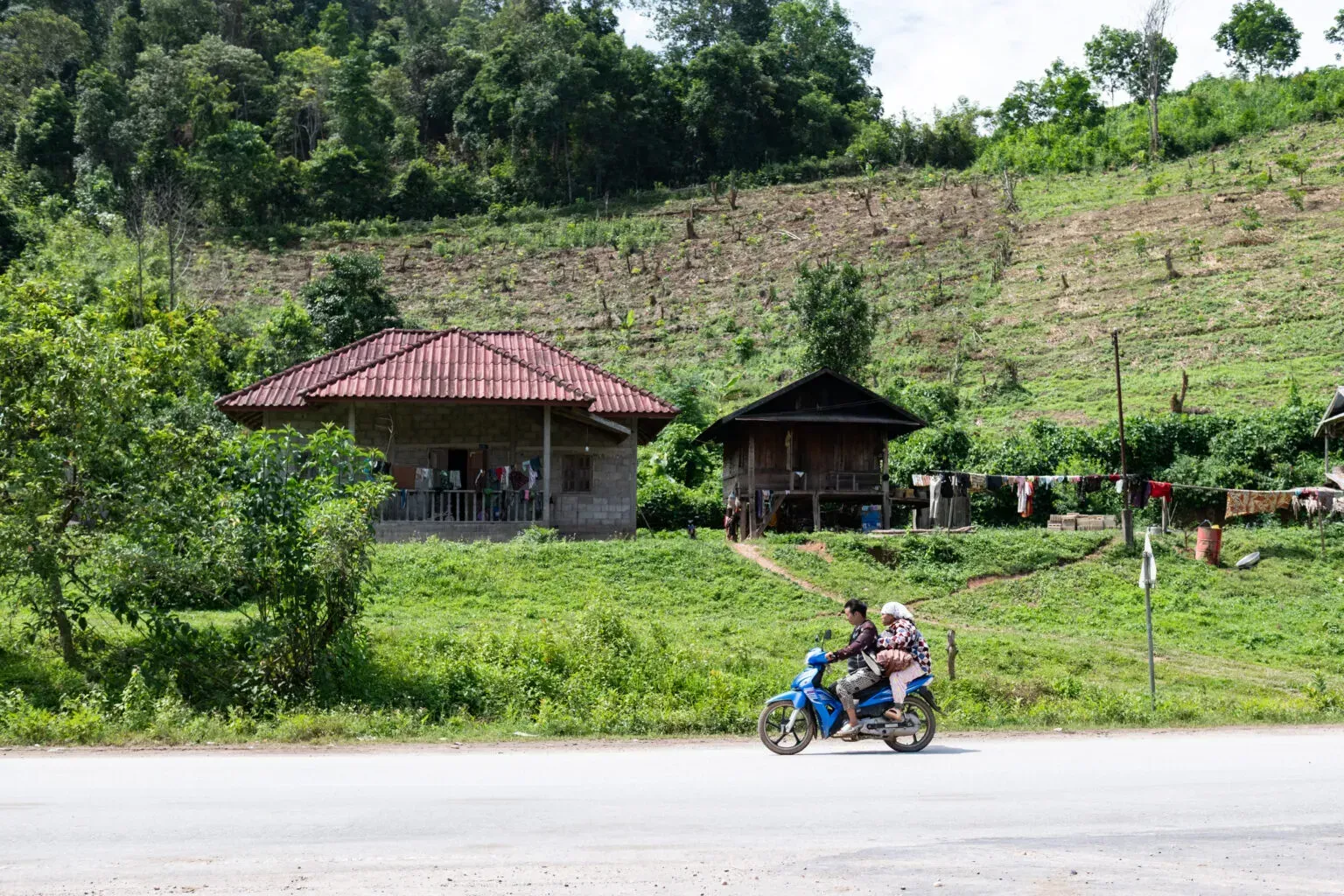
GPSNR operates a fund to support such training and sustainability projects. It now channels about US $3-4 million a year to improve smallholder incomes and working conditions, reduce deforestation and help farmers meet regulations.
So far, it has funded 16,452 smallholders a total of $3 million, though Savi admitted this is not a lot of money to fix the supply chain. They need to get much larger pledges from the industry, he added.
The EV race is speeding up. Yet ethical, responsible tires will hinge on decisions made across the chain — from boardrooms and governments to farms like Srirat’s.