Story
 November 4, 2025
In Timor-Leste, Even Modest Cuts in US Foreign Aid Add Up
Country:

Journalist Ted Alcorn reports on how the changes in U.S. development assistance are impacting people...
Cuts to international aid are risking the development of Asia's youngest democracy. Ted Alcorn reports from Dili.
In Dili, the capital of Timor-Leste, the compound recently vacated by the US Agency for International Development bore the marks of abandonment. Someone had taken the sign down from its gate, and the yard behind the tall white fencing stood empty and still, a contrast to the busy avenue outside and the waves of the Indian Ocean lapping at the beach beyond.
As the USA effects a dramatic shift in foreign policy, dozens of countries are grappling with the sudden loss of tens or hundreds of millions of dollars in aid, and ruptures in bilateral partnerships that had seemed stable. In Timor-Leste, Asia's youngest democracy, the USA did not primarily underwrite access to life-saving medications as they did in some heavily HIV-affected or malaria-affected countries, but was helping alleviate many of the country's entrenched challenges.
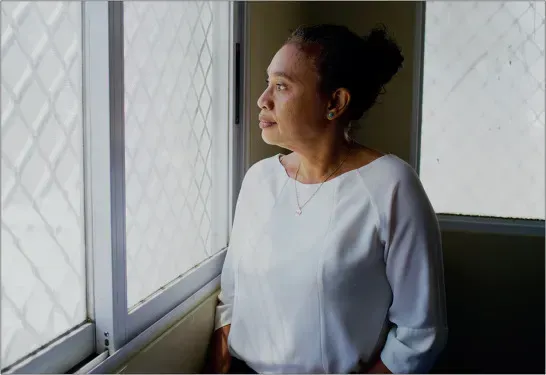
Sources say America's abrupt retreat will set back Timor-Leste's development. Teodulo Clemente de Jesus Ximenes, a physician from Timor-Leste who worked as a health specialist for USAID for years until retiring in early 2024, likened the withdrawal to the death of a parent. “When the children really, really need you, you are not there.”
As a nonprofit journalism organization, we depend on your support to fund more than 170 reporting projects every year on critical global and local issues. Donate any amount today to become a Pulitzer Center Champion and receive exclusive benefits!
Since Timor-Leste's independence in 2002, won after decades of occupation by Indonesia, USAID has provided about US$20 million in foreign aid each year, a large amount for a country of 1·2 million people. Only 11 conflict-affected or sub-Saharan African countries received more assistance from USAID as a share of their gross national income, according to an analysis by the Center for Global Development in Washington, DC.
Bolstered with those resources (but primarily by its own effort), Timor-Leste has made progress on health. Life expectancy has risen by more than 5 years since 2000, and child mortality has been halved. The number of deaths from tuberculosis have significantly decreased (although the disease remains the most common cause of death) and the country eliminated malaria earlier this year.
Yet, the country's needs remain immense. About a third of the population lives in poverty and nearly half of children are stunted. Without a strong local economy to tax, the government relies almost entirely on revenues from oil and gas sales, which are projected to decline as offshore reserves are depleted. Human resources are scarce—there is fewer than one doctor for every 10 000 residents—and the country's institutions are fragile. “Right now, the quality of service delivered by the public system is very poor”, said Ximenes.
USAID's priorities in the country reflected some of these deficits, targeting governance, economic growth, and health. Rather than implement programmes directly, the agency made multimillion dollar grants to non-governmental organisations to do the work.
Members of the Timor-Leste Government were critical of how these contracts were often awarded to US-based organisations, out of concern that funds were taken up by American employees’ salaries. The State Department has since signalled it is discarding the approach of contracting non-profits, calling the process inefficient. But wherever contracted organisations were headquartered, they primarily relied on local staff.
USAID's closure in Timor-Leste cut grants off midstream, including some that had just begun and others that were nearing completion. The non-profit Mercy Corps shuttered two projects and permanently closed its in-country offices, although it said that this was previously planned and not a reaction to the funding cuts. Counterpart International also exited the country, ending a $9·5 million initiative that was strengthening civil society groups that were working on everything from monitoring the judicial system to managing water systems. “What was disruptive was the nature of the closure”, said Chief Operating Officer Gwendolyn Appel, who had to fire 16 staff. It eroded trust “in a country where trust is really hard to gain”.
The Palladium Group had just launched a $17 million project to strengthen Timor-Leste's health system when the termination letter from USAID arrived. Chief of Party Bhavesh Jain said he had planned to hire 30 staff, who would have helped the country's health-care workers standardise care, improve budget oversight, and expand nutrition monitoring. The withdrawal of foreign assistance suggested the USA had “really taken a back seat”, he said. By contrast, China has expanded its presence in the health sector, including through a recent agreement to fund and build a 100-bed military hospital in Dili.
Other projects might endure without USAID, albeit in an altered form. World Neighbors, an Oklahoma-based non-profit, was able to continue a $6 million, 4-year project helping rural communities in Timor-Leste and Indonesia improve livelihoods, but had to radically downsize it. “I wouldn’t say that people will die”, said President Kate Schecter—as they likely will in countries where USAID had been providing lifesaving medications to the acutely ill—but “it will set people back quite a bit.”
USAID also partly funded the most recent Demographic and Health Survey, a crucial national instrument for tracking progress on key health indicators in Timor-Leste. An updated survey planned for 2025 briefly looked imperilled, but the Timorese Government was able to secure alternative funding. Other countries have not been so lucky: a half dozen that lost USAID funding for their surveys have cancelled them or indefinitely put them on hold, according to a Demographic and Health Survey spokesperson.
Locally run organisations that had been awarded USAID grants have few alternatives to substitute for that support. For HIAM Health, a local non-profit that works on nutrition and community health, a $1 million, 3-year grant from USAID was the largest it had ever received—until it was painfully clawed back. Director Rosaria Martins da Cruz wondered aloud whether President Trump had done this as a bargaining tactic, or to teach a lesson in self-reliance. “With USAID or not, we will still grow by ourselves”, she stated.
Timor-Leste's political leaders put on a brave face. In February, when US foreign assistance was initially suspended, President José Ramos-Horta publicly downplayed the impact. Timor-Leste receives more foreign assistance from Australia than the USA, and in total, aid is only about 7% of national GDP, according to the World Bank. Interviewed in August, Ramos-Horta said he had advised Timor-Leste's Prime Minister, Xanana Gusmão, to fill the gap left by USAID with state resources. “We have enough cash of our own to take over”, he said.
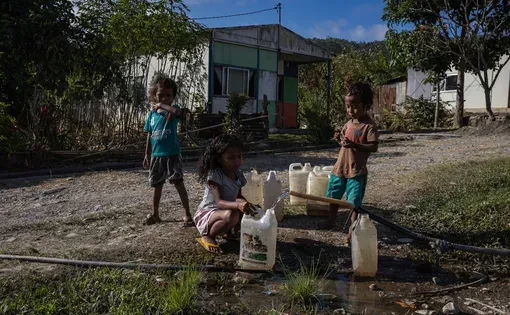
However, the rollback of foreign assistance goes far beyond USAID. The US Agriculture Department wound down a $27 million project that distributed rice, beans, and cooking oil from American farmers to schoolchildren in some of Timor-Leste's most malnourished regions. The impact of the USA's withdrawal from multilateral organisations is trickling down too: the Global Fund said its next cycle of grants to Timor-Leste would shrink by 8% and in August, the leadership of the US Millenium Challenge Corporation recommended cancelling a compact to build a nearly half-billion-dollar wastewater treatment system for Dili, where raw sewage seeps into the groundwater that many residents use as drinking water.
The cuts are already affecting Timorese beneficiaries. 2 hours’ drive west of Dili in the district of Liquiça, where paved roads give way to rough dirt tracks, another local non-profit HAMNASA had been granted $3·5 million to help reduce rates of gender-based violence, including by training community members and health-care providers, and by helping female-headed households improve financially and economically. Some women participating in the programme, who had received chickens to raise to help supplement their income, were confused as to why America had abruptly withdrawn its support. Cristina dos Santos, who was looking after three of her own children and four additional ones, was still tending a dozen chickens in the coop the project had erected for her, although some had died of an illness and she was now uncertain how to get the others vaccinated. She attributed the end of the programme to President Trump but did not judge him for the decision. “We cannot say whether the President is good or not”, she said, but “how can we keep carrying out our activities?”
Other participants held out hope. Jacinta Afonso Brise, a 25-year-old whose boyfriend abandoned her 3 years ago after she became pregnant, said she previously made about a dollar a day raising vegetables and selling tapioca cakes. Having completed secondary school, she was looking for opportunities to improve her English. “If a programme from America comes again, I am ready.”