Journalist Resource
 October 3, 2025
How We Shined a Light on ‘Forever Chemicals’ Risks to Firefighters
Country:

In an age where information is everywhere but often eludes the communities that need it most...

An investigation on the health impacts of PFAS exposure on Maine firefighters, produced through the StoryReach U.S. Fellowship, engaged collaboration with fire departments state-wide. Highlights include:
- Expanded PFAS pre-reporting to include a statewide survey of fire departments, which received 78 responses, and PFAS testing kits for communities.
- Adapted outreach strategy based on firefighter feedback: created shareable video, one-page fact sheet, newsletter content, and distributed print materials at the Maine Fire Chiefs Association conference.
- Reporting reached legislators ahead of PFAS-related votes; one inventory measure passed, while other bills were carried over.
- Shared widely by advocates and experts: circulated to 135 fire service contacts nationwide, firefighting union members in the Midwest, followers of the Maine Municipal Association and Environmental Health News, and social media accounts for the Maine State Federation of Firefighters.
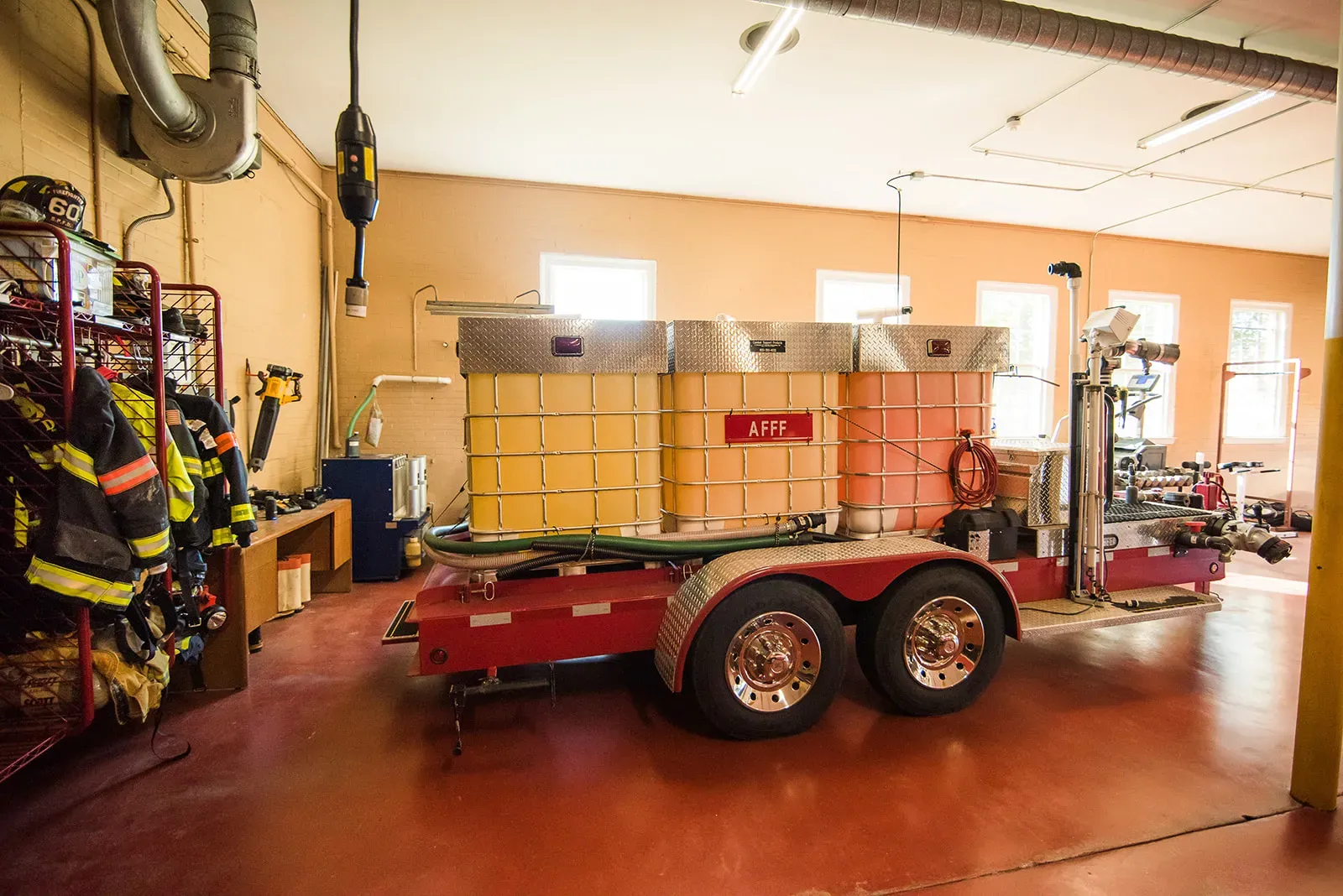
Per- and polyfluoroalkyl substances (PFAS), a vast class of toxic and persistent chemicals, endanger many workers — a fact that has received little media attention. With support from the Pulitzer Center’s StoryReach U.S. Fellowship Program, I collaborated with researchers and firefighters to assess how PFAS have been used in the fire service, endangering the health of firefighters and contaminating the communities they serve.
For decades, PFAS have been an ingredient in Class B firefighting foam [also known as aqueous film-forming foam, or AFFF], used liberally in trainings and routinely on combustible fuel fires. PFAS are also present in all three layers of firefighters’ protective turnout gear. PFAS from firehouse uses can accumulate in dust indoors, enter septic systems and groundwater, and build up in the bodies of firefighters, raising risks of many health concerns.
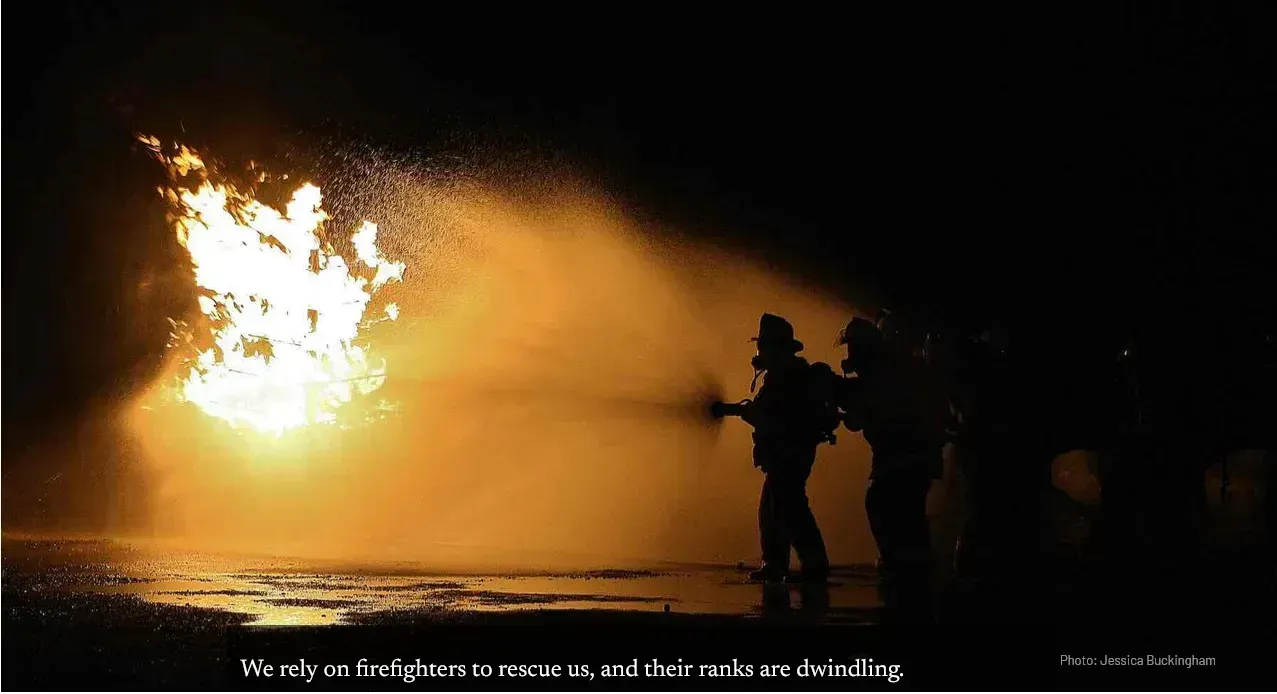
As a freelance journalist collaborating with the nonprofit newsroom Maine Morning Star (part of the States Newsroom network), I reported on the fire service in a sparsely populated rural state already struggling to keep small-town fire departments staffed. There’s a shortage of firefighters—both career and volunteer—nationwide, and the many challenges that Maine departments face are indicative of national and even international pressures on fire service.

As a nonprofit journalism organization, we depend on your support to fund more than 170 reporting projects every year on critical global and local issues. Donate any amount today to become a Pulitzer Center Champion and receive exclusive benefits!
My reporting revealed that many communities and firefighters still know little about the extent of PFAS risks from firefighting, and nearly all departments are caught in an economic bind—unable to afford the measures that would reduce their exposure. In a survey done as part of the reporting, roughly two-thirds of fire departments reliant on well water reported that they had never tested station drinking water for PFAS. Almost all of them reported that they would participate if the state offered free testing.
This project targeted firefighters (in and beyond Maine), state legislators, and town officials. The findings alert policymakers about the need to help first responders and communities minimize further PFAS use, and inform firefighters about how to limit exposure.

“My reporting revealed that many communities and firefighters still know little about the extent of PFAS risks from firefighting, and nearly all departments are caught in an economic bind—unable to afford the measures that would reduce their exposure.”

Conducting collaborative research that engaged fire departments
To learn more about potential PFAS exposure pathways for firefighters, I teamed up with Rutgers School of Public Health epidemiologist Judith Graber and two student researchers on a detailed online survey that went out to more than 350 Maine fire chiefs. Graber, who has led a cancer prevention and awareness study with volunteer fire departments in nine states, helped shape the survey design and review the data. We received assistance distributing the survey [and later, the survey results] from Maine's Office of the State Fire Marshal and the state’s three professional firefighting associations. Having the cooperation of these entities proved critical because they are known and trusted by those in the fire service.
Never having been a firefighter, I was reporting on a field that I had no firsthand knowledge of, where even volunteers undergo hundreds of hours of specialized training. Furthermore, I was asking questions about a class of chemicals that has the fire service on edge, particularly since two PFAS compounds were named — shortly before the project began — to the “Superfund” list of hazardous chemicals. Many fire chiefs are fearful for their health and that of department members, and some are anxious about the legal ramifications of their community’s historic use of PFAS-laden foam.
It helped greatly to have two experienced and well-regarded fire chiefs willing to field questions throughout the research process and to review the survey and poster drafts before they were distributed. These individuals also helped me make connections within the fire service for interviews.
The survey we shared with fire departments had a low response rate [20 percent], despite follow-up reminders and deadline extensions, in part due to the length [61 questions, requiring about 20 minutes to complete]. Fortunately, the 77 responses received provided enough meaningful data to suggest where some of the biggest challenges lie.
To gather additional data on PFAS in fire station wells, we provided PFAS water screening kits to departments that volunteered to participate on the survey form. I chose kits from a materials science lab because they are affordable [relative to state-certified tests, which typically are at least four times the cost] and they’re easy to administer and mail back. These particular screening kits had already demonstrated reliable results through an earlier split-sample comparative analysis done in Maine. The lab provided frequent updates, but the process of getting all the kits back from fire departments took far longer than anticipated [more than two months].

Telling the story visually
The preliminary research on water testing and fire station practices revealed that firefighters have severe time constraints and might not read the three longer articles I had planned. Since limited time was also an issue for legislators and town officials, I began to consider how my findings could be presented more visually, within and beyond the articles, making information accessible to those more likely to skim than read deeply.
With help from the Pulitzer Center’s data and research staff, I was able to introduce the series with a “scrollytelling” lead-in [short text blocks rolling over a series of photos] — creating a dynamic gallery to build interest in the longer articles and other project materials. The stories themselves had abundant images, charts, and pull quotes, along with photo captions encompassing key points. Results of the survey were also summarized largely in colorful charts [prepared, again, thanks to the Pulitzer Center’s data staff].
To capture the attention of firefighters who would not encounter the series through news channels, we produced two short videos: a one-minute version designed for social media sharing and a four-minute version that departments can use in membership meetings to introduce this topic. A graphic designer helped create a poster for fire departments with guidance on reducing PFAS exposure. Many of these posters were distributed at the annual conference of the Maine Fire Chiefs' Association.
To consolidate these resources, Maine Morning Star created a project landing page, which also holds a related radio call-in program with several panelists, a collaborative project with Maine Public that aired shortly after the articles’ publication. That joint effort broadened the audience for the project series, and could be an effective engagement strategy for other reporters not doing their own audio component. Having a broad smorgasbord of reading, listening, and viewing options on one page—and driving traffic there with a QR code on the project posters—worked well for this project and might be a model for other journalists to consider.
“This project pushed the Maine Morning Star to navigate many new technical steps, such as establishing a dedicated project landing page, uploading PDFs onto its site, and creating a YouTube channel. These capacities will improve its opportunities for audience engagement going forward, but staff time will likely remain a constraint.”
Producing a variety of multimedia resources concurrently while reporting and writing three in-depth articles took extensive time (as in seven-day workweeks), concentrated into a four-month stretch. The volunteer support of the Rutgers University team was invaluable, along with contractual support for the graphic elements. Booking the videographers and photographer months before the shoots and keeping their assignments tightly focused helped make it feasible to complete the project elements on schedule.
This project pushed the Maine Morning Star to navigate many new technical steps, such as establishing a dedicated project landing page, uploading PDFs onto its site, and creating a YouTube channel. These capacities will improve opportunities for audience engagement going forward, but staff time will likely remain a constraint.

Project impact
In an informal discussion after the series launch, representatives of Maine’s firefighting community acknowledged that they were “behind” in getting PFAS information out to all firefighters, and they expressed appreciation for having the project resources available to help in that effort. By engaging firefighters in completing surveys and undertaking water-testing, the project stimulated more discussion of this topic even before publication.
Legislators received a link to the project in advance of votes on several PFAS-related bills that could largely eliminate the use of AFFF in Maine, completing an inventory and takeback program that the state had planned on doing but had never funded. The project also offered legislators a better understanding of the rationale for a bill that would require health insurance companies to cover the cost of PFAS blood testing [a major obstacle to adequate medical monitoring for firefighters and others with high exposure]. The inventory measure passed, but the takeback program and health insurance bills were carried over to the next legislative session.
While the reporting project was aimed at in-state audiences, opportunities arose to reach legislators and firefighters nationwide. Stateline, which issues a daily newsletter with state and local policy news, picked up all three stories. A well-connected advocate in the firefighting community shared the stories via email with 135 fire service contacts nationwide. An epidemiologist in the Midwest, having read of the project on a PFAS news collator, shared information with firefighting union members in her area.
Using Looker Studio, Maine Morning Star created a dashboard to help track digital engagement metrics such as page views, total users, average session duration, and bounce rate for each element of the project. That dashboard also tracks visits to the landing page from the QR code on the project poster. The numbers reflect a challenge inherent to journalism today: Even with a highly visual project involving clear threats to public health, it’s difficult to capture and hold attention for long. This dynamic is particularly true for audiences that are chronically overworked like firefighters, legislators, and municipal officials.
With digital publications particularly, stories can feel like they drop quickly into oblivion. By creating a landing page, a project box at the base of the news outlet’s home page, and posters with QR codes, we hope that this project has a long tail, with people able to access the resources for years to come.