Story
 March 27, 2025
Texas Senate Business Committee Considers Renewable Energy Regulation Bill
Country:

Project
Texas Energy Crossroads
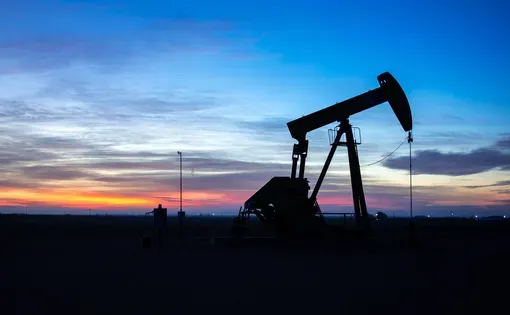
President Trump is throwing his weight behind an expanded campaign of oil and gas drilling.


AUSTIN (KXAN) — Senators on the state Business and Commerce Committee discussed on Thursday the merits of a bill that could place additional fees, permitting rules and regulatory requirements on new utility-scale solar and wind generation projects in Texas.
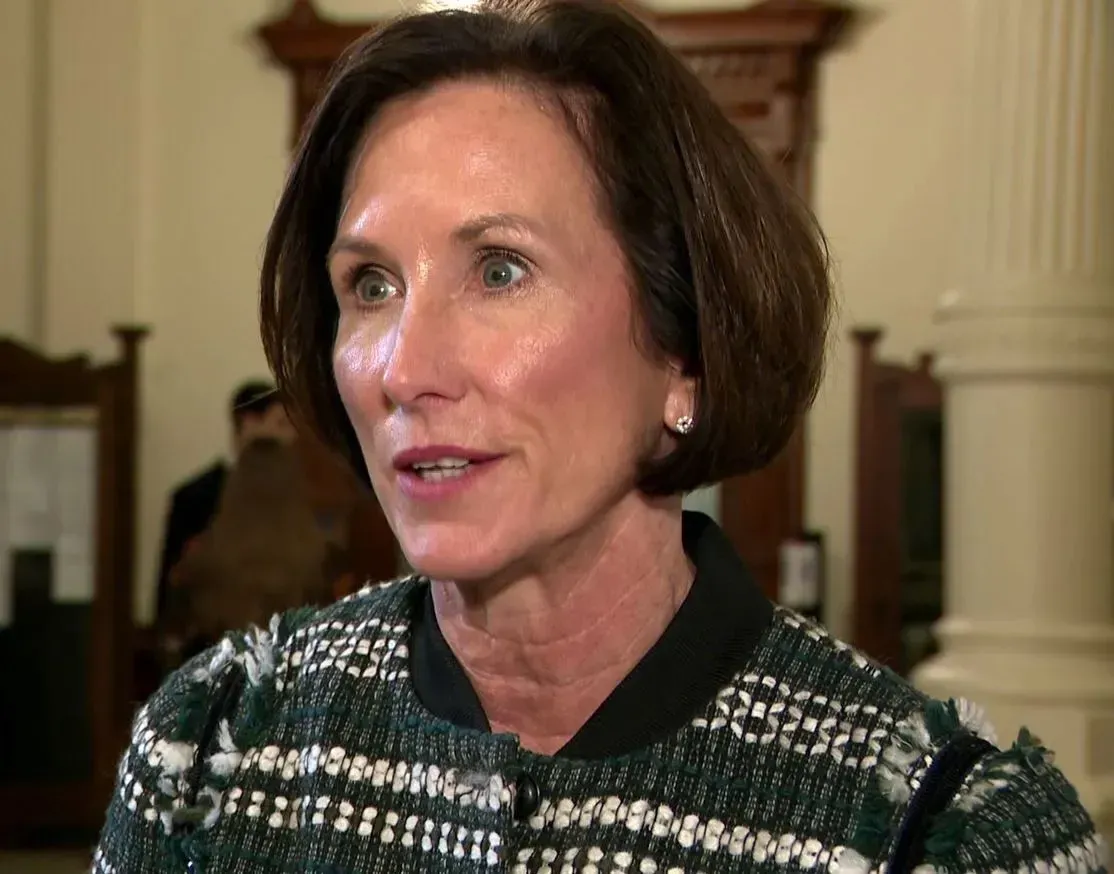
Sen. Lois Kolkhorst, R-Brenham, authored Senate Bill 819. She has described the law as protection for landowners, the environment and “the right thing to do for Texas.”
The bill, as Kolkhorst put it in the meeting, “is common sense guidelines for wind and solar installations.”

As a nonprofit journalism organization, we depend on your support to fund more than 170 reporting projects every year on critical global and local issues. Donate any amount today to become a Pulitzer Center Champion and receive exclusive benefits!
Many at the hearing agreed, many others did not.
Nearly 130 witnesses registered to testify, with just over 100 people opposing the measure. As her measure came up for its hearing, Kolkhorst acknowledged the numerous suited men and women gathered along the back wall of the room.
“All of the suits have joined us,” Kolkhorst said smiling. That means “this is heavily, heavily, heavily lobbied.”
In her opening testimony, Kolkhorst spoke of the lack of rules for placing renewable energy projects, how thousands of acres have been clear cut in East Texas for solar farms and how a wind project with 600 foot turbines was considered in her Fayette County Senate district where she never felt there was enough wind to support it.
Some of her constituents have “put their life savings into their property” and “want to die looking at that sunset” they’ve seen for years, Kolkhorst said, alluding to the impact a wind turbine can have on the Texas horizon.
Testimony at the meeting highlighted the opposing forces on the bill, which don’t fall neatly along political lines.
For and against
Those in favor of the legislation voiced concerns about impacts to the environment, their property values and natural areas of the state.
Justin Dreibelbis, CEO of the Texas Wildlife Association, a private land ownership and stewardship organization, spoke in favor of the bill. Rules for setbacks are necessary, he said, and wind turbines can suppress neighboring property values by 5 to 10%.
“There need to be clear side boards on the siting of these projects,” Dreibelbis said.
A Franklin County landowner spoke in favor of the bill. A solar project was slated to be built on three sides of his rural property, which was causing him worry.
Randy Nunn, an advisory board member of the Devil’s River Conservancy, also backed the bill. The Devil’s River — situated in Val Verde County — is considered one of Texas’ most pristine, spring-fed waterways. Nearby residents have fought for years against a large-scale wind project being located there.
“I’m for all of the above, just not everywhere,” Nunn said.
Many more opposed the bill.
Mike Olinger, an Armstrong County rancher, farmer and manager of Goodnight Wind, said he opposed the bill. His Panhandle county has benefited greatly from tax revenue and lease payments from wind energy.
“We don’t need to be punishing the small counties because we don’t have oil and gas,” Armstrong said. “This is the only revenue we’ve got since 1900, and that was a railroad track.”
Jeff Clark, CEO of renewable energy advocacy firm Texas Power Alliance, said simply, “this bill will kill renewable energy in Texas.”
Chloe Crumley, with Audubon Texas, spoke in favor of the bill, saying her organization supports renewable energy generally because the biggest threat to birds is climate change.
In response to Crumley’s testimony, Sen. Mayes Middleton, R-Galveston, brought up a common talking point among those opposed to wind turbines: that they kill birds. Middleton is listed as an author of the bill alongside Kolkhorst.
“When they impact, what happens to the birds?” Middleton asked Crumley.
Crumley acknowledged that birds do die from hitting turbines. Avian mortality rate studies have shown there are roughly 700,000 birds killed per year by wind turbines, she said. But, that estimate is likely conservative and the number could be closer to 1 million, she said.
For comparison, she said, building collisions kill about 1 billion birds per year and vehicle strikes cause about 25 million bird deaths. Given the overall dangers facing birds, Crumley said her organization does support wind power.
Bill breakdown
Kolkhorst’s bill would require notice of applications and a public meeting on new wind and solar projects over 10 megawatts, which is enough to power about 2,500 homes during peak use, according to ERCOT. The law would also require Public Utility Commission permitting and environmental impact reviews by the Texas Parks and Wildlife Department.
Fees would be put in a “renewable energy generation facility cleanup fund.” Wind turbines would have to be set back at least 3,000 feet from neighboring property lines, unless a neighbor agreed to a waiver. Solar arrays would need to be at least 100 feet from next-door property lines and 200 feet from habitable structures.
The new permitting rules would not apply to projects existing before Sept. 1, 2025, unless they increased power output by 5 megawatts, or “materially” changed the placement of the generation facilities, according to the bill.
Nine additional senators have signed onto the bill as authors. All of them are Republicans except one, Juan “Chuy” Hinojosa, a South Texas Democrat.
Federal pressure
Kolkhorst’s latest renewable regulation bill comes at a time of keen focus on such projects by President Donald Trump.
On his first day in office, Trump singled out wind power in an executive order that paused new leases for wind projects on federal lands and waters. Speaking at his inauguration, Trump stated “we’re not going to do the wind thing. Wind — big ugly windmills.”
And, in February, Trump created a National Energy Dominance Council, which would focus on expanding “all forms of reliable and affordable energy production.” The executive order establishing the council lists nearly a dozen of the country’s “amazing national assets,” including oil, natural gas, uranium, coal, biofuels, flowing water, geothermal heat and more.
Solar and wind didn’t make the cut.
Kolkhorst said she agrees with Trump’s moratorium on new federal wind projects. As a senator with a district that stretches to the Texas coast, Kolkhorst said she doesn’t want to “see them out in our bays and estuaries, these big windmills.”
Texas’ history of renewables
Texas’ leadership has fostered renewable energy production for decades. In 2010, former Gov. Rick Perry — who would later serve as U.S. Secretary of Energy in Trump’s first term — touted Texas as the country’s largest renewable producer and praised forward-thinking Texas legislation that paved the way for renewable energy to blossom.
In April 2024, Gov. Abbott also championed the state’s wind energy production as the overarching “all-of-the-above energy strategy.”