Event
DCEFF 2025: Industrial Currents
Country:
Event Date:
March 27, 2025 | 6:30 PM TO 8:00 PM EDTADDRESS:
Martin Luther King Jr. Memorial Library
901 G Street NW
Washington, DC 20001



A documentary looks into citizens' efforts to transition a coal community to newer means of...

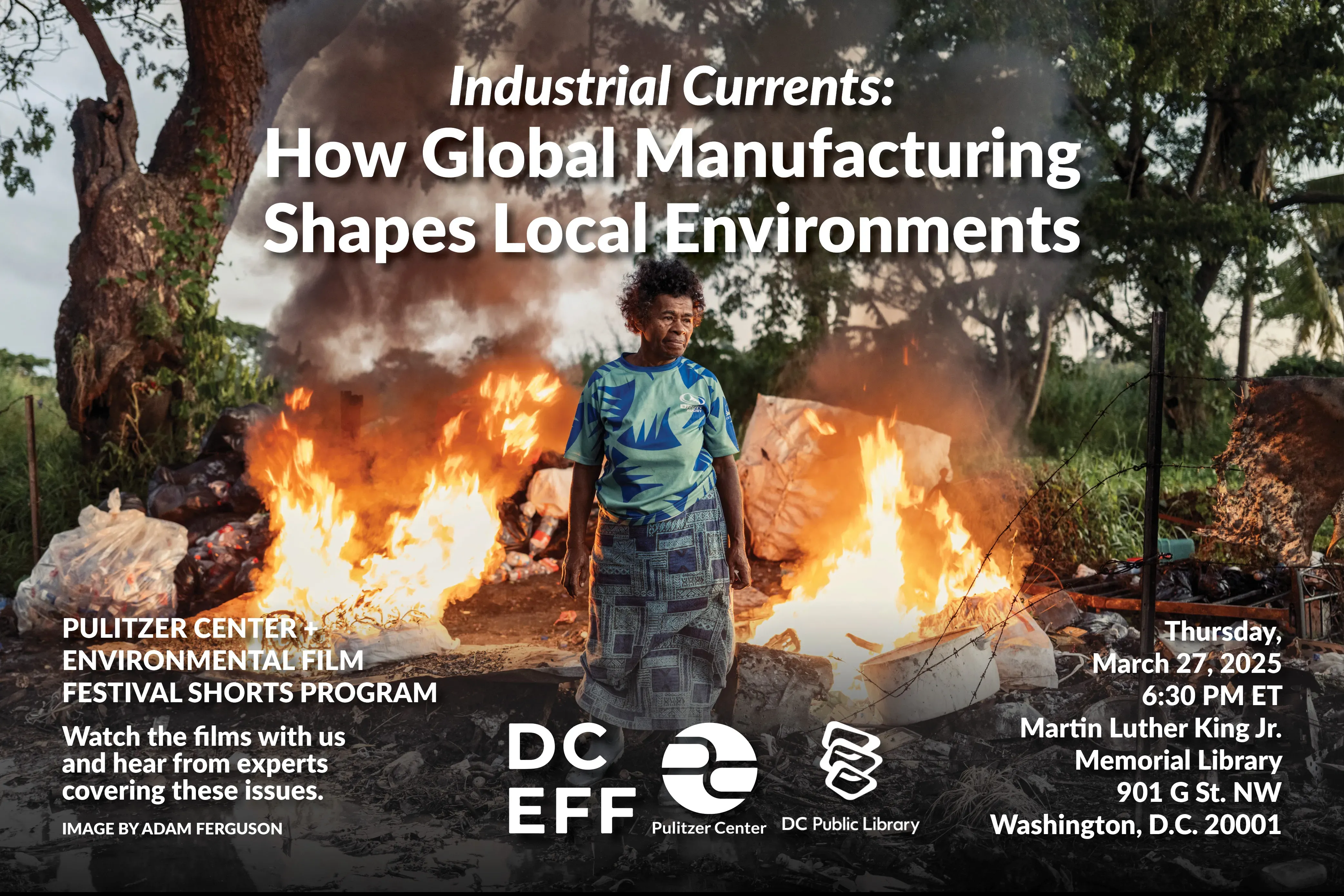
Industrial Currents: How Global Manufacturing Shapes Local Environments
Pulitzer Center Environmental Film Festival Shorts Program 2025
At a time crucial to stopping the advance of global warming, corporations play a key role in both the destruction and protection of our environment. Join the Pulitzer Center for a series of short films spotlighting how the lack of transparency, bad governance, and in some cases corruption are exacerbating environmental destruction. Local communities are left to deal with the consequences of global supply chains, attempting to protect their health, homes, and livelihoods with little information and support.
The Environmental Film Festival is free and open to the public; registration is required. A Q&A will follow the screening with grantee Anton L. Delgado and Josh Axelrod, from the National Resources Defense Council, moderated by climate video journalist Eli Kintisch.
Panelists:
- Anton L. Delgado is a multimedia journalist in Southeast Asia, covering climate, politics, business, and the environment for several newsrooms, including The Associated Press, Bloomberg, NPR, and Mongabay. Delgado was a 2022 and 2023 Rainforest Investigations Fellow and a 2020 Campus Consortium Reporting Fellow.
- Josh Axelrod is a Senior Program Advocate, Nature, at the National Resources Defense Council. Axelrod focuses on issues including public land protection and conservation, renewable energy sitting on public lands, limiting oil and gas development on public lands, energy transmission, and climate policy.
- Eli Kintisch is a science and climate video journalist and the Ted Turner Assistant Professor of Environmental Media at George Washington University.
Films:
"How First World Consumers Dirty the Environment"
Sechaba Mokhethi, Pascalinah Kabi, Billy Ntaote — MNN Centre for Investigative Journalism Lesotho
An investigation by grantees Billy Ntaote, Sechaba Mokhethi, and Nicole Tau of the MNN Centre for Investigative Journalism uncovers how first world consumer choices pollute the environment in Lesotho. Negligence and corruption have resulted in a lack of regulation of textile factories in Maseru and Maputsoe, in disregard for labor laws. Factories pollute with apparent impunity as tests confirm that factories release toxic wastewater into water courses, including the Mohokare/Caledon River.
"Inside Fiji’s Fiery Battle Against Plastics"
Aryn Baker — TIME
Burning plastic releases toxic substances that will remain in the environment for hundreds of years, with deleterious impacts on human and ecosystem health. Yet open burning is one of the most common methods for eliminating unwanted waste in a remote island nation besieged by a plastic tide. Less than a third of Fiji’s plastic waste is locally produced. The rest drifts in with ocean currents from as far away as South Africa and Mexico. It must be disposed of, wherever it comes from, and burning is often the simplest option.
"As For Us: India’s Journey Towards a Green Future"
Pawanjot Kaur — Financial Times
The Financial Times partnered with the One World Media fellowship program to publish the work of filmmaker Pawanjot Kaur, who tells the story of the people who live in Jharkhand, a major coal mining region of India. The film highlights the citizen-led groundwork intended to transition Jharkhand’s coal community to newer means of livelihood.
Project
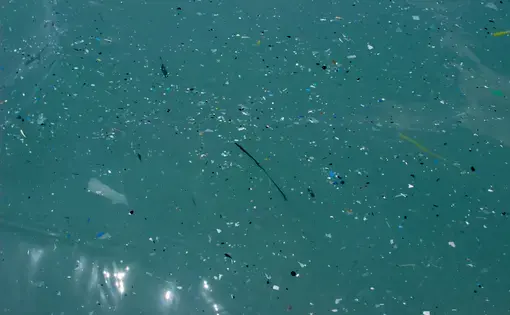
The Ocean’s Invisible Pollutants
We’ve seen the photos: the Pacific garbage patch, turtles choking on straws, oil spills visible from...

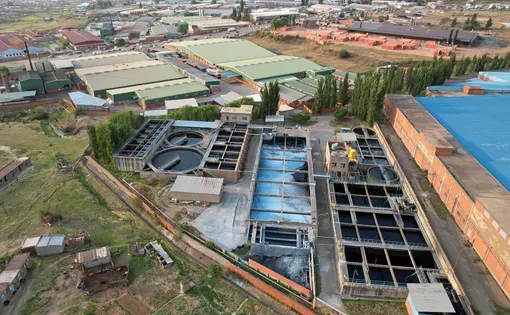
An investigation uncovers how consumer choices pollute the environment in Lesotho.