Pulitzer Center Update November 16, 2026
U.S. Regulator Proposes Another Blow to Corporate Transparency
Country:


On Sept. 16, the U.S. Securities and Exchange Commission (SEC) proposed to eliminate a rule that requires companies to publish shareholder proposals. These documents are an important source for journalists and researchers working on corporate accountability, supply chains, and environmental wrongdoing.
“These changes would suppress shareholder governance [and] diminish corporate transparency and accountability,” said a letter addressed to the SEC signed by over a dozen state treasurers.
Learn how to find SEC filings relevant to your investigation in our SEC and EDGAR guide.
The rescission of Rule 14a-8 would let state law govern the publication of shareholder proposals. As of now, no U.S. state requires management boards to publish these proposals as part of the company’s documents.
“In practice, that [rescission] would hand the decision over to company management rather than the owners of the company,” said investor group Freedom to Invest in a press release.
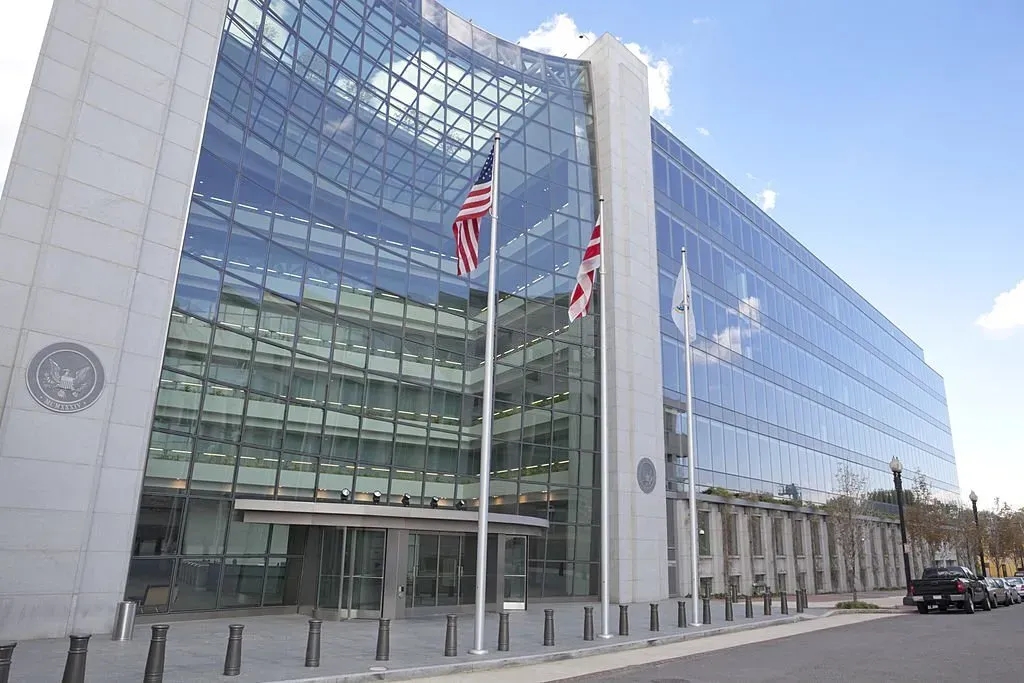
Besides taking away power from investors, excluding the proposals from publicly available documents would eliminate a great source of information for reporters and corporate accountability organizations.
The Interfaith Center on Corporate Responsibility (ICCR), for example, regularly uses shareholder proposals as a platform to push for climate and environmental justice, ethical supply chains, and corporate political responsibility.
“This SEC’s proposal to rescind Rule 14a-8 is an attack on the fundamental rights of shareholders, and eliminates the decades of precedent that has facilitated productive engagement between investors and companies,” said ICCR CEO Josh Zinner.
Besides proposing to eliminate Rule 14a-8, the SEC also proposed to eliminate Rule 14a-6(g), which requires large shareholders to submit a “Notice of Exempt Solicitation” when they want to encourage other shareholders to vote a certain way on agenda items.
In the same proposal, the agency wants to get rid of the requirement to share annual reports, arguing that this financial information is already included in the required 10-K filings. However, the annual reports are: easier to find, usually easier to read, and might include additional information that is useful for researchers and investors.
SEC documents are not only relevant for investigations inside the U.S. Many international companies are traded at U.S. stock exchanges, and many U.S. companies have been required to file statements about their dealings with international clients.
A change of direction
For almost eight decades, the SEC has served as an arbiter between shareholders and companies. The agency and the laws it enforces were created as a reaction against the Wall Street crash of 1929, which led to the worldwide Great Depression. The U.S. government wanted to move regulation from state to federal oversight in order to prohibit the investment practices that precipitated the crash.
Since President Donald Trump appointed its temporary director Mark Uyeda in 2025, and a few months later gave the position permanently to Paul Atkins, the SEC has been giving more power to companies to regulate themselves.

By law, public companies in the United States are required to hold an annual shareholder meeting where they elect leadership, learn about the state of the company, and hold votes.
Materials for these meetings (called “proxy materials”) are distributed ahead of time.
Shareholders who wish to bring a vote to the meeting, or express a grievance, may send “shareholder proposals” to the company's “principal executive offices” to be included in the proxy materials.
Importantly for researchers and journalists, proxy materials, along with shareholder proposals are currently publicly hosted on the SEC’s EDGAR database.
Jump to the section “How to find shareholder proposals in EDGAR” in our SEC methodology for instructions on accessing shareholder proposals.
Submitting a shareholder proposal can be a low-cost way for activist investors to promote their objectives. For instance, proposals may ask a company to commit to diversity initiatives, tighten their supply chain, or be more transparent about political spending.
In 2021, a shareholder proposal asking for more transparency on deforestation led to a commitment by international agribusiness company Bunge. In October of the same year, investors held P&G accountable through a proposal about its role in deforestation tied to palm oil and forest pulp production.
While all proposals must include an actionable voting item, winning a vote isn’t the only impact shareholder proposals can have.
Since proposals are hosted publicly, they can attract the attention of journalists and researchers, which encourages companies to engage in private negotiations with the shareholder to avoid the proposal being published publicly.
The rule also serves as an equalizer, allowing shareholders with as little as $2,000 in stock to force massive companies to put their grievances on the ballot.
The second rule, Rule 14a-6(g) is intended to be a transparency mechanism that forces shareholders of $5 million or more to be explicit about how they lobby for votes, including for shareholder proposals.
Smaller shareholders can submit these notices voluntarily, and some use it as an affordable way to make public statements about the action or inaction of a company.
The proposed amendment would get rid of both required and voluntary notices of exempt solicitation and the SEC would stop hosting the notices on their site altogether.
A fact sheet published by the SEC explains that the “vast majority” of notices submitted in recent years have been voluntary.
These moves by the SEC are part of a broader shift by the Trump administration to deregulate industry.
On Dec. 11, 2025, President Trump signed Executive Order 14366, titled Protecting American Investors From Foreign-Owned and Politically-Motivated Proxy Advisors.
In the executive order, the President criticized proxy advisors that “have supported shareholder proposals requiring American companies to conduct racial equity audits and significantly reduce greenhouse gas emissions.”
He goes on to say that, “proxy advisors regularly use their substantial power to advance and prioritize radical politically-motivated agendas.”
Trump calls on the Chairman of the SEC to review all documents that relate to proxy advisors including Rule 14a-8 and consider revising or rescinding them.
In a statement, SEC Chairman Paul Atkins wrote that regulating the shareholder proposal process was beyond the authority of the Commission and is instead a job for the states.
He went on to frame the change as an opportunity for states to compete to attract companies, adding, “Competition has always been the engine for innovation and progress in America.”
The public comment period on the proposed elimination of Rule 14a-8 and Rule 14a-6(g) will be open until Nov. 20, 2026. After which, a five person commission will vote to approve or deny the proposals.