Pulitzer Center Update July 30, 2026
Sharp Seminar Fellows Make a World of Connections
Country:

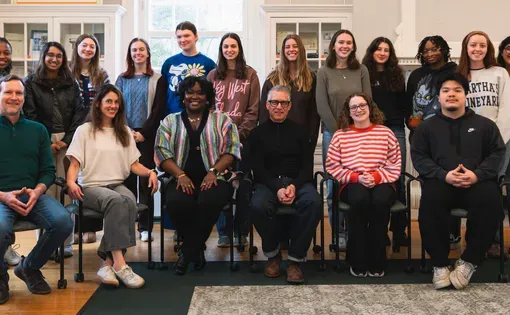
Students report on various issues around the world.


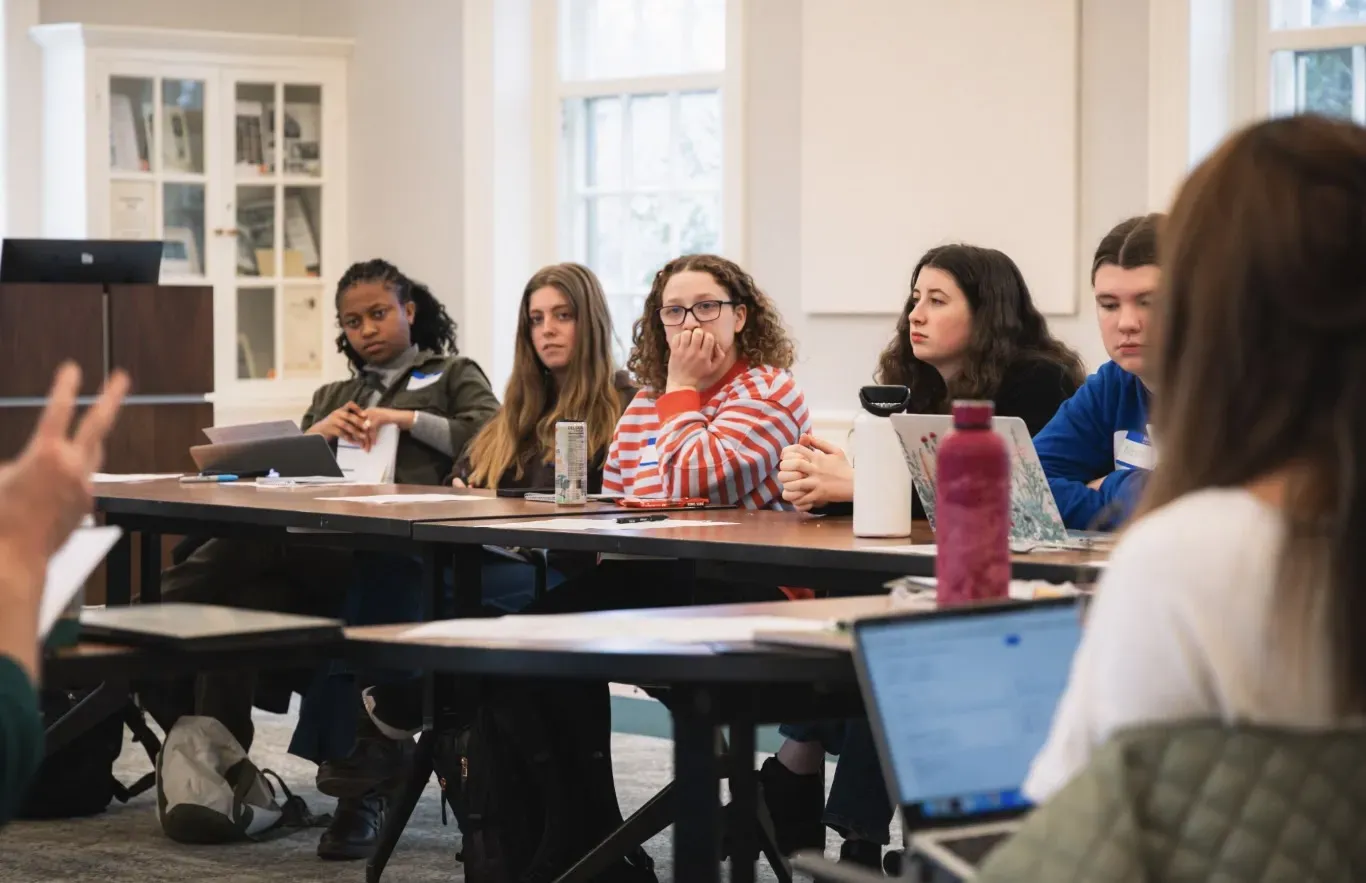
“Journalism is not dead—it’s reimagining itself,” Ted Maris-Wolf said over a video call.
Reflecting on this year’s collection of articles by students in the Sharp Writer-in-Residence Program/Journalism Seminar, the associate director of The Charles Center at William & Mary radiated a sense of pride and subtle awe.
After all, for 15 years, the highly competitive Sharp Seminar plays a meaningful role in this reimagining as a journalism incubator. Sharp provides students with opportunities to go beyond the academic world to report on topics for more general audiences.
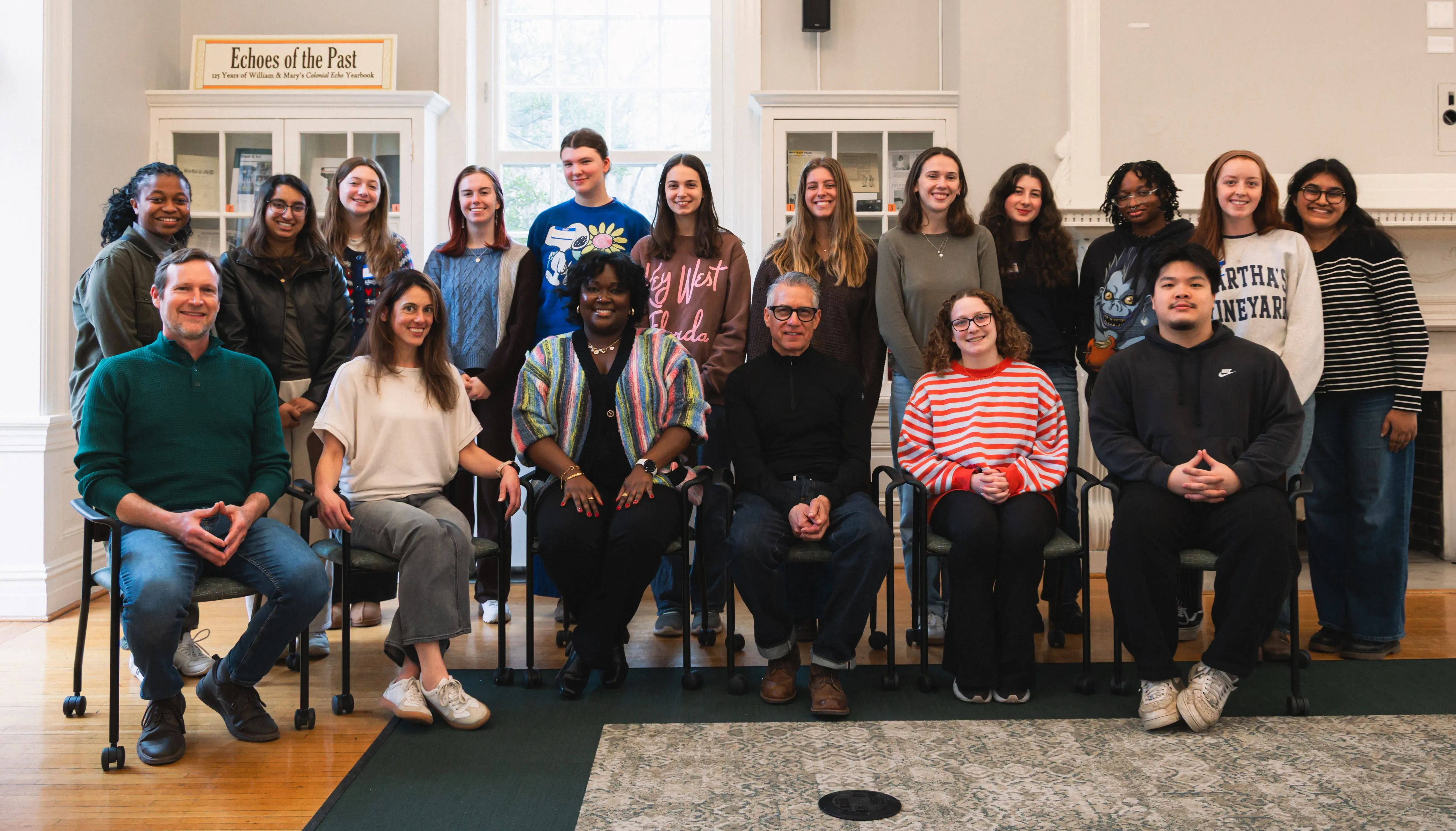
The 2025-2026 cohort of Seminar Fellows ventured into geographies and communities to report on a breadth of issues, including the youth vote, art preservation, environmental conservation, anti-immigrant sentiment, and gaps in healthcare.
“One of the things I love about this program is [...] that it’s not just for journalists,” said Christian Science Monitor writer and Pulitzer Center grantee Stephanie Hanes, who led the Seminar with Maris-Wolf. “It’s using these skills of journalism for anything that they do—the skills [...] of getting out of your own echo chambers and actually talking to people who are different than you.”
The Seminar teaches a small cohort of students the breadth of journalistic practice—from cultivating sources, to reporting and writing, and verifying facts. But, perhaps most importantly, the Seminar instills lessons in adaptation, balance, and operating in doubt and the unknown.
Fellow Mona Garimella knows this well. The junior majoring in government and psychology ended with a story entirely different from her original idea. Garimella, who wrote about how South Asian communities in Ireland cope with the rise of anti-immigrant sentiment, harnessed the power of pivoting and turning her fears into an opportunity.
“It’s only through being scared that you’re able to get answers to your questions,” Garimella said. Or, as Hanes put it, the other side of doubt is curiosity. “How do you tap into what you don’t know and lean into that, and actually turn that into a superpower,” Hanes said.
These are the skills that Anne Sharp was looking for as a William & Mary student determined to become a journalist in the 1980s. But, as is the case now, the second-oldest higher education institution in the U.S. didn't have a journalism program.
“I knew that William & Mary didn’t have a journalism program, but what I wanted was a good liberal arts education with street experience in writing,” Sharp told the Pulitzer Center in 2012. “I wanted to write for the college paper and get on at a city or town paper.”
So, in 2011, along with her husband, Barry Sharp, and support from the Pulitzer Center, Anne Sharp launched the Sharp Writer-in-Residence Program/Journalism Seminar at William & Mary.
Fifteen years on, the coveted Seminar has seen a recent “upswell” of interest among students, according to Maris-Wolf. This is due to a “heightened sense of the importance of journalism in democracy” during the times we live in, he said. “Journalism has a special responsibility in democratic societies for revealing structures that may be hidden in plain sight.”
“The journalistic practice—that listening and engaging and getting on the ground and talking to people with views that are different, the dialogue that is inherent in journalistic practice—all of that over the past years have started to look increasingly important,” Hanes said.
Engaging with people and cultivating sources are the skills Fellow Ethan Qin is taking into his professional career in finance. For his Seminar project, the recent graduate, who majored in finance and minored in data science, looked into how English football academies have become financial assets rather than a developmental pathway for youth players.
Qin traveled to London, walked its streets, and talked with patrons at pubs to get a raw sense of what soccer means to the community. But after all his reporting, Qin said, he felt something was missing—a key voice that would bring his story to life.
His deadline was looming—and even passed—yet he hadn’t found this voice. He kept trying—with his instructors guiding him and helping him balance between “the ideal versus the possible,” as Hanes said, between sticking to his instinct and embracing alternatives.
After digging in local newspapers and social media, cold-calling a company, and just “conversing,” Qin finally found this key source.
Reflecting on this “last-minute find,” Qin saw the depths of “keeping the faith, trusting the process, and having that belief that ‘OK, it will come,’—you just need to keep looking.”
Fellow Nora Birchett, who is majoring in history with an interest in museum work, found a similar nail-biting experience when exploring the restitution-retention debate of Benin Bronzes, high-value artifacts whose return home to Nigeria is a highly contested subject.
“I was hitting a lot of dead ends,” Birchett said. She kept on going, though, following several potential leads until, right at the end of an hours-long conversation with one her sources, she found the story.
The whole process was “really stressful,” Birchett said. “I would call my mom and be like, ‘I can't do this. I’m so scared.’ And then, I don't know, it just … it kept being OK, even when things kind of fell through and I had to look in a new direction,” she said. “There was always somewhere to go if I had to look for it.”
It is this kind of pivoting, of turning what we don’t know into a path of learning, of thinking critically through issues and obstacles, that runs through the 2025-2026 collection of stories by Sharp Seminar students.
The 2025-2026 cohort includes 14 students with different disciplinary backgrounds, from psychology and government to finance, history, and geospatial analysis. They reported from different localities, from Kenya to Ireland, from rural Minnesota to Cincinnati, from Rosario, Argentina, to Rio Grande City, Texas.
This year’s Seminar attracted students who are interdisciplinary, Maris-Wolf said. “Students are equipped to look past disciplinary boundaries and make connections.”
But, perhaps most significant of all is the reimagining of journalism in a new generation of practitioners who can take the craft and the skills to spaces beyond conventional journalistic outlets.
The Sharp Seminar provides students not only with a “chance to do journalism—they’re getting a chance to understand this core part of democracy and democratic practice. And that, to me, has become increasingly clear,” Hanes said.