Pulitzer Center Update June 4, 2026
A Lesson in Global Health Reporting From Grantee Eli Cahan: How To Persuade People To Care

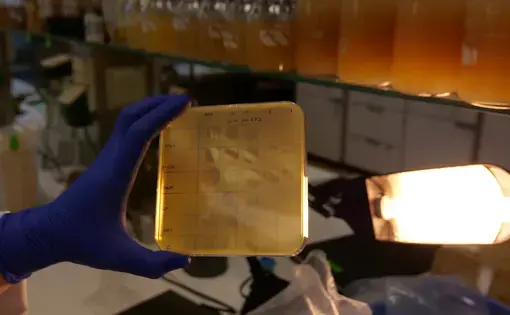
The relationship between conflict and the spread of “superbugs” has been one of increasing concern.

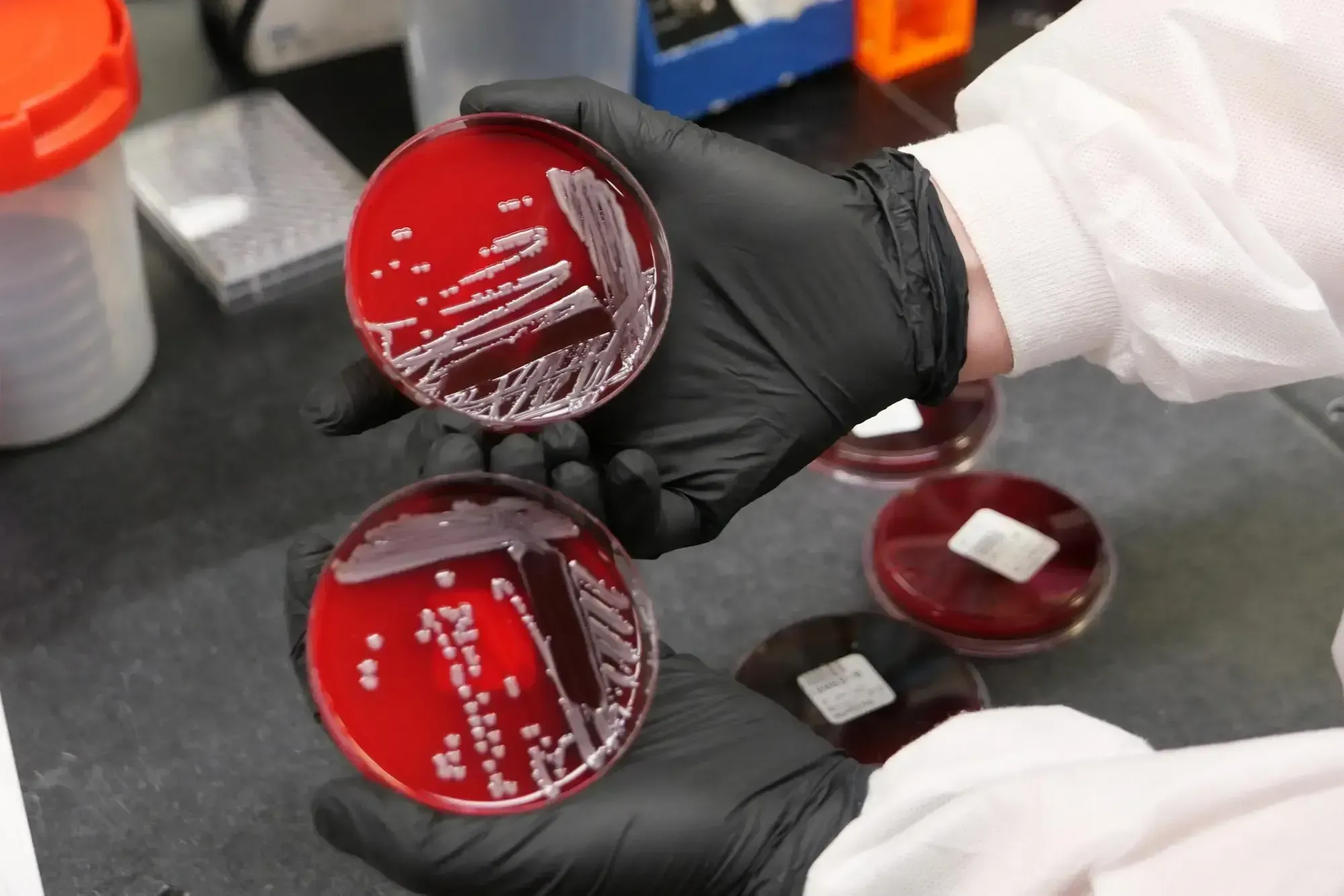
During a recent visit to our Seminar in Humanitarian Health at the Johns Hopkins Bloomberg School of Public Health, Pulitzer Center grantee and physician Eli Cahan offered guidance on navigating the world of public health communication.
Sitting in a classroom at the School of Public Health can feel like an uphill battle: We analyze datasets from studies far away and scour through published articles trying to learn how to save lives, millions at a time. In our seminar, we talked about how academia often favors quantity of data points over qualitative lived experiences and discards anecdotal stories as cherry-picking.
But our challenge now is to do both: to generate a body of robust evidence to show the universal relevance of communities’ health challenges, and to amplify individual stories. We’re already convinced that global health matters. But what are we supposed to do in an era of public health backsliding?
Cahan’s seminar diagnosed the first step in this task: How do we persuade people to care about others they’ve never met?
Now, more than ever, we need to refine the process of importing back into relevance the lives of those far away from us.
We have spent an academic year debating how to respond to infectious disease outbreaks in refugee settings; discussing the intersections of climate and migration; and talking about improved models for human rights. We students come from a spectrum of backgrounds, ranging from new university graduates to seasoned physicians or NGO program managers. This seminar invites us to interrogate biweekly guest lecturers on how they respond to challenging scenarios. Cahan—a pediatrician and investigative journalist—offered a bridge for us to tie academic research to real-world momentum.
As aspiring public health professionals, we are learning to straddle the intellectual rigor of academia with the human toll of real-world, ongoing urgency in global health challenges. But as people, we tend to overweight what is local and visible at the cost of a community far away.
The needs of those in crisis in distant contexts often don't match up with the power and impact of individual voices.
But some stories break through and spark the paradigm shifts we’re looking for. Cahan's reporting and presentations bring humanity from the faraway to our hearts and minds. He focuses on the individuals at the center of a story. He then conveys its magnitude by zooming outward in scale.
Cahan conveyed the power of showing up. He told us about a reluctant cigarette break in which he connected more deeply with the people at the center of a story and found groundbreaking news in informants.
In an era of continually urgent public health challenges, we discussed the need to bring liquidity—the capacity to respond with the resources and immediacy that health crises demand—to places without it.
That raises another challenge: How do we meet the imperative of transcending the silos of journal-based publication and translating research into policy? How do we keep centered on the nuance of individual lives when looking at data on millions of abstract points?
This requires looking beyond the conventional clinical bounds of a physician. Public health is about social pathology and the broader, systemic conditions that manifest as clinical outcomes.
In order to have an impact, research communication needs to be actionable, Cahan taught us. When we present results, we need to explain what our readers are supposed to do with that information; what needs to be done in response; and why aren’t we doing it.
Meaningful writing must do three things:
- Offer a story, not just a topic: What specifically is new?
- Prove it with data and an evidentiary base.
- Use firsthand narratives and details readers can see themselves.