Pulitzer Center Update June 17, 2026
Journalists' Roundtable Finds Opportunities, Challenges in Covering the Arctic

Project
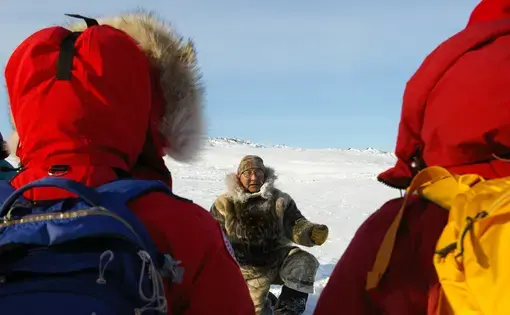
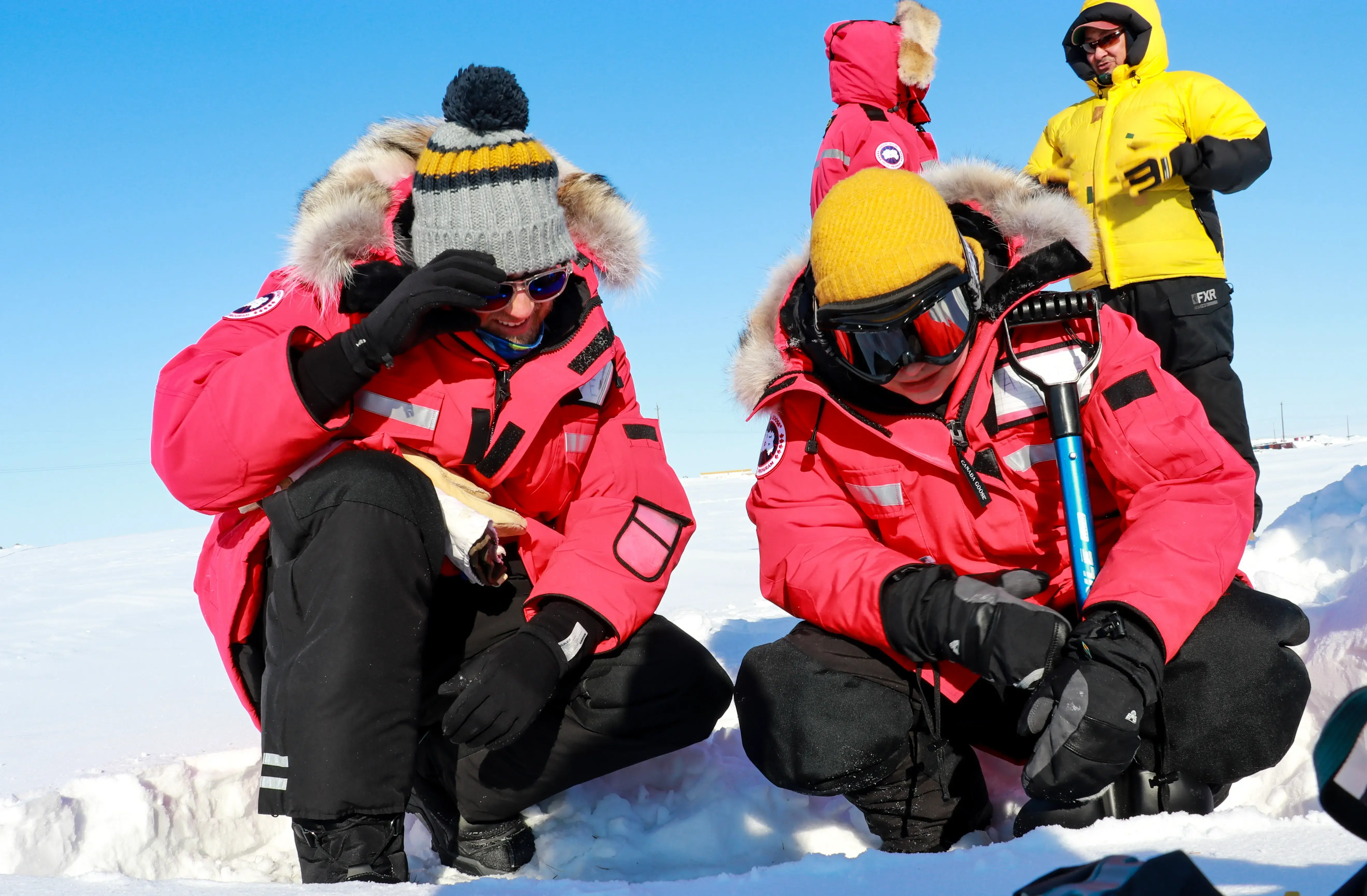
What the Snow Can Teach
Not enough is known about changing snow in Arctic. A team of 40 researchers, students, and...

The definition of community includes the phrase “the condition of sharing.” Here at the Pulitzer Center, we are a trailblazer for sharing knowledge through journalism.
Community-building is a key and central philosophy of ours: bringing diverse groups of people together to share knowledge, collaborate on ideas, and to effect conversations that help us—and others—to learn about what we don’t know.
Last week at the Center, we convened our first ever Arctic roundtable event. It was a virtual gathering of eight brilliant minds—from photographers to reporters, a researcher, and an editor—chaired by our Ocean Editor Jessica Aldred.
Our aim was to listen to the challenges and opportunities of Arctic reporting through their lens, to understand what should be in our line of sight, and to hear about the things we should be thinking about.
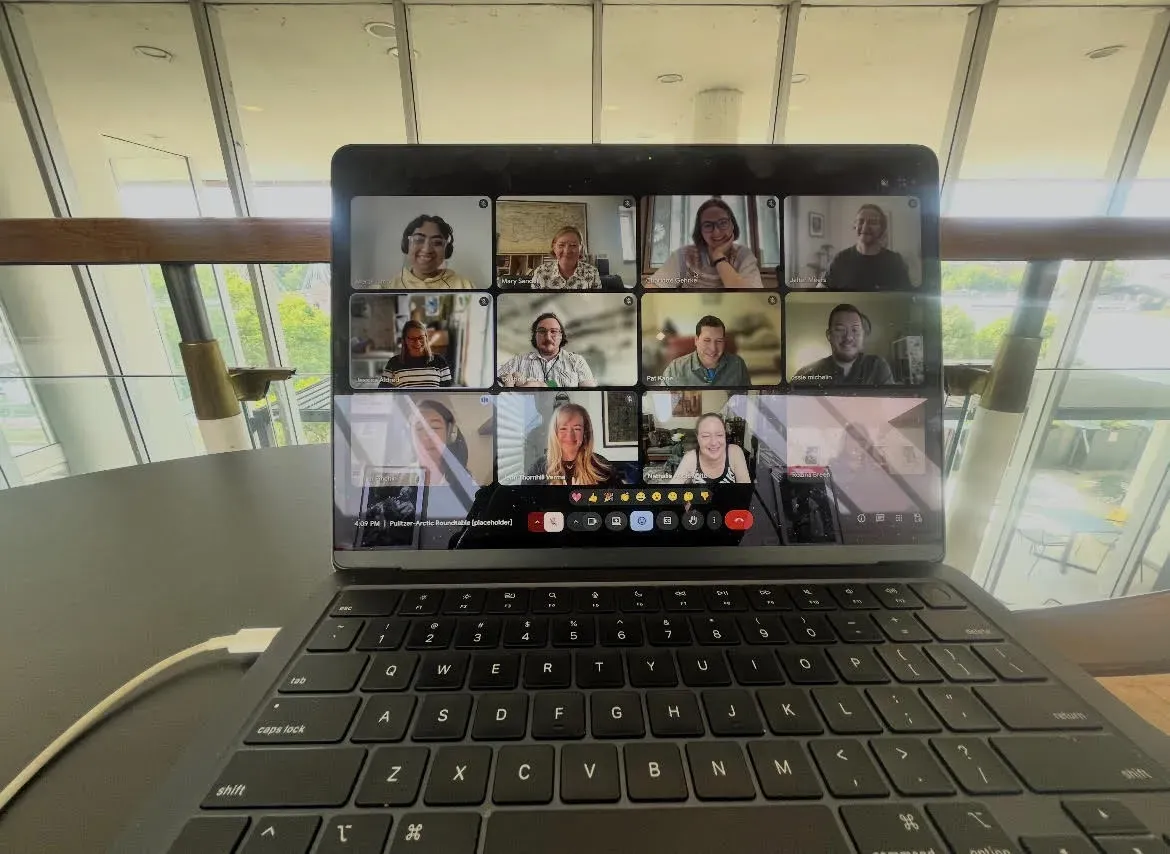
Key themes from our conversation
The key themes that emerged were:
- Building trust with communities
- Ensuring longevity of reporting
- The value and importance of Indigenous voices
- The vitality of networks
Climate reporting was a key thematic area. And we all agreed that climate intersects pretty much with everything from the world of work to things like housing and transportation.
The challenges of Arctic reporting
The challenges are clear. The nature of current coverage is too inconsistent and cyclical. Global knowledge is lacking and there are too many assumptions about the Arctic (the Arctic is not polar bears). There is also a feeling that there is too much parachute journalism and a distinct lack of opportunity for young journalists in the nation states.
The Northernmost part of the world is an opportunity
So, what are the things the roundtable felt the journalism community at large should focus on?
We should be looking at, and reporting on Indigenous peoples’ solutions—there is so much to learn from them. Plus, ensuring that stories about everything from climate to geopolitics and everything in between are rooted in communities. The most urgent issues of our time should be connecting the micro to the macro—we are all invested in the world around us and we all have the power to shift the dial on meaningful change.
We also talked about the power of network building, and the urgency of supporting Indigenous and local journalists, including the next generation of journalists.
If you want to understand why everyone needs to sit up and take note of the Arctic, read my previous blog “Why All Eyes Should Be on the Arctic.”
I’d also love to share the names and work of our formidable panel.
Meral Jamal
Meral Jamal is an independent South Asian journalist based in Nunavut since 2022. She's reported from across Canada's north since 2019.
Jamal has covered local, national, and international news for various media outlets. In Canada, her work has been featured in The Narwhal, the Canadian Geographic, Briarpatch, and Broadview, among others. She's also written for international outlets, including Undark, The Guardian, Al Jazeera, and The Weather Network.
Jamal has been a frequent (and the youngest) guest on the Unexpected Elements podcast by the BBC, where she's been sharing stories about local conservation and climate solutions. She's also reported on Indigenous law in relation to energy, resource extraction, climate action, and stewardship with IndigiNews.
With the Pulitzer Center’s support, Jamal examined the impact of changing snow conditions in the High Arctic on the lives of local inhabitants, and how Indigenous Inuit knowledge can bolster scientific research. Her project also looked at how changes to the Arctic climate never truly stay in the Arctic, and what these changes mean for people across Canada and around the world.
Charlotte Gehrke
Charlotte Gehrke is a postdoctoral researcher at the Helmholtz Institute for Functional Marine Biodiversity (HIFMB) at the Alfred Wegener Institute (AWI) and the University of Oldenburg (UOL). Her work examines the intersection of science communication, journalism, policy, and diplomacy, with an empirical focus on polar and ocean governance. Gehrke’s research has been published in a wide range of academic journals and edited volumes, including International Affairs, Science & Diplomacy, Global Society, Marine Policy, the Routledge Handbook of Arctic Governance, and more.
Check out two of her publications: “Visitors to the Arctic” (2025) and “Practitioner Perspectives on Arctic Marine Mammals in Environmental News Reporting” (2024).
Marybeth Sandell
Marybeth Sandell is the editor-in-chief at Arctic Today. She has chased corporate news stories around the world, working for Bloomberg in Stockholm, London, Zurich, and New York. She taught communications and journalism at the University of North Carolina at Pembroke and co-authored books, including What's Your Story? The Essential Business Storytelling Handbook. Sandell is based in Stockholm.
She shared this great article with us on what the Arctic means and how that depends on who you ask.
Ossie Michelin
Ossie Michelin is an award-winning Labrador Inuk journalist from the community of North West River, Newfoundland, and Labrador, Canada. For over a decade, Michelin has reported in a variety of media focusing on sharing the Indigenous perspective on news, arts, and environmental science. His work seeks to build connections between North and South, and across cultures.
Michelin has written, with support from Pulitzer Center, about how the Inuit want to protect their Arctic homes and how they plan to reclaim their sea.
Karen Pinchin
Karen Pinchin is a Canadian science journalist and author whose projects investigate and reveal how consumption, history, and technology shape our shared warming world. A graduate of Columbia University’s master’s in science journalism program, her longform magazine and newspaper reporting has won regional and national awards. Her work has appeared in outlets including Canadian Geographic, Hakai Magazine, and Scientific American. Her first book, Kings of Their Own Ocean: Tuna, Obsession and the Future of Our Seas—about a mercurial fisherman and a bluefin tuna he tagged—was named a Globe and Mail Best Book in 2023.
I’d recommend reading her Pulitzer Center-supported investigation Beset By Ice, which looks into who is profiting and who is paying the costs on the new Arctic shipping routes opening up as a result of the melting ice.
Jenn Thornhill Verma
Jenn Thornhill Verma is a Canadian freelance journalist covering fisheries, the ocean, and climate change. Her award-winning reporting combines rigorous evidence with compelling narratives, alongside those wearing the boots on the boats and in the harbors where many of the stories happen.
In 2024-2025, as a Pulitzer Center Ocean Reporting Network (ORN) Fellow, Thornhill Verma investigated Canada-U.S. cross-border protections for the critically endangered North Atlantic right whale for The Globe and Mail's Entangled series. Her reporting for The Globe and Mail's Unsettled series—which examines how Labrador Inuit are adapting to climate change—led the team to gold in Environmental and Climate Change reporting at the 2025 Canadian Association of Journalists awards.
Pat Kane
Pat Kane is a photojournalist based in Yellowknife, Northwest Territories, on the traditional land of the Yellowknives Dene First Nation.
He takes a documentary approach to stories about life in Northern Canada, with a special focus on issues important to Indigenous people, including the relationship between land and identity.
Kane is a National Geographic Explorer, a 2020 World Press Photo’s Joop Swart Masterclass mentee, and the recipient of the 2024 Dr. Jane Goodall Vital Impacts Environmental Photography grant.
His work has been exhibited in galleries and at festivals internationally, and published by National Geographic, The New York Times, World Press Photo, The Atlantic, The Globe and Mail, The Walrus, and other leading outlets.
Kane is of Irish-Canadian and Algonquin (Anishinaabe) ancestry, and is a member of the Timiskaming First Nation.
His article about caribou herds is worth your time. His photography is also stunning.
Dustin Patar
Dustin Patar is an award-winning freelance visual journalist who lives and works in Iqaluit, Nunavut, Canada.
His work often focuses on the Canadian Arctic, including Inuit culture, the impacts of climate change, daily life, and sovereignty. His photography has been exhibited both in Canada and internationally, and his stories have been published by The Globe and Mail, Canadian Geographic, The Walrus, The Narwhal, and the Canadian Broadcasting Corporation, among others.
Patar’s photography is just breathtaking—I’d love you to take a look.
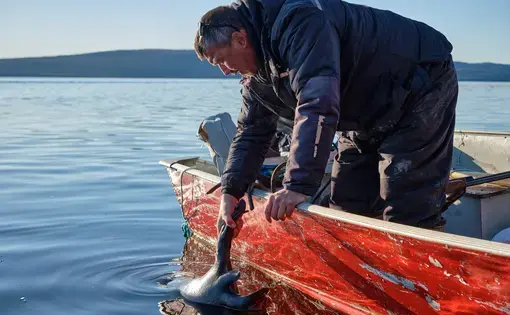
To protect the waters of Nunatsiavut, the local Inuit government is developing a massive new marine...


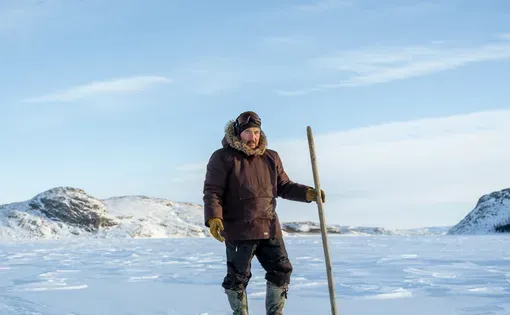
Amid climate shifts, the Labrador Inuit are taking matters into their own hands.


Project
Beset by Ice
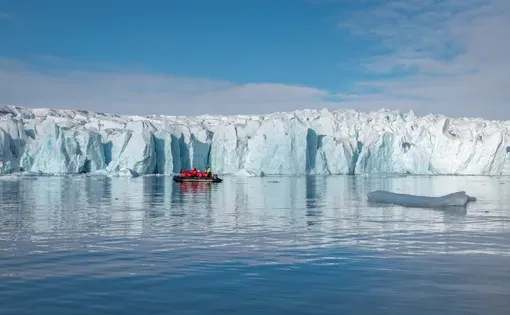
As melting sea ice opens new Arctic shipping routes, who profits and who pays the costs?