Pulitzer Center Update June 25, 2026
How Journalism Can Change the World: Global Health in Focus
Country:

Project
Chemotherapy at Risk
When controls fail, the risk is transferred to the patient.


Lisa Gibbs delivered a keynote talk at the SNF Nostos conference on June 23, 2026. Below is a recording and transcript of her remarks.
I want to thank SNF and iMEdD for having me here and for their partnership in strengthening journalism around the world.
Cancer is the leading cause of death worldwide. Roughly 1 in 5 people will be diagnosed with cancer at some point during their lifetimes. Now imagine you, or someone close to you, are waiting for chemotherapy and the hospital tells you the medication is unavailable. And it’s not because you can’t afford it, or it can’t be purchased. They had the medicine in their hands—but it was defective. It couldn’t be used.
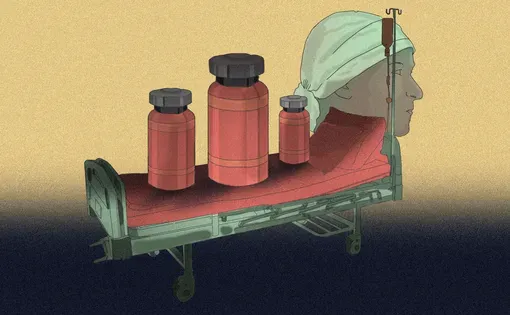
This is what happened to thousands of families in Peru. Over six years, Peru's Ministry of Health purchased more than 140,000 cancer drugs that contained bacteria or glass particles, or, didn’t have the right concentration of medicine described on the label.
Instead of delivering lifesaving medicine, the vials ended up in the trash. Some patients went untreated for weeks. And the Peruvian government kept on buying drugs from the same manufacturers despite their quality problems.
Now, how do we even know about this?
We know this because of the work of journalists. In this case terrific investigative journalists at Salud con Lupa in Peru, and the Bureau of Investigative Journalism in the UK. Because of this investigation, finally, change did happen. The Peruvian government launched inspections of 26 manufacturing plants in India and China, and there are efforts underway to improve the government’s drug safety practices.
You know, we can’t fix problems we don’t know about.
So this is one of the greatest powers of journalism: It shines a light on the actions of people and institutions in power which affect us all, and by doing so, it creates better conditions for accountability.
This kind of reporting is what the Pulitzer Center calls breakthrough journalism. Journalism that isn’t just noise, a headline that you scroll past when you’re catching up on the news of the day.
Breakthrough journalism is not about a clever headline, it’s journalism in service: service to truth, to our communities, and to our society. Stories about vital issues that show you the world and inspire you to get involved.
There are many many stories like the one in Peru, which lead to the end of harmful practices, inspire new laws, and create real change.
And that kind of impact alone makes journalism vital for a healthy society.
But if we only talk about policy action, we are missing so much more of what journalism can do for our world.
We believe Journalism creates curiosity, connection and purpose.
It provides the human stories, the evidence and the context that fuels real and important conversations about the world’s challenges and how we can solve them together.
These beliefs have informed the Pulitzer Center’s work since we were founded in 2006. In partnership with organizations like the SNF, we supply journalists all over the world with the resources to produce ambitious stories. And then we connect those stories with youth, academia, civil society organizations and policymakers to activate civic engagement and impact.
Global Health has been a priority for us since our beginnings. This revolving globe represents every story about Global Health that the Pulitzer Center has made possible with grants and resources over our last 20 years—2,801 of them.
We’ve supported stories about everything from advances in infectious disease to public health accountability to challenges of mental health treatment.
Journalism shapes how the public understands and responds to global health challenges, and it can also counter the destructive forces of mis- and disinformation.
I’m speaking to you at a time when both journalism and the state of global health are under stress.
For journalism, changing technologies and consumer behavior has contributed to job losses and even closures of important news outlets around the world, especially those serving local communities. Producing the kind of breakthrough journalism I’m talking about has become increasingly costly and complex.
Increasingly sophisticated AI tools and a flood of content on digital media platforms challenge our ability to separate fact from fiction. That includes distinguishing trustworthy health reporting from bad actors peddling bad advice for their own gain.
In the global health area, the termination of numerous international health programs because of United States’ development aid cuts is accelerating the spread of infectious disease and is projected to cause up to 14 million preventable deaths by 2030. We in fact have supported numerous projects on this topic.
Both journalism and global health face a loss of public trust. This trend spiked during the COVID-19 pandemic and has gotten worse ever since.
AI is reshaping how not just how people get their news but also how they seek medical expertise and advice.
According to reports from the Edelman Trust Institute, 64% of consumers surveyed last year say that using AI tools can match or outperform doctors. Younger generations especially believe this is true.
70% of people believe at least one controversial health claim on topics like vaccines, fluoride treatment.
Two in three people believe their country is fragmented over health issues. The U.S. leads the way on that, followed by India and Mexico.
I hear from a lot of people that they are concerned about the future of journalism. But I’m very optimistic. Journalists are resilient. They are used to operating in difficult situations, asking the questions that often people don’t want asked.
And I do believe that journalism can rebuild trust, not just for the sake of journalism but for other sectors. But, to be successful, we do have to work harder to ensure that journalism connects with people in the right ways, so that it can keep making a difference in global health and in the world.
This is at the core of Pulitzer Center’s mission, I’m going to show you some examples of what I mean.
In Venezuela, where press freedom has shrunk and news organizations are struggling to survive, a team of journalists decided to bypass algorithms and take their reporting on COVID to the streets. They hopped on a bus and held live news broadcasts in front of dozens of commuters.
Journalism can contribute to important scientific conversations like this gathering at the Consortium of Universities for Global Health. The Pulitzer Center works with public health programs at universities like Johns Hopkins and George Washington University. What we’ve heard from our university partners is a recognition that scientists and journalists share common values around seeking truth and evidence, and interests in collaborating. Stories bring what’s going on in the real world into classrooms, informing conversations that help educate future health leaders. Of course, through journalism and journalism techniques, scientists also can communicate their research to the public in accessible ways.
Journalism can inspire young people to care about global health issues.
Every year we run a poetry contest called Fighting Words. We invite students to read a story that we have supported and to write a poem about it. We receive 2,000 entries, and they are all delightful.
I’m going to show you one. It’s based on a story published in National Geographic about how scientists in Uganda were addressing Vitamin A deficiencies that contributed to thousands of child deaths. They had genetically modified a banana to deliver life-saving doses of Vitamin A—but that turned the banana orange. Would kids eat an orange banana?
Let’s hear what 8-year-old William Taylor has to say.
Journalism can provide the raw material for artists who bring issues to communities in creative ways.
Journalism provides hard facts and expert voices. Art makes you feel, it reaches you through your senses. Art projects—whether painting or performance—connect issues to people who may never look at a news site. Mixing journalism and art is one tool in the Pulitzer Center toolkit.
A great piece of investigative journalism often results in impact. But when we actively bring journalism into communities, into everyday conversations, we create a ripple effect of trust and engagement.
That’s the power of journalism. Thank you.