By Mihikaa Seth
18 | Alpharetta, Georgia
First-place young adult contest winner, Climate and Environment category
With lines from "Underground Highways of Arctic Fungi Challenge How We Think About Conservation" by Max G. Levy, a Pulitzer Center-supported story
They drove the Dalton Highway
counting what cannot be counted—
cores of frozen soil,
dark as unopened books.
Four days of digging
into a world that does not announce itself.
“What does that universe under the surface look like?”
Not empty. Never empty.
But threaded—
fine white filaments
braiding rock to root,
trading phosphorus for carbon
like quiet currency.
Once, we called them parasites.
“Root eater.”
Because we could not imagine
a relationship without taking.
“They’re doing something different.”
Different like survival without permission.
Different like a system
that does not center us.
Beneath the tundra,
they build without witness—
highways without wheels,
maps without borders.
“These places are real, and out there, and huge.”
Huge enough to hold forests together.
Huge enough to slow their collapse.
But the Arctic is warming
four times faster than the rest of us,
and even the invisible
has limits.
Shrubs move north.
Roots hesitate.
Partnerships unravel quietly.
Plants cannot migrate alone.
So they wait—
for the fungi
we never thought to protect.
We save the visible.
The polar bear.
The skyline of trees.
We do not save the conversation beneath them.
And so the question is not
whether the forest survives.
It is whether the network does.
Because this——
this underground exchange of breath and mineral,
this quiet insistence of connection—
is what makes survival possible.
“What mycorrhizal fungi really embody is symbiosis,
interactions between species.”
Not individuals.
Not heroes.
Systems.
If we lose that—
no amount of saving
will be enough.
So listen.
Not to the wind in the trees,
but to what holds them up.
The future is not above us.
It is beneath our feet—
fading,
thread by thread.
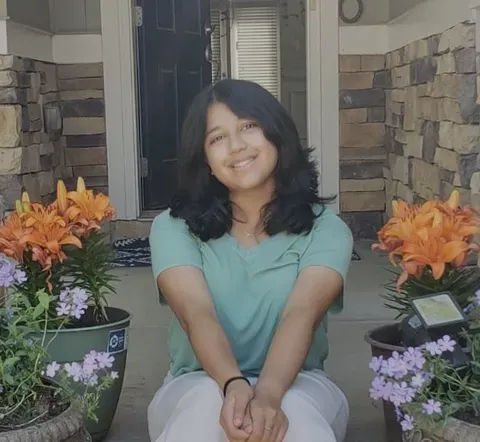
Mihikaa Seth is a recent high school graduate from Alpharetta, Georgia. She has known she wanted to study environmental science since the age of 12 and plans to pursue it in college, with the goal of contributing to environmental conservation and the health of the planet through scientific work. She is inspired by those who have driven change even when it was not the norm, and she values writing as a way to express thoughts that are easier to process on the page than out loud. She also finds purpose in volunteering and in the simple impact of helping others, and she hopes to contribute to a more sustainable world through her future work.
Read more winning entries from the 2026 Fighting Words Poetry Contest