By Viraj Lal
11th grade | Chinmaya International Residential School | Coimbatore, India
First place K–11 contest winner, Human Rights category
With lines from "I Came Back to My Culture, and I Healed" by Elyse Wild, a Pulitzer Center-supported story
Steve Knockwood found the trail
inside a cage of cold and stone,
a box built to unmake a man,
to hollow out the marrow and the bone.
Some taught him how to speak the name he'd long since let go,
the medicine his grandfather carried
before the shame began its slow, corrosive work.
For generations, they had tried to scour the old ways clean,
to make a people unlearn
the ancient grammar of their hands.
The language faded in the mouth.
The needle found the vein.
Until the children of the lost
forgot how to answer the wind.
But culture is a patient root
travelling deep beneath the scars.
It waits for its sons, digging through the dark,
until they strike the living thing
that has always known their name.
And Steve dug down.
Through the bars,
through the long, dry hollow of wasted breath,
and found the thing that held him
more tenderly than death.
He went into the sweat,
the stones, the steam, the heavy weight of dark,
and learned to work the flint by hand,
a slow and wordless prayer
until the edge remembered his grip.
At dawn he burned the sage.
He let the cedar smoke unspool,
loosening, strand by strand, the knot that silence had fastened behind his eyes.
"I came back to my culture, and I healed."
Now I watch you
at the edge of your own unwatered ground,
a name worn smooth as river stone
resting in a mouth that no longer knows its shape.
The scar on your palm has its own dialect;
you stopped translating it
before you learned to read.
The story you wear was once a tongue
inside a grandfather's throat;
now it sits in your chest like a splinter
you mistake for bone.
Somewhere a grandfather's flint
still waits under glass in a museum.
Somewhere a ceremony breathes
in the lungs of an elder
who has not spoken it aloud
since the year the language went underground.
You don't need a cell to lose the heft of your own hands.
The small, daily removals:
the untaught prayer,
the festival you step past like a stranger at the gate,
the elder's tale you turn away
because it sounds too much like grief.
They don't scar.
They silt.
They settle in the places where your name once stood
until you no longer know you carried one.
But beneath the noise of the living,
beneath the dry reed splitting in the wind,
there is a ceremony that never stopped waiting,
older than your oldest need.
It doesn't ask how long you've strayed.
It only recognizes the shape of you:
the way your rivers still remember their cut.
Your culture does not punish you for wandering.
It only holds the door open
with the same hands that first taught you
to kneel.
And when you finally walk back to the water
where your elders prayed,
you will not need to speak.
The river remembers what the mouth cannot say.
The root still knows the taste of stolen ground.
And somewhere inside the dark,
the flint still dreams of the hand
that has not yet returned.
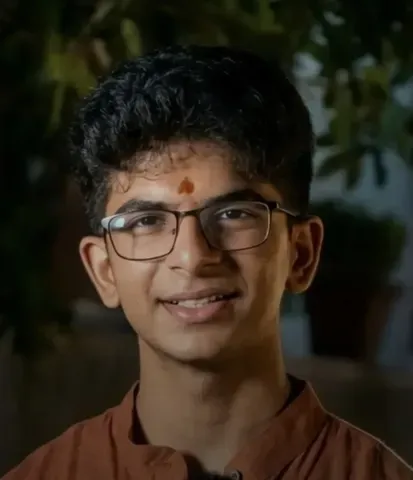
Viraj Vijaykumar Lal is a rising junior at Chinmaya International Residential School. He loves science, history, quizzing, travelling, and enjoying himself with family and friends. As an Indian, he is proud of his culture, is privileged to have an opportunity to talk about its importance, and enjoys celebrating, meeting new people, and having new experiences. He hopes to one day be a social worker or a diplomat.
Read more winning entries from the 2026 Fighting Words Poetry Contest.