
Immigrants' cuisines, dreams, and struggles come together on Corso Garibaldi.
In this bustling district in Perugia, Italy, the cuisines, dreams, and struggles of immigrants converge amid increasing anti-immigration sentiment.
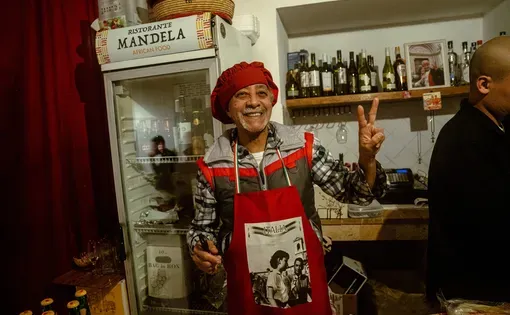
Ever since he arrived in Italy as a political refugee, Osman Taifour has always wanted to open an African restaurant.
Finally, in 2019, on the bustling main street of Corso Garibaldi in Perugia, his dream came true.
He named his eatery Ristorante Mandela.

As a nonprofit journalism organization, we depend on your support to fund more than 170 reporting projects every year on critical global and local issues. Donate any amount today to become a Pulitzer Center Champion and receive exclusive benefits!
“He’s my idol,” said Taifour of Nelson Mandela, the anti-apartheid activist and former South African president. “He is a big symbol of peace.”
Taifour, 58, knew personally how war and political instability can devastate families. He grew up in Sudan and graduated in philosophy from the University of Cairo in Khartoum. He later became active in Sudanese politics. But in 1989, a military coup marked the beginning of a 30-year dictatorship and forced him to flee to Syria.
“I miss everything, all the culture, the music, the people, even the nature,” Taifour said in fluent Italian of his home country, which he left at 28. “Even though I’m inserted in the Italian society now, I still miss everything.”
The pain he’s experienced is evident in his voice. His siblings and their children all live in different countries. He’s never been able to go back to Sudan. And he’s had to restart his entire life from scratch.
So, opening his own restaurant showcased both the pride he felt in his heritage and an offering to his adopted home.
It was also a symbol of his resilience.
‘Flavors of the world’
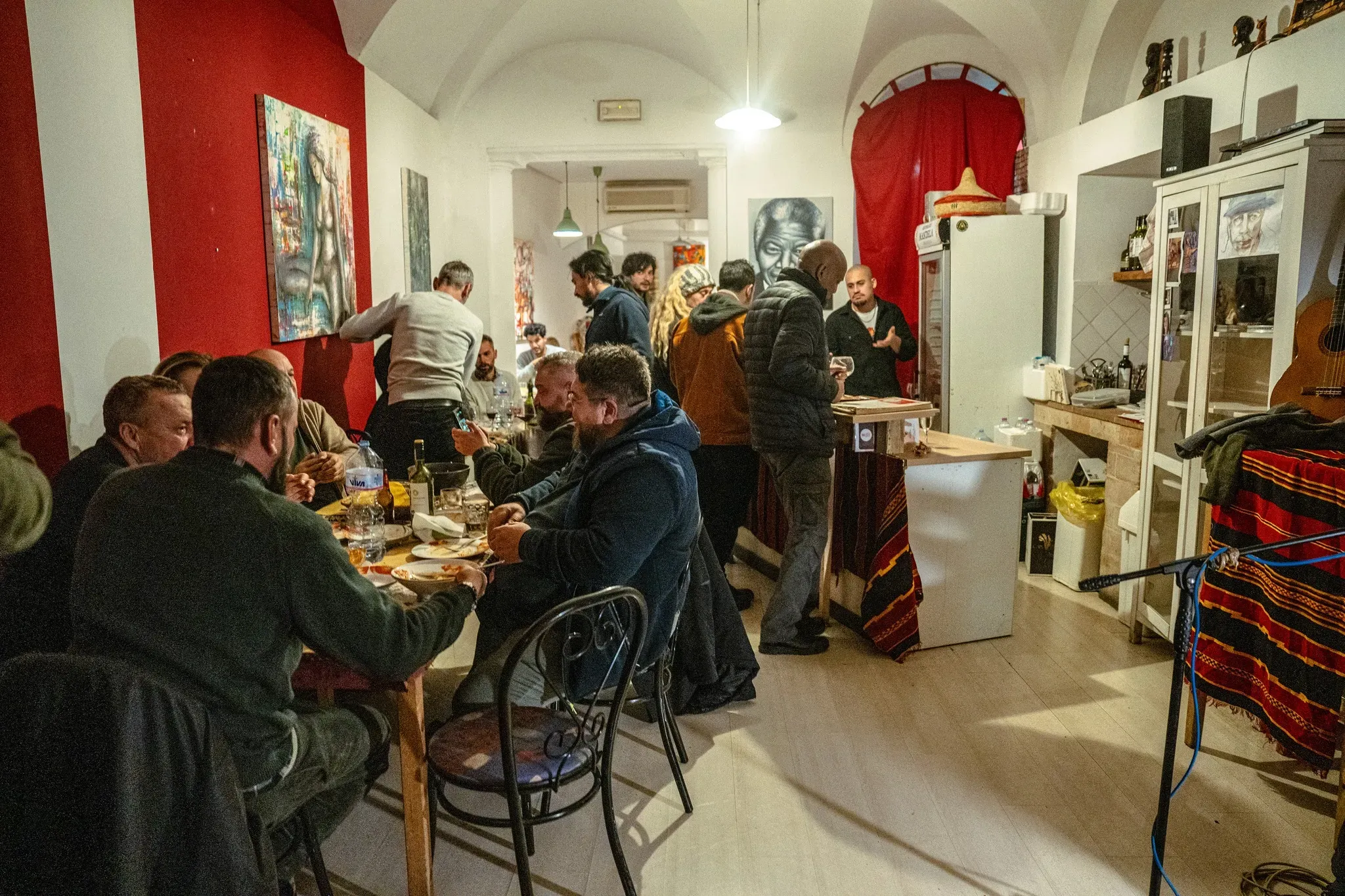
On Corso Garibaldi, the world converges on a single street. China, Lebanon, Taiwan, and Greece are all represented through their cuisines. Immigrants from all over the world, chasing the Italian dream, have opened restaurants to pursue economic opportunity, entrepreneurial independence, and cultural expression.
“Corso Garibaldi, flavors of the world in one street,” boasts the Corso Garibaldi District website.
Restaurants such as Sapore Greco, Wang Noodles, and Zin Zan line the street’s narrow cobblestone path. They serve non-Italian cuisines, including spicy apple soup, zongzi, and suvlaki, to a primarily Italian clientele.
“The goal was to bring kitchens from around the world to one spot to strengthen the multicultural identity of the city,” said Fabrizio Ciancaleoni, with the Corso Garibaldi Association. “Food is a great way for people to meet each other.”
All the different cuisines on Corso Garibaldi have a receptive audience, as the Università per Stranieri di Perugia, or the University for Foreigners, which draws students from more than 120 countries, is just steps away.
But the receptiveness to foreign cuisines and the people who prepare them on Corso Garibaldi comes amid increasing national hostility toward migrants.
Since 2010, the immigrant population has been estimated to have increased from 3.6 million to 5.6 million, according to Eurostat, a European Union database. In addition, in 2025, there were an estimated 83,000 more “clandestine” or “irregular migrants,” the term used to refer to foreign nationals who enter Italy by boat or overstay their visas. In recent years, an increasing number of migrants have come from African countries, including Tunisia, Nigeria, Côte d’Ivoire, Guinea, Sudan, and Eritrea.
This has sparked backlash from people who say the country doesn’t have the resources to manage the influx of migrants. In recent years, there has also been a rise in anti-immigration political groups, including the current far-right ruling party, Fratelli d'Italia, or Brothers of Italy.
Giorgia Meloni, the country’s prime minister, was elected on a campaign promise to curb “irregular migration.” Since taking office in 2022, her administration has focused on reducing illegal sea crossings, has increased the length of time these migrants can be held from three to 18 months and has outsourced asylum processing. Meloni once said that the country was under “incredible pressure” from immigration and that she would not allow Italy to become “Europe’s refugee camp.”
Food as a bridge
Taifour worked for many years as a social worker in Bologna. During that time, he also discovered his culinary calling while helping at an annual international food festival.
“I learned to cook food from all over the world,” Taifour said. “Every year it was a different specialty.”
In 2007, he opened a catering company that served cuisines from across Africa, including Senegal, Sudan, and Somalia. Twelve years later, he moved to Perugia, located about 100 miles north of Rome. Known for its lush landscapes and cosmopolitan feel, Perugia is the capital of Umbria, a region often called the “green heart of Italy.”
“It’s a small city, but it has a lot of culture,” Taifour said.
In 2019, he opened the region’s first African restaurant. He wanted to introduce people to the incredible range of food they likely hadn’t tasted before.
“Africa is the base of the world and all humanity,” Taifour said. “I want people to know everything beautiful about Africa.”
Several studies have shown that ethnic restaurants can act as “spaces for cultural recognition, economic integration, and social inclusion for migrants.” A 2025 study found that traditional food helps immigrants preserve their identity and culture “by providing a stable anchor in a foreign and uncertain living context.” Food can foster “a sense of home and familiarity” and “play a crucial role in fostering resilience” within immigrant communities. Another study from 2023 showed how traditional foods can help reduce culture shock by fostering connections among immigrants, alleviating emotional distress, and mitigating feelings of isolation.
Taifour introduced Italians to dishes such as African polenta, a thick porridge made from cornmeal; fufu, a ball-shaped dough made from boiled root vegetables; and injera, a spongy, fermented flatbread.
He often taught his Italian customers about the regions the food came from and how it was traditionally prepared and eaten.
He talked about how customs differed—in Italy, people ate with forks; in Africa, it was common to eat with your fingers. In Italy, there were different courses such as antipasti, primi, and secondi; in Africa, all the food was served at once. In Italy, each person had their own plate; in African cultures, it was traditional to share.
For Taifour, Ristorante Mandela was more than just a place to serve food. “The restaurant wasn’t just a restaurant; it was a center of culture,” he said. He showcased African books, music, poetry, and performances.
He enjoyed being located on Corso Garibaldi—it was lively and dynamic. He became friends with other immigrant restaurant owners from around the world and dined at their eateries. They hung out and talked about food, customers, and life.
“It made me happy,” he said.
‘They trust me’
“Qual è il piatto più conosciuto del tuo paese?”
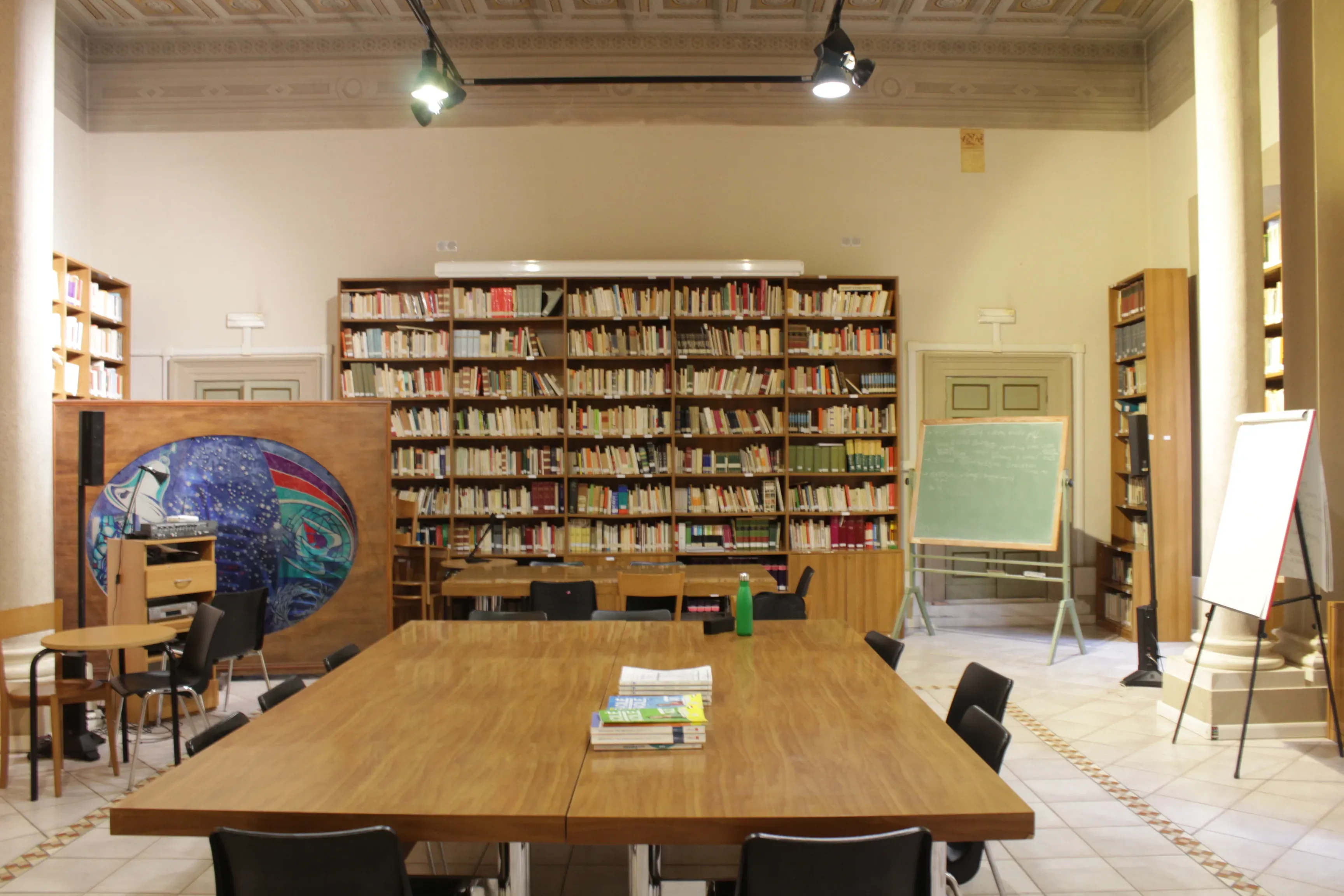
Mara Moriconi teaches an evening class of more than a dozen refugee students at the Youth Hostel International Reception Center in Perugia. Today, they are discussing the most well-known dishes from their country.
“Plantain,” said Mercy, a 28-year-old student from Nigeria, in halting Italian. She explained the difference between a banana and a plantain to the class.
“We speak a lot about food,” Moriconi said.
Her students arrive from many parts of the world—Afghanistan, Pakistan, Bangladesh, Kurdistan, Palestine, Nepal, Egypt, Nigeria, Iraq, and China. Many have faced extreme poverty and discrimination. Moriconi said almost all her students carry deep trauma from their journeys, either across the Mediterranean or via the Balkan route, so she avoids talking about “the trip.”
“Every student has a terrible story,” she said. “Especially the women. I avoid talking about it. They avoid talking about it. It’s really painful.”
Instead, when they are in front of her, she focuses on their resilience and future possibilities. Food is a neutral topic that everyone is happy to discuss. There are some Italian terms that all her students know when they enter class, she said, laughing. “Pizza, café!”
The Italian government places asylum seekers across the provinces, in proportion to each province's population. “For many, I am the first Italian person they meet,” Moriconi said.
Her Italian language class is a crucial step in the asylum process. While asylum seekers are held in centers, waiting for their cases to go through the courts, Moriconi’s class prepares them to strengthen their refugee claims. If they can speak Italian, they have a better chance of integrating and securing work.
“Language is number one, the minimum to establish relationships,” she said. “Without language, it’s impossible.”
Some of her students enter her class completely illiterate, even in their native language. Moriconi knows that learning to read and write in a new language as an adult is especially challenging.
“I feel responsible. I am here to make a better world, a better life for them,” Moriconi said. “This work is important.”
She starts with simple, practical verbs like “to drive" and “to sing.” She also uses pictures of activities that her students would be familiar with, such as riding the bus or shopping in a supermarket. Her lessons are centered on the practical issues refugees face, such as social interactions and finding jobs.
Moriconi typically works alone; she teaches two classes for 12 hours a week. The government provides refugees with housing, clothing, and food. But Moriconi’s Italian lessons are funded by Unitatis Redintegratio, a nonprofit organization.
Moriconi often weaves games and play into her lessons. Food is a humorous subject for the class.
She jokingly recounted her horrified reaction when a student described making a pane-and-spaghetti sandwich, a combination no Italian would eat. She also described hearing her students from India and Bangladesh say they eat rice and chicken for breakfast, a stark contrast to the cornetto and cappuccino that Italians typically enjoy.
“It’s very, very funny to me,” said Moriconi.
In turn, Moriconi said her students are surprised by some of the cultural mores in Italy, where women drink alcohol and mix freely with men. “In their culture, in their country, women have a different rule.”
Judiete is 28 years old with a soft voice and long braids. She came to Italy from Nigeria with her husband. After arriving by boat at Lampedusa, the southernmost Italian island and now a major entry point for migrants crossing from North Africa to Italy, she was transferred to Perugia.
Judiete, who discovered Moriconi’s class through social services, said her life in Italy is very different from what it was back home.
“What I like about being here is the freedom,” Judiete said. “There’s nothing like assault or someone oppressing you. Total freedom.”
Judiete and Mercy were recently interviewed for a job at a factory and hope to get hired soon. Moriconi’s students typically work in agriculture or in restaurants.
Moriconi said that, though the number of immigrants has increased, government support for immigrants has decreased over the past 10 years. So, even when her students get jobs, their lives are still challenging.
“It’s difficult to leave your family, your home, your country, your language, your food,” Moriconi said. “Tutte le storie. All the stories.”
Moriconi is grateful to get to interact with her students and support them. Her favorite part of her job is receiving messages from former students telling her they got married, bought a house, or started a job. She’s proud that she played a part in helping them get settled.
“They trust me,” Moriconi said. “This work is incredible.”
‘I like Italia’
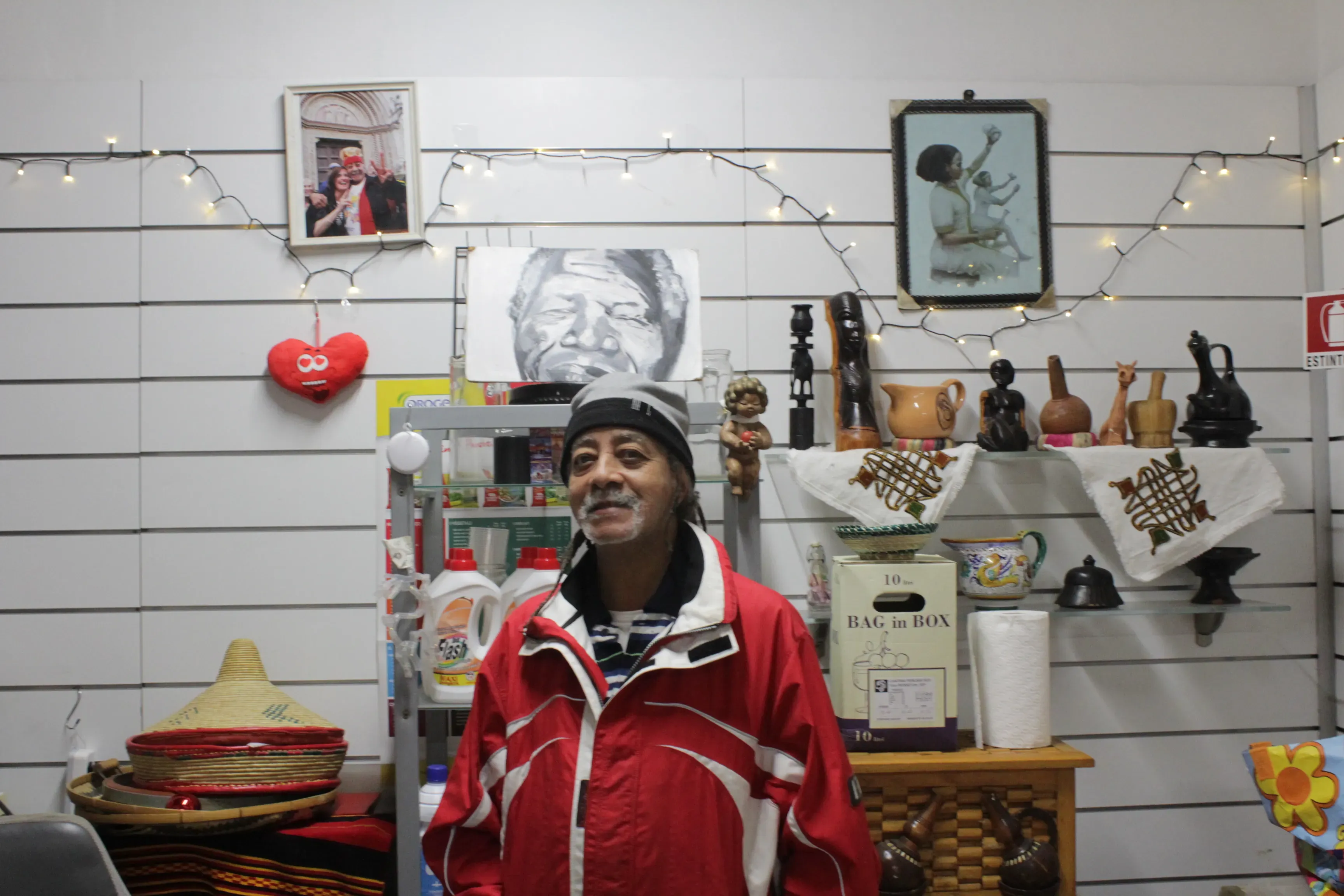
Taifour said he once got a chance to move to Canada, but he decided against it. Taifour said that Italians are friendly and sociable. “For this reason, I remain here,” he said. “I like Italia.”
Taifour closed his restaurant in 2025. A Chinese restaurant has taken its place.
Taifour, with long gray locks, caramel skin, and gentle eyes, said he’s getting older and it was becoming difficult to be on his feet all the time. But he doesn’t regret the six years he spent showcasing African cuisines. He’s met tourists from all over the globe, made friends in Italy, and feels he has done his part to promote African culture.
Since then, other African restaurants have opened in Perugia. Taifour opened a small store a few feet from his old restaurant, where he still hosts cultural events. He’s called it the Mandela Market.
“I'm still Mandela,” he said with a chuckle.