
Project
The Cost of the Campbell
Trump ordered a coal-powered power plant to be kept open despite its health hazards.

The Pulitzer Center's support for this reporting was made possible through the Stavros Niarchos Foundation (SNF).
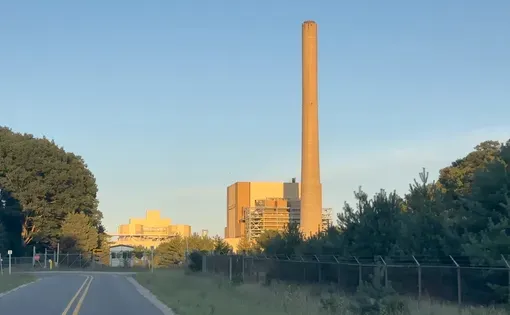
The Trump Administration’s Department of Energy (DOE) has repeatedly invoked emergency authority under the 1920 Federal Power Act to force Consumers Energy to keep its coal-fired J.H. Campbell power plant in Port Sheldon Township, Michigan, running since May 2025.
The utility and state regulators had established a long-settled timeline to retire the 63-year-old facility, substituting its output with renewable generation, storage, and natural gas. Pointing to regional grid reliability concerns, federal officials bypassed the local approval process and issued back-to-back 90-day emergency orders ordering the facility to remain operational.
The intervention reflects a broader national conflict between federal mandates to preserve fossil fuels and state-level directives prioritizing green transitions.

As a nonprofit journalism organization, we depend on your support to fund more than 170 reporting projects every year on critical global and local issues. Donate any amount today to become a Pulitzer Center Champion and receive exclusive benefits!
Locally, the decision highlighted political fractures within Ottawa County. Members of the Trump-aligned political group Ottawa Impact on the County Board of Commissioners actively campaigned against the shutdown, framing the closure as a threat by "climate crisis green energy" agendas. In early 2025, the board passed a resolution petitioning regulators and federal figures to pause the retirement, providing political momentum for the White House's executive intervention.



Overriding the planned shutdown has imposed significant economic burdens on the regional power grid. Generating power at the aging facility requires costly coal deliveries and maintenance that Consumers Energy estimates run hundreds of thousands of dollars per day, accumulating tens of millions in unanticipated compliance costs.
Because the plant operates under a federal mandate rather than standard economic dispatch, these operating expenditures are passed directly to ratepayers across the Midcontinent Independent System Operator, or MISO, a regional grid that includes Michigan, 14 other states and one Canadian province.
The emergency orders have drawn fierce legal resistance. The state of Michigan—led by Michigan Attorney General Dana Nessel—along with environmental advocacy organizations and consumer watchdog groups has filed several challenges claiming that the DOE unlawfully manufactured an "energy emergency" under federal law to indefinitely override state regulatory oversight, private utility planning and statutory grid transition rules. Beyond financial and legal friction, the forced operation of the Campbell plant prolongs its toxic environmental footprint. Continued coal combustion releases air particulates, sulfur dioxide, and nitrous oxides while generating vast volumes of toxic coal ash.
Local residents and environmental advocacy groups continue to express concern regarding wastewater discharges and coal ash ponds that threaten Lake Michigan and demand extensive long-term remediation to prevent heavy metals from leaching into Ottawa County’s groundwater supply.