Story
 October 31, 2025
A Top Zimbabwe Malaria Research Center Killed by USAID Closure, Resurrected by UMC
Country:



Project
A Liberated Church Despite Loss
Africa is center stage for a landmark change in the United Methodist Church.
Key Points
- A malaria research center housed at Africa University, a United Methodist-affiliated institution in Mutare, Zimbabwe, received a stop work order in March with the Trump administration closing USAID.
- A new grant from the UMC General Board of Global Ministries revives the center's work during the peak malaria season, with potential for more funding down the road.
- The malaria research center maintains a colony of mosquitoes for government health officials to test the effectiveness of insecticide. Here's how it does that.
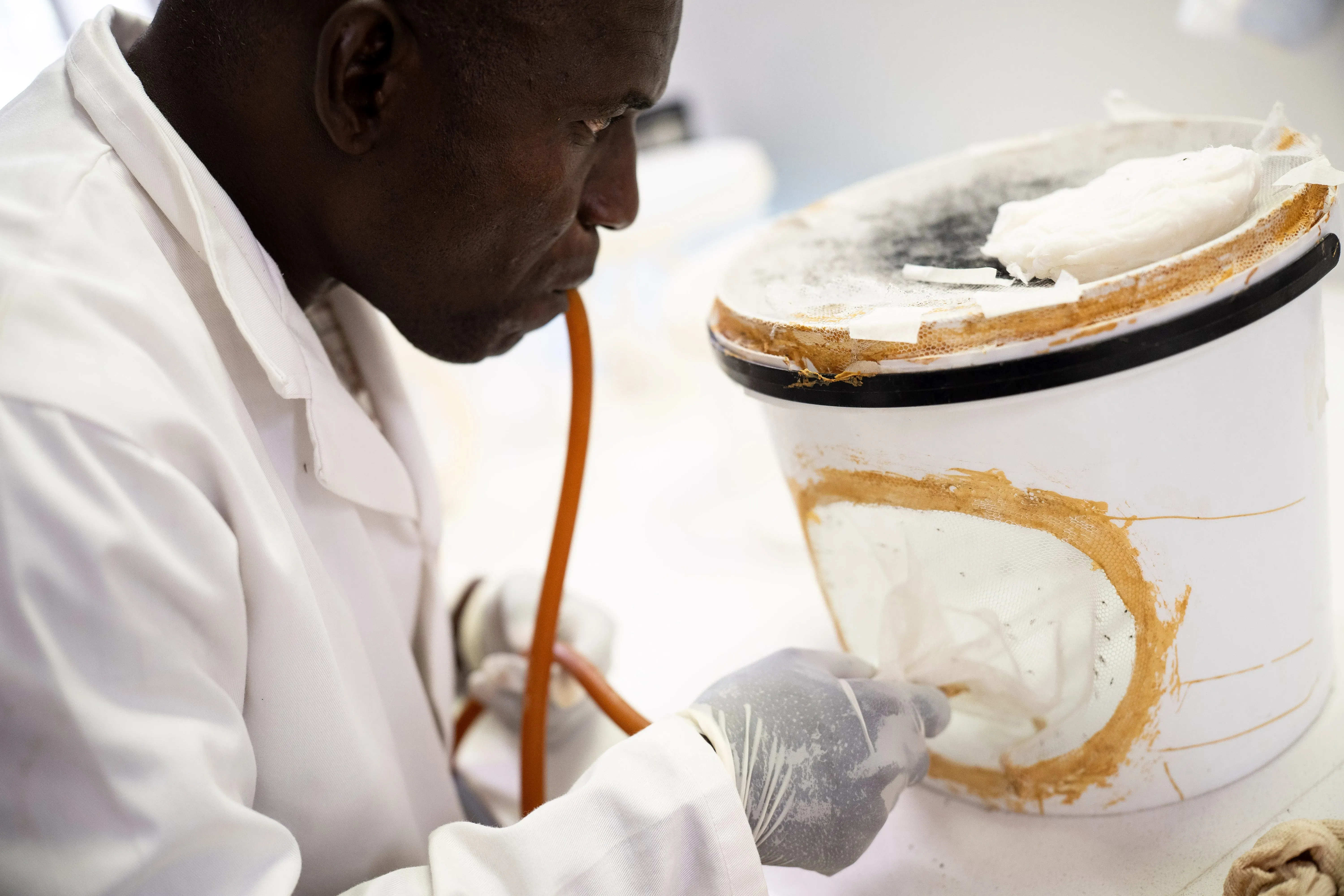
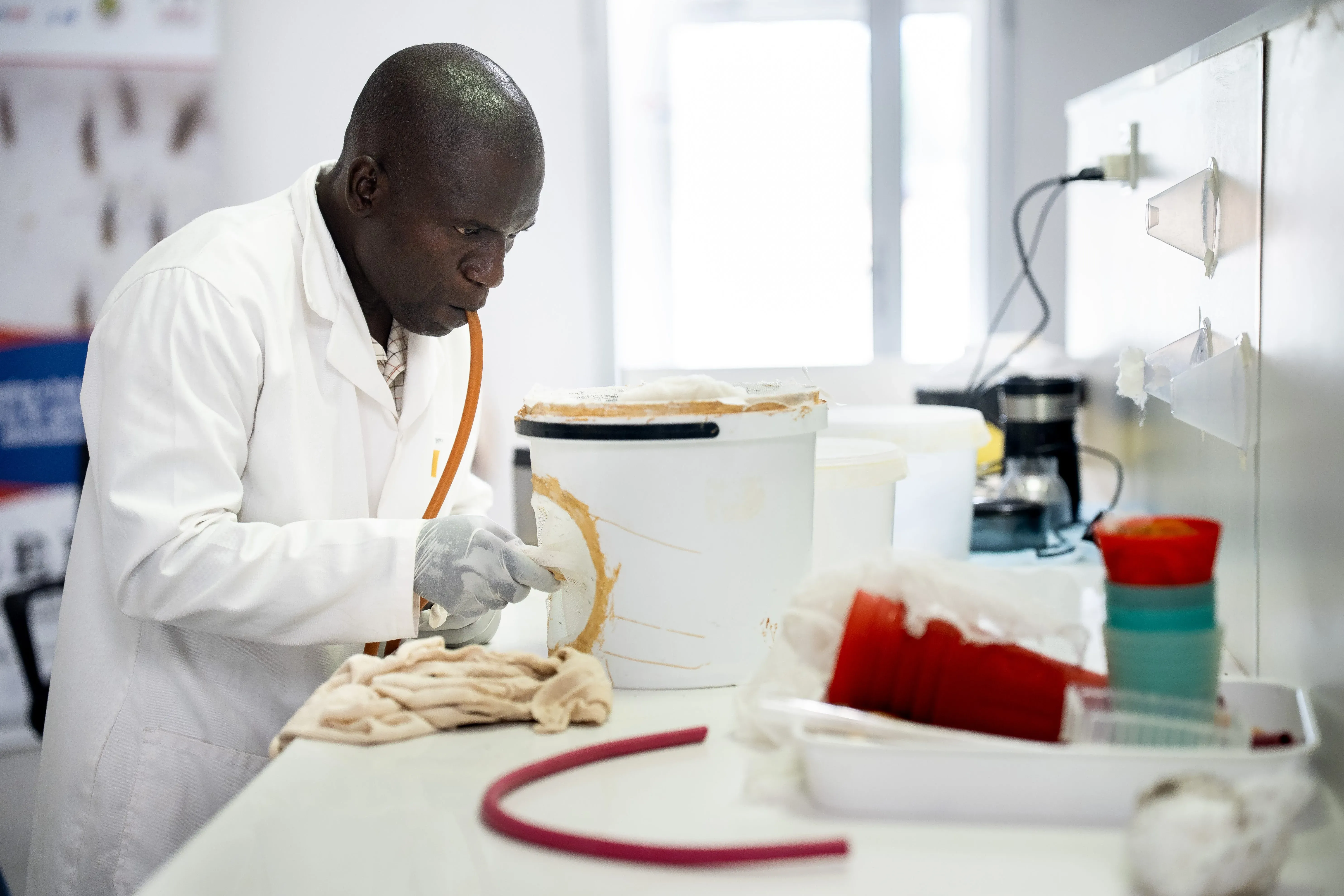
MUTARE, ZIMBABWE — Insectary assistants collect the specimens by sucking into a straw-like pump.
But they don't mistakenly swallow any, joked senior insectary assistant Petro Kawadza during a demonstration.
It’s part of the critical service a malaria research center at Africa University in Mutare, Zimbabwe, provides to the whole nation. This collection of hundreds of female mosquitoes goes to the Zimbabwe Ministry of Health and Child Care to test the effectiveness of mosquito repellent.
This program at the United Methodist Church-affiliated Africa University, officially called the Zimbabwe Entomological Support in Malaria Control Programme (ZESMCP), is the chief malaria research program of its kind in the whole country. And in March, it came to a screeching halt.

As a nonprofit journalism organization, we depend on your support to fund more than 170 reporting projects every year on critical global and local issues. Donate any amount today to become a Pulitzer Center Champion and receive exclusive benefits!
“It was traumatic, if I can put it that way,” entomologist specialist Hieronymo Masendu said, referring to President Donald Trump’s administration shutting down USAID.
But the center is up and running today due to an emergency cash flow the center received from the UMC General Board of Global Ministries. The UMC is historically Nashville-based.
The past six months have been a witness to the hardship a critical medical service faced in the wake of USAID’s termination and of faith-based organizations stepping in to fill the gap.
“It means a lot for us. It’s not usual that you have the church funding a research center like in this manner,” Masendu said. “It’s the first of its kind as far as I’m concerned.”
Masendu said it’s unlikely the center would have received this funding if not for its affiliation with Africa University, which houses the center on its campus. The university even provided the bricks that went toward the center’s construction, an enterprise that began in 2017 with USAID funding.
In 2021, the center received a three-year grant from USAID as part of the U.S. President’s Malaria Initiative. In September 2024, it received a one-year extension of that grant.
Under its new grant it received from the UMC General Board of Global Ministries, the malaria center needs to show progress with the distribution of mosquitoes it’s raising and of insecticide resistance it’s raising the mosquitoes to test.
“The ball is now in our court,” Masendu said. “We want to take advantage of that and prove our worth.”
Maintaining a mosquito colony
The malaria center is responsible for two groups of mosquitoes.
One group comes from collections at local streams.
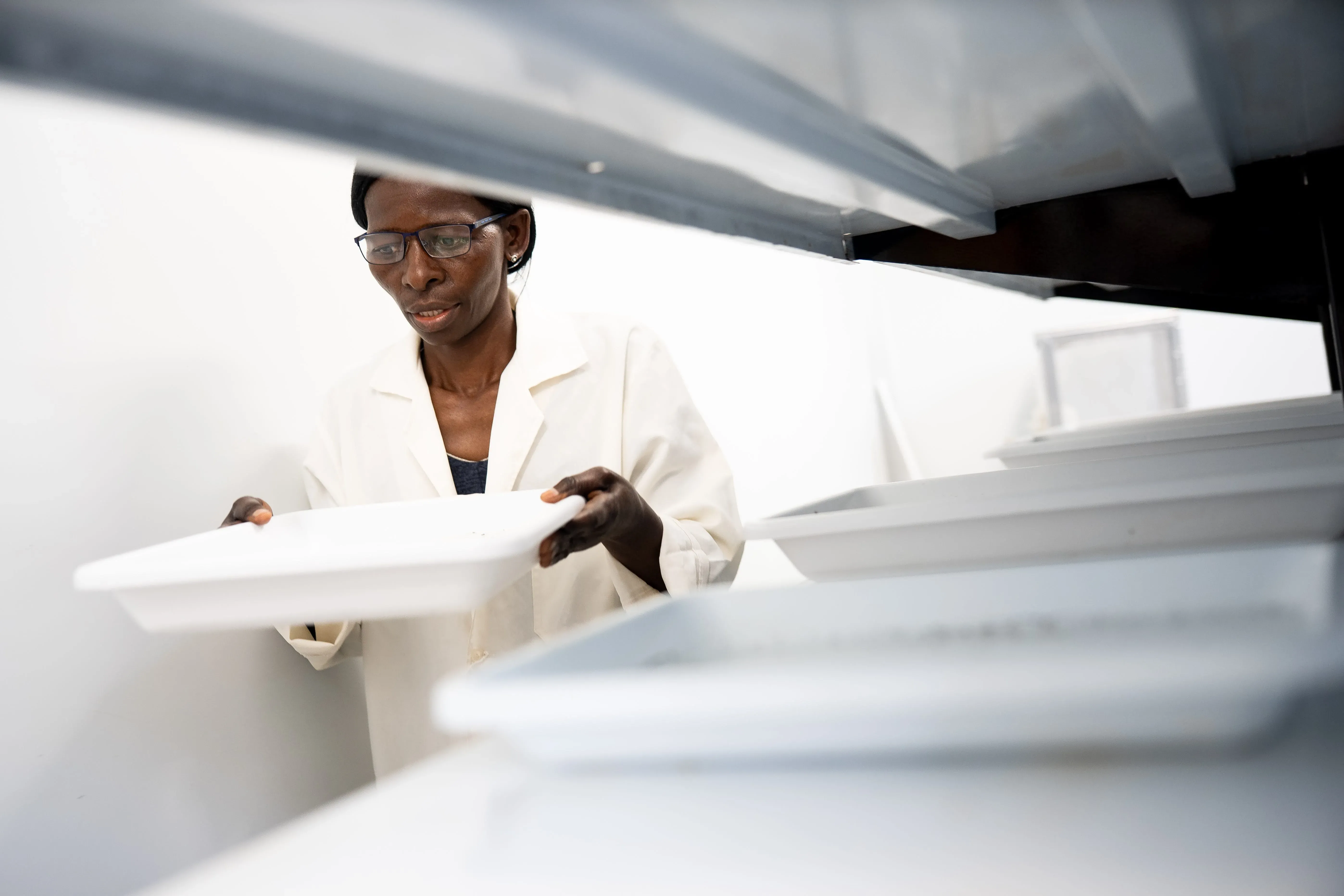
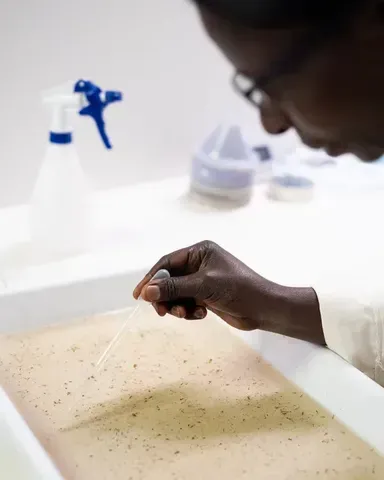
The other group, they grow. In one room, Kawadza feeds the mosquitoes with a rabbit, whose back he’s shaven. The mosquitoes then lay eggs, and the eggs are brought into a second room. In that room, insectary assistant Violla Chimwayi then oversees the hatching of the larvae and their development into pupae.
Since the center received its first colony in 2017, it’s now on its 244th generation.
The need for both categories of mosquitoes is to test insecticide resistance.
“The biggest threat is insecticide resistance,” Masendu said. “So, you do everything according to the book, but you still get malaria cases. And you start asking questions. One of the biggest questions is: Are the mosquitoes responding to the chemical as expected?”
This testing is done in two different ways, both of which occur during the peak malaria season – typically, from October through December. The first type of test is when government health officials come to the center at Africa University and spray 10 mosquitoes in a special cone. All 10 mosquitoes should be dead within 24 hours.
The other testing is when the center provides hundreds of mosquitoes to the health ministry to use to continue testing the effectiveness of insecticide. Insectary assistant Fanuel Toto collects those hundreds every week using the pump.
This work is critical to informing the Zimbabwe government whether it can continue using the same insecticide or if it needs to purchase a different one, a costly endeavor.
When there are fewer than five cases of malaria per a population of 1,000, the health ministry stops spraying insecticide within those communities and transitions its residents to using mosquito nets.
“We have made tremendous progress to the point we are now talking about eliminating malaria in Zimbabwe,” Masendu said.
Maintain sustainable funding
The malaria research center at Africa University is one of two organizations that oversee “sentinel sites” across the country that monitor mosquito populations and malaria transmission.
But the other organization, a branch of the Zimbabwe health ministry, is suffering from poor funding and has had difficulty keeping pace with Masendu’s team. Masendu said that’s why it’s even more important his center is operating on all cylinders.
But a stop work order in March in the wake of USAID closing torpedoed that momentum.
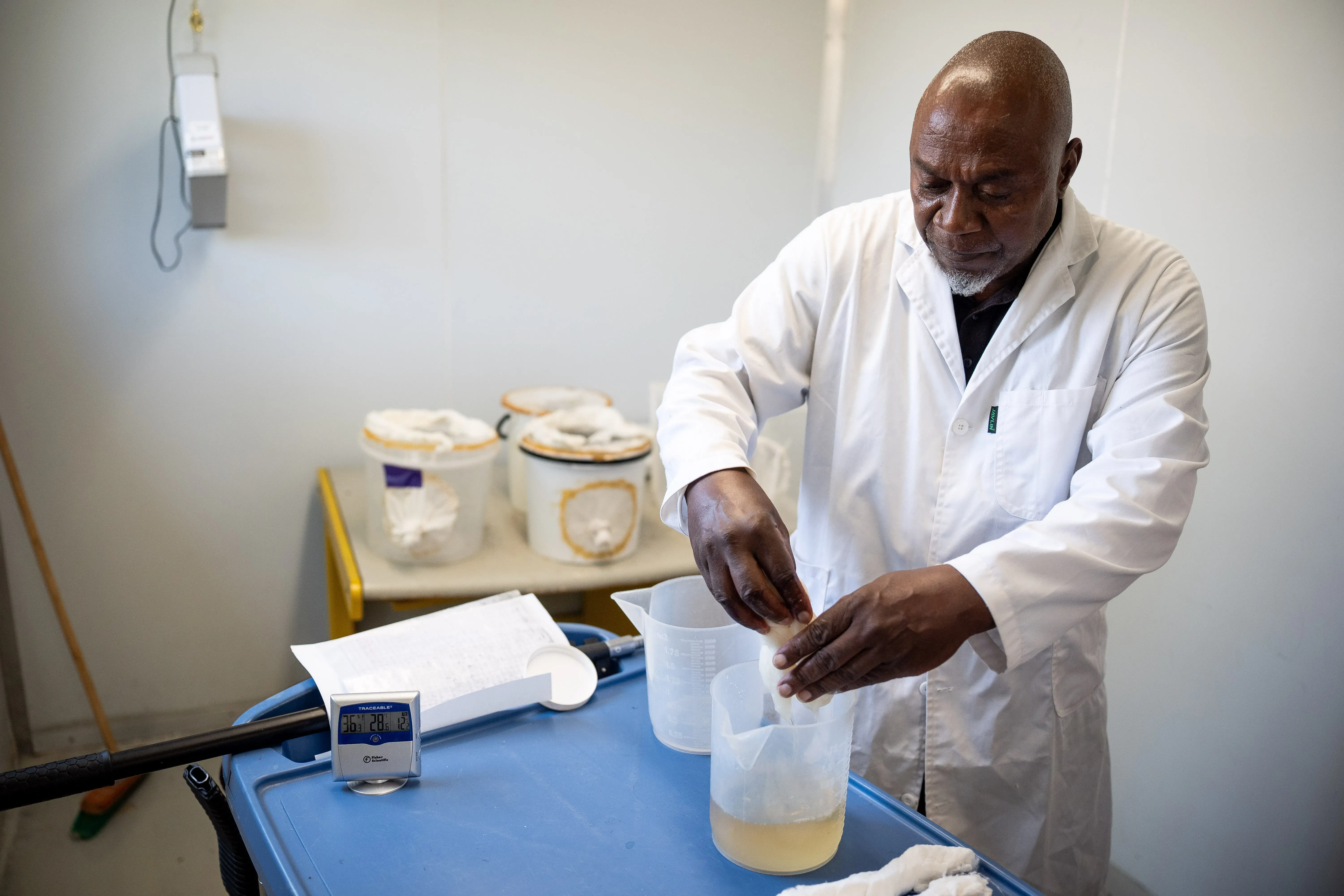
“The transition, it was terrible. Not just the case for myself, but my colleagues as well,” Masendu said. “You have your career ahead of you and it’s disrupted.”
The team of veteran researchers went months without pay or benefits. They were uncertain if they would ever return and were increasingly anxious about the nearing malaria season.
The UMC General Board of Global Ministries grant relieved that anxiety, but only on a short-term basis. The grant lasts until March, allowing the center to get through peak malaria season.
Assuming the center is able to show its continued success, it’s likely it will continue operating.
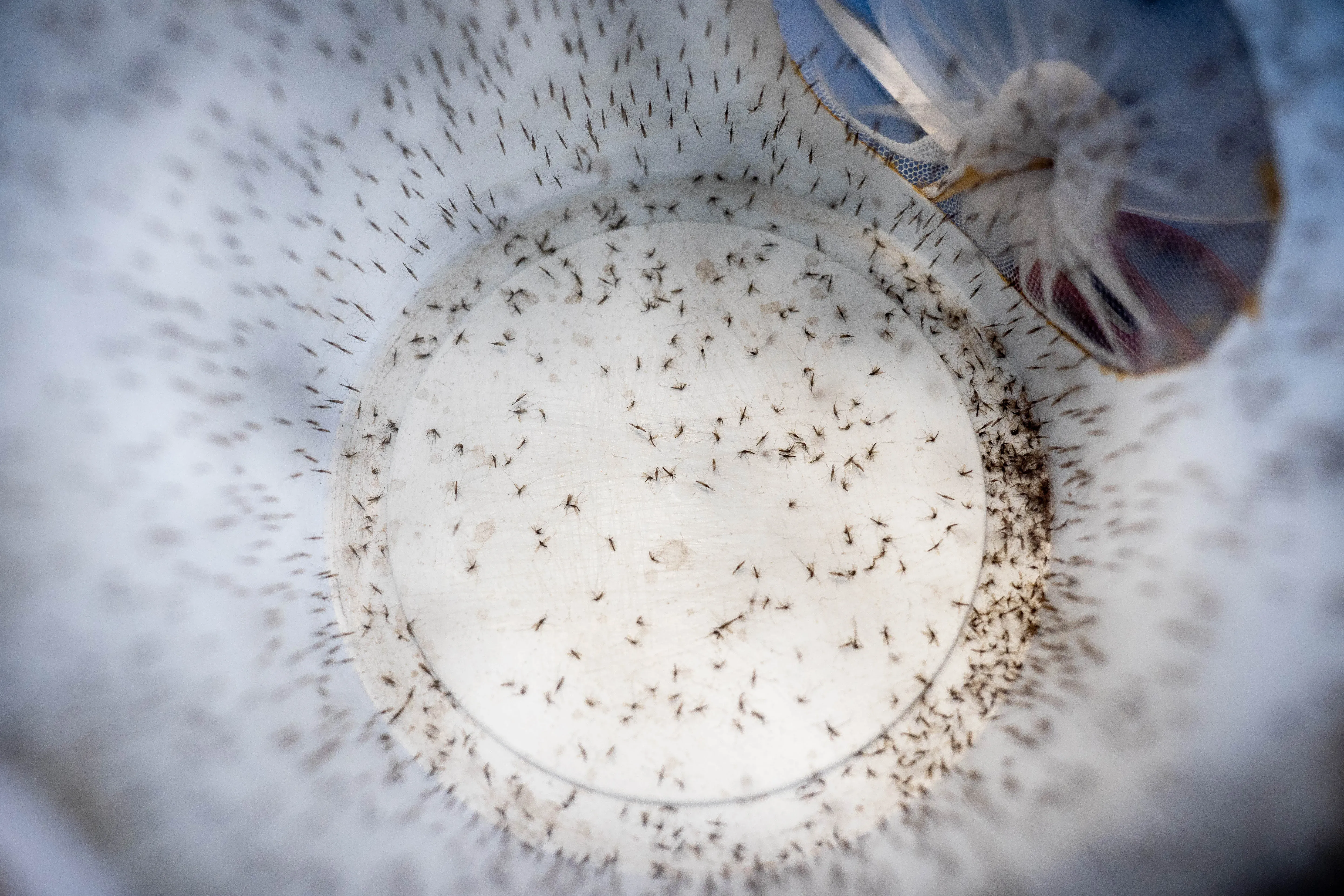
“As long as we do our part and perform, I’m told we are assured of more funding coming from the UMC,” Masendu said.