
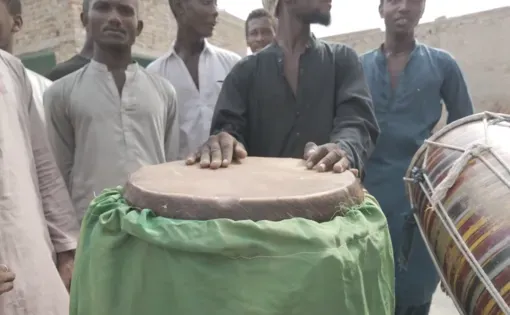
Pakistan’s Sheedi community reclaims its African heritage at the Sheedi Mela—playing African beats...
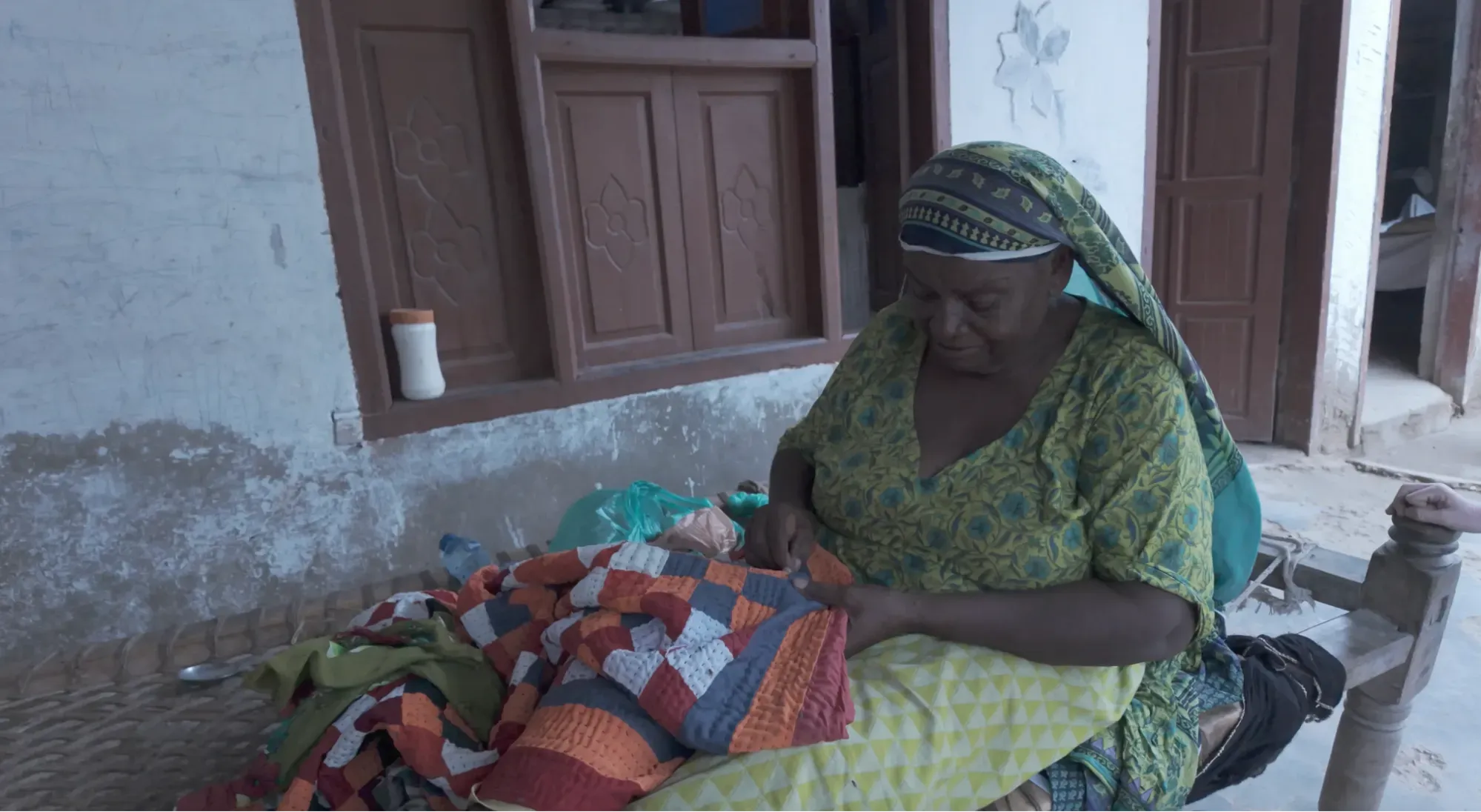
Sheedi women stitched ralli quilts not only to keep their families warm but also to keep hope alive.
When I first saw a ralli quilt in Tando Bago, it seemed at first like nothing more than a patchwork blanket, triangles of red, black, and white stitched into sharp, geometric patterns. But the longer I looked, the more it became clear that the cloth was carrying something older, something heavier than its surface suggested. Here, survival doesn’t always sound like a drumbeat. Sometimes, it rests quietly in stitches, folded into fabric, and passed down through hands.
A ralli is a traditional quilt from Sindh and southern Punjab, pieced together from scraps of cloth. Women collect old saris, ajrak (a Sindhi textile pattern), or dyed cotton, cutting them into triangles, squares, and circles, then sewing them into captivating geometric mosaics. Some rallis are made in bold colors such as reds, yellows, and indigos, while others use softer whites and blacks. They are often given as wedding gifts, laid on charpais (a woven bed), or used to cover sleeping children. For Sindhi women, the ralli is both an everyday object and art form: practical, beautiful, and deeply communal, since they are often stitched in groups.
The Sheedis, descendants of East Africans brought to Sindh through the Indian Ocean slave trade, have always found ways to endure. Oral memory says that enslaved women once stitched rallis not only to keep their families warm but also to keep hope alive. Isra Abdul Ghafoor, a young woman from the community, repeated what she had been told by her elders: “Earlier, enslaved people stitched rallis, drawing maps on them, maps of how to escape.”

As a nonprofit journalism organization, we depend on your support to fund more than 170 reporting projects every year on critical global and local issues. Donate any amount today to become a Pulitzer Center Champion and receive exclusive benefits!
That story stopped me. A quilt that could guide a family out of bondage. A blanket that doubled as a map. To imagine a woman secretly working by firelight, choosing colors and patterns not just for beauty but for direction, is to realize the ralli was never just a quilt. It was a lifeline, a quiet rebellion sewn square by square.
Even today, Sheedi women carry forward that legacy of making survival tangible. In courtyards and shadowed rooms, they gather with their cloth and needles. I have watched them spread out fabrics as if opening archives, exchanging stories while their hands move in rhythm.
Bibi Qambrani, who now sells rallis in Karachi, told me she feels like she is stitching her grandmother’s prayers into every piece. “My grandmother always said there is a prayer in the thread. When I push the needle through, it feels like I am hearing her words again.”
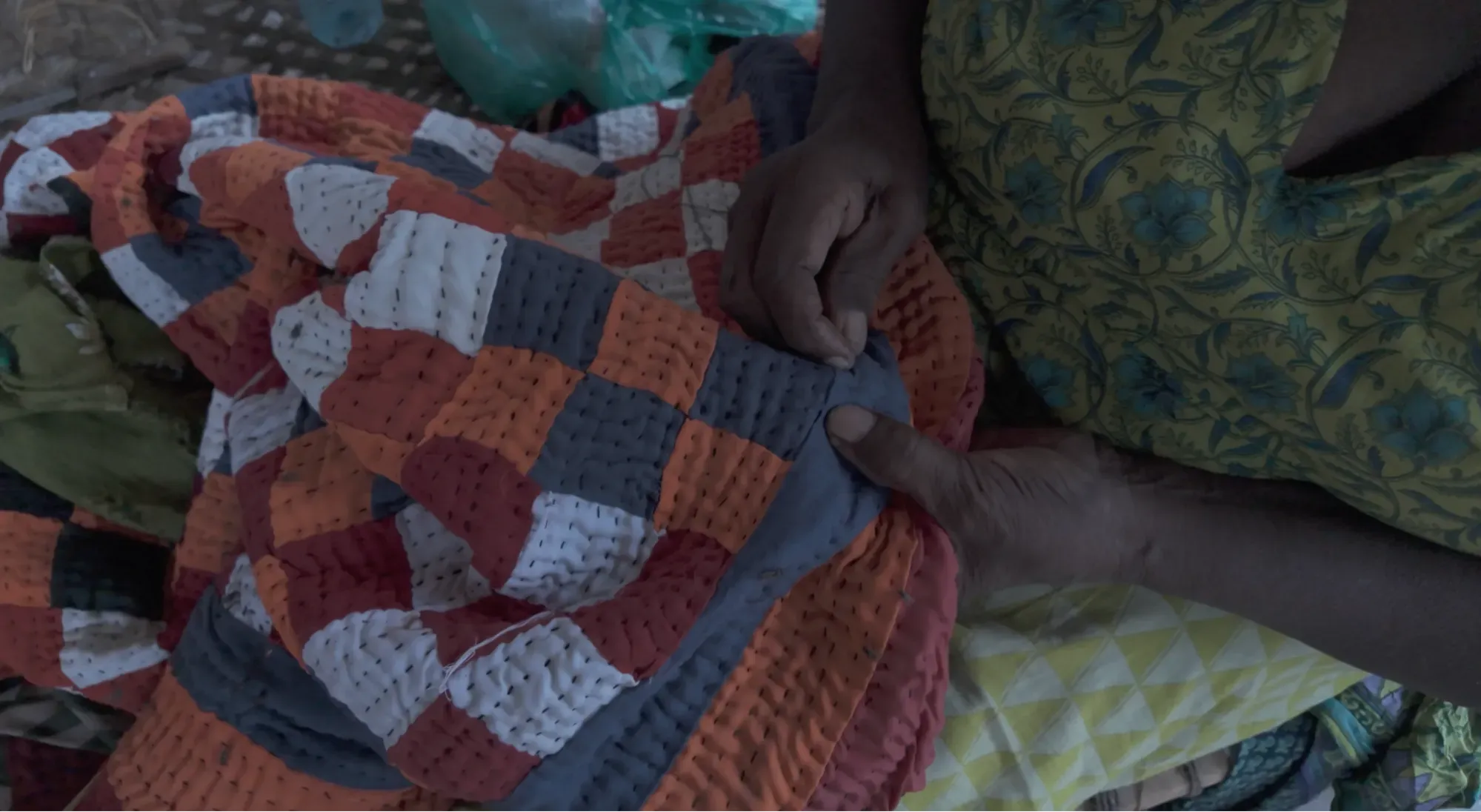
For the elders, the ralli is even more than memory. In Tando Bago, an older woman leaned on her cane and told me: “This cloth is the testimony of our women. When everything else was taken, our language, our history, this remained.”
At weddings, Sheedi women drum and sing. In their homes, they sew ralli to sell in local markets. The work brings income, but it also brings continuity. Every patch they stitch is another reminder that endurance here has always depended on women’s hands, hands that cooked, drummed, prayed, and stitched survival into being.
The ralli endures as proof that even when language was lost, when history was erased from textbooks, and when archives ignored them, women still found a way to record it. Not with ink, but with thread. Now, when I unfold it carefully, I can still see the map, not only of how to escape, but of how to carry a people forward.