Behind the scenes of war, Syria’s first lady rose to the apex of power.
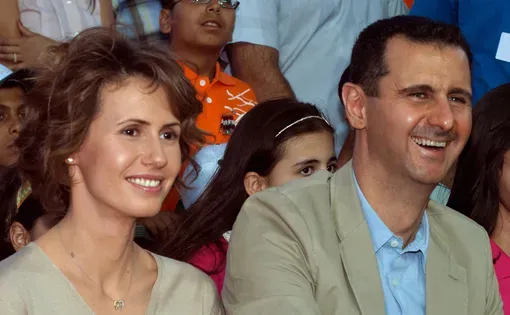
She was once Emma: a high-achieving, middle-class girl from west London with a promising future in banking. Then, in 2001, she married Bashar al-Assad, the new leader of Syria — and her life changed course dramatically.
For many Syrians, the young president, who seemed to have reluctantly taken over from his father, represented a fresh start after decades of brutal dictatorship. With his intelligent, glamorous British-born wife — now known as Asma — at his side, Assad promised reform, and a new beginning.
Instead, when the Arab spring reached Syria in 2011, those promises gave way to one of the bloodiest conflicts of the 21st century. Through 13 years of war, as the regime imprisoned, tortured and killed its own people, Asma remained at her husband’s side. Her conscience, she later said, didn’t tell her otherwise.
So who was she really? Did she know what was happening in the prisons and hospitals around her? Did she try to stop it? Or did she become an active — even enthusiastic — part of the regime itself, helping sustain the bloody dictatorship? Some Syrians accuse her of personally profiting from the war. Others insist she wanted to escape but found herself trapped, her family under threat.
For months, Observer reporters Chloe Hadjimatheou and Gary Marshall have investigated the woman once known as Emma. Travelling across Syria and Europe, and speaking to friends, relatives and people who knew the former first lady, they piece together a picture of how Emma became Asma al-Assad, living inside one of the world’s most notorious regimes.

As a nonprofit journalism organization, we depend on your support to fund more than 170 reporting projects every year on critical global and local issues. Donate any amount today to become a Pulitzer Center Champion and receive exclusive benefits!
Introducing ... 'We call her Emma'
In 2001 Emma marries Bashar al-Assad, the now infamous dictator of Syria. What did she really know about the atrocities her husband’s government was carrying out? And what choices did she really have?
Episode 1: The girl from Acton
Emma is a high achieving, middle-class woman from West London — she’s destined for a successful career and a comfortable British life. But in 2001 she makes a decision that will come to define her — she marries the son of a dictator and becomes Asma al-Assad, the first lady of Syria.
Episode 2: Diana of Damascus
When Asma arrives in Syria, there’s a palpable sense of hope. People in the country and around the world dare to believe that she is a force for good. Journalist Chloe Hadjimatheou hears from people who worked with her in the early years who — despite everything that’s happened — still believe her intentions were genuine but that she became trapped by the regime.
Episode 3: Asma’s choice
In 2011, the Arab Spring hits Syria, and Asma has a decision to make: Speak out in favour of the popular revolution or stay loyal to the regime. But what choice did she really have?
Episode 4: Asma’s deal
Journalist Chloe Hadjimatheou travels to Damascus to meet people close to Bashar and Asma. One source tells her that Asma took a drastic decision in the early years of the war—she tried to leave Syria. Only it’s not for the reasons you might think.
Episode 5: Asma’s orphanages
Chloe Hadjimatheou learns of allegations that Asma—the "mother of the nation"—had an active role in one of the regime’s cruellest strategies: separating the children of dissidents and rebel fighters from their parents to use them as bargaining chips. At an orphanage in Damascus, Hadjimatheou gets closer to the truth.
Episode 6: Asma's Syria
Eighteen months ago the Assad regime suddenly collapsed, and the first lady and her family fled to Moscow. A regime insider tells Chloe Hadjimatheou just how powerful Asma had become in the final years and what was happening inside the palace. Could Asma really have had aspirations to take over from her husband?