
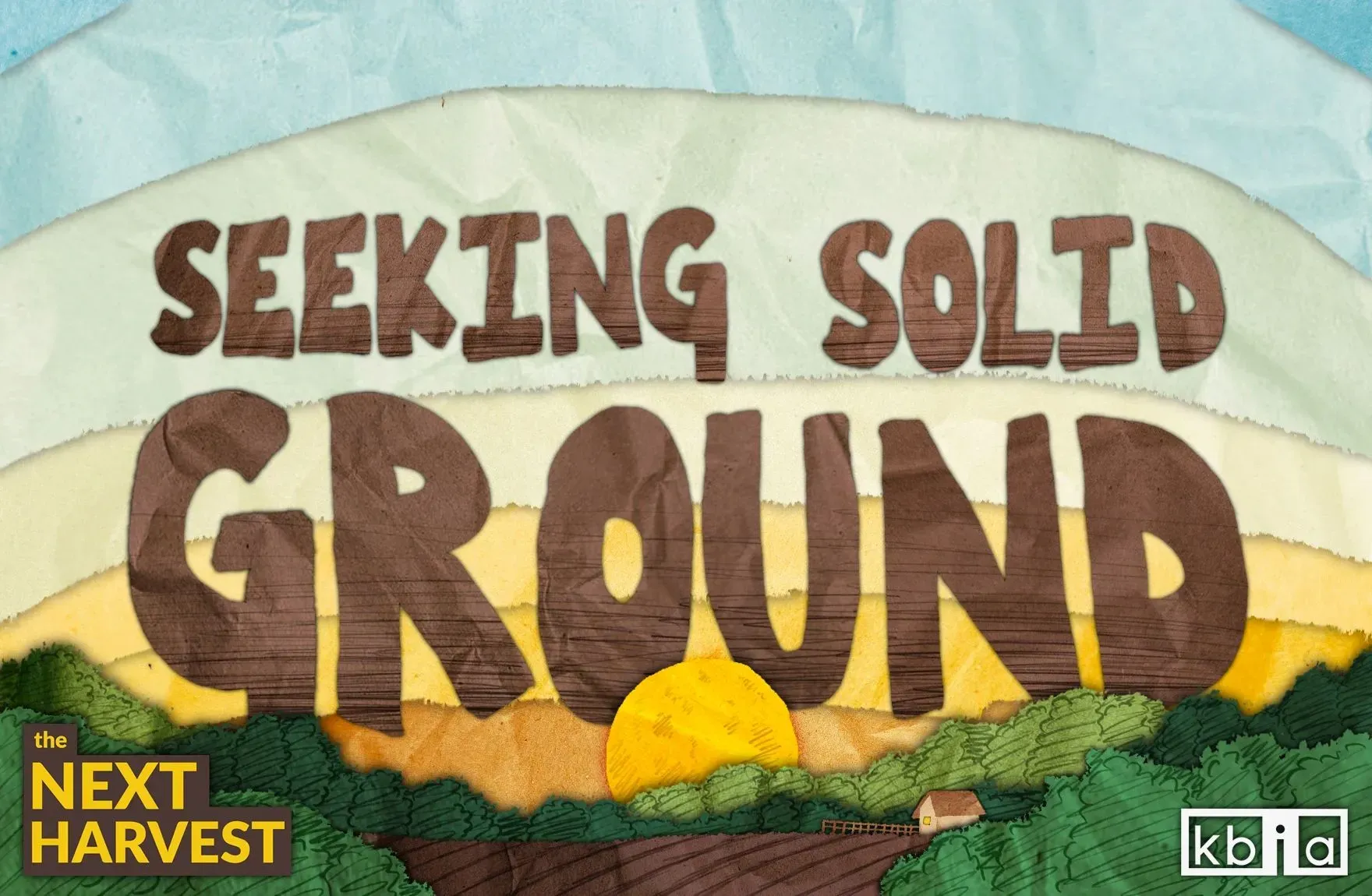
Competition for land is high, and "The Next Harvest: Seeking Solid Ground" explores how society...

Nothing can be accomplished in agriculture without a place to grow crops, raise animals and cultivate food. It all starts with farmland.
But it’s increasingly difficult for new farmers to access land. A national survey of young farmers shows it's their top challenge. Which is why this season of KBIA’s news series The Next Harvest is focused on farmland: who has it, who needs it, and how to care for it to grow our food and fuel our rural communities.
Brendan Stice, 23, is a row crop farmer from Mexico, Missouri. About a year after he started farming, Stice took a piece of plywood and painted the words “Young Farmer Looking For Ground to Rent” on it. He added his phone number and placed it on the side of the road between Centralia and Mexico.



As a nonprofit journalism organization, we depend on your support to fund more than 170 reporting projects every year on critical global and local issues. Donate any amount today to become a Pulitzer Center Champion and receive exclusive benefits!
Stice began farming on rented land when he was 19 years old. His parents didn’t farm and therefore had no land to pass on to him.
A lot of farmland agreements happen through family, neighbors, and by word of mouth. That made acquiring land slow going for Stice. So, he got creative.
“That's why I put something like that to see if I can get anybody to pick up on it,” Stice said.
The sign hasn’t yet yielded Stice any land. The offers he’s gotten from his homemade advertising are pieces of land that are too far away, too small of a parcel or too expensive.
Stice’s goal is to find enough land so he can quit his job and farm full-time. For a farmer growing commodity crops such as corn and soybeans, that amounts to about 1,000 acres.
“It's been quite the challenge. I started with 15 acres and it's my fourth year this year,” Stice said. “Now I have about 200. So it's been a challenge, but we're getting somewhere.”
According to data from the U.S. Department of Agriculture, at least 50 million acres of farmland in the Midwest is set to change hands by the end of the decade. This is in part due to the average age of farmers and landowners. In Missouri, nearly half of farmland owners are between 55 and 74.



With competition for land so high, how does any of it get into the hands of the next generation of farmers who want to steward that land and produce food?
KBIA will spend the next three months reporting and attempting to answer that question.
Coming up this season on The Next Harvest:
- How retiring from a career in agriculture is a lot different, and potentially a lot harder, than leaving other professions.
- The people and organizations aiming to help family farms successfully transition the land — and the business — to the next generation.
- An exploration of nontraditional farmland transfer arrangements and efforts to preserve good quality farmland from further development.
- One-on-one conversations with agricultural experts, researchers and policymakers.
The Next Harvest: Seeking Solid Ground airs Wednesdays on KBIA and can be found at KBIA.org. The series is reported and produced by Jana Rose Schleis and Caspar Dowdy.