Story
 July 27, 2025
Missionaries Using Secret Audio Devices To Evangelise Brazil’s Isolated Peoples


Project
Uncontacted Peoples
The Amazon territories where they live, and people in the outside world who protect them
Exclusive: Solar-powered units reciting biblical passages have appeared in the Javari valley, despite strict laws protecting Indigenous groups.
Missionary groups are using audio devices in protected territories of the rainforest to attract and evangelise isolated or recently contacted Indigenous people in the Amazon. A joint investigation by The Guardian and Brazilian newspaper O Globo reveals that solar-powered devices reciting biblical messages in Portuguese and Spanish have appeared among members of the Korubo people in the Javari valley, near the Brazil-Peru border.
Map courtesy of The Guardian.
Drones have also been spotted by Brazilian state agents in charge of protecting the areas. The gadgets have raised concerns about illegal missionary activities, despite strict government measures designed to safeguard isolated Indigenous groups.

As a nonprofit journalism organization, we depend on your support to fund more than 170 reporting projects every year on critical global and local issues. Donate any amount today to become a Pulitzer Center Champion and receive exclusive benefits!
This is not thought to be the first recent attempt by missionary groups to reach isolated and uncontacted communities in the Javari valley. Shortly before the pandemic, a group of US and Brazilian citizens affiliated with evangelical churches were allegedly reported to be planning to contact the Korubo people. It was claimed they had used seaplanes to map trails and locate longhouses.
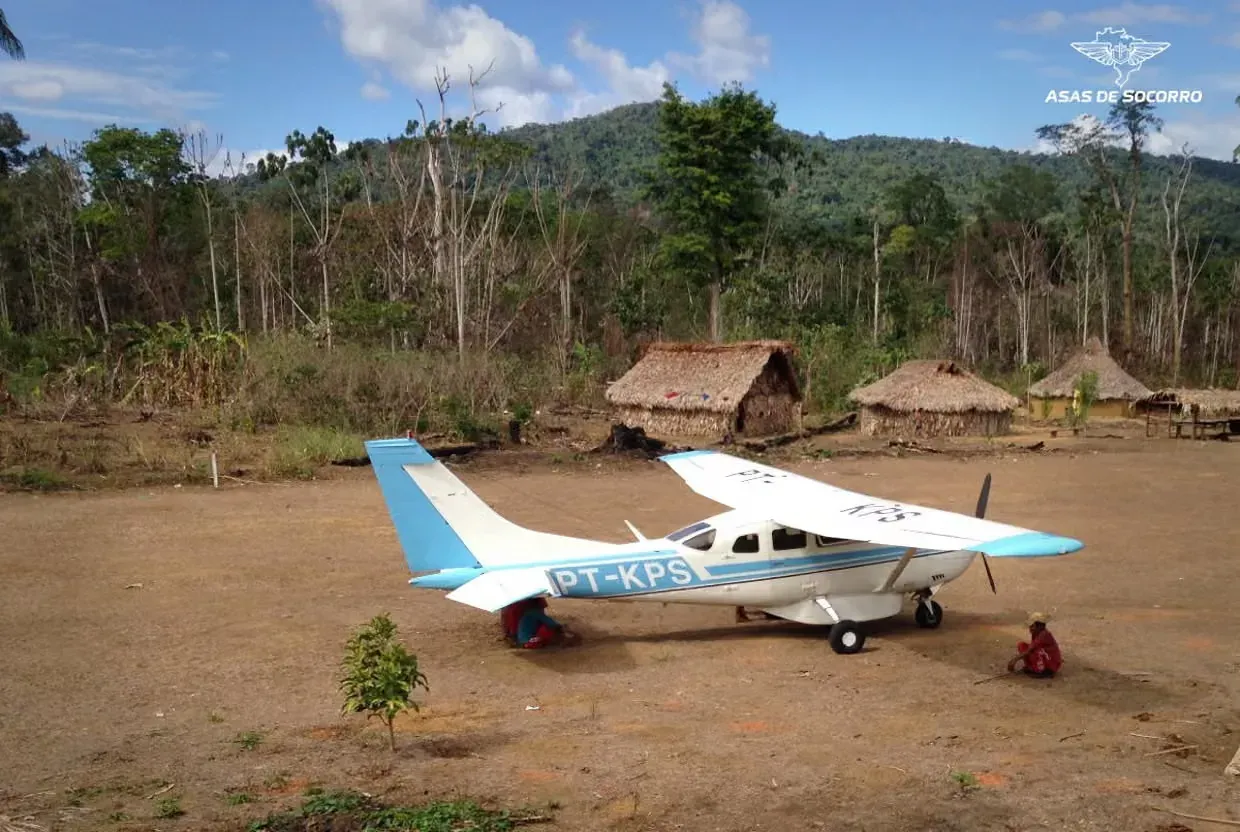
Three missionaries were identified as planning these alleged contact efforts: Thomas Andrew Tonkin, Josiah McIntyre and Wilson de Benjamin Kannenberg, linked to the Missão Novas Tribos do Brasil (New Tribes Mission of Brazil – MNTB) and a humanitarian group known as Asas de Socorro – or Wings of Relief. They were prohibited from entering Indigenous territory by court order during the Covid crisis.
Now it has emerged that missionaries have returned to the Javari valley and surrounding towns, such as Atalaia do Norte, with a new tool.
The first device uncovered, a yellow and grey mobile phone-sized unit, mysteriously appeared in a Korubo village in the Javari valley recently. The gadget, which recites the Bible and inspirational talks by an American Baptist, can do so indefinitely, even off-grid, thanks to a solar panel. Up to seven of the units were reported by local people, but photo and video evidence were obtained for just one.
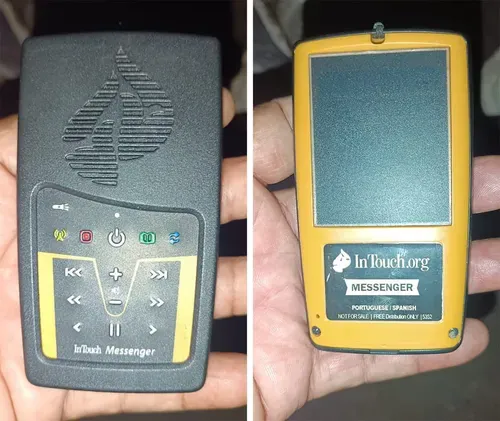
A message on the device located by The Guardian states: “Let’s see what Paul says as he considers his own life in Philippians chapter 3, verse 4: ‘If someone else thinks they have reasons to put confidence in the flesh, I have more’.”
The Brazilian government does not permit proselytising in the Korubo’s territory. Its policy, dating from 1987, stipulates that isolated groups must initiate any contact, a stance that made Brazil a pioneer in respecting Indigenous self-determination.
The state also strictly controls access, to protect the Korubo and other uncontacted peoples in the region from common diseases to which they have little or no immunity.
The device that reached the hands of the Korubo is called Messenger and is distributed by the Baptist organisation In Touch Ministries, based in Atlanta, Georgia. It is now a curiosity in the possession of the Korubo community matriarch, Mayá.
In Touch does not sell the Messenger. The devices are donated to “unreached” people in countries around the world and are available in more than 100 languages. With its solar panel and built-in torch, the device is designed to bring the gospel to places that lack reliable electricity or internet connections.
In an interview with The Guardian, Seth Grey, In Touch Ministries’ chief operating officer, confirmed that the organisation uses devices such as the Messenger and that “it is built for functionality, solar-powered, with a flashlight.” “Then they discover the content,” he said, adding that the device is loud enough for 20-person “listening groups.”
Grey said he personally delivered 48 of the devices to the Wai Wai people in the Brazilian Amazon four years ago. They contained religious content in their language and Portuguese. The Wai Wai have engaged with US missionaries, who have contacted and proselytised among communities in the northern Amazon, for decades, according to anthropologist Catherine V Howard.
Grey said, however, that the Messenger should not be present in the Javari valley in violation of Brazilian policy. “We don’t go anywhere we’re not allowed,” he said, referring to In Touch staff. He said he was aware of missionaries from “other organisations” who do carry the devices to regions and countries where they are prohibited.
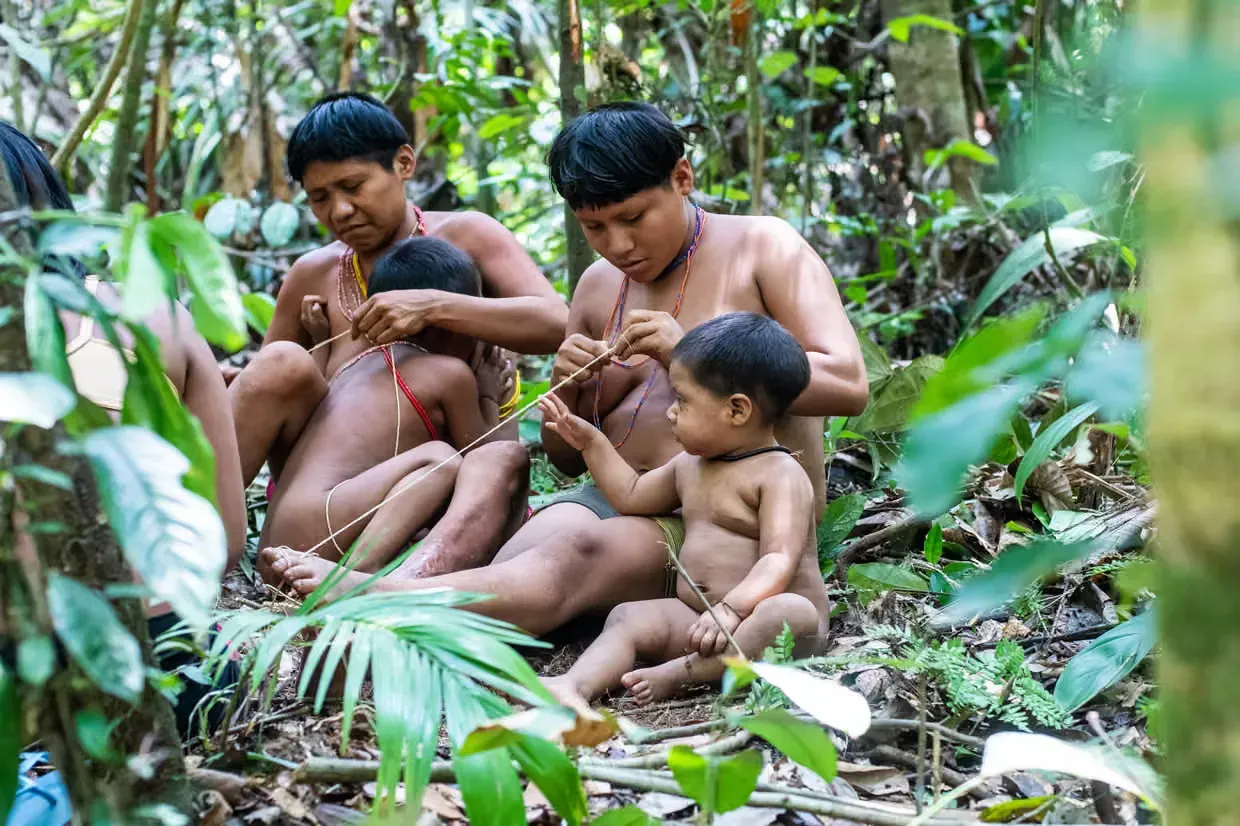
The Korubo, known for their deadly expertise with war clubs, are a recently contacted people and therefore of keen interest to certain missionaries focused on preaching to the “unreached.”
Sgt Cardovan da Silva Soeiro, a military police officer at the government protection post at the entrance to the Javari valley Indigenous territory, said he learned about the devices from an Indigenous person stationed at the base.
“I sent a report with the photos to police intelligence, but so far we haven’t heard anything back. The Indigenous people didn’t want to give me the devices, so I thought it best not to insist. I just managed to get the images,” he said.
Cardovan said military police officers are aware of the presence of missionaries allegedly linked to another Christian group, Jehovah’s Witnesses. “Some of these religious entities are very likely trying to get closer,” he said.
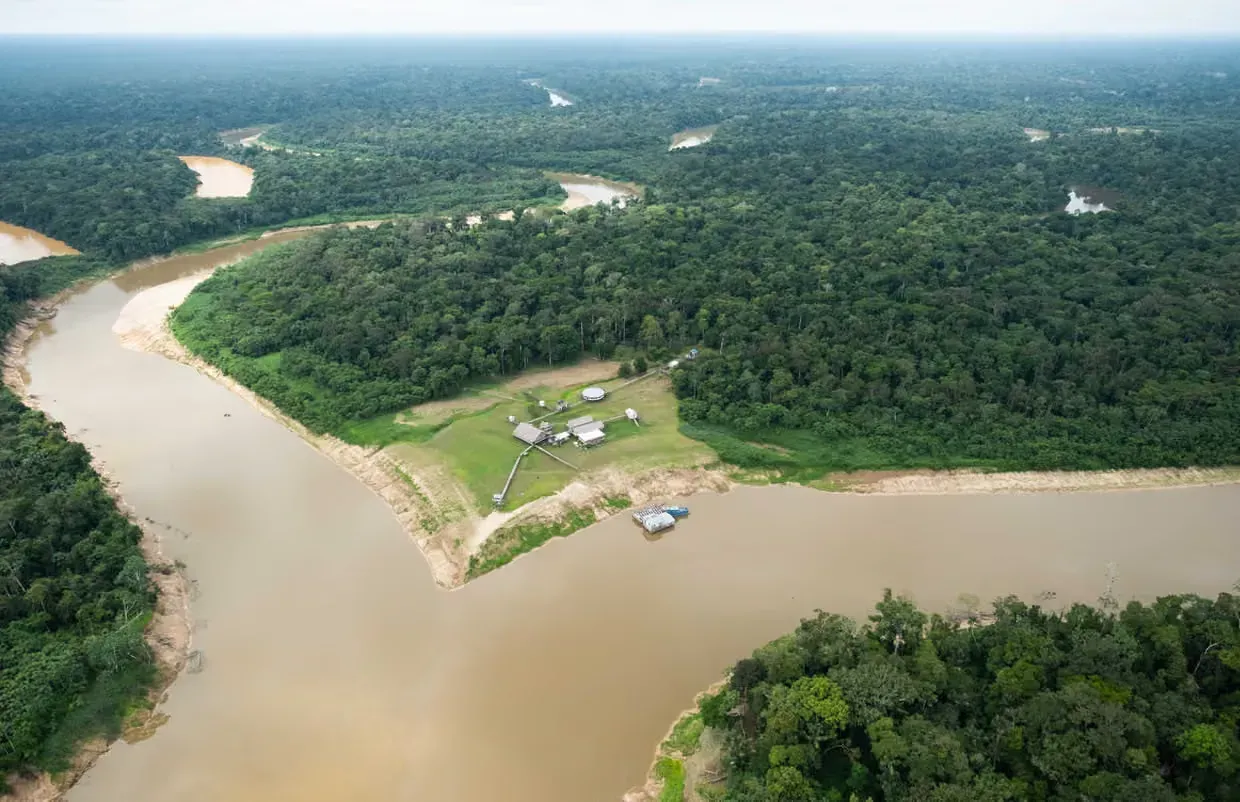
He also reported to police command the presence of “mysterious drones” that had recently appeared above the base, usually in the late afternoon. Cardovan was ordered to shoot them down, but so far has been unable to do so.
“We don’t know if they belong to missionaries, drug traffickers, fishers or miners who are watching the base to see if they’ll have free passage through here. When I received the order from command to shoot them down, I aimed my rifle, but the drone fled at high speed. It seemed very sophisticated,” he said.
Daniel Luís Dalberto, a federal prosecutor’s office agent who monitors the rights of uncontacted and recently contacted peoples, said the key point to understanding the presence of missionaries is not how many there are in the territory, “but rather the change in methods like those of the radios that are emerging now.”
“It’s a stealthy, concealed, under the radar conversion,” he said. “The method has become sophisticated and difficult, almost impossible to combat.”
Damë Matis and Paulo Mumia contributed to this report.
This series on uncontacted peoples is a partnership between The Guardian and Brazilian newspaper O Globo and is supported by the Open Society Foundations, the Ford Foundation, the Pulitzer Center, and the Nia Tero Foundation. Read it in Portuguese here.