
The Nuba Mountains became a refuge. That safety is now unravelling.

Intisar Abdullah Kodi is only 21, but the list of what Sudan’s civil war has taken from her is long. The family meals shared around a table heavy with food. The big house where she had everything she desired.
But what hurts Ms. Kodi most is being separated from her fiance, Amjad.
Five months ago, her family fled the southern city of Kadugli, escaping the drone strikes puncturing the city as the paramilitary Rapid Support Forces (RSF) and the Sudanese Armed Forces (SAF) fought for control there.

As a nonprofit journalism organization, we depend on your support to fund more than 170 reporting projects every year on critical global and local issues. Donate any amount today to become a Pulitzer Center Champion and receive exclusive benefits!
That meant leaving Amjad behind. With a weak phone signal in the area where her family has found refuge, the two have no way of reaching each other. For all she knows, he fled home, too. “I don’t know if he is alive or not,” she says, her voice breaking.
Sudan’s three-year civil war has ravaged the country, killing tens of thousands, displacing more than 20% of the population, and leaving millions at risk of starvation. But many of the war’s personal tragedies will never register in the world’s ledgers of suffering. The precious family photographs left behind. The child who has learned to go to bed hungry. And love suspended, held hostage to a conflict with no end in sight.
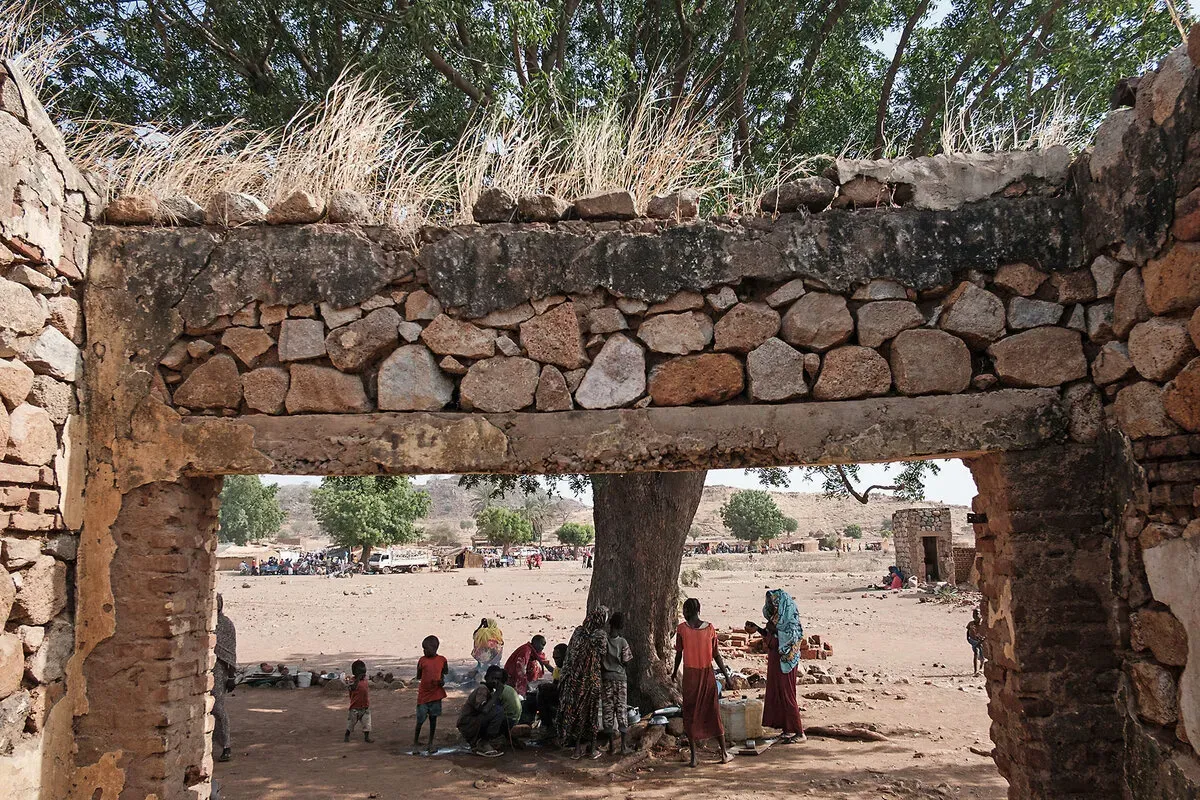
“My biggest wish now is to see my fiance,” says Ms. Kodi, who is sheltering with three dozen relatives in the rundown shell of a building at the southern edge of Sudan’s Nuba Mountains. They have resorted to selling their clothes and eating boiled sheepskin to survive.
For months, Adam Koukou also wondered if he would ever see his loved ones again.
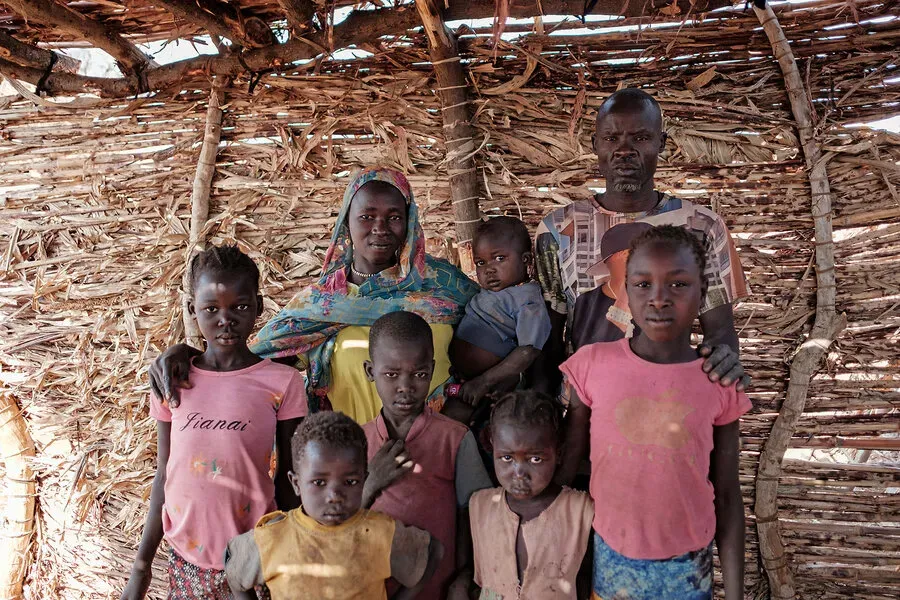
Before the war, he worked as a baker in Kadugli, specializing in pillowy Sudanese bread, while his wife, Hanan, cared for their 10 children at home. When the fighting began, the price of flour multiplied five, then 10 times over, he says. Finally, it wasn’t possible to bake at all. Mr. Koukou began selling charcoal instead, but it wasn’t enough. The children were always hungry.
And so, last autumn, Mr. Koukou decided to break his own heart by sending his family away.
In the soft dawn light, his wife left the city for a displacement camp 30 miles away, with a baby on her back, another small child in her arms, and a few of their belongings balanced on her head. The other children trailed behind her.
Mr. Koukou remained in Kadugli, trying to earn a living for his family. But as the weeks dragged on, and drone strikes battered the city, he wondered if he would live to see them again. Then, late last year, he watched a drone strike kill his friend Musa, and he decided it was now or never.
“When you see something like that, you run for your life,” Mr. Koukou says.
Under cover of darkness, he slipped into the mountains.
When Mr. Koukou arrived in the displacement camp and saw his family again for the first time, their clothes were ragged; their eyes tired, but it hardly mattered: They were together again.
Mr. Koukou and his wife embraced, their faces wet with tears. “I couldn’t believe he actually joined us,” she says.
Mr. Koukou held the children tightly. “Hopefully, we never get separated again,” he told his family. “Even though we have nothing, we pray to God to take care of us.”