Story
 November 20, 2026
How Women Producers in Jamaica Are Breaking Cost Barriers for Other Rural Women
Country:

Climate change and extreme weather have profound impacts on the daily lives of people in island...
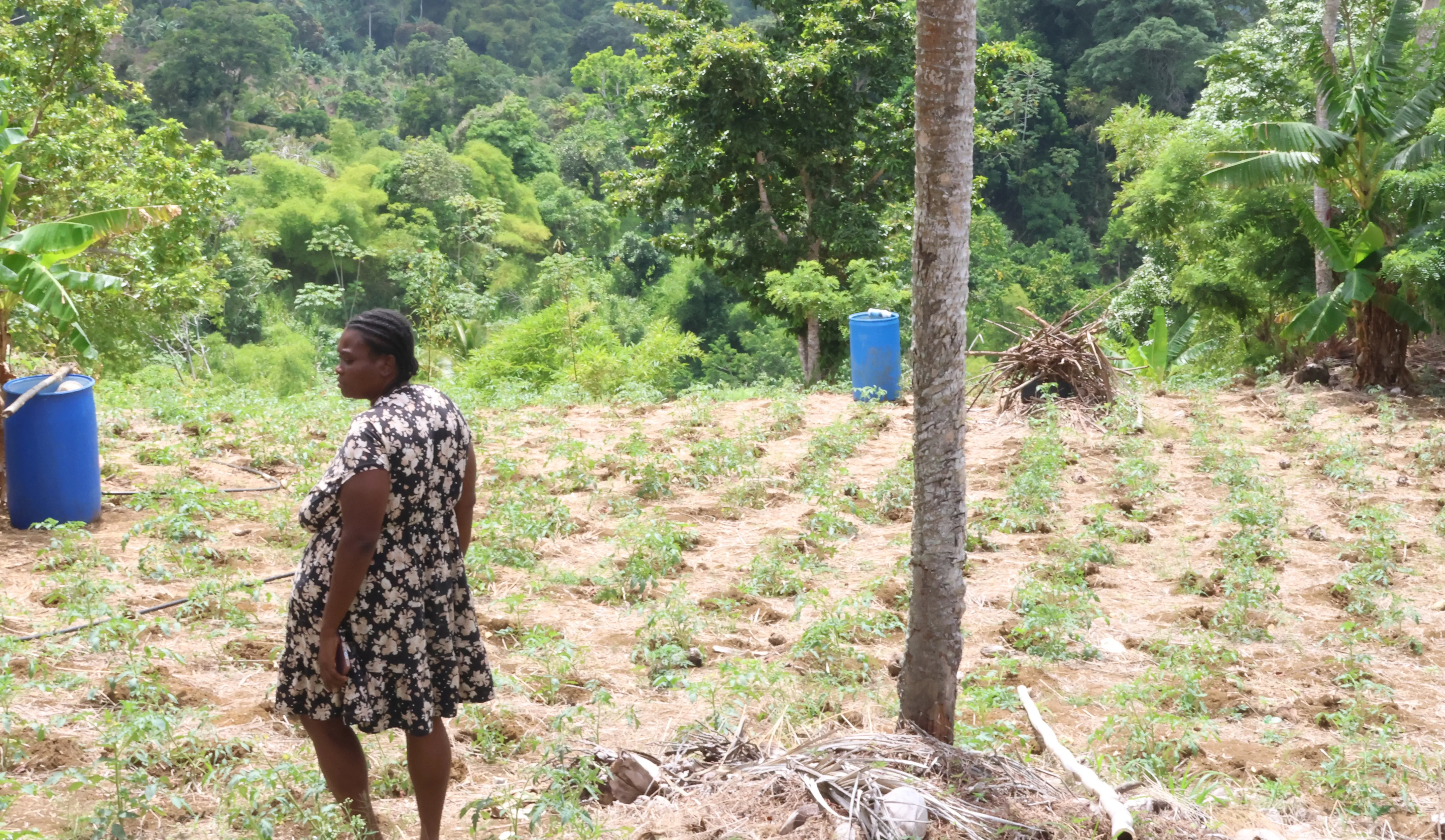
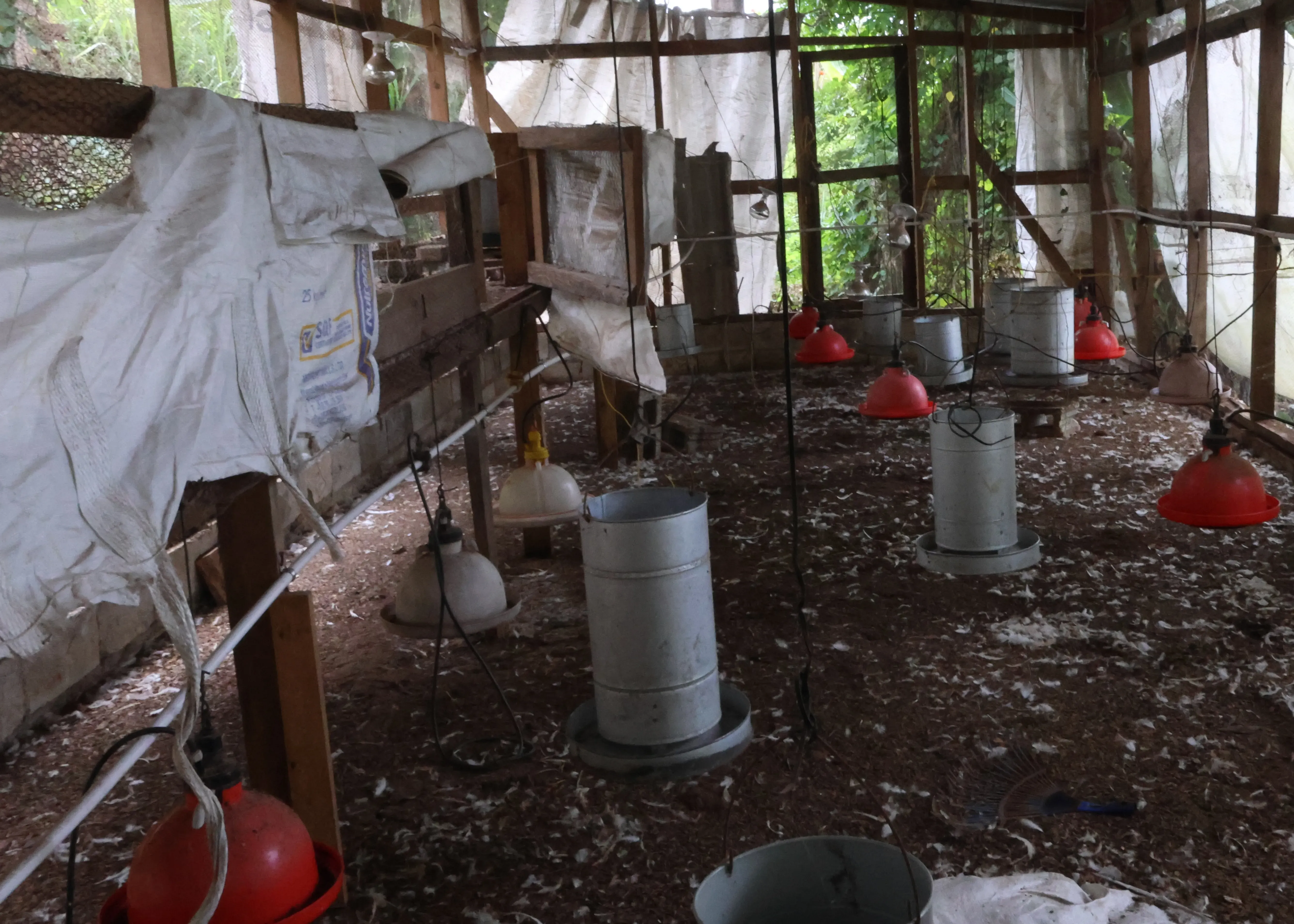
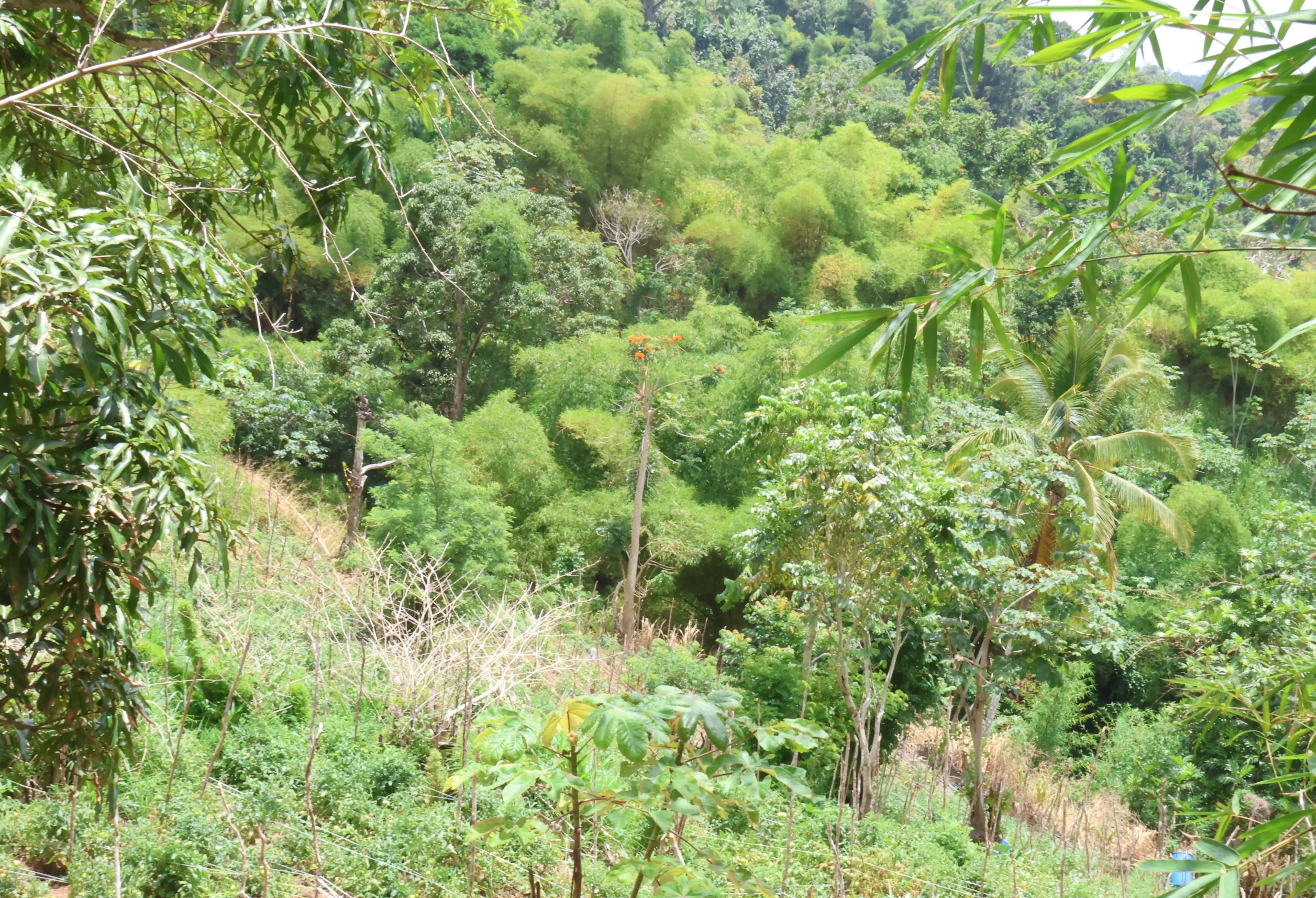
Perched among the rolling mountains of east St. Catherine, Jamaica, Shanquie Powell’s farm and home have undergone a small miracle. Overlooking a lush canopy of juniper trees sits a wooden coop of white chickens and behind it, a path winding down toward rows of tomato crop and blankets of budding cucumbers.
For decades, Powell sold a variety of produce including corn and potatoes, and slaughtered chickens to sustain herself and her family. Yet, nine months ago, Powell’s farm was an unrecognizable sight. Her crops ripped from their roots and blew in every direction down the mountain. The wooden chicken coop was destroyed, leaving hundreds of birds laying still after being bombarded with rushing floodwater. Her flock of 600 grown chickens was reduced to 100 in the span of a day. As an independent farmer, Powell was left to pick up the pieces.
“I thought the full coop was well-buttoned down, but when the storm came and hit,” Powell said, shaking her head, “it wasn’t enough.”

As a nonprofit journalism organization, we depend on your support to fund more than 170 reporting projects every year on critical global and local issues. Donate any amount today to become a Pulitzer Center Champion and receive exclusive benefits!
On October 25, 2025, Hurricane Melissa ripped through the island of Jamaica. The Category 5 storm unleashed unforgiving winds with speeds of 185 mph. Hurricane Melissa’s direct landfall decimated several parishes across the island, including Westmoreland, Hanover, St. James, and St. Elizabeth, colloquially known as “The Breadbasket,” where over 22% of Jamaica’s agricultural production occurs.
The path of destruction caused overwhelming damage to the agricultural sector, according to Jamaica Information Service (JIS). Post-storm assessments indicated losses of $29.5 billion Jamaican dollars, or more than $185 million. Staples of the Jamaican diet, including tubers (cassava and yams), tomatoes, carrots, sweet peppers, cabbages, bananas, and plantains, reached a record 68% loss. Over 1.2 million animals including poultry and livestock were killed in the storm, according to JIS, representing a 22% loss.
In a statement to Jamaica’s House of Representatives, Minister of Agriculture and Fisheries Hon. Floyd Green said operations on over 101,000 acres of land were affected by the disaster. In total, Hurricane Melissa cost the island nation almost one-third of their total GDP. The extent of the damage erased hard-earned production gains, leaving many farmers and their families’ livelihoods on uncertain grounds.
What’s more, the island nation was already in the midst of an expected recovery of three to five years following the destruction of Category 4 storm Hurricane Beryl, which had made landfall on the island only a year before. The short interval between each storm gave farmers and the government little time to recuperate or prepare.
Powell was one of an estimated 70,000 farmers who lost the majority of their crops in one or both the storms.
“I suffer[ed] an extreme amount of damage,” Powell said. “I had a big piece of sweet corn and I lose everything.”
Women farmers like Powell were particularly hit hard. According to Jamaica’s Rural Agricultural Development Authority, out of over 135,000 registered farmers, more than 42,000 or 32% are women. JIS reports that over the past 10 years this number is only increasing. Women farmers in particular face an uphill battle when it comes to storm recovery.
Because women farmers are underrepresented as landowners, principal farm operators, and market contributors, many women received no help when it came time to replant their crops or replace the livestock they’d lost.
“[I'm] not making enough money from the farm to pay the bills,” said Powell, who signed a J$1 million loan—about $6,300—from Jamaica National Bank after Hurricane Melissa destroyed her farm. But 10 months later, the bank still hasn’t given her the money.
“I can get back on my feet if I have the capital,” she said, but rebuilding will be a long process. “Me na even start to recover yet,” Powell said in Jamaican Patois.
According to JIS, securing adequate funding from the government is an evergreen issue. Banks often lend just a fraction of what farmers actually need to recover. In the case of Hanover farmer Madge Wright-Conniffe, when presenting a business plan for J$1 million, she received an offer for only J$200,000 to J$300,000, just one fifth of what she’d requested.
Insurance, a lifeline for farmers
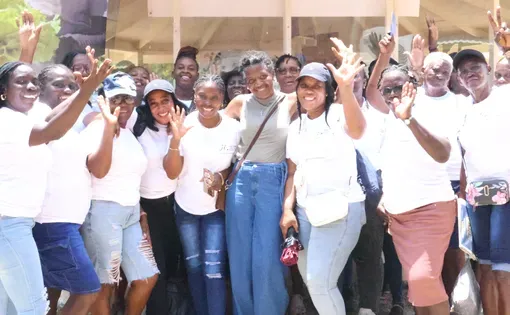
One small organization is working to fill the gap between independent rural women farmers and government aid. Based in the bustling neighborhood of downtown Kingston, the Jamaica Network of Rural Women Producers (JNRWP) is a nongovernmental organization (NGO) connecting rural women farmers through 14 cluster groups spanning the entire island. The organization provides farm training, financial literacy workshops, agricultural marketing services, and any necessary tools and input to maintain a farmstead.
Melissa Grant, a crop farmer in Guy’s Hill received fertilizers for her 5 acres of farmland, finance management training, and chickens from the JNRWP to help support her business. Now she’s able to sell her cucumbers, Irish potatoes, plantains, and corn to pay her bills, and feed herself and her husband.
“They help us out, we can count on them,” Grant said.

When emergency strikes, JNRWP President Tamisha Lee said that a level of urgency is necessary to secure aid for women farmers.
“One cannot wait on the whole bureaucratic process through the government. One cannot wait for the containers to be cleared for aid to come into the country,” Lee said.
In the wake of disaster, JNRWP advocates for the voices of rural women farmers by increasing accessibility to resources and financial assistance. Since Hurricane Beryl, Lee worked to carve avenues of support for members of the network affected by weather disaster. She lobbied to receive support from organizations such as the United Nations Development Program Livelihoods Project and the Red Cross. To improve upon storm preparedness immediately after Hurricane Beryl, the JNRWP partnered with humanitarian agency CARE International and farming supply company Hi-Pro to provide insurance to JNRWP members under the Roots Resilience Parametric Insurance Programme.
CARE International pledged $65,000 to sponsor 110 women, and Hi-Pro pledged $900,000 to cover 10 poultry and livestock farmers. Thirty members of the JNRWP were initially registered for the Roots Resilience program. With the proactive implementation of this insurance program, following the fallout of Hurricane Melissa, those members were protected already against damages.
“Within five days post-Melissa, those 30 members we registered under the parametric insurance scheme, they received J$150,000 transferred to their bank accounts,” Lee said. “They were protected against drought, heavy wind speeds, and also flooding.”
Facilitated by the Grace Kennedy Insurance company and their Weather Protection Program, the Roots Resilience Parametric Insurance Programme works like this: Weather conditions are monitored through public atmospheric data in each parish. If a severe weather event is detected, then an insurance payout is triggered to the beneficiary.
Since benefits are distributed based on pre-determined events rather than scale of losses, the Roots Resilience program is a unique approach to building resilience against climate disasters due to its speed in payouts. The JNRWP and its partners agree that speed is vital to recovery efforts, especially for women, as returning to production quickly is necessary for their own and their families’ livelihoods.
“That is how they put the food on their tables, that is how they send their children to school, that is how they repair their homes and their farmsteads,” said vice president of the Hi-Pro Division of Jamaica Broilers, Col. Jaimie Ogilvie.
“Otherwise, they’d have to bootstrap themselves, find the financing from somewhere else…especially in the rural communities where there is not much economic activity,” he said.
Powell didn't register to receive parametric insurance as she claimed she didn't face insecurity. To prepare for future weather disasters, Powell said that little can be done.
“Based on the high wind and the speeds, there is little [preparation] I can do based on doing outdoor farming and the hillside where I do my farming,” she said.
As for her chicken coop, Powell plans to move all of her operations indoors the day before any storm makes landfall.
All farmers, regardless of farm size or income, are eligible to receive the insurance benefits. The intention of the rapid insurance payouts is to ensure a sense of security.
“The first thing that it does is buy them a sense of freedom,” Ogilvie said.
When Hurricane Melissa struck, Vennisha Beckford, a crop and poultry farmer in St. Elizabeth, had to use her children’s mattresses to board herself and her family in their bathroom. Every sector of her farm had damage. Beckford is down to a dozen layer chickens after having over 80 birds pre-storm. Heavy rainfall destroyed her sweet corn, cucumber, pumpkin, and peanut crops, disrupting her flow of income to pay household bills and her children’s schooling.
“Knowing that I lost so many birds, I didn’t know how to get back on track or where to pick up the pieces,” said Beckford, who received J$150,000 (about $948) from the Roots Resilience program. “I was elated, I was surprised, overwhelmed, crying to tears.”
“It gave me hope,” Beckford said. “I have a coup that's newly built. I feel confident that I am going to reach somewhere.”
Infrastructure failures and government weaknesses
In the decades since 2006 Nobel Prize winner Muhammad Yunus’ popularization of microfinance to the global poor with the founding of Garameen Bank, organizations around the world have been investing in programs like collateral-free loans for small-scale entrepreneurs. However, NGOs such as Fonkoze, a microfinance institution in nearby Haiti, realized that people who received even small loans weren’t able to repay them or even restart their businesses after a hurricane hit.
Microfinance loan programs often fail to alleviate financial strain for low-income and impoverished individuals, as cycles of high interest rates leave borrowers trapped. The JNRWP and its partners, therefore, created disaster insurance programs like the Roots Resilience program.
Jamaica’s government runs similar programs, such as The AgriCare Program and The Fisheries and Agriculture Multi-Advantage Plan. But in rural Jamaica, most women don’t have access to insurance and loan programs because, according to the Food and Agriculture Organization of the United Nations, smallholder farmers pose high level risks to insurers, limiting basic insurance entry points to organized supply chains and larger commercial farms.
Rural areas suffer from climate disaster disproportionately due to weaker infrastructure. Studies show that many buildings don't adhere to building codes and are made of material vulnerable to extreme winds and flooding, such as wood and limestone. Farms in the countryside are often built on slopes of mountains where deforestation is required to make room for crops. These practices lead to soil erosion, leaving dwellings and farmsteads on the mountains at risk of landslides during hurricanes.
Unpaved and pothole-ridden roads and neglected storm drain systems in rural areas contribute to slow debris removal post-disaster. Like blood flow in veins being blocked from the heart, this causes humanitarian and reconstruction aid to be cut off from rural communities. After Hurricane Melissa the Ministry of Local Government launched an island-wide cleanup program, JTV news reported. However, Westmoreland residents quoted in the JTV interview said that government aid was only active in their cleanup efforts for two days.
The Jamaican government has made attempts to create policy to support farmers post-disaster through tax concessions, subsidized loans from the Development Bank of Jamaica, or grants from the Ministry of Agriculture and Fisheries and its subsidiaries.
According to the Inter-American Development Bank, Jamaica Rural Economy and Ecosystems Adapting to Climate Change Project (JaREEACH) aimed to build climate resilience through irrigation system renovations and providing tools to cocoa farmers. However, this initiative only lasted from 2012 to 2019. Other attempts at improving food security include programs like the Onion Production Program, aimed to improve productivity and sustainability through grants and loans. This program yielded results of 30% growth in onion production, but mainly via agro-processors or large-scale farmers.
But policies lack detailed terms, conditions, and thresholds for the distribution of government grants and subsidies that make it difficult for rural farmers to access crucial programs. Farmers are unclear on how to participate in these programs, which can lead to less effective use of funds.
Slow and bureaucratic processes create difficulty for women farmers to secure the resources to maintain and expand their farms and businesses.
“The challenge is always the speed of implementation. The things that we are doing now should have been done 30 years ago,” Green, the minister of Agriculture and Fisheries, said. “If I could get [things] done in six months instead of two years it would be so much easier.”
In order to fast-track rebuilding efforts, the government established the National Reconstruction and Resilience Authority (NaRRA). However, NaRRA’s responsibility is to oversee large-scale construction projects, like building new infrastructure and driving economic transformations. NaRRA will not play a role in localized efforts, such as replacing roofs or restoring electricity in affected towns.
Getting ready for the next one
Jamaica’s hurricane season lasts from June 1 through November 30. The 2026 season has been a relatively calm one thus far. The National Oceanic and Atmospheric Administration (NOAA) predicts a 55% chance of a below-normal Atlantic hurricane season. An average hurricane season has about three major hurricanes (categories 3-5), and this year about one to three are predicted to form in the Atlantic Ocean.
Early preparations are essential to being safe throughout the duration of the season.
Since March, the JNRWP increased membership of the Roots Resilience program from 30 to 120 members.
Green urges farmers to take more active responsibility in their preparations.
“We do know that we are seasonal farmers, so we will have things like drought, and we have to build out storage,” he said.
He recommends farmers store any harvestable crops in storage units or containers ahead of storms in order to mitigate crop losses. Green said that the government is beginning a new initiative with GK Weather Protect Insurance in which the first 5,000 farmers can register for free as the government pays for base costs.
With factors such as limited schooling and less diverse economic opportunity, agriculture is the primary way to support oneself in rural Jamaica. After surviving a hurricane, weather-related insurance can help ensure that farmers survive the aftermath. Climate disasters are only increasing in severity, but farmers like Powell will continue to face the storm.
“Farming is what I do, farming is what I know, farming is what I love,” Powell said.