

Project
Ugandans Fight Against Sugarcane
How sugarcane reshaped Uganda’s farmland, food supply, and culture
There was a word for God in Lusoga long before the British came. In the villages, neighbors would gather at the place they found most grand; they met at the striking boulder whose edges were smoothed by time, or under the ancient trees whose roots had called this earth home for generations. And in Budondo, it was Bujagali Falls, where waters merged with the Nile below. These were the sites of worship to the creator, Katonda. When the British arrived, they deemed these rituals primitive, misunderstanding the sites as gods themselves rather than as connectors to the divine.
It was up the road from this sacred spot that I met Bujagali Namamba. Meetings with him are usually by appointment, but that afternoon I found myself sitting on a bench outside the ceremonial site, waiting. A few women dressed in traditional attire emerged from a thatched hut, and then Paul, a caretaker, approached me with a palm leaf dipped in water, dousing my feet, arms, and face before I entered. Inside, dim light filtered through cracks in the wall. Namamba sat before me on a throne layered with barkcloth.
It was the barkcloth that I had come to see. Just hours earlier, sugarcane farmer Otimong Jamada told me in Budondo about the environmental destruction left in the wake of cane farming.

As a nonprofit journalism organization, we depend on your support to fund more than 170 reporting projects every year on critical global and local issues. Donate any amount today to become a Pulitzer Center Champion and receive exclusive benefits!
"It used to look almost like a jungle over there," said Jamada, pointing toward the land near his home.
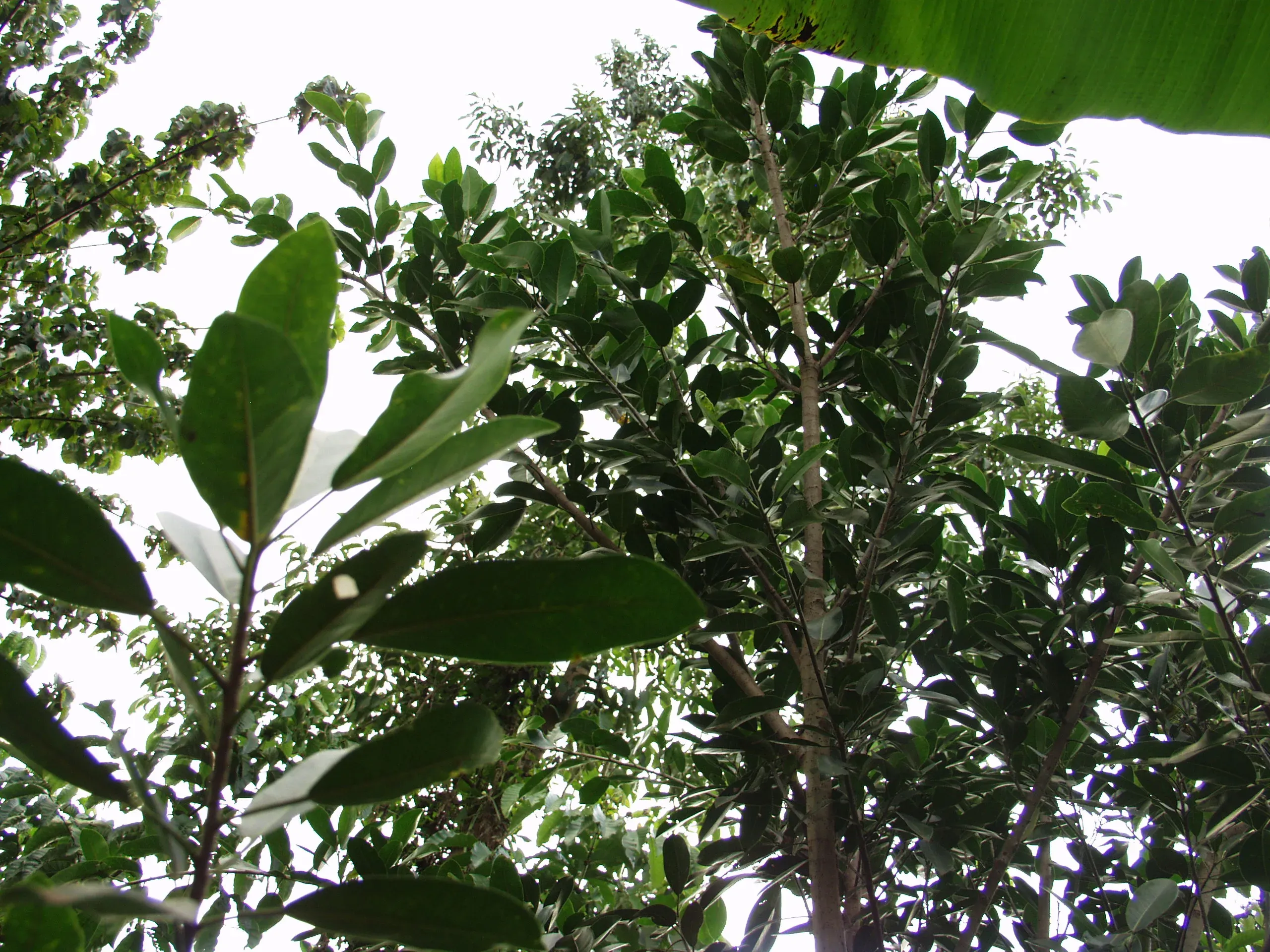
Mangoes, avocados, jackfruits, matooke, Mutuba trees …
He paused and asked, “Do you know the Mutuba tree?”
The Mutuba’s story stretches back centuries. Oral histories say that around the 14th century, a man in Buganda first stripped its bark and, with skill and patience, fashioned it into Uganda’s earliest cloth. From that point on, the Mutuba tree became central to heritage. Barkcloth, or olubugo, clothed nearly the entire population, long before woven fabrics arrived.
To keep the trees multiplying, culture itself carried the responsibility. A child’s naming meant a Mutuba planted. A marriage morning meant another. When an elder died, still another was put into the ground. Over time, homes grew into small forests.
“The Mutuba became a treasured tree,” said Abraham Kitaulwa, a teacher and promoter of Uganda’s intangible cultural heritage.
The Mutuba was useful beyond its bark. Its leaves fattened goats, its mulch enriched the soil, and its wood became beams for houses and fuel for cooking fires.
Colonialism unraveled it. Traders brought cotton and linen, smoother and easier to wash. Missionaries went further, branding barkcloth “demonic” because of its ties to traditional religion. What had once been status and sustainability was stripped of value, left instead with stigma.
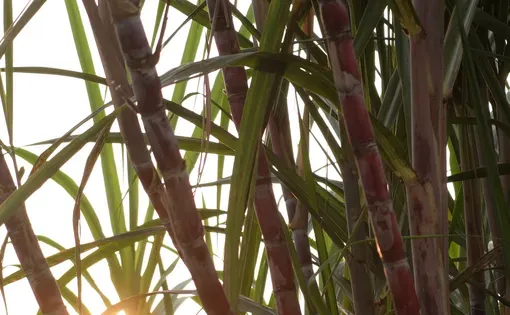
Sugarcane did the rest. Fields of cane replaced forests, the slow-growing Mutuba felled for quick cash.
“People have cut down the trees just basically to plant sugarcane,” Kitaulwa said.
The result, he explained, was predictable: Where households once grew their own forests, now they struggle to find shade.
“Imagine after every child, you plant a tree … some homes used to have forests themselves,” Kitaulwa said. “So environmental protection wasn’t a problem.”
The effects are visible everywhere. Once tree-covered hills are stripped bare, with fast-growing eucalyptus planted instead of native trees like the Mutuba. Sacred landscapes like Mabira Forest have been threatened with conversion to cane, sparking mass protests. Since 1990, Uganda has lost millions of Mutuba trees to deforestation, each loss cutting away at both the environment and identity.
There is a new wave of people trying to reclaim the Mutuba tree and its barkcloth for the next generation.
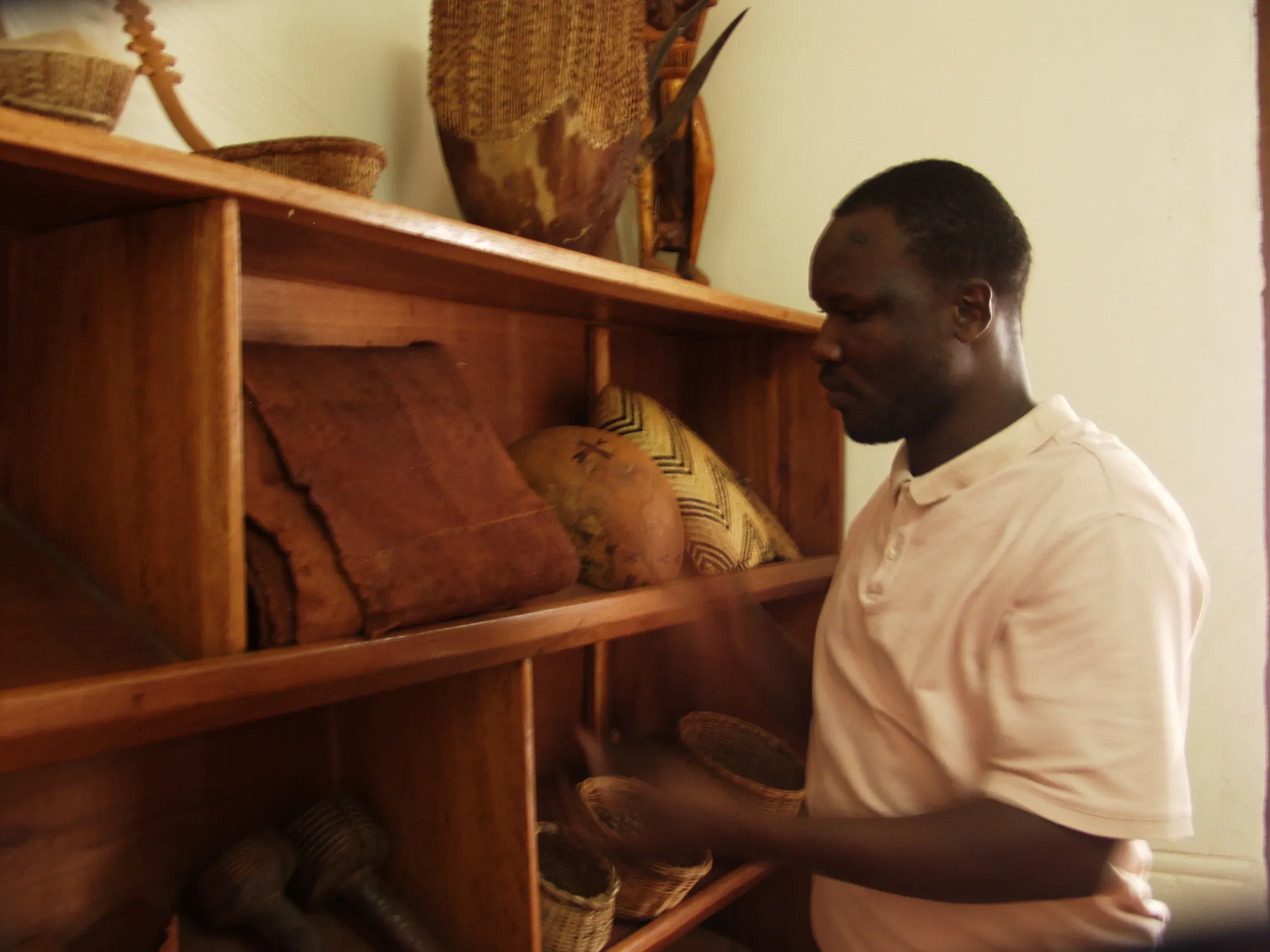
In Jinja, I stopped at the Cultural Library, part museum and part classroom, where shelves of books sit beside artifacts of Uganda’s past. It was here where I met Henry Malimo, who runs the library and teaches schoolchildren about the Mutuba and the traditions bound to it. He laid out the simple tools once used to strip bark and soften it into cloth.
“Our environment contributes almost 90 percent to our culture,” Malimo said.
Through a program called Cultural Health Education, Malimo and his colleagues visit secondary schools to teach Uganda’s younger generations about the value of their heritage. They show students the Mutuba tree, explain how barkcloth was made, and correct the lingering belief that it is tied to witchcraft. Thirteen schools now participate, each classroom an attempt to reverse the losses of the past century.
Malimo stressed that identity is at the heart of this work.
“To be called clanless is one of the worst abuses someone can say here,” he explained.
Not knowing where you come from—your clan, your grandparents, your great-grandparents—is seen as a kind of rootlessness, an emptiness.
“If you don’t know where you are coming from,” Malimo said, “you will never know where you are going.”