Story
 October 3, 2026
Gazette-Mail Testing Reveals Public Health Risks From West Virginians’ Well Water
Country:

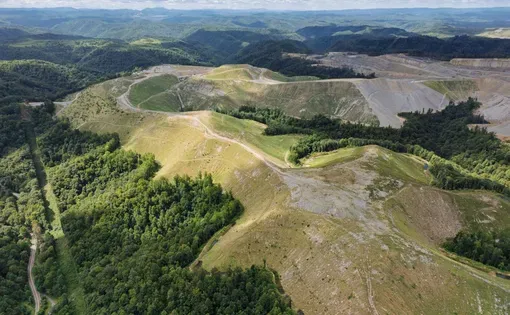
In West Virginia, water is a devastating stumbling block.
PROCIOUS, West Virginia – Jacob Pennington used to drink his well water.
The 32-year-old environmental health specialist stopped doing so around three years ago when it started to taste foul. Now he fills up jugs at work because the public system water there isn’t metallic or salty like what his home supply has become.
“It sucks for just cleaning, cooking,” Pennington said in the kitchen of his Elk River Road home in this tiny, unincorporated community in rural Clay County.

As a nonprofit journalism organization, we depend on your support to fund more than 170 reporting projects every year on critical global and local issues. Donate any amount today to become a Pulitzer Center Champion and receive exclusive benefits!
Pennington’s water supply causes too much damage to be written off as merely a nuisance.
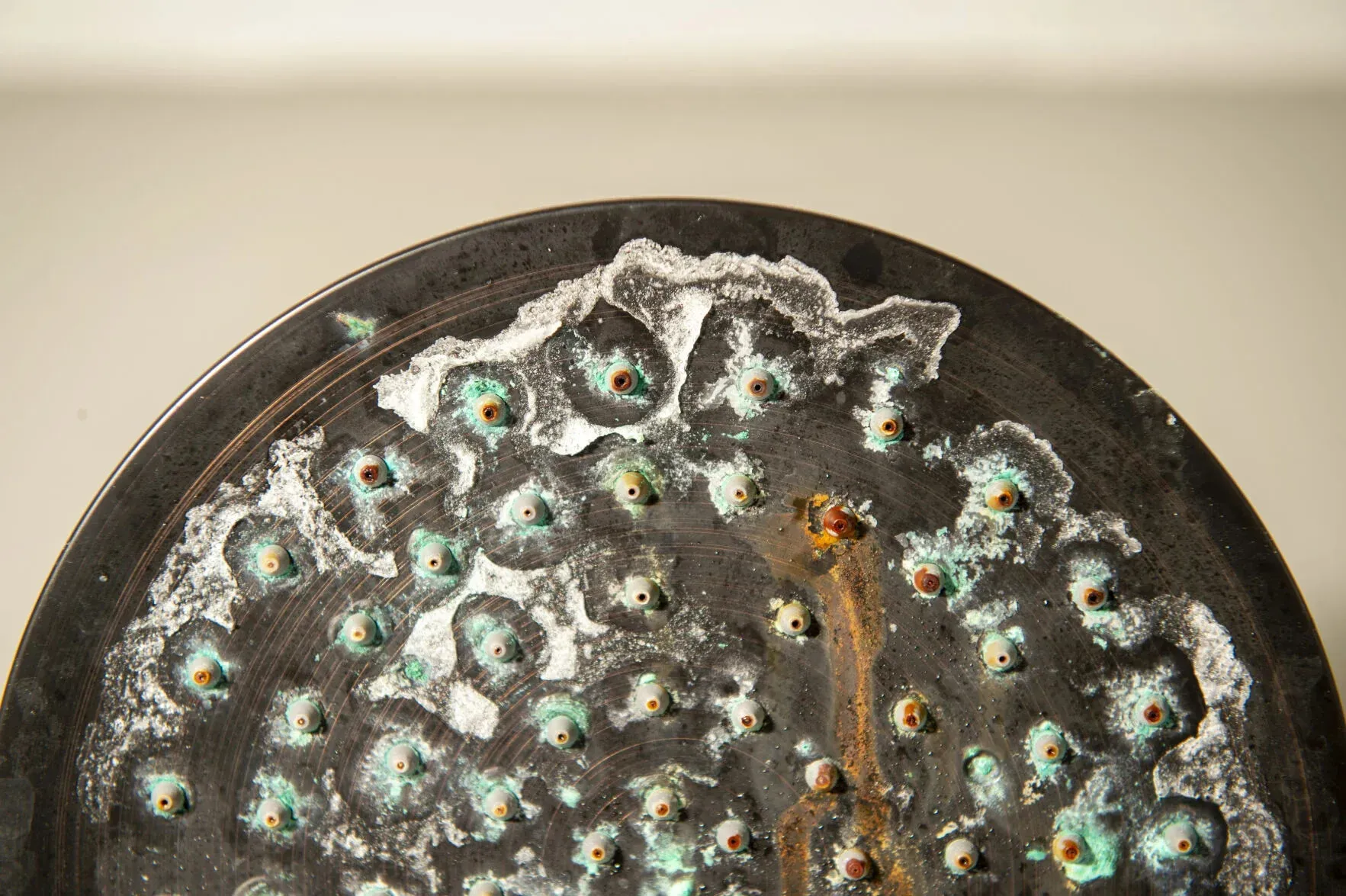
It leaves rust- to orange-colored stains on his sinks, shower and appliances within days of Pennington cleaning them.
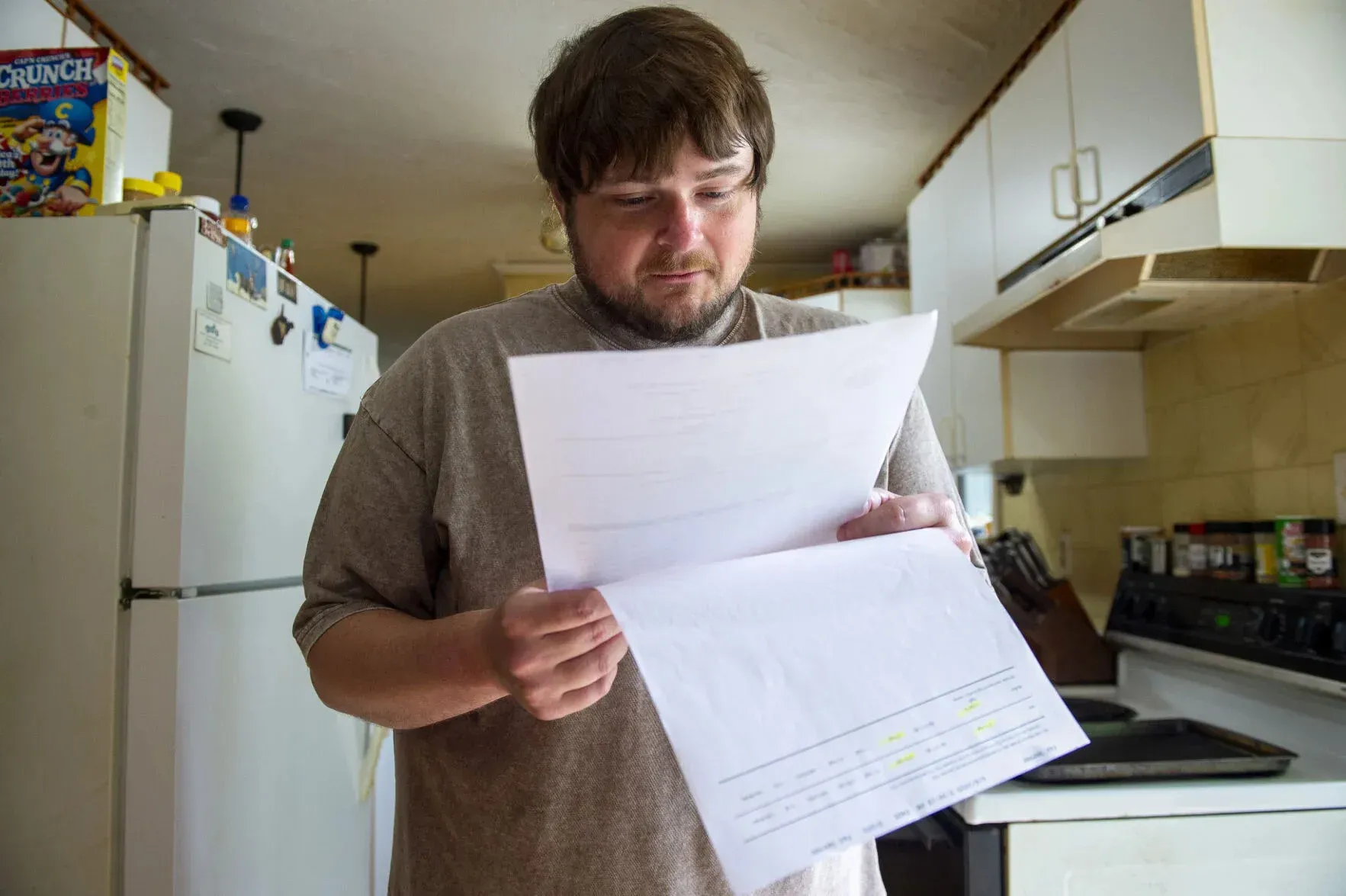
Pennington buys a lot of the hard water stain-cleaner Lime-A-Way, but it’s no match for the rust-colored water that flows into his home and has already aged a newly installed shower.
“The handle is just so rusted already,” Pennington laments.
Pennington was one of more than 30 residents across West Virginia who had their well water sampled independently via the Gazette-Mail to gauge the quality of private well water throughout the state — for which there has been a dearth of official data or documentation to accompany the state’s public water system quality data.
In 2024, West Virginia had the nation’s highest percentage of public water systems with health-based Safe Drinking Water Act violations — 29.2%, according to a Gazette-Mail analysis of U.S. Environmental Protection Agency data — causing concern about the quality of private well water for Mountain Staters, as well.
The testing provided by the Gazette-Mail in partnership with the West Virginia Rivers Coalition, a nonpartisan water restoration nonprofit, was funded by the Pulitzer Center for Crisis Reporting, which supports investigative reporting projects. The Gazette-Mail paid SimpleLab, a national environmental testing company, and Cyclopure, a national water-testing and purification company, to analyze the samples for bacteria, metals and industrial chemicals known as PFAS (per- and polyfluoroalkyl substances), all of which pose human health risks.
“Data from private wells is very much a black box,” said freshwater biologist Than Hitt, the senior scientist with the West Virginia Rivers Coalition who examined the test results.
The unfiltered well water samples from volunteer residents allowed the Gazette-Mail and the West Virginia Rivers Coalition to assess geological impacts on groundwater quality and differences in contaminants and related public health liabilities throughout the state.
Hitt noted that there has been little baseline sampling in groundwater for PFAS and other contaminants in central West Virginia because most area municipal water systems draw from surface water.
“There aren’t large enough aquifers to justify groundwater wells for municipal supplies,” Hitt said, “and therefore, the data that we have about safety and security are primarily from surface waters. Now, there is interaction between groundwater quality and surface water quality, but there’s very scant data for basic groundwater conditions in this part of the state, so that was one of our other interests in this work — to inform the baseline understanding of what’s going on in the central part of the state.”
The tests revealed evidence of gas and oil brine in samples in the central part of West Virginia, cancer-linked PFAS scattered throughout the state and E. coli, which poses a risk of gastrointestinal and other illnesses, in the central and southern parts of the state.
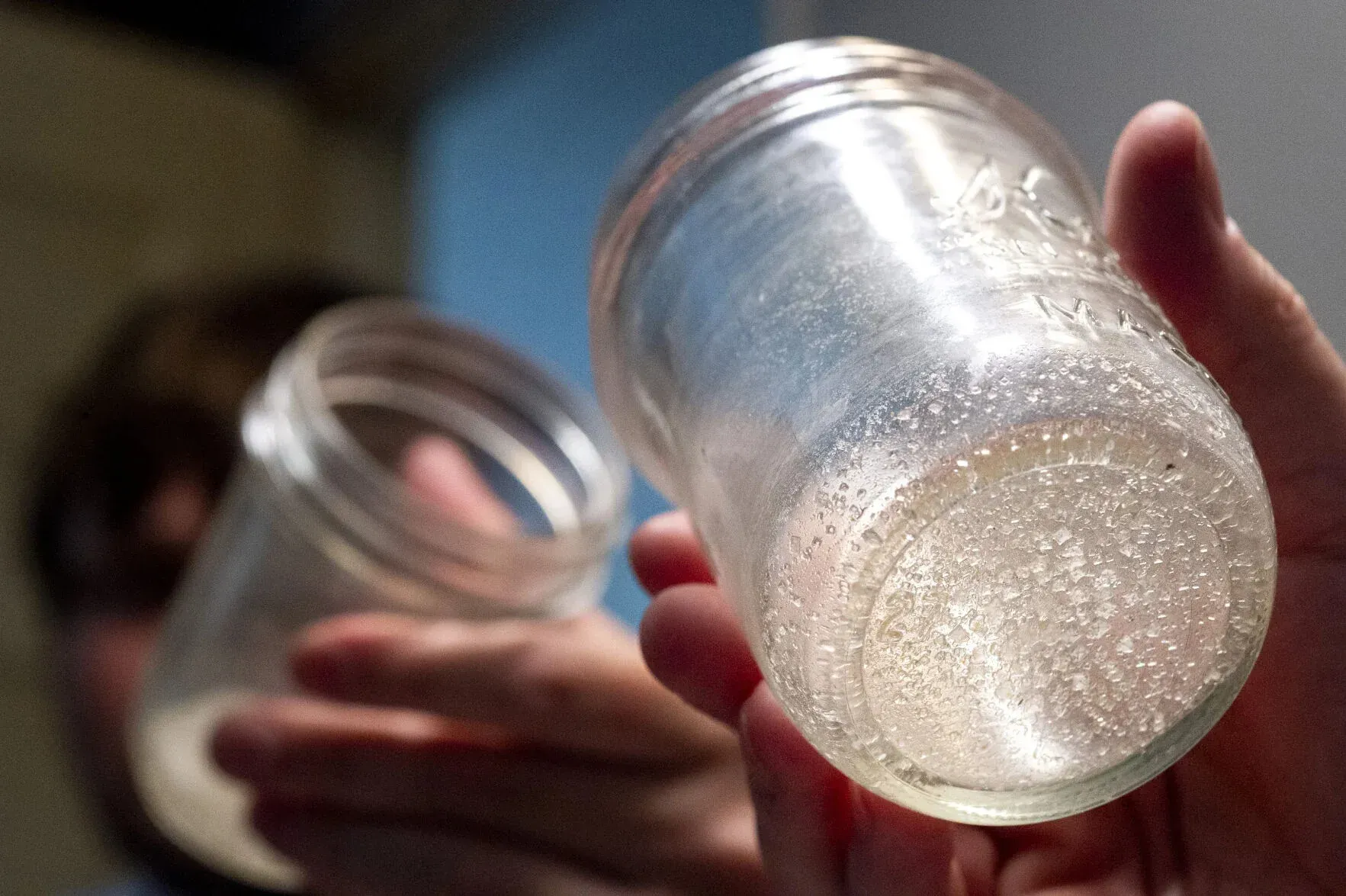
Pennington’s water showed high readings of conductivity — a measure of the ability of water to pass an electrical current that is elevated by dissolved solids entering water via human disturbance — and barium, which can cause vomiting, diarrhea, breathing problems and muscle weakness when above the federal drinking water standard. Pennington’s water was sampled twice to confirm the results.
Hitt said Pennington’s conductivity readings were “through the roof” — observed at more than 20 times the target range — and that the barium results strongly suggest a presence of gas and oil brine at high concentrations in groundwater supplying the well since barium is known to indicate gas and oil brine. Hitt noted that many gas wells are shown near the site through the West Virginia Department of Environmental Protection’s geographic information system data viewer.
Pennington’s results also showed detections above the federal drinking water standard for E. coli and total coliform bacteria, which can indicate other potentially infectious agents.
As a sanitarian, Pennington knows that coliform bacteria in well water are one of the most common issues for those with private wells. The Centers for Disease Control and Prevention recommends testing well water via a state-certified laboratory at least once a year for total coliform bacteria. The West Virginia Department of Health’s list of certified laboratories is available at bit.ly/WVLabList.
But Pennington wasn’t expecting barium to be an issue, and it’s one that can cost at least several hundred dollars to address through ion-exchange and reverse-osmosis drinking water treatment technologies.
“It seems like an expensive filtration system would be needed to put a dent in that problem,” Pennington said.
Pennington suspects that nearby gas well operations have affected his water supply quality. He pointed out what he said was an abandoned gas line running parallel with the creek right beside his house.
“I had reported that it had several areas where gas was spewing out multiple times before they stopped servicing it altogether,” Pennington said.
'That’s when I knew we had to get out'
Just more than 100 miles south on Interstate 77 is the Spanishburg, Mercer County, property that Angela Conlon and her husband, a medically retired U.S. Marine, evacuated after moving there in November 2023 and developing chronic illnesses shortly afterward that she attributes to the poor water quality at their home.
Conlon recalls that she and her husband, Bryan, both 39, developed a range of symptoms that became more severe the longer they stayed in their home: headaches, dizziness spells, chronic fatigue, memory impairment, difficulty concentrating, irritability, crippling anxiety, muscle spasms and reduced coordination.
A dozen years removed from being deployed to Afghanistan with the Second Battalion, Eighth Marines, an infantry battalion known for engaging in the battles of Guadalcanal and Okinawa in World War II in addition to the war in Afghanistan, Bryan Conlon suffered neurological symptoms “much like Alzheimer’s events” while still living in their Spanishburg home that have subsided since they left it, Angela Conlon remembers.
“Our skin aged what looked [like] almost a decade,” she recounted.
When a family member began coughing and reported burning eyes, a tight chest and muscle cramps during a weekend stay at the Conlons' home, they concluded the culprit was something in the house.
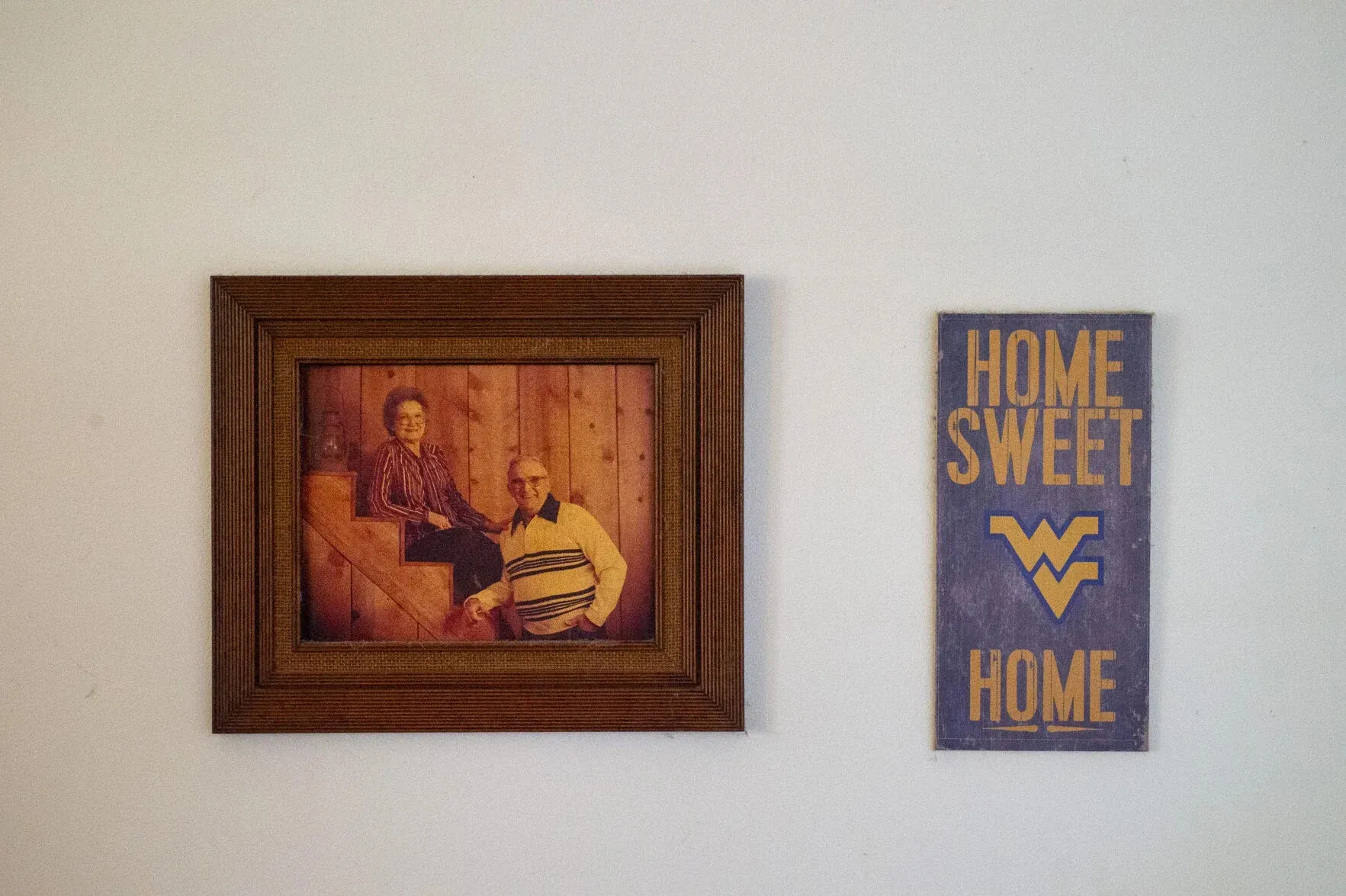
The Conlons’ water was orange and metallic. It also seemed to be ruining — and perhaps shortening — their lives. They emergency-evacuated away from it on Aug. 12, 2025, decamping to North Carolina.
“As the week went on in North Carolina, my body began to feel better than it had since moving home,” Angela Conlon said. “That’s when I knew we had to get out.”
But Angela and Bryan Conlon had nowhere to go. So instead of putting up a tent, they moved into a shed on their Spanishburg property, where they made do until January of this year.
Angela Conlon, a dog trainer, had insulated and converted the shed into a dog kennel some 200 yards from their house, living there until it got too cold in January. They cooked and “lived” out of their garage and slept in the shed, she added.
Angela Conlon theorized that her water supply was harmed by a migration of contaminants from an underground injection control well in Camp Creek, another unincorporated Mercer County community less than 10 miles from Spanishburg. She noted that her and her husband’s symptoms align with that of chronic and low-grade exposure to wastewater generated during gas and oil extraction.
“I truly have no idea what else could cause the exact overlap in symptoms that grew this severe,” she said.
Angela and Bryan Conlon settled nearly 200 miles away in Mebane, N.C., so she could work.
But that doesn’t mean their troubles have been settled.
“This has caused such an enormous financial burden that we have to resort to these measures to pay bills and survive,” Angela Conlon said. “We are still paying the mortgage and refuse to sell because we cannot — in good conscience — cause someone harm by allowing them to move into a house that destroyed our health. I don’t know what to do going forward, and I am scared to think what our future looks like if we can’t get answers and help with this situation.”
Gazette-Mail-provided testing showed aluminum, iron and manganese levels above EPA benchmarks in the Conlons’ water.
The EPA has assigned aluminum, iron and manganese secondary maximum contaminant levels — guidelines to help public water systems manage drinking water for aesthetic considerations, like taste, color and odor.
But although contaminants aren’t thought to pose a human health risk at the secondary maximum contaminant level, according to the EPA, their presence throughout southern West Virginia and other Mountain State communities makes for water that most wouldn’t call potable. Acute exposure to the contaminants highly concentrated in the Conlons’ water, though, can cause nausea, vomiting, diarrhea and other gastrointestinal illnesses.
Angela Conlon indicated she’s been wary of what she estimated was a massive underground injection control well for radioactive fracking waste just less than 2½ miles from her house.
Fracking wastewater injection wells can leak toxic brine and heavy metals into drinking water aquifers via shoddy well casings or elevated underground pressure.
“Water has a tendency to leach through those wells into aquifers,” Angela Conlon said. “I don’t believe in simple coincidences at this point.”
'You've done something important here'
Hitt, a former longtime U.S. Geological Survey research fish biologist, presented the results of the Gazette-Mail and West Virginia Rivers Coalition survey of domestic well water quality across the state at a recent Association of Mid-Atlantic Aquatic Biologists meeting at Cacapon Resort State Park.
Hitt noted that the detection of PFAS chemicals in central West Virginia is important because prior sampling in that region has focused on surface waters instead of groundwater sources.
Hitt called the spatial distribution of PFAS in eastern West Virginia “very patchy,” with nearby samples showing widely different concentrations in some cases and thus indicating that more sampling will be needed to identify contamination risks in that region. The statewide patchiness, Hitt added, suggests PFAS transport via groundwater.
Repeated sampling confirmed evidence of gas and oil brine in central West Virginia through high levels of barium and strontium, Hitt reported, noting that multiple gas and oil permits are located near those high concentrations, with further work needed to understand the extent of the impact.
Potential contaminant sources, Hitt reported, included broken septic systems for E. coli and PFAS, as well as firefighting foam for the latter.
“I am afraid how widespread this may be considering all the orphaned, abandoned, and UIC wells,” Angela Conlon said. UIC wells are underground injection control wells.

Hitt led a recent webinar for participants whose water tests were provided by the Gazette-Mail in which he highlighted overarching findings from the sampling results.
“E. coli and total fecal coliform — if we see detections in your sample, that indicates there’s some work to do,” Hitt told participants during the webinar, recommending that those with E. coli detections contact their county health departments for guidance on how to “shock” a well through chlorination to disinfect its water supply.
Hitt told participants that the guidance is “something that county health departments are really good at, and that’s their lane.”
Hitt said the high barium readings in central West Virginia show “the fingerprint for oil and gas brine” and that the statewide patchiness of PFAS indicates their locations are “just not as simple as point sources where we know, OK, PFAS is used here, and therefore, you see it there.”
But Hitt made clear that knowledge is power for West Virginians concerned about their well water quality.
“I just think it’s so important that you all participated in this because this is a new way of doing science," Hitt said. It’s obviously important for protecting your family, understanding water quality and filtration options … but it also provides some important insights about groundwater quality in a region, especially for that region where sampling has been very scant in the past. So you’ve done something important here by offering your involvement in this survey.”
Living with 'this bad water'
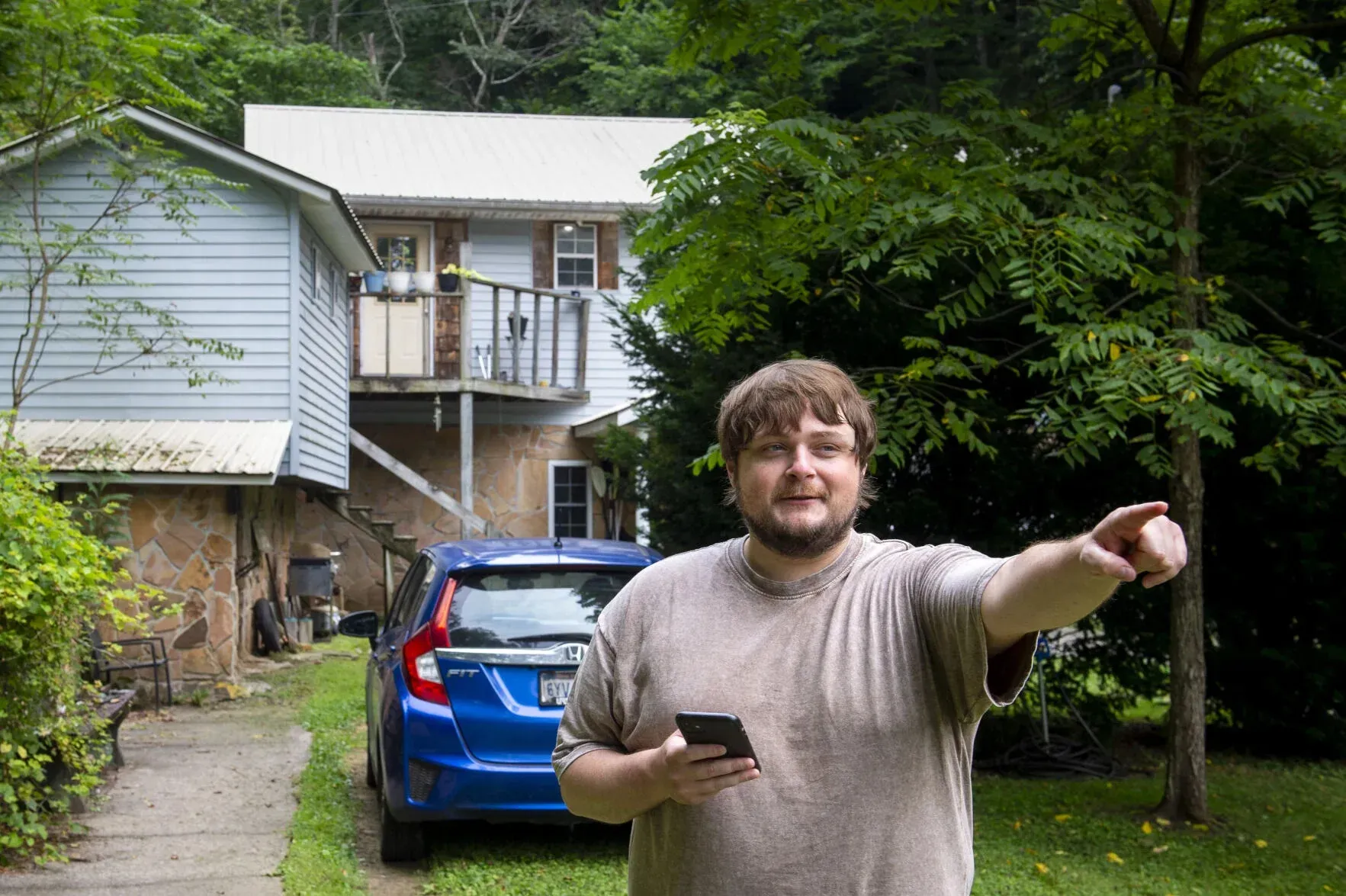
Mary Wildfire, 70, of Roane County, had E. coli and total coliform detected in her water just outside of Spencer, but she said she doesn’t know why.
“I don’t know,” Wildfire said. “Is our well casing cracked, or is there contamination somewhere that connects with the groundwater seams? Or is it in the house perhaps?”
Chuck Conner, 79, of Roane County, had well water results above the federal benchmarks for arsenic and lead. Hitt concluded that Conner’s high arsenic concentration — more than double the federal standard — suggested groundwater contamination rather than plumbing.
Conner, who has lived at his residence outside Spencer for 32 years, said the last time the well water had been tested was over 25 years ago by the local health department, only for fluoride content that read slightly high. Conner said he rated the quality of his water as “very good” and used it daily. The well water has never been discolored, Conner said.
Conner said the testing provided by the Gazette-Mail would be a “great baseline for comparing future tests.”
Wildfire said it occurred to her husband that intake holes in 50-gallon plastic drums upstairs in their home, which feed into taps downstairs, might be vulnerable to contamination via mice. He plugged them so that only one is open while he pumps them in sunny weather. The couple has an off-grid solar setup.
Next, Wildfire said, they’d need to bleach their whole system, using instructions provided by their local health department, which would come out and test the water just for coliform bacteria.
“But if it’s positive again. I don’t know what we’ll do,” Wildfire said.
Angela Conlon said she’d be willing to participate in further sampling initiatives.
“Why not?” she said. “The more data, the better.”
Pennington’s takeaway from the testing?
“Water quality should never be something you have to be concerned about,” he said, “and here I am extremely concerned because I do not have access to public water where I live, so I am stuck showering, washing dishes and clothes with this bad water.”
Pennington observed that if he ever wants to change his home water situation, it’ll take a “very expensive filtration system.”
Angela Conlon planned to investigate her Mercer County water system until she and her husband figured out why they became so sick in their home.
“Until then,” she said, “we can’t live there.”