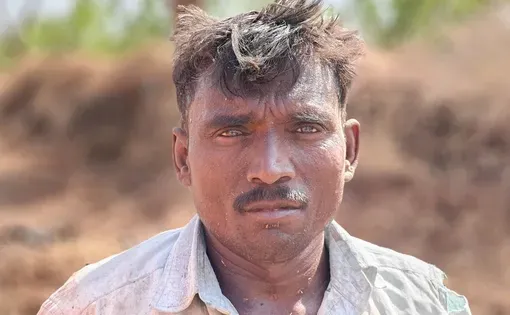
Technology and Hindu nationalism have led to a rise in superstitions.
Farmers and labourers in Maharashtra donate large sums of money in huge numbers to temple trusts and pilgrimage centres. Faith and superstition trump financial stress even during devastating floods.
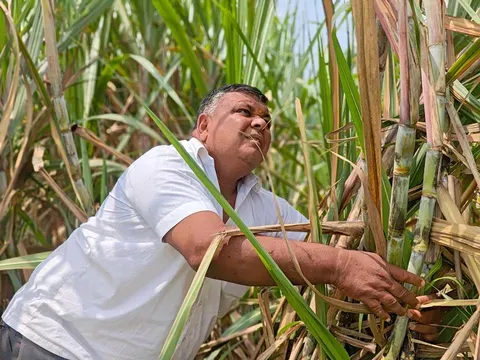
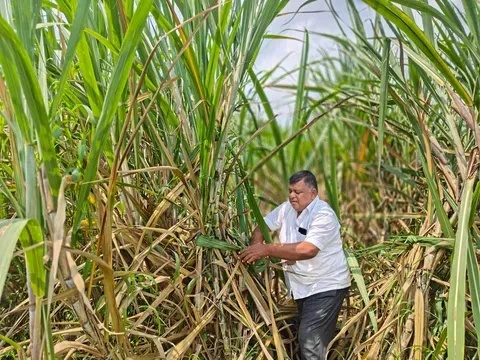
A promise he made before the monsoons has come back to haunt Deurao Nagare, 53.
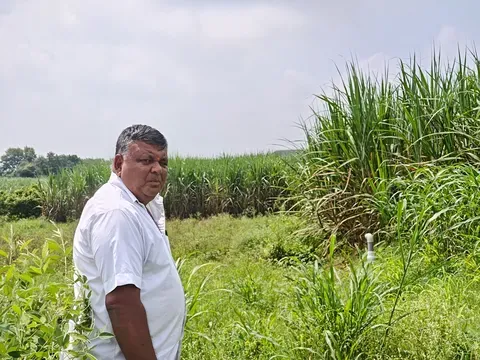
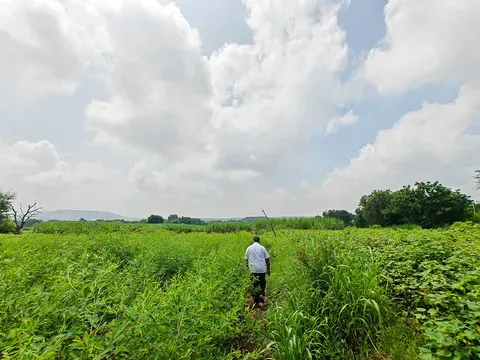
He spent the month of September standing in knee-deep water, trying to save his farmland from a devastating downpour. His 8-acre farm is located on a hilly slope in Chaklamba village, which makes it even more vulnerable during floods.
“The water flows directly through my farm,” he explains. “Every day, I spent hours creating an outlet for the water.”

As a nonprofit journalism organization, we depend on your support to fund more than 170 reporting projects every year on critical global and local issues. Donate any amount today to become a Pulitzer Center Champion and receive exclusive benefits!
That backbreaking labour turned out to be futile, and he couldn’t win against the angry clouds. His cotton, pigeon pea and sugarcane crops were destroyed, causing him a loss of over Rs. 3 lakh. The force of water flowing down the hills also washed away some of the topsoil in his farmland, jeopardizing his livelihood.
The thought of recovering the losses though, disturbs him less than the possibility of failing to raise the Rs. 1.7 lakh Nagare had promised for a temple at one of Maharashtra’s important pilgrimage spots.
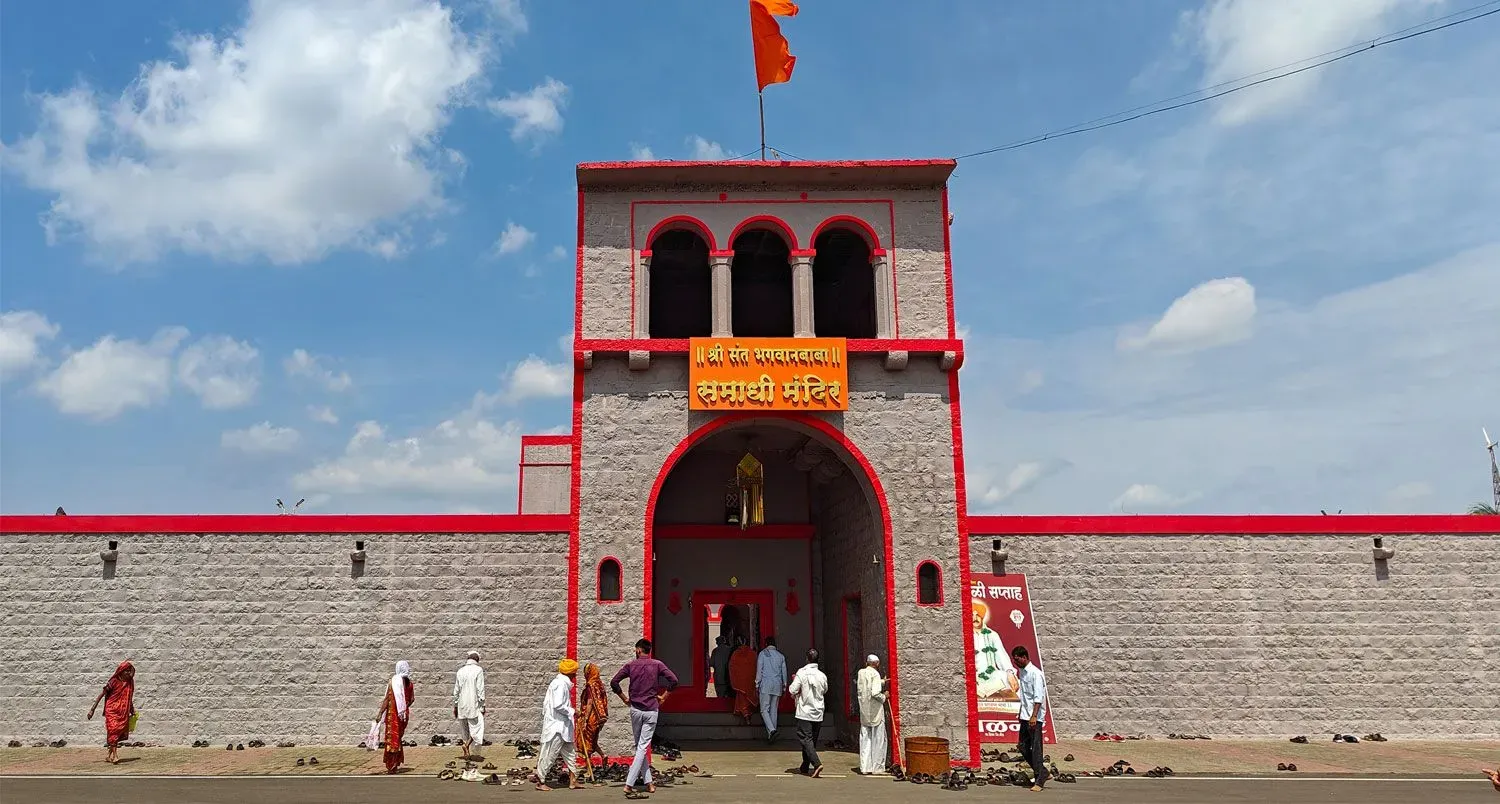
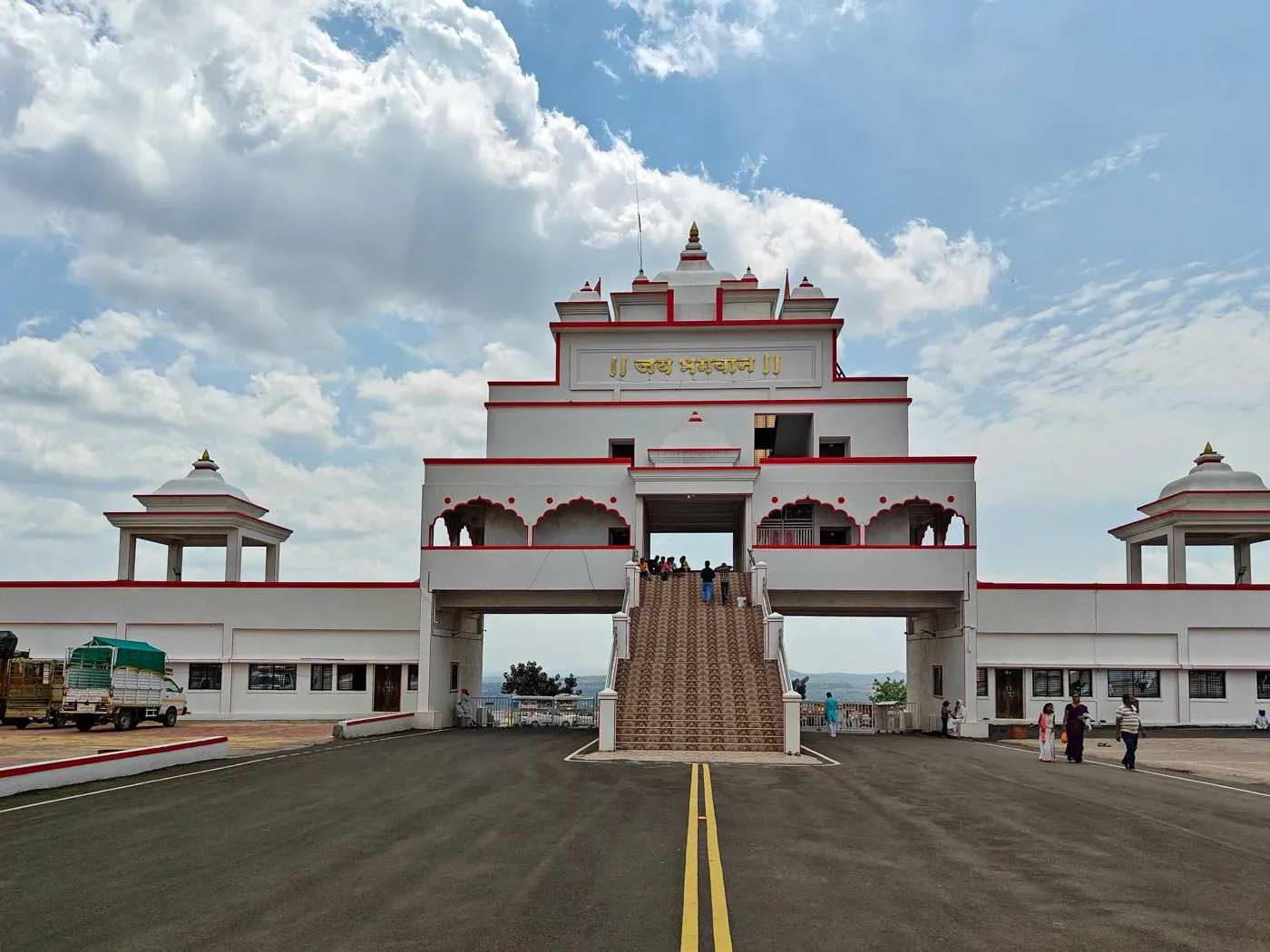
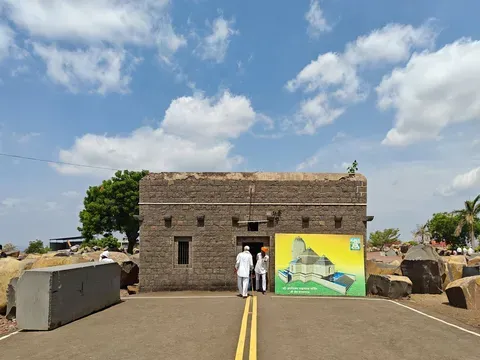
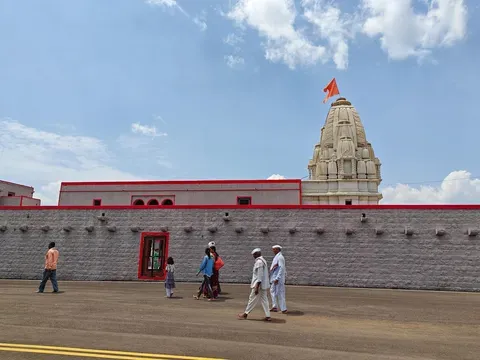
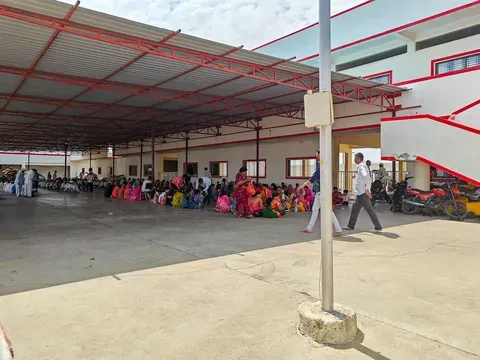
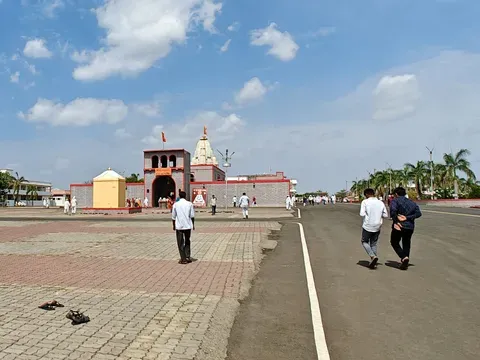
The Bhagwangad complex, located on a pristine hill along the border of Beed and Ahilyanagar districts, is a massive expanse thronged by devotees from all over the state. The annual footfall at this temple dedicated to Bhagwan Baba, a revered ascetic of the Warkari tradition, is anywhere between 15-20 lakhs. In 1958, he installed an idol of Vithal in Bhagwangad. While people from across different communities visit Bhagwangad, its predominant constituency is the Vanzari community, a prominent OBC caste.
Former Maharashtra Deputy Chief Minister, Gopinath Mundhe, had begun the tradition of holding a Dussehra rally at Bhagwangad, recognizing the importance of the place in the lives of Vanzari farmers and labourers. Over the years, his rallies grew stronger, attracting lakhs of devotees, and Bhagwangad emerged as a political power too, along with being a religious pilgrimage.
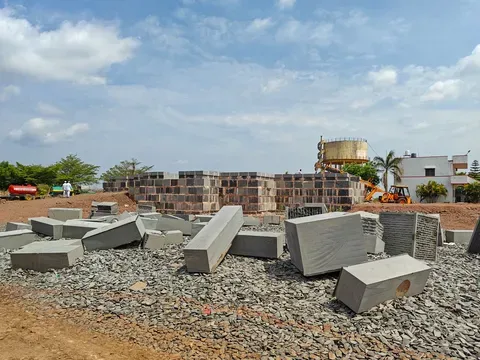
Currently, the Mahant of Bhagwangad, Namdev Shastri, is in the process of building a lavish temple dedicated to Dyaneshwar, a 13th century poet and philosopher-saint revered across Maharashtra. That is estimated to cost over Rs. 25 crore. The inauguration is scheduled to take place on Dussehra 2026 at their sprawling premises. And the money is being raised from the devotees, many of whom may not know where their next meal would come from.
Nagare’s village of Chaklamba in Beed district’s Georai taluka has pledged to raise Rs. 2.41 crore for the construction of the temple. That, from the 410 households of this village overwhelmingly comprising farmers, farm labourers, and sugarcane cutters. Krushna Maharaj, the next-in-line to succeed Namdev Shastri, said that soliciting contributions has been a longstanding tradition right from the time of Bhagwan Baba – the seer who originally founded Bhagwangad in 1958. “At the time, people didn’t have money, so they donated in foodgrains,” Krushna Maharaj explained. “Today, the form of donations has changed to cash. That’s it.”
However, when Nagare and the rest of Chaklamba promised to donate the handsome sum of Rs. 2.41 crore for the temple, they had little idea of what the next few months would look like.
As of the last week of September, over 31 lakh farmers had been affected across nearly 18 lakh hectares of farmland in Maharashtra, due to one of the heaviest downpours in the state in recent times. Thousands of people have lost their homes overnight.
Chaklamba isn’t an exception to the disaster Maharashtra is facing. Farmers like Nagare are already staring at a debt-ridden future. The state has announced a relief package of Rs. 2,215 crore but the losses are actually much higher. If that amount is divided among the affected, it comes down to merely Rs. 7,000 per farmer.
Later, Chief Minister Devendra Fadnavis, announced over Rs. 31,000 crore as help for farmers. However, farm activist Ajit Navale pointed out that Fadnavis had deceptively counted the money already allocated to farmers under different schemes, and the actual help stood at Rs. 6,500 crore.
Yet, the village is adamant on meeting their promise to Bhagwangad, and have justover a year to do that. “I have time to stitch together the amount,” Nagare says. “I will save up and fulfil my promise. I have given my word. I can’t go back on it.”
Chaklamba is among 60-70 villages which send a truck-full of bhakris (a round flatbread) once every month to Bhagwangad. “It is used to feed at least 3,500 devotees every day at Bhagwangad,” Krushna Maharaj says.
Besides that, Bhagwangad runs two schools, he adds, and looks after the education of more than 100 poor children across caste and religion. Some 30 of them stay at a hostel in Bhagwangad. They are all boys because “it is a place of Brahmacharya,” he says.
Maharashtra is known for famous temples like Shirdi or Pandharpur which see an annual footfall of close to 40 million visitors between the two. However, over the years, even pilgrimage centres that are relatively less known outside of the state, have been attracting massive crowds. People in these centres have developed an association with their local temple trust over time, and their loyalties don’t shift regardless of who occupies the religious seat. Unfortunately for the locals, the temple trusts have begun to extract more and more from their devotees, promising a better life in the distant future.
In the last week of September, a local Marathi newspaper, Karyarambha, questioned the lack of help from temple trusts and pilgrimages to farmers in distress. Farmers and labourers, the paper argued, spend out of pocket for religious programs, festivals and temples. Now that the farmers are devastated by floods, the same institutions should come forward and help them out, the newspaper said.
Temple trusts like Shirdi and Tulja Bhavani have donated Rs. 1 crore each for flood relief – a negligible fraction of what they earn annually.
Within 100 kilometres of Bhagwangad are two more bustling pilgrim centres – Devgad and Sarala Bet – which are currently helmed by Bhaskargiri Maharaj and Ramgiri Maharaj, respectively.
In August 2024, the police filed an FIR against Ramgiri Maharaj for derogatory remarks against Prophet Mohammad. It created a riot-like situation in Ahilyanagar district’s Srirampur town, where Ramgiri is based. Yet, because many have worshiped at the pilgrimage site of Sarala Bet, the same Ramgiri Maharaj continues to be invited for programs where villagers shell out from their pocket to arrange feasts in his honour.
Over the past 10 years, followers of Bhaskargiri Maharaj in Newasa – the taluka in Ahilyanagar where he enjoys most influence – have been running a campaign to build temples in each of the villages. The money comes from the villagers and the gram panchayat. The fundraising happens on WhatsApp.
The shops and homes of Newasa are adorned with Bhaskargiri’s garlanded photos. Almost every village here has a dedicated committee consisting of 30-40 people to sing devotional songs and religious hymns in his honour. “During festivals, Bhaskargiri Maharaj himself travels through villages and sings devotional songs to raise awareness about religion,” says Ramdas Wakchaure, 47, one of those committee members in the village of Saundala in Newasa.
Just before the 2024 state assembly elections in Maharashtra, Bhaskargiri Maharaj told his followers to “vote for religion,” which is said to have changed the fortunes of the contestants overnight. Muslims make up about 7 per cent of Ahilyanagar district’s population.
His followers have ensured that every village in the taluka of Newasa has at least four temples dedicated to different Hindu gods, Wakchaure says. “We make sure that people don’t have to donate every few months. It’s mostly one temple every two years or so per village.”
Newasa has 127 villages. At four temples per village, the followers of Bhaskargiri Maharaj have built around 500 of them in one taluka in just 10 years. “The cost of one temple is around Rs. 10 lakh,” Wakchaure added.
In other words, the population of Newasa, normally struggling with farm crisis, poor healthcare, and education, has shelled out Rs. 50 crore for the construction of tiny temples across their villages. “Nobody refuses money for God's work,” Wakchaure says.
However, conversations with farmers and labourers in the privacy of their homes reveal an additional layer. While their devotion is unshakable, the amount they donate might in some cases boil down to peer pressure. Things like “you can’t say no” or “it may not look good” or “you might alienate the rest of the village” are heard after promising people anonymity.
Nonetheless, the trend has far-reaching implications.
In remote villages at a local level away from any spotlight, small-time godmen mushroom and extort money from poor people, promising them better times. This is now a successful business model.
Namdev Shastri’s reach is at quite another level. His YouTube channel – with over a quarter of a million subscribers – even has a neatly edited video of him traveling in a helicopter through Switzerland. Ahead of the 2024 state assembly elections, he had backed the Mahayuti candidate, Dhananjay Mundhe, which was widely seen as a critical factor behind Mundhe’s win. However, that doesn’t matter to the devotees of Bhagwangad. For them, he shows them the path.
Nanabai Ugalmugle, 48, and her husband, Shivaji, 50, are both migrant Vanzari sugarcane labourers in Chaklamba. For a meagre amount of Rs. 50,000 across six months, couples mostly from Marathwada migrate to western Maharashtra or Karnataka to engage in one of the most gruesome forms of bonded labour in appalling conditions. Their children too are in the same profession because, Shivaji says, “We never had the money to educate our sons.”
The couple has promised a Rs. 1 lakh donation for the temple at Bhagwangad. That’s about as much as their annual income.
“We treat the pilgrimage site like we would treat our kids,” says Shivaji. “Even if we don’t have footwear or a roof over our heads, we will do what we can for the temple. We have been brought up to worship it.”
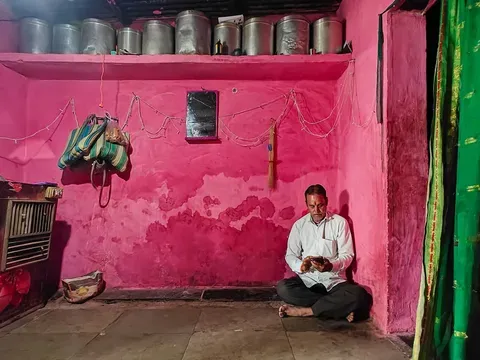
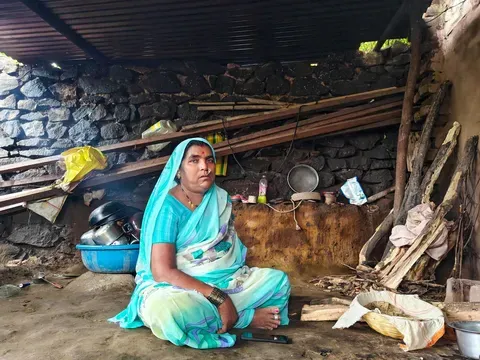
Sitting just outside their one-room house in Chaklamba, Nanabai, who is struggling with joint pain and frail knees due to hard labour, concurs with her husband. “Whatever little we have,” she adds, “is because of Bhagwangad and Namdev Shastri. He is the one that has given us everything. We shouldn’t think twice before giving anything to him. No questions asked.”
The residents of Chaklamba even attribute the onset of the monsoon to Namdev Shastri. “The region had not had any rainfall until he visited our village for a program. The moment he came here, it started raining,” says Bhausaheb Thore, 52, a migrant sugarcane worker in the village.
It is another matter that the rain – after it started – didn’t stop until it ravaged 30 districts and caused a serious loss of life and livelihoods. Bhausaheb has a counter to that too. “At least our drinking water concern is taken care of, and we will have water during our winter cropping season,” he says.
Bhausaheb has promised Rs. 1.25 lakh for the construction of the temple. He doesn’t have his own farmland, and lives in a rented one-room house, paying Rs. 1,500 per month. “Contributing to the temple is an honour we won’t get for the next three generations,” he adds. “When the time comes in a year and half, we will keep the cash at Baba’s feet.”
It would be a matter of pride, he adds, when the temple is constructed. “Years later, we won’t exist,” says Bhausaheb. “But the temple will be there, and will have a bit of us in it.”