Story
 June 5, 2025
Displaced From Their Homes, Nagorno-Karabakh Refugees in Armenia Don’t Want To Be Forgotten
Country:

William & Mary students embarked on reporting around the world during the 14th Sharp Writer-in...


Alla Harutyunyan has only an hour before she gets in a van to go meet with displaced families. Red, yellow, and blue—the colors of Armenia’s flag—line the skirt she wraps around herself. The light coming through the window of her NGO’s office reveals the bags under her eyes. Her work can’t wait for the funding that might never come.
Harutyunyan is the vice president of Mission Armenia, a nonprofit in Armenia that closely supports the over 120,000 people who arrived in the West Asia nation from Nagorno-Karabakh, Azerbaijan, just over a year ago. Known to Armenians as Artsakh, Nagorno-Karabakh is a region legally recognized as part of Azerbaijan that previously was governed autonomously by its ethnic Armenian population. In September and October 2023, the people of this region were forced to leave after military attacks by Azerbaijan in an event that amounted to ethnic cleansing, according to Freedom House, a Washington, D.C.-based human rights organization.
A year and a half later, it’s hard to tell that Armenia experienced such a large displacement. Artsakhsis in Armenia have enrolled their children in school, found jobs, and opened small businesses, but the deep psychological trauma of war and displacement lingers. Just three years before the exodus, a deadly war engulfed the region, and a blockade the year prior cut off essential goods. Providing the resources for such a wide-scale mental health crisis is not something her organization can undertake without additional support, but that is hard to come by.
“There are no homeless in Armenia, but the conditions are insufficient,” says Harutyunyan. Her words are translated from Armenian by Mission Armenia Project Coordinator Narine Baghdasaryan.
Harutyunyan recalls that in the early days of the displacement crisis there was a coordinated welcome by the Armenians who were supported by international aid. Onlooking countries pledged millions of dollars. But as the urgency of the crisis has faded, that attention has dried up.
“Sincerely, we hope that the international community will keep helping us, but our partners are idle,” says Harutyunyan.
The displacement and its aftermath have taught advocates like Harutyunya an important lesson: They must develop resilience among themselves, to be prepared even as international powers change priorities. As international support fades, Artsakhsis and Armenians look inwards, relying on each other for community, advocacy, and support.

As a nonprofit journalism organization, we depend on your support to fund more than 170 reporting projects every year on critical global and local issues. Donate any amount today to become a Pulitzer Center Champion and receive exclusive benefits!
Gurgen Mirzoyan says he got lucky. Without his grant from the European Union, he might have never reopened his business in Armenia. He runs a paper recycling company that he opened in 2019 in Nagorno-Karabakh. After the 2020 war, he and his business partner decided to relocate to Yerevan, Armenia’s capital. He recalled being better off than most. He had friends and family members in Armenia, but could not reopen his business until 2023.
“I didn't have this deep psychological trauma. However, there was something that would keep me down, from starting the business and I couldn't motivate myself to start it over again,” says Mirzoyan. His words are translated from Armenian by Margarita Arakelyan of the Fund for Armenian Relief, another organization that has supported him and other Artsakhi refugees.
His business requires several complicated pieces of machinery that were damaged after the move from Nagorno-Karabakh. After investing in his business in Nagorno-Karabakh, he had little left over to reinvest and reopen it in Armenia, until one day, after the displacement in 2023, he came across a grant to support Artsakhi small businesses in Armenia, funded by the European Union.
When he thinks of what he has survived, he begins to cry. For Mirzoyan, the grant was more than financial assistance. It was the opportunity to rebuild his life. He wants to continue living the life he has in Armenia, but he cannot forget what he left behind.
“I can’t imagine how our lives can be restored. It’s very hard for us. We will need to have the power within ourselves to fight for justice,” says Mirzoyan.
Igor Mirzakhanyan calls himself an international lawyer with first-hand experience in conflict. After serving in the army, as all young men do in Armenia, he discovered a passion for international humanitarian law, the field that dictates the rules of war. In 2021, he found himself in front of the International Court of Justice, the United Nations’ top court, filing Armenia’s complaint against Azerbaijan for human rights violations.
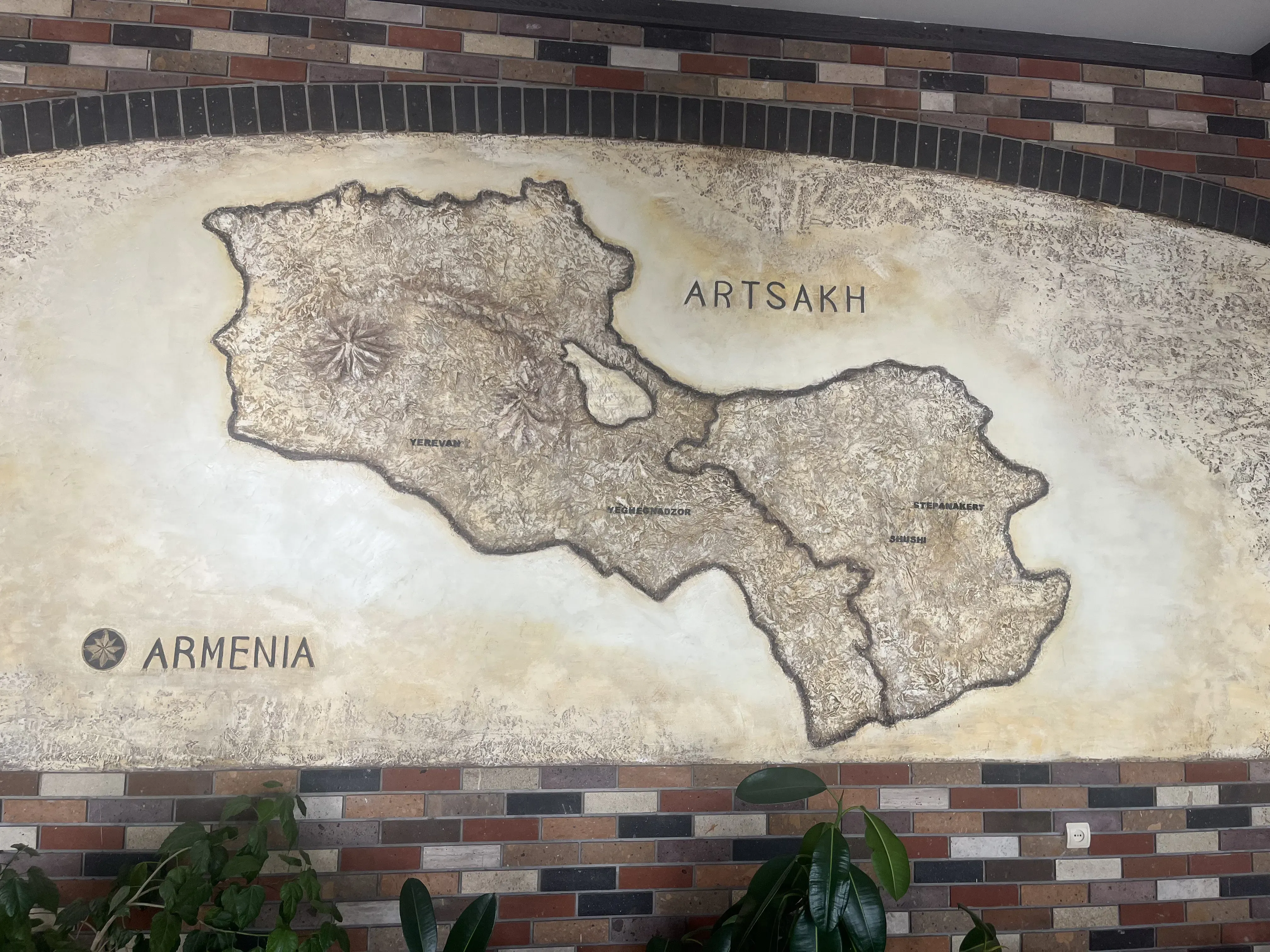
Armenia’s case against Azerbaijan, which began after the 2020 war between the nations, alleges the violation of an international treaty on anti-discrimination. After Armenia, Azerbaijan filed one of its own. International justice, however, is a slow process, and both cases are still ongoing.
In the meantime, Mirzakhanyan is working to further the education of international law in Armenia. In 2022, he hosted a summer school in Artsakh, where he is originally from. Many of his students had also just seen war.
“To my surprise, they were really interested in this subject,” says Mirzakhanyan. “I had the fear that they wouldn't be interested in learning about a branch of law that was not actually implemented so well, but they tried to learn what went wrong during the conflict, so they can do it right next time.”
Inspired by Armenia’s momentum in international law, Mirzakhanyan has founded a new organization, the Armenian International Law Association, to promote the subject in the country. It is still in its early stages, but he has already seen a lot of success thanks to the supportive networks in Armenia. They have organized several events without any outside funding and have received hundreds of student applications despite only advertising on Facebook.
His mission is to give Armenia the tools to uphold international law, even as many other nations continue to look the other way. Mirzakhanyan says they don’t want to be implicated for not upholding the duty to prevent violations. Such a legal silence is dangerous, it allows the crime to go unpunished, he says.
“What are you teaching to your students when you are silent when there is a violation of international law?” asks Mirzakhanyan.
He shares a saying in Armenian: "մեկը մյուսով (mege musov)," which means "let’s all help one another." It represents the cultural sentiment that has welcomed refugees in Armenia, supported the creation of new businesses, and kept communities alive through hardship.
Karine Bakshian arrived in Yerevan with only the clothes on her back and her laptop. Within it were the memories of soldiers lost in the war and the histories of her beloved Artsakh. Soon, the laptop will include testimonies from the people displaced alongside her. She placed the laptop on her knees and got to typing.
Bakshian manages a Facebook page dedicated to the memory of Askeran, the region in Artsakh she is from. Her page has become a gathering place for her former neighbors, who now live scattered across Armenia. While they don't know when they will return to their homes, Bakshian shares stories of their culture and lives, so that it is not forgotten.
Her Facebook page, considered a "newspaper" in her communities, is one of the last sources of news from her region, as newspaper offices eventually closed. She doesn’t know how yet, but she dreams of taking her stories to international media outlets.
“If I ever stopped running this newspaper, sharing stories on this platform, I think the people would not forgive me,” says Bakshian, her words translated from Armenian by Greta Khachatryan of The Armenia Project, an organization that supports foreign journalists in Armenia.
People come to Bakshian with stories to share about their lives and loved ones. Her page preserves a memory of a soldier, someone’s son, who lost his life in the war four years ago. Someone else remembers the smell of their house and where it was situated in the neighborhood. One of them has just had the grand opening of their new business. Their children have started school. In the comments, they speak in the Artsakh dialect so that it does not die out.
“For us to be able to go back to our country, the big countries and the overall world need to know our stories, to help us go back there,” says Bakshian.
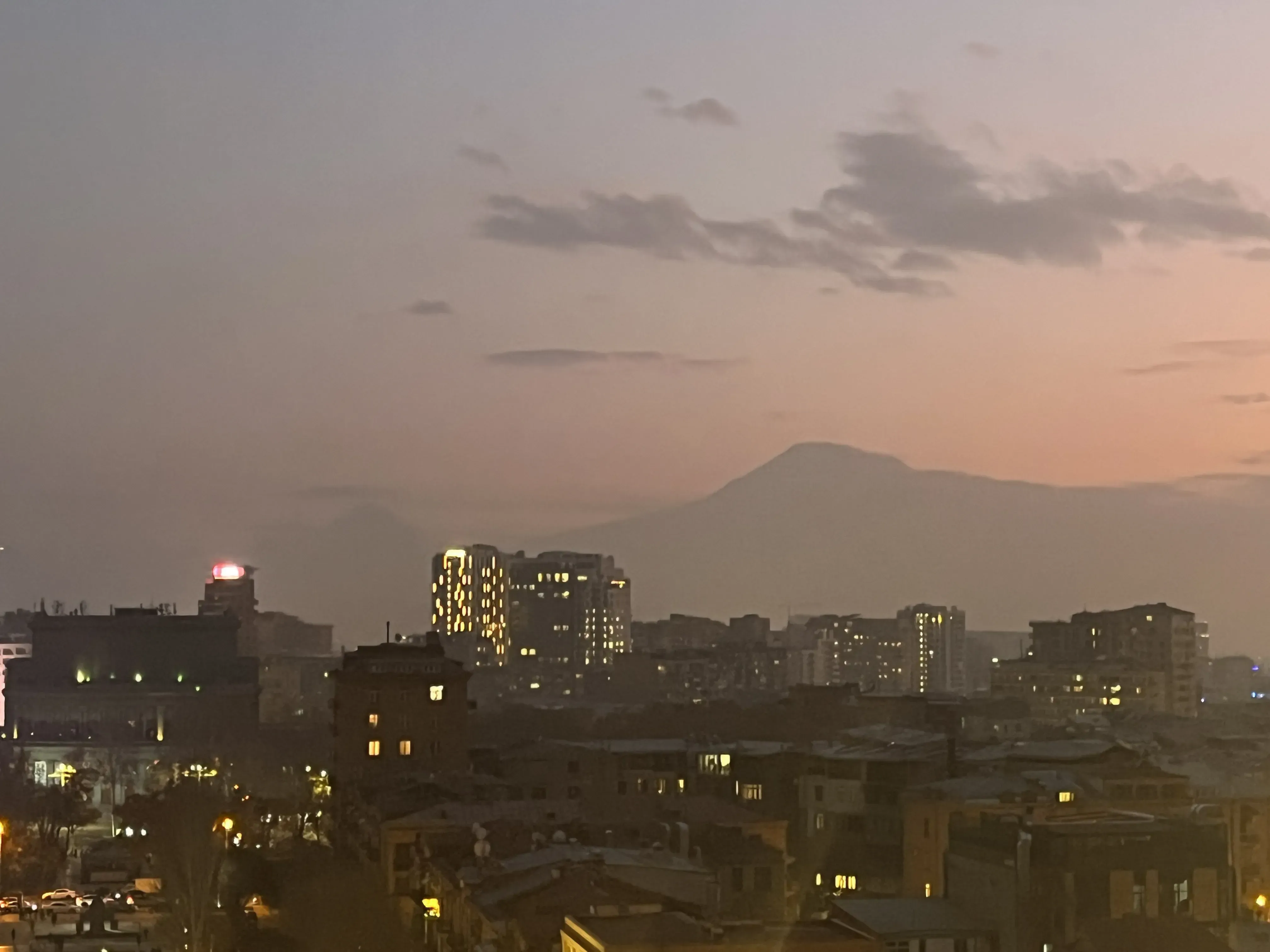
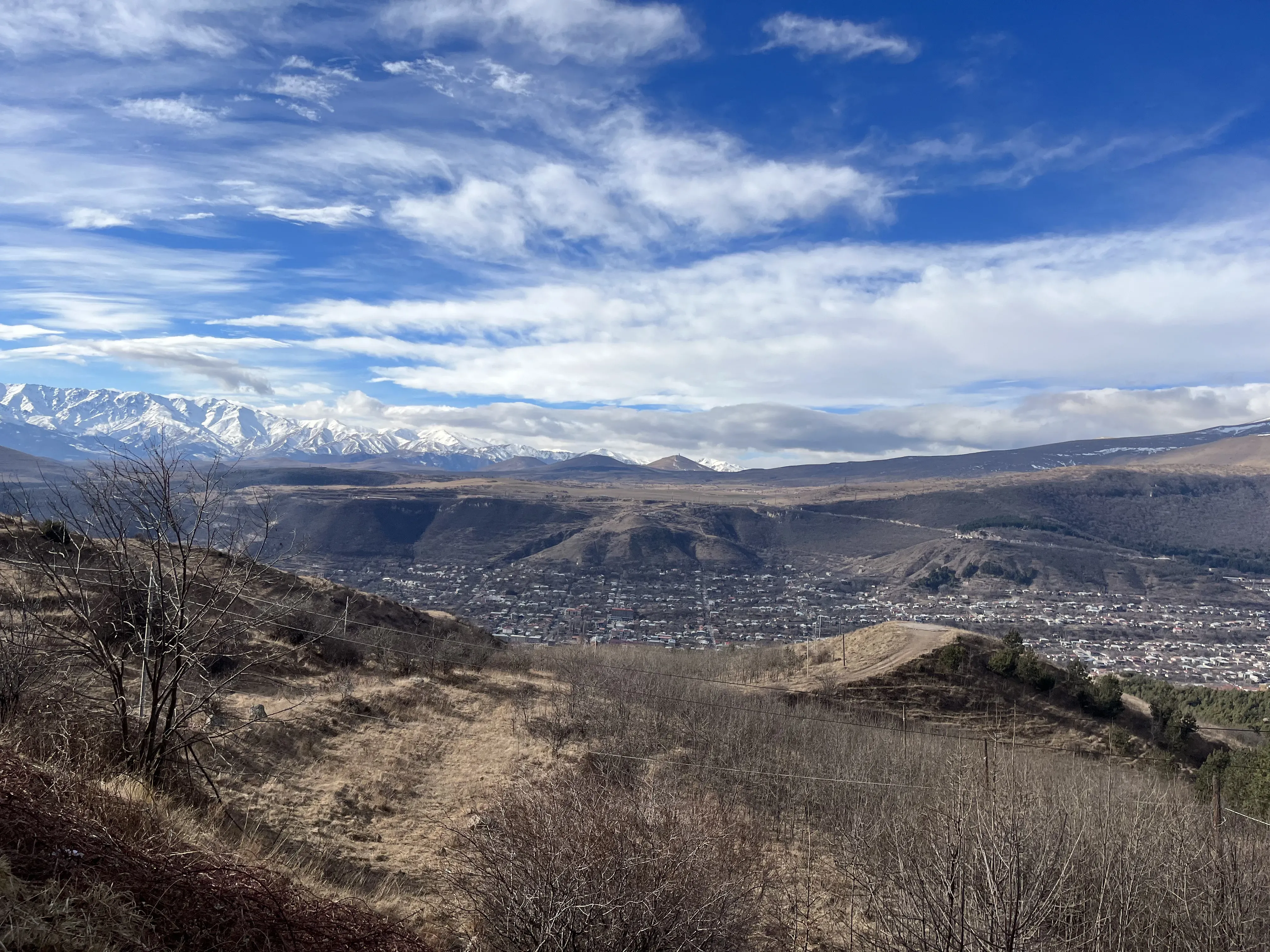
Goris is a town in the very south of Armenia and is the closest urban center to Artsakh. A year and a half ago, it was overwhelmed by the exodus. Now, it is like it never happened. A lot of the Artsakhsis have since left for bigger cities or other countries. Others cannot afford to leave Goris.
The Bardanyan family's house is in a quiet part of town. There are still boxes in the doorway, and a huge space heater keeps the living room warm. Smiling children run around with translator apps open on their phones. The mother sets out an array of tea, snacks, and sweets on the table.
This is the house of the Bardanyans, but it is not their home. It was given to them after they were forced from theirs in Artsakh. They traveled by foot as shots were fired by Azeri soldiers behind them. The mother, Narine Mirzoyan, can’t recall a lot of what happened to her. She says it’s because of the war and continuing displacement. She thanks God for keeping the family alive and leading them to where they are now.
“Our world is there,” says the father, Arsen Bardanyan. He speaks in Russian, his second language. “The most important thing now is that we are alive, we are healthy. Gradually, everything else will be OK.”
When they first arrived in Goris, they found a community ready to accept them. International organizations on the ground at the time and the Armenian community gave them a house and furniture. Two years later, they feel trapped financially.
The rent they pay for their house leaves them with almost nothing left over. Bardanyan is disabled after serving in the army, yet he still works an outdoors job to support his family. They dream of sending their oldest daughter to university and buying their own house in Goris, but they have no idea when or how they will do so. Disconnected from official advocacy channels, they don’t know who they could reach out to for support.
For the Bardanyans, like many Artsakhsis, justice means stability and rebuilding comfortable lives where they are. They have neighbors who care for them, but many of the bigger issues of displacement like trauma, permanent housing, and citizenship will persist and worsen without greater organizational support.
At the end of their interview, they were glad people would hear their story.
“Home for us is this,” says Narine Mirzoyan, gesturing inwards toward herself. “Possessions are good, but to be heard is everything.”